
Shakira Turns Copacabana Into the World’s Biggest Dance Floor With Record-Breaking Free Concert
Shakira’s 2 Million–Strong Copacabana Concert: How Rio Became Pop’s Biggest Free Stage
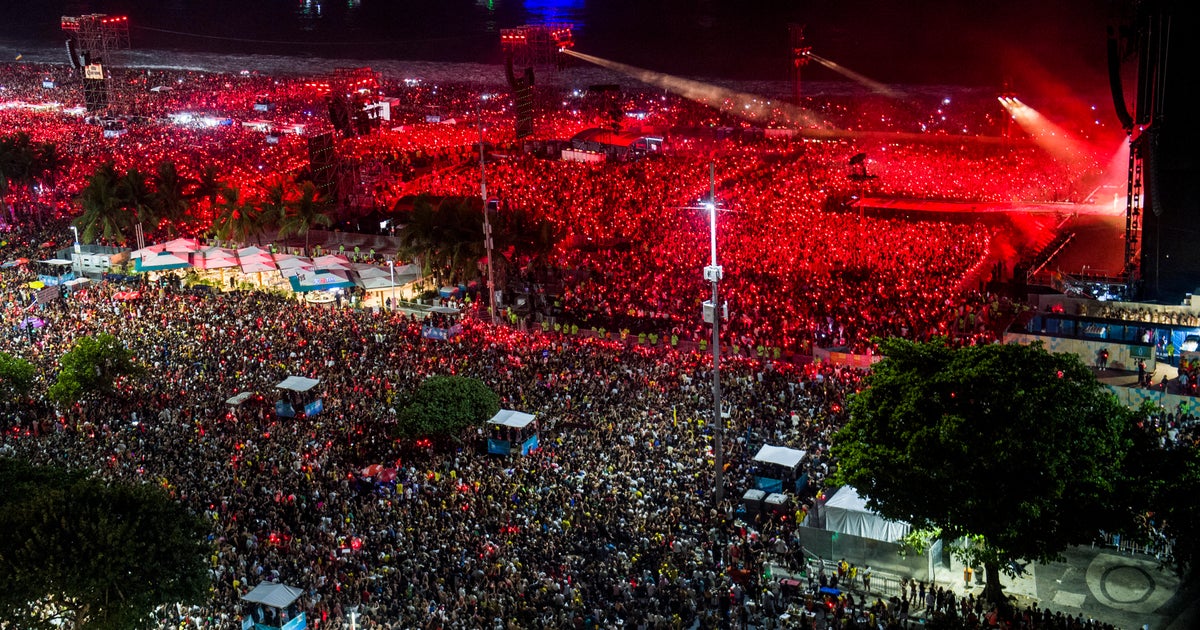
On a warm Saturday night in Rio de Janeiro, Shakira turned Copacabana Beach into what may be the largest pop club on earth. According to the city’s mayor, an estimated 2 million people flooded one of the world’s most famous waterfronts for a free concert that doubled as a statement about Latin pop’s global dominance and Brazil’s growing tradition of mega-scale beach shows.
Following recent blockbuster Copacabana performances by Madonna in 2024 and Lady Gaga the year before, Shakira’s show confirms that Rio has quietly become the premier open-air arena for legacy pop stars and global superstars alike—no ticket required.
From “Hips Don’t Lie” to the Shoreline: Why This Concert Mattered
Shakira isn’t new to big stages—World Cup anthems, Super Bowl halftime, and decades of arena tours have made her a reliable global draw. But Copacabana Beach is a different scale altogether. When Rio opens its sand to free spectacles, the city becomes part music venue, part civic experiment. Two million people is more than the population of many countries’ capitals.
Culturally, the timing also tracks. Latin music has been dominating global streaming charts, and Shakira’s recent resurgence—helped by viral breakup anthems, TikTok-ready choreographies, and high-profile collaborations—has reignited the kind of cross-generational enthusiasm that makes events like this feel less like a concert and more like a collective catharsis.

“Colombian superstar Shakira gave a free concert on Copacabana Beach in Rio de Janeiro on Saturday night, an event that the city's mayor said drew 2 million people to one of the world's most iconic waterfronts.”
Copacabana’s New Tradition: Madonna, Lady Gaga, Shakira, and the Mega-Beach Era
If this feels like déjà vu, that’s intentional. Shakira’s concert is the latest installment in Rio’s unofficial “Copacabana series,” where each year a different pop titan lays claim to the beach. Madonna turned it into a late-career victory lap in 2024, while Lady Gaga’s show leaned into theatrical spectacle and powerhouse vocals.
The pattern here is industry-savvy: free shows funded by sponsors and public-private partnerships, streamed or clipped to within an inch of their lives across social platforms. For artists, the payoff is reach and legacy; for Rio, it’s tourism marketing on an absurdly cinematic scale.
- Madonna (2024): Positioned as a career-spanning celebration, heavy on nostalgia.
- Lady Gaga (2025): A more theatrical, performance-art approach, with a focus on vocal fireworks.
- Shakira (2026): Rhythm-forward, dance-driven, leaning into Latin and global pop crossover.
Sound, Sand, and Spectacle: What a 2 Million–Person Show Actually Looks Like
Even by festival standards, 2 million spectators is a logistical fever dream. Think more along the lines of New Year’s Eve in Rio—another Copacabana institution—than a traditional stadium gig. Visuals from the show highlight an almost surreal scale: an ocean of people stretching back into the city, LED screens glowing against the Atlantic, and a pop star trying to reach both the front row and a distant horizon of fans filming from balconies.
For accessibility and crowd management, Rio’s city government typically deploys layered security perimeters, emergency medical teams along the beach, and public transit schedules tailored around crowd dispersal. The concert isn’t just an entertainment event; it’s a temporary reengineering of how the city moves and breathes for a night.
The Performance: Hits, Hybrids, and a Global Latin Pop Victory Lap
While full setlists and official releases will trickle out over the coming days, Shakira’s Copacabana show leaned on exactly what you’d expect from a free mega-event: maximal hits, maximal rhythm. Her catalog is practically engineered for a beach setting—“Waka Waka,” “Hips Don’t Lie,” “La Bicicleta,” and her more recent viral breakup tracks are designed for mass singalongs and communal choreography.
Musically, this is the Shakira that’s been reasserting herself over the last few years: a savvy blend of rock-rooted showmanship, Colombian folk references, and reggaeton-adjacent production, all wrapped in a stadium-pop sheen. On a beach, with 2 million people and the Atlantic breeze, those choices read less like genre strategy and more like instinct.
“Latin music isn’t just having a moment; it’s reshaping what ‘global pop’ sounds like. A night like this at Copacabana Beach is proof that the language barrier has become more of a creative tool than an obstacle.” – Contemporary music critic perspective
Beyond the Beach: Tourism, Politics, and the Business of “Free”
“Free” is doing a lot of work here. For fans on the sand, it means a rare chance to see a superstar without a hundred-dollar ticket. For Rio, it means global press, tourism boosts, and a symbolic reminder that the city remains an aspirational backdrop for music, film, and sport.
The mayor publicly touting the 2 million figure isn’t just crowd math; it’s soft power. These events position Rio as a cultural hub that can rival major festival cities while tapping into Brazil’s long history of street-level, public celebration— from Carnival to New Year’s fireworks. And for Shakira, it’s a brand move as much as a concert: generosity as spectacle.
- Tourism: Future visitors are effectively sold on a package of beach, nightlife, and marquee events.
- Streaming + Social: Clips from the show function as rolling promotion across platforms.
- Local economy: Vendors, hotels, and transport systems see a short-term surge.
- Political capital: City officials get to frame Rio as open, vibrant, and safe at extreme scale.
The Trade-Offs: Crowd Risks, Environmental Concerns, and Access
As spectacular as these events are, they’re not without controversy. Packing millions of people into a coastal area raises obvious safety questions—everything from evacuation routes to medical access to preventing crowd crush situations. Rio has experience with large-scale gatherings, but each show is a live test under global scrutiny.
There’s also the environmental bill. Copacabana’s sand is famously resilient, but it’s not invincible. Waste, noise, and infrastructure strain can all have long-tail impacts, especially if not managed with serious cleanup and conservation plans. For residents, a “free” show can sometimes translate into blocked access, noise late into the night, and a city temporarily reoriented toward visitors.
- Public safety and emergency response at unprecedented crowd sizes.
- Environmental impact on the beach and surrounding marine ecosystem.
- Equitable access and how local residents experience the event.
- Funding transparency: who really pays for “free” concerts?
How to Watch, Rewatch, and Put This Night in Shakira’s Career Timeline
While the Copacabana concert is, by nature, a “you had to be there” experience, it’s almost guaranteed that official clips, behind-the-scenes footage, and fan-shot videos will turn up across platforms and broadcast outlets. For Shakira, the event slots neatly into a career arc that’s currently in a renewed upswing, reinforcing her status as one of the most enduring and adaptable Latin pop stars of her generation.
As a live event, this Copacabana show feels less like a one-off spectacle and more like a stake in the ground: Latin pop, performed in Portuguese-speaking Brazil by a Colombian artist, framed as a global public good. That’s a long way from the alternative-rock-leaning Shakira of the late ’90s, but it’s also a very natural evolution.

Final Thoughts: When a Beach Becomes the World’s Biggest Stage
Shakira’s free Copacabana concert is bigger than a headline about a huge crowd. It’s a snapshot of where global pop is right now: multilingual, platform-aware, and increasingly tied to public spectacle. It cements Rio’s shoreline as a kind of rotating hall-of-fame venue for superstar careers, each show adding another layer to the city’s cultural mythology.
The next questions are less about if this will happen again and more about who’s next, and how cities and artists can make these mega-gatherings safer, greener, and more inclusive—without losing the sense that, for one night, the world’s biggest stage belonged to everyone.
For more on the event and official imagery, see CBS News’ coverage of Shakira’s Copacabana concert, and keep an eye on Shakira’s official channels for any full-performance releases or documentaries built from this landmark night.
