
Are Laundry Pods Secretly Triggering Your Child’s Eczema Flares?
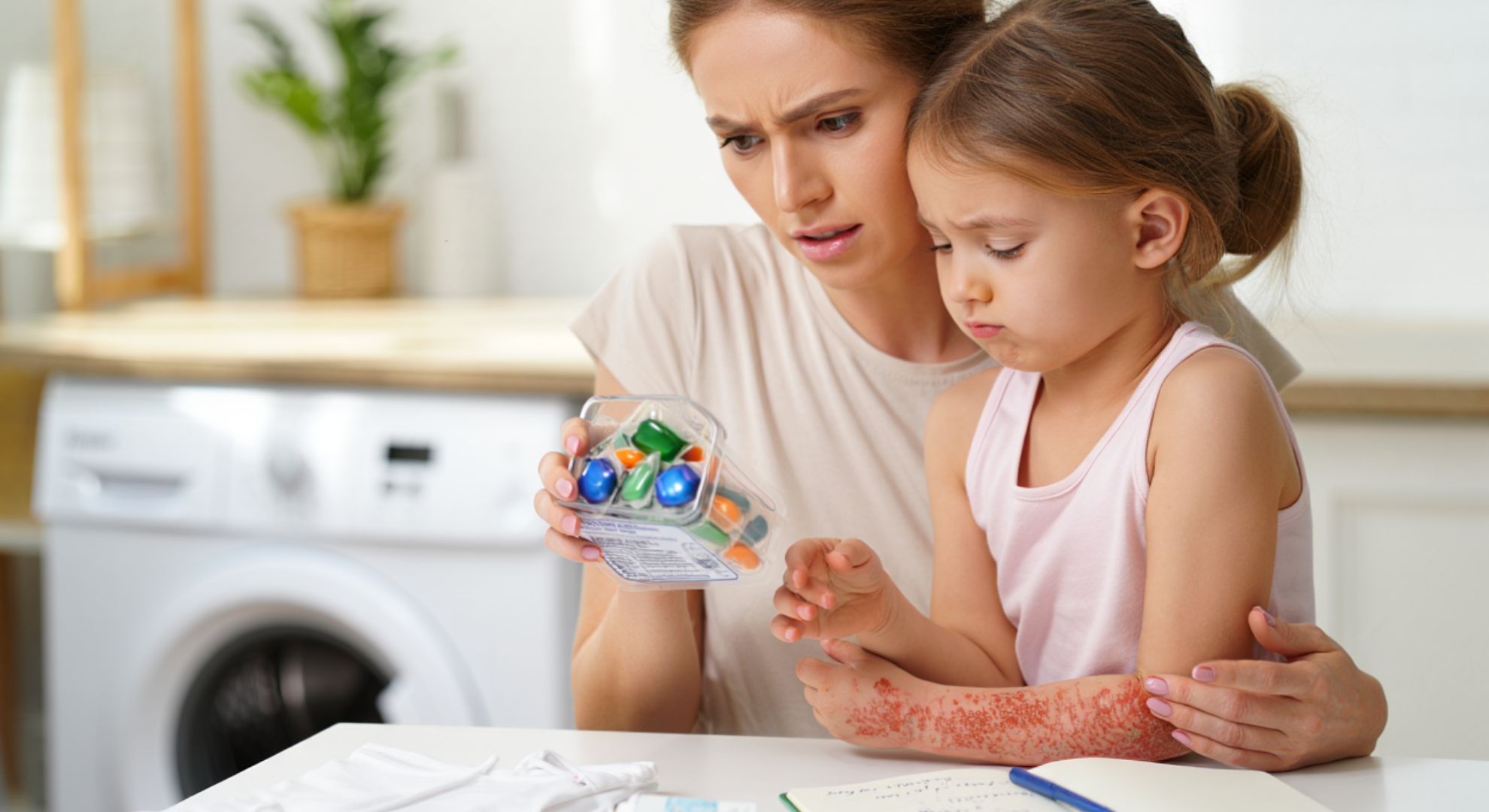
Dermatologists are raising fresh concerns that residue from highly concentrated laundry detergent pods may be irritating kids’ skin and contributing to childhood eczema flares. Parents across the U.S. are reporting the same puzzling pattern: the more laundry they do to keep things “extra clean,” the more red, itchy patches seem to show up on their children’s arms, legs, and bellies.
In early May 2026, coverage from outlets including the Iowa Park Leader highlighted that certain laundry detergent pods commonly found in American homes may leave behind chemical residue on clothing and bedding. Some dermatologists now suspect this residue could be a trigger for eczema in children who already have sensitive, allergy‑prone skin.
If you’re a parent wondering whether your favorite detergent pods might be part of the problem, you’re not alone—and you don’t need to panic. Let’s walk through what we know so far, what’s still uncertain, and the practical, evidence‑based steps you can take to protect your child’s skin.
“We’re not saying every pod is dangerous. But for a child with active eczema, even small amounts of leftover detergents and fragrances on clothing can be enough to keep the skin in a constant state of irritation.”
Why Laundry Detergent Pods Are Under Scrutiny for Childhood Eczema
Eczema (atopic dermatitis) is an inflammatory skin condition that causes dry, itchy, easily irritated skin. It’s influenced by genes, the immune system, and environmental triggers. Detergents don’t “cause” eczema in the first place, but they can trigger flares or make existing eczema worse—especially when residues sit on clothing that touches the skin all day.
Laundry detergent pods are extremely convenient: pre‑measured, mess‑free, and highly concentrated. That concentration is part of the concern. According to dermatology reports discussed in early 2026:
- High concentration means even a small amount of undissolved detergent can leave a relatively high dose of surfactants and fragrances on fabric.
- Cool or quick wash cycles may not fully dissolve the pod’s outer film, leaving sticky or filmy residue behind.
- Fragrances, dyes, and brighteners in some pod formulations are known irritants or sensitizers for people with eczema or contact dermatitis.
How Detergent Residue Irritates Sensitive and Eczema‑Prone Skin
To understand what might be happening, it helps to look at two things: your child’s skin barrier and what’s actually in many detergent pods.
1. Eczema and the fragile skin barrier
Children with eczema typically have a “leaky” skin barrier. Their skin loses water easily and lets irritants in more easily than average. When that vulnerable skin barrier comes into contact with leftover detergents, it can:
- Dry out further (many detergents are designed to strip oils and dirt).
- Let in small, irritating molecules from fragrances, preservatives, and dyes.
- Trigger an immune response, leading to redness, itching, and flare‑ups.
2. What’s inside many detergent pods
While formulations vary by brand, typical laundry pods may contain:
- Surfactants (cleaning agents) that can strip skin oils if not fully rinsed.
- Fragrances, which are among the most common causes of contact dermatitis.
- Optical brighteners that cling to fabric to make whites look “brighter,” but can irritate sensitive skin.
- Dyes and colorants used to make pods visually appealing.
“Detergent residue is an underestimated source of irritation. For most people, it’s an inconvenience. For kids with eczema, it can be the difference between calm skin and weeks of flares.”
Several studies (including those published in dermatology and allergy journals before 2026) have shown that fragrance‑free, dye‑free detergents are generally better tolerated by people with atopic dermatitis compared with standard fragranced products. The new concern about pods is essentially an extension of this existing knowledge, combined with the issue of higher concentration and potential residue.
What Recent Reports and Dermatologists Are Actually Saying
As of May 2026, dermatologists commenting to local and national media, including the Iowa Park Leader, are reporting:
- An increase in parents linking flares to changes in laundry products, especially when switching to highly fragranced pods or “extra‑strength” formulas.
- Case reports where children’s eczema improved when families switched away from pods to fragrance‑free, liquid detergents and used extra rinse cycles.
- Clinical suspicion that the combination of high concentration + fragrance + incomplete rinsing may be particularly problematic.
To be clear, these are largely observational reports and clinical experiences, not yet large randomized controlled trials focused exclusively on pods. However, they align with long‑standing advice from dermatology and allergy societies:
- The American Academy of Dermatology and the National Eczema Association consistently recommend fragrance‑free, dye‑free detergents for eczema‑prone skin.
- Multiple studies show that reducing exposure to potential irritants lowers flare frequency for many children with atopic dermatitis, although it does not “cure” the condition.
So while laundry pods are not officially banned or universally condemned, more dermatologists now suggest that they may be worth avoiding if a child has stubborn or unexplained eczema flares—especially when other triggers have been addressed.

A Real‑World Example: When “Extra Clean” Backfired
Consider a common scenario shared in pediatric dermatology clinics:
A 4‑year‑old boy with mild eczema starts preschool. His parents, wanting to keep germs to a minimum, switch to a popular “deep clean” laundry pod with a strong “fresh linen” scent. Within a few weeks, his previously mild eczema turns into nightly itching, bloody scratch marks, and new patches on his back and legs.
After ruling out infections and food triggers, the dermatologist asks about laundry products. The family switches to:
- a fragrance‑free liquid detergent labeled for sensitive skin,
- an extra rinse cycle on all his clothes and bedding, and
- avoiding fabric softener and dryer sheets.
Over 3–4 weeks, his skin steadily improves. He still has eczema (it doesn’t magically vanish), but the constant cycle of angry, inflamed patches calms down significantly.
Signs Your Laundry Routine Might Be Aggravating Your Child’s Eczema
It can be hard to know whether detergents are part of the problem. These patterns may suggest that laundry products or residue are contributing:
- Flares in areas that touch clothing most — waistbands, sock lines, underarms, backs of knees, where pajamas or sheets rub.
- Worse itching after putting on “freshly washed” clothes or getting into a freshly changed bed.
- New flares after a detergent switch (especially to strongly scented pods or “extra brightening” formulas).
- Improvement during vacations when using different laundry products (or less detergent overall).
None of these signs prove cause and effect on their own, but together they can be meaningful clues. A simple, time‑limited experiment—switching to a gentler laundry routine for 3–4 weeks—can help you and your child’s clinician see whether the skin responds.
7 Practical Laundry Steps to Help Protect Eczema‑Prone Skin
You don’t have to overhaul your entire household overnight. Start with a few of these dermatologist‑backed strategies, then adjust based on how your child’s skin responds.
- Switch from pods to a liquid or powder for sensitive skin
Choose a product labeled:- “fragrance‑free” (not just “unscented”),
- “dye‑free,” and
- for “sensitive skin” or “eczema‑friendly” when available.
- Use the minimum effective detergent amount
More detergent does not mean cleaner clothes. Excess soap is harder to rinse out and increases residue. - Add an extra rinse cycle
Many washing machines have a “extra rinse” or “second rinse” option. This simple change can significantly lower detergent residue on clothing and bedding. - Avoid fabric softeners and dryer sheets
These often contain strong fragrances and waxy coatings that cling to fabric. If you need softness, consider:- wool dryer balls (fragrance‑free), or
- simply line‑drying and fluffing in the dryer for a few minutes.
- Rinse new clothes before wearing
New fabrics can carry finishing chemicals and dyes. Washing them once or twice before your child wears them can reduce irritation. - Choose soft, breathable fabrics
Cotton and bamboo are generally more comfortable for eczema‑prone skin than rough synthetics or wool that can cause friction and itching. - Keep a simple, consistent routine
Changing products frequently can make it difficult to spot triggers. Once you find a detergent that seems well tolerated, stick with it.

Common Obstacles (and How to Work Around Them)
“Pods are just so convenient.”
Convenience matters—especially when you’re juggling kids, work, and everything else. If completely ditching pods feels overwhelming, you might:
- Reserve pods for adult laundry only, using a separate, gentle detergent for your child’s items.
- Use pods only in hot cycles where they dissolve more reliably, and still add an extra rinse.
“Fragrance‑free detergents smell ‘weird’ or like nothing.”
It can be an adjustment to switch from heavily perfumed laundry to a more neutral smell. You might try:
- Starting with just your child’s clothes and bedding, while leaving the rest of the household products unchanged at first.
- Adding freshness by line‑drying outdoors when possible.
“Sensitive detergents can be more expensive.”
Budget is a realistic concern. Some ways to manage costs:
- Look for store‑brand fragrance‑free, dye‑free detergents; many perform well and cost less than specialty brands.
- Use the smallest amount of detergent needed; overpouring is expensive and harder on skin.
- Prioritize washing items that directly touch your child’s skin (pajamas, underwear, sheets) with the gentlest products if you can’t switch everything at once.
When to Talk to a Pediatrician or Dermatologist
Adjusting laundry habits is just one part of eczema care. It’s time to seek professional guidance if:
- Your child’s eczema is painful, keeps them up at night, or affects school or play.
- You see oozing, crusting, or signs of infection (yellow scabs, pus, fever).
- You’ve tried common measures (gentle skincare, moisturizing, basic trigger reduction) for several weeks without improvement.
A clinician can:
- Confirm the diagnosis (to rule out other skin conditions).
- Recommend appropriate treatments, like medicated creams or ointments.
- Help you design a practical “eczema action plan” that includes skincare, trigger management, and when to step treatment up or down.
What Science Still Needs to Clarify About Laundry Pods and Eczema
Even as warnings make headlines, it’s important not to jump ahead of the data. Here’s what remains uncertain:
- How different brands compare: Not all pods are formulated the same. Some may be less irritating than others, but independent, head‑to‑head studies are limited.
- Exact dose–response relationships: We don’t yet know how much residue is needed to trigger flares in different children.
- Long‑term outcomes: We need more research to understand whether reducing detergent irritants early in life changes the long‑term course of eczema.
Future studies will likely measure:
- Detergent residue levels in fabrics washed with pods vs. liquids vs. powders.
- Skin reactions in children with and without eczema who wear those fabrics.
- Whether switching products leads to measurable, sustained improvements.

Bringing It All Together: Calm, Not Panic
The emerging concern about laundry detergent pods and childhood eczema is understandable—and it can be unsettling to think that something meant to keep your family clean might be aggravating your child’s skin. Still, this isn’t a call for alarm; it’s a prompt for thoughtful adjustment.
Here’s the key idea: if your child has eczema or very sensitive skin, reducing exposure to potential irritants in laundry products is a low‑risk, often helpful step. Pods are just one part of that picture, especially highly fragranced, concentrated versions that may leave residue.
- Consider switching to a fragrance‑free, dye‑free detergent (ideally non‑pod).
- Use an extra rinse cycle and avoid fabric softeners and dryer sheets.
- Monitor your child’s skin for 3–4 weeks and note any changes.
- Work with your child’s healthcare provider for a comprehensive eczema plan.
You don’t have to do everything perfectly to make a difference. Even small, consistent changes to your laundry routine can lighten the load on your child’s skin, giving their eczema treatments a better chance to work and hopefully bringing more comfortable days—and quieter nights—for your whole family.
Next step: Pick one change you can make this week—switching detergents, adding an extra rinse, or cutting out dryer sheets—and see how your child’s skin responds. Then build from there, one manageable step at a time.

