
The Pitt’s Night Shift Chaos: Inside Season 2, Episode 13, “7:00 PM”
“The Pitt” Season 2, Episode 13, “7:00 PM” Recap & Review
Season 2, Episode 13 of The Pitt, titled “7:00 PM,” swings the camera to the night shift and delivers a fast, funny, and surprisingly emotional hour that reshuffles character dynamics while pushing the hospital drama into darker, more morally tangled territory. It’s the kind of mid-season episode that feels like a soft reset: new faces, new rhythms, same chaotic hospital.
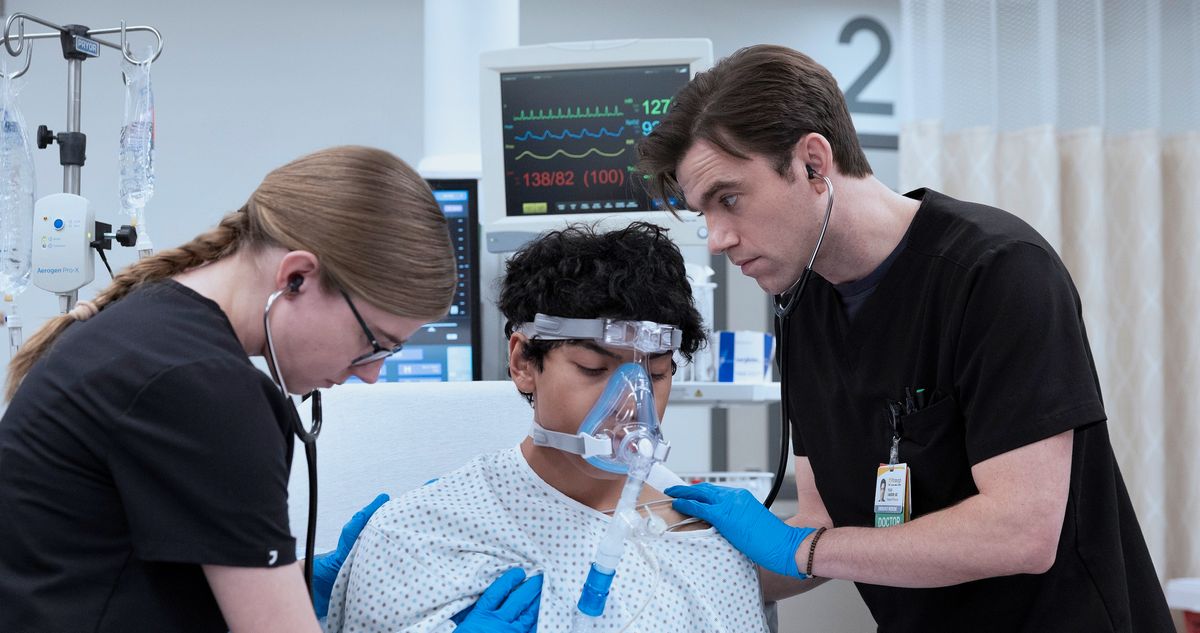
Where “7:00 PM” Sits in The Pitt Season 2
By Episode 13, The Pitt has already established itself as a scrappier, darker cousin to the classic network medical drama. Think the messy ethics of House, some of the breakneck pacing of ER, and the “we live here now” ensemble chemistry of Grey’s Anatomy, all filtered through a more contemporary, slightly cynical lens.
“7:00 PM” is structured as a handoff: the day shift exits with the usual emotional baggage, and the night crew clocks in, inheriting both their patients and their unfinished business. It’s a clever narrative device that lets the episode feel intimate and self-contained while still feeding ongoing season arcs.
Meet the Night Shift: Abbot, Shen, Ellis & Co.
The episode’s biggest flex is the night-shift ensemble. Abbot, Shen, Ellis, and the rest don’t just feel like backup for the main cast; they come in hot with their own rhythms, grudges, and in-jokes. The script leans into that energy, turning the shift change into a mini culture clash.
The night crew has a slightly different ethos: looser, more improvisational, and far more aware that at 3 a.m., the hospital system is running on fumes. They’re not there to look heroic so much as to keep people alive by any means necessary, paperwork and decorum be damned.
“The night shift lives where the rules get blurry. Day shift makes policies; night shift breaks them to make sure people see morning.”
That vibe tracks with how real-life hospital culture often works: nights are where shortcuts, workarounds, and unspoken compromises pile up. The Pitt doesn’t pretend those compromises are pretty.
“7:00 PM” Plot Breakdown: One Shift, Many Fires
Without spoiling every beat, “7:00 PM” plays out like a relay race of crises, each escalating the moral and emotional stakes:
- The handoff: The opening handoff sequence lays out the episode’s ticking-clock setup. Patients, charts, and half-explained disasters are passed down like cursed heirlooms.
- The high-risk case: A central patient storyline (the kind that could anchor a bottle episode) forces the team to choose between hospital policy and a more aggressive, ethically gray intervention.
- Personal secrets on the night shift: Romantic entanglements and professional resentments bubble up, especially for Ellis, whose bedside manner masks some questionable decision-making.
- Systemic failure as background noise: Staffing shortages, lack of resources, and bureaucratic inertia function less as exposition and more like environmental hazards, shaping nearly every choice the night crew makes.
The structure keeps the pacing frantic but coherent: every subplot feels like a variation on the same theme—what it costs to get people through the night in a system that’s already broken before sunset.

Themes: Moral Triage and Night-Shift Ethics
The most compelling layer of “7:00 PM” is how it tackles ethical triage. It’s not just who gets the bed or the surgery; it’s who gets the time, the attention, the emotional bandwidth when the staff is running on caffeine and spite.
- Resource scarcity: The episode makes budget cuts and understaffing feel less like talking points and more like a horror element.
- Burnout as a plot engine: Characters don’t just look tired; their judgment is clearly frayed, and the episode lets that matter.
- Consent and communication: A key storyline turns on how much a patient and their family are told, and how much is withheld “for their own good.”
“We’re not choosing between good and bad. We’re choosing between bad and worse, and then we do the paperwork like it was all clean.”
That line (or one very close to it) lands like the series thesis statement. The Pitt isn’t glamorizing the grind; it’s admitting that sometimes the only options left are ugly ones.

Character Work: Fresh-Faced Cuties, Messy Humans
Vulture’s recap leans hard into the “fresh-faced cuties with medical degrees” framing, which is both a wink at medical-drama thirst culture and an acknowledgment that the casting here really does spark. But the episode’s better instincts refuse to leave these characters as just charming disaster doctors.
Abbot emerges as the moral center of the shift—someone who still believes in doing things “the right way,” even when that phrase has lost all practical meaning. Shen feels like the stealth MVP: clinically sharp, quietly observant, and clearly carrying more emotional history with this hospital than they let on. Ellis, meanwhile, edges toward antihero territory, pushing boundaries in ways that are both effective and slightly chilling.

Direction, Tone, and Style: Controlled Chaos
Stylistically, “7:00 PM” leans into a kind of managed chaos. The camera work favors tight, sometimes claustrophobic shots in hallways and patient rooms, mirroring the sense that no one on this shift ever has quite enough space—physically or emotionally.
- Pacing: Alternates between frantic crash-cart sequences and quieter, morally knotty conversations.
- Sound design: The constant background hum—monitors, overhead calls, distant codes—keeps the episode on edge even in dialogue-heavy scenes.
- Humor: Gallows humor is the primary pressure valve, which will feel very familiar to anyone who’s heard real clinicians talk about their shifts.
What keeps it from tipping into pure bleakness is that the episode still believes, on some level, in the point of all this chaos. People do get better. Lives are saved. It’s just that the cost is no longer politely blurred out.
Strengths, Weaknesses, and How “7:00 PM” Stacks Up
As an hour of television, “7:00 PM” is both a crowd-pleaser and a quietly ambitious experiment. It’s not flawless, but it pushes The Pitt in a direction that feels specific and lived-in.
What works
- Ensemble chemistry: The night-shift dynamic feels instantly believable and loaded with history.
- Thematic focus: Ethics under exhaustion is a strong and timely through-line.
- Structural hook: Centering a single shift gives the episode urgency and clarity.
What doesn’t fully land
- Occasional soapiness: A couple of personal reveals feel rushed, as if the episode is trying to justify spin-off-level backstory in one go.
- Limited patient POV: While the staff’s moral stress is vivid, patients themselves are sometimes reduced to catalysts rather than full characters.
Still, compared with other Season 2 episodes, “7:00 PM” stands out as a tonal north star: this is who these people are when the day shift isn’t looking.

Cultural Context: The Ongoing Appeal of Night-Shift Medicine
“7:00 PM” taps into a broader TV trend of foregrounding the night shift as a kind of shadow world within familiar institutions—think of shows that treat overnight cops, nurses, or emergency workers as operating under different laws, written and unwritten.
In the post-2020 landscape, audiences are also far more aware of how fragile healthcare systems really are. Medical dramas can’t get away with purely glossy hero narratives anymore; viewers know too much. The Pitt leans into that awareness without turning into pure misery television, which is a tricky balance.
Vulture’s take on the episode leans into the fun of falling for the “fresh-faced cuties,” but the recap also clocks what the show is doing formally: using fan-friendly charisma as the sugar coating for some bitter truths about care, cost, and burnout.
Watch More: Official Clips and Extras
For an official look at the tone and pacing of Season 2, check your region’s streaming platform or the show’s network channel on YouTube for trailers and episode clips. Search for:
- “The Pitt Season 2 trailer”
- “The Pitt 2x13 7:00 PM promo”
- “The Pitt night shift episode sneak peek”
These promos usually spotlight the big ethical cliffhangers and the snappier character banter that Vulture highlights in its recap.
Final Thoughts: A Strong Case for the Night Shift
“7:00 PM” isn’t just a fun gimmick episode; it’s a statement of intent for where The Pitt wants to live: in the gray zones of modern healthcare, with just enough humor and heat to keep the medicine going down. The night shift may have arrived as “fresh-faced cuties,” but by the end of the hour, they feel like something more durable and more interesting—people who know that saving lives at night means getting their hands, and sometimes their consciences, just a little bit dirty.
If Season 2 continues to build on the character work and ethical tension showcased here, episodes like “7:00 PM” will be the reason The Pitt earns a place alongside the heavier hitters of TV’s medical-drama canon.
