
Inside the AI PC Era: How Copilot+ and Apple Silicon Are Rewiring Personal Computing
The phrase “AI PC” has exploded across tech media from 2024 to 2026, but beneath the marketing is a real architectural shift: personal computers are gaining specialized neural processing units (NPUs) and deep OS integration for on-device AI. Windows Copilot+ PCs, Apple’s M‑series Macs, and upcoming Linux‑friendly AI laptops are all racing to make local AI assistants as ubiquitous as Wi‑Fi—yet questions remain about privacy, regulation, and whether everyday users will truly benefit.
In this article, we unpack what defines an AI PC, explore Microsoft’s Copilot+ strategy versus Apple Silicon’s “Neural Engine” approach, look at actual workloads and benchmarks, and examine the long‑term implications for developers, enterprises, and consumers.
Mission Overview: What Is an “AI PC” in 2024–2026?
The core mission of the AI PC era is to move key AI workloads from the cloud onto your laptop or desktop. Instead of sending every prompt, photo, or recording to distant data centers, the PC itself performs inference on local hardware accelerators optimized for neural networks.
Across outlets like The Verge, Ars Technica, and TechRadar, a rough consensus definition has emerged:
- Dedicated NPU (Neural Processing Unit): A low‑power accelerator tuned for matrix math and tensor operations used in neural networks.
- OS‑level AI integration: System features (search, transcription, suggestions, copilots) tightly coupled with the NPU.
- On-device inference for common tasks: Small to medium models (≈3B–14B parameters) run locally for latency, privacy, and offline use.
- AI‑aware applications: Creative, productivity, and communication tools offloading specific functions—denoising, object selection, smart replies—to the NPU.
“What’s changing isn’t just faster chips—it’s that PCs are being redesigned around AI workloads as a first‑class citizen, the way GPUs reshaped gaming and content creation.”
— Ian Cutress, semiconductor analyst, in commentary on the AI PC wave
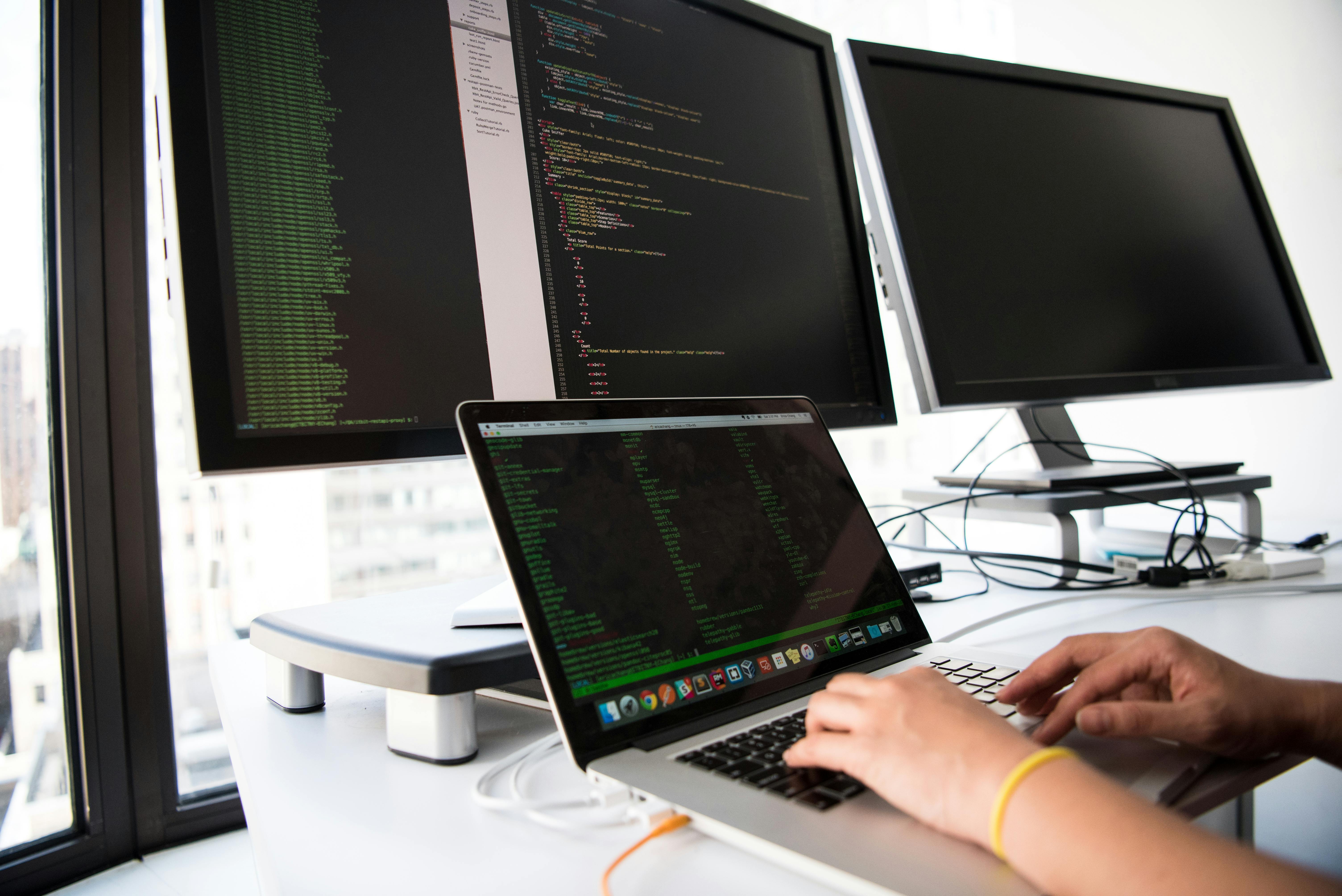
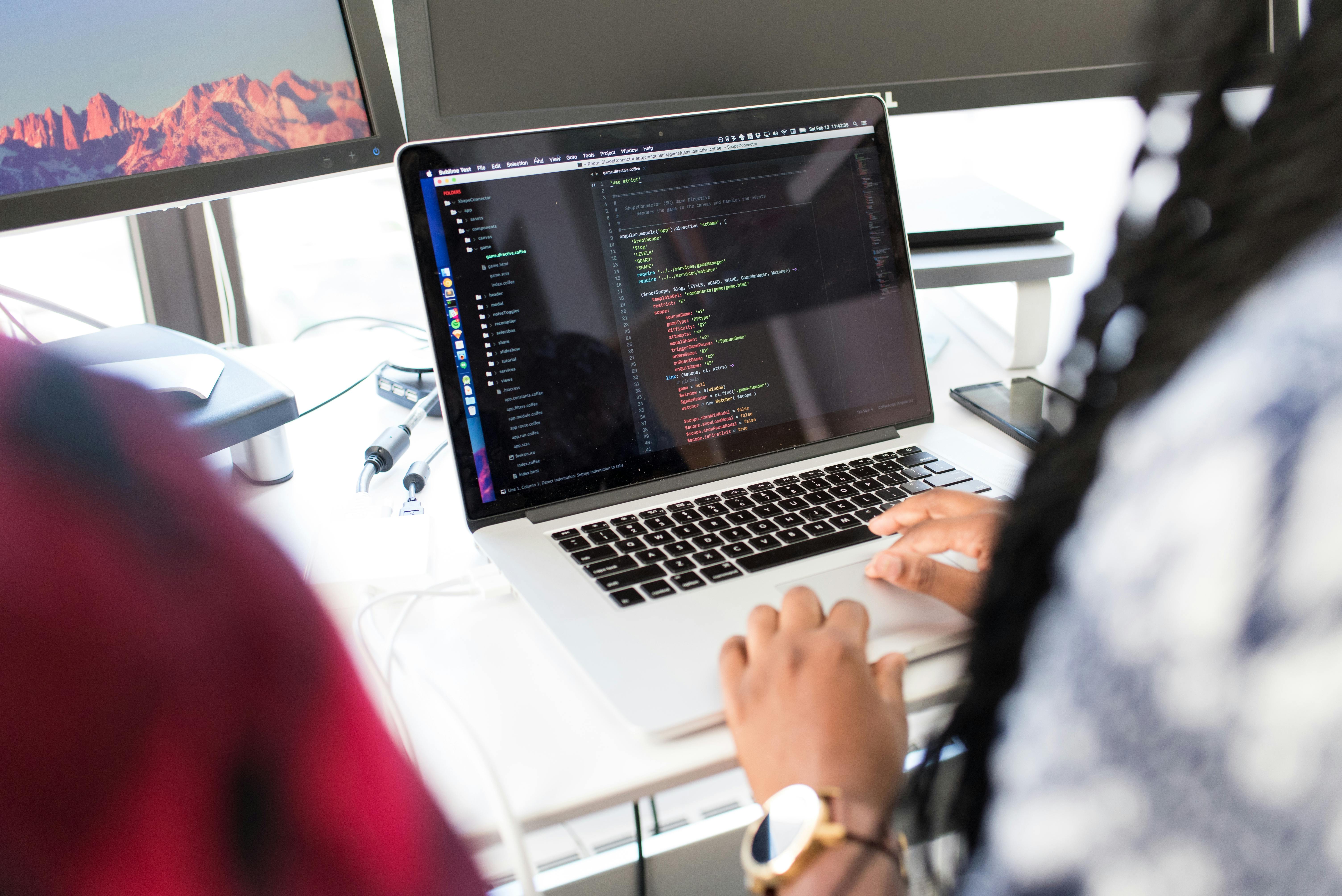
Visualizing the AI PC Hardware Shift
Technology: Inside Copilot+ PCs and Apple Silicon
Under the AI PC banner, Microsoft and Apple are converging on similar goals with very different strategies and silicon roadmaps.
Windows Copilot+ PCs and the NPU Arms Race
On Windows, “Copilot+ PC” is not a vague label—Microsoft has defined minimum NPU performance requirements (measured in TOPS, or trillions of operations per second) that devices must meet to carry the badge.
- Qualcomm Snapdragon X Elite/X Plus: ARM‑based SoCs with NPUs delivering around 45 TOPS dedicated to AI, plus additional compute from CPU/GPU.
- Intel Core Ultra (Meteor Lake) and “Lunar Lake”: Hybrid x86 chips combining CPU, integrated GPU, and an NPU targetting ≈34–45+ TOPS across subsystems.
- AMD Ryzen AI series: APUs with strong integrated graphics and NPUs aimed at balancing AI workloads with gaming and content creation.
Copilot+ PCs promise:
- Low‑latency assistants: System‑wide Copilot features that summarize documents, emails, and web pages locally.
- Enhanced communications: Live transcription, translation, noise reduction, and eye‑contact correction in calls.
- Creative boosts: NPU‑accelerated denoising, object selection, generative fills, and background replacement in apps like Adobe Premiere Pro and Photoshop.
“We’re designing Copilot+ PCs so that your data doesn’t have to leave your device to benefit from powerful AI—privacy and latency are first‑order design constraints, not afterthoughts.”
— Satya Nadella, Microsoft CEO, on the Copilot+ announcement
Apple Silicon and the Neural Engine
Apple’s M‑series chips—M1 through M4—bake AI acceleration directly into the SoC via the Apple Neural Engine (ANE). Each generation has increased both TOPS and memory bandwidth, enabled by Apple’s unified memory architecture (UMA), where CPU, GPU, and NPU share the same high‑speed memory pool.
Key AI‑relevant characteristics of Apple Silicon:
- Unified Memory: Reduces copying overhead and improves throughput for large tensors in AI workloads.
- Neural Engine: Dedicated cores tuned for matrix operations, claimed to deliver tens of TOPS with excellent energy efficiency.
- Integrated software stack: Core ML, Metal Performance Shaders, and frameworks tightly coupled to macOS and iOS.
Apple’s approach emphasizes on‑device AI primarily as a privacy and UX story:
- Local transcription in Voice Memos and Apple Notes.
- On‑device photo classification and search (faces, objects, scenes).
- Contextual suggestions across macOS and iOS (autofill, smart replies, Spotlight enhancements).
- Rumored and early beta features for on‑device text and image generation paired with optional cloud expansion.
“We believe AI’s most powerful applications will be deeply integrated into your personal devices, with privacy by design and control in the user’s hands.”
— Tim Cook, Apple CEO, in recent earnings commentary on generative AI
Scientific Significance: Why On‑Device AI Matters
Hacker News threads and academic benchmarks have been clear: properly used, NPUs deliver a step‑function improvement in performance‑per‑watt for inference, especially with optimizations like quantization (e.g., INT8, INT4) and sparsity.
Performance-per-Watt and Model Scalability
For small to medium models (≈3B–14B parameters), NPUs can:
- Outperform CPUs by multiples in tokens‑per‑second for language models.
- Match or exceed integrated GPUs at a fraction of the power cost.
- Enable plausible battery‑friendly, always‑available assistants without hitting thermal limits.
This is crucial because many real‑world tasks do not require 70B‑parameter foundation models:
- Note and document summarization.
- Meeting transcription and basic semantic search.
- Code completion for individual developers.
- Photo curation, tagging, and simple generative adjustments.
Privacy, Governance, and Regulatory Angles
From a data‑governance standpoint, on‑device inference changes the threat model:
- Reduced data exfiltration: Sensitive documents, chats, and media need not leave the device for AI processing.
- Regulatory alignment: Easier compliance with frameworks like GDPR and HIPAA when data is not transmitted to third‑party servers.
- New local risks: Features such as continuous screen analysis or timeline “Recall” functions create rich local logs that can be subpoenaed or misused if not properly encrypted and controlled.
“Local AI does not magically solve privacy—what it does is shift the focus from cloud security to endpoint security. Both have to be robust for the system to be trustworthy.”
— Bruce Schneier, security technologist, discussing on‑device AI architectures
Key AI PC Workloads: Real‑World Use Cases
Social media reviews and YouTube benchmarks highlight where AI PCs already shine and where they still feel like tech demos.
Productivity and Knowledge Work
- Meeting transcription: Local transcription for Zoom, Teams, or Google Meet calls, with searchable archives and automatic highlights.
- Document summarization: System‑level copilots that summarize long PDFs, web articles, and email threads.
- Contextual assistance: Assistants that can understand the current window or project without uploading the entire screen to the cloud.
Developer Workflows
Developers are early beneficiaries of AI PCs:
- On‑device code completion and refactoring for privacy‑sensitive repositories.
- Static analysis with AI hints integrated into IDEs.
- Local RAG (Retrieval‑Augmented Generation) over docs and codebases using vectors stored on the device.
Many devs experimenting with local models use tools like Ollama or llama.cpp, which already tap into Apple’s ANE or Windows NPUs when drivers and SDKs allow.
Creative and Media Work
- Video editing: Background noise reduction, auto‑cutting dead air, and smart reframing.
- Photography: Upscaling, denoising, portrait masking, and background removal.
- Audio production: Voice isolation and room reverb removal directly on laptops without dedicated DSP hardware.
Milestones in the AI PC Era
Several inflection points between 2024 and 2026 mark the formation of the AI PC landscape.
Hardware and Platform Milestones
- Launch of Qualcomm Snapdragon X Elite/X Plus laptops: First wave of ARM‑based Windows AI laptops with strong NPU performance and all‑day battery life.
- Intel’s Core Ultra and “Lunar Lake” reveal: Mainstream x86 chips integrating NPUs as a core part of the platform story.
- Apple M3/M4 Macs: Increasing emphasis on “AI‑ready” branding, with Neural Engine performance included in keynotes and marketing specs.
Software and Ecosystem Milestones
- Copilot+ PCs shipping with system‑wide Copilot and NPU‑accelerated Windows Studio Effects.
- Adobe, DaVinci Resolve, and other creative suites rolling out NPU‑accelerated filters and workflows.
- Open‑source runtimes like ONNX Runtime, TensorRT, and Core ML tools providing NPU pathways for developers.
Challenges: Hype, Fragmentation, and Trust
Despite the excitement, the AI PC narrative is far from settled. Reviewers on Ars Technica, Engadget, and countless YouTube channels consistently highlight gaps between the vision and today’s reality.
1. Fragmented Developer Experience
Developers targeting on‑device AI must navigate:
- Different hardware backends: Qualcomm NPUs, Intel/AMD NPUs, Apple’s ANE—each with its own optimal formats and toolchains.
- Driver and runtime maturity: Not all NPUs are accessible or stable through standard frameworks yet.
- Model portability: Converting large models between PyTorch, TensorFlow, ONNX, Core ML, and vendor formats introduces friction.
This is slowly improving as vendors converge on ONNX and similar intermediates, but the “write once, run anywhere (fast)” dream is not fully realized.
2. User Experience and Real Value
On X/Twitter and YouTube, early adopter feedback often asks:
- Do AI features actually save time, or are they “demo‑ware”?
- Is battery life better or worse when AI features are always on?
- Are users comfortable with system‑wide context capture for copilots?
“The best AI features disappear into the background—if you have to think ‘I’m using AI now,’ it’s probably not integrated well enough yet.”
— Joanna Stern, technology columnist, discussing AI features in consumer laptops
3. Privacy, Compliance, and Forensics
Features like Microsoft’s paused “Recall” concept—keeping a searchable local timeline of your screen—highlight a tension:
- Productivity gains: Instantly find that chart or slide you saw “somewhere last week.”
- Corporate risk: Potential conflicts with compliance rules about retention, data minimization, and access control.
- Forensic exposure: Rich local logs could be valuable to attackers or in legal discovery.
Vendors are now emphasizing end‑to‑end encryption, hardware‑backed secure enclaves, and granular controls (per‑app, per‑workspace) to address these concerns.
How to Choose an AI‑Ready PC Today
If you are considering a new laptop or desktop in 2025–2026, a few technical criteria can help you buy “AI‑ready” without overpaying for marketing terms.
Key Specs to Evaluate
- NPU performance: Look for published NPU TOPS and real‑world benchmarks for your target workloads (e.g., local LLMs, video tools).
- Unified or high‑bandwidth memory: Helps models run smoothly without constant swapping.
- Thermals and acoustics: Check independent tests for sustained NPU loads; some devices throttle quickly or get noisy.
- Battery life under AI workloads: Synthetic benchmarks are less helpful than real usage reviews on YouTube or outlets like Notebookcheck.
Example AI‑Capable Systems and Accessories
Some popular options in the US market (availability and configurations change rapidly):
- Microsoft Surface Laptop (Snapdragon X Elite‑based Copilot+ configuration) — Early flagship for Windows on ARM with strong NPU performance and long battery life.
- Apple MacBook Air 13‑inch with M3 — Excellent balance of CPU, GPU, and Neural Engine for local AI tasks on macOS.
- Lenovo Yoga or ThinkPad with Intel Core Ultra — x86 Windows laptops with integrated NPUs suitable for Copilot features.
For power users running local LLMs, pairing an AI PC with a fast external SSD, such as the Samsung T7 Shield Portable SSD, helps store large models while keeping load times reasonable.
Developer View: Building for On‑Device AI
For software teams, AI PCs open a new deployment target: the client machine as a capable inference node. This changes architecture and product design decisions.
Design Patterns Emerging
- Hybrid inference: Run small models locally for low‑latency, privacy‑sensitive tasks; offload complex or long‑context queries to the cloud.
- Local vector stores: Keep embeddings and documents on the device, enabling private semantic search and retrieval.
- Task‑specific models: Instead of a single giant generalist model, ship compact specialized models (e.g., meeting summarization, code hints, image tagging).
Tools and Resources
Helpful starting points include:
- ONNX Runtime for cross‑platform hardware acceleration, including NPUs.
- Apple’s Core ML and MLX tools for macOS and iOS.
- Windows AI documentation, covering DirectML and NPU integration.
- PyTorch Mobile and TensorFlow Lite for lighter models deployable on client hardware.
Looking Ahead: The Next Phase of the AI PC Era
Between now and the late 2020s, several trends are likely:
- Standardized NPU APIs: Similar to how Vulkan, DirectX, and Metal unified GPU access, we should see more mature common abstractions for NPUs.
- Larger local models: As memory capacities grow and quantization improves, running 20B+ parameter models locally on high‑end systems will become normal.
- Context‑rich agents: Assistants that continuously—but controllably—observe files, windows, and workflows to provide proactive help.
- Regulation and norms: Policies around logging, consent, and data boundaries will shape how far OS‑level AI can go.

Conclusion: Beyond the Buzzword
The “AI PC” label is undeniably a marketing term—but it describes a genuine architectural transition. NPUs, unified memory, and OS‑level copilots are changing how laptops and desktops are designed, just as SSDs and high‑DPI displays did a decade ago.
Microsoft’s Copilot+ PCs and Apple’s M‑series Macs embody two competing but overlapping visions: one broad, multi‑vendor ecosystem driven by Windows and silicon partners; the other vertically integrated, with Apple controlling both chips and software stack. Both are betting that the future of AI is personal, local, and deeply embedded into everyday workflows.
Over the next few years, the winners will not be defined solely by TOPS numbers, but by how seamlessly and responsibly these capabilities translate into productivity, creativity, and trust for real users.
Additional Resources and Further Reading
To dive deeper into the AI PC landscape, benchmarks, and implications, consider exploring:
- The Verge – AI and computing coverage
- Ars Technica – CPU, GPU, and NPU deep dives
- TechRadar – Laptop reviews with AI performance notes
- Engadget – AI hardware news
- Papers With Code for model benchmarks and implementations.
- Popular YouTube channels like Linus Tech Tips, Hardware Unboxed, and MKBHD for real‑world AI laptop tests.
For professionals, following experts on LinkedIn—such as chip architects, OS engineers, and AI researchers—can provide nuanced insights beyond product announcements, including trade‑offs in NPU design, software portability, and long‑term ecosystem strategies.
References / Sources
- Microsoft – Introducing Copilot+ PCs
- Apple – Apple Intelligence and on‑device AI
- Qualcomm – Snapdragon X Elite AI capabilities
- Intel – Core Ultra processors and AI PCs
- AMD – Ryzen AI platform
- TechCrunch – AI PC coverage
- Hacker News – Discussions on local LLMs and NPU benchmarks
- ACM Digital Library – Research on edge and on‑device AI
