
How Generative AI Is Rewriting the Rules of Social Media Creation
This article unpacks the technologies driving the shift, why platforms are racing to integrate them, and what it all means for creators, audiences, and regulators over the next few years.
Social and creator platforms are in a high-speed arms race to bake generative AI directly into their core experiences. TikTok’s AI video filters and script helpers, YouTube’s Dream Screen and automatic dubbing, Instagram’s AI image tools, and Spotify’s AI DJ and voice cloning experiments all point to the same reality: AI is becoming the default layer of how content is created, remixed, and discovered.
Tech outlets such as TechCrunch, The Verge, and The Next Web now report weekly—sometimes daily—on new AI tools: automatic captioning and translation, AI-generated avatars and backgrounds, and systems that can turn a text prompt into a short-form video or music snippet in seconds.
Mission Overview: Why Social Platforms Are Racing Into Generative AI
Behind the flurry of launches lies a clear strategic mission: make it dramatically easier to create engaging content, keep users on-platform, and unlock new, scalable monetization formats. At the same time, platforms must navigate mounting concerns about authenticity, misinformation, intellectual property, and the impact on human creators.
“Generative AI is turning every social app into a creative suite. The question is no longer whether platforms will adopt it, but how responsibly and transparently they’ll do it.”
— Adapted from commentary by multiple AI researchers quoted across TechCrunch and The Verge coverage
The Creator Economy Under Pressure: Why AI Features Are Trending
Several economic and product dynamics explain why TikTok, YouTube, Instagram, and Spotify are investing heavily in AI-driven creation tools.
1. Creator Economy Saturation
There are now millions of full-time and part-time creators competing for attention. As feeds become saturated, platforms want to help users stand out with polished content—without requiring professional production skills.
- AI-assisted video editing that can auto-cut to the beat, remove awkward pauses, and smooth transitions.
- Automated thumbnail generation optimized for click-through on YouTube and Instagram.
- Script assistance that drafts hooks, video outlines, or caption ideas from brief prompts.
Tools like these are marketed as “leveling the playing field,” but they also raise concerns that they could flood timelines with formulaic, low-effort content.
2. Engagement and Hyper-Personalization
Generative AI doesn’t just create content; it also personalizes it. Automatic captioning and translation are now common, enabling cross-language reach. Some platforms are testing AI that dubs creators’ voices into many languages while keeping vocal style and emotion.
- Auto-dubbed content can instantly reach audiences in new markets.
- Personalized edits (e.g., different aspect ratios, pacing, or overlays) can be generated for different segments.
- AI-curated B-roll and background music can be matched to user preferences and context.
3. Monetization and New Ad Formats
Generative AI opens up completely new types of advertising:
- Dynamic product placement, where AI edits sponsored products into creator videos after the fact.
- Synthetic brand ambassadors—virtual influencers and AI-generated actors.
- Personalized ad creatives at scale, where each viewer sees a slightly different, AI-tuned variation.
This is attracting major marketer interest but also regulatory scrutiny over disclosure, fairness, and potential manipulation.
4. Competition With Standalone AI Apps
As users flock to standalone AI tools—like dedicated image generators and video editors—social platforms risk losing the “creation moment” off-platform. This is why they increasingly integrate:
- Text-to-image and text-to-video generation directly inside posting workflows.
- AI sound and music generation within short-form video editors.
- Built-in AI chat or co-pilot tools for brainstorming and content planning.
The strategic goal is clear: keep ideation, production, and distribution inside a single ecosystem.
Technology: How Generative AI Powers Modern Social Platforms
Under the hood, social platforms rely on a mix of large language models (LLMs), diffusion models, transformer-based audio models, and reinforcement learning tuned for engagement and safety.
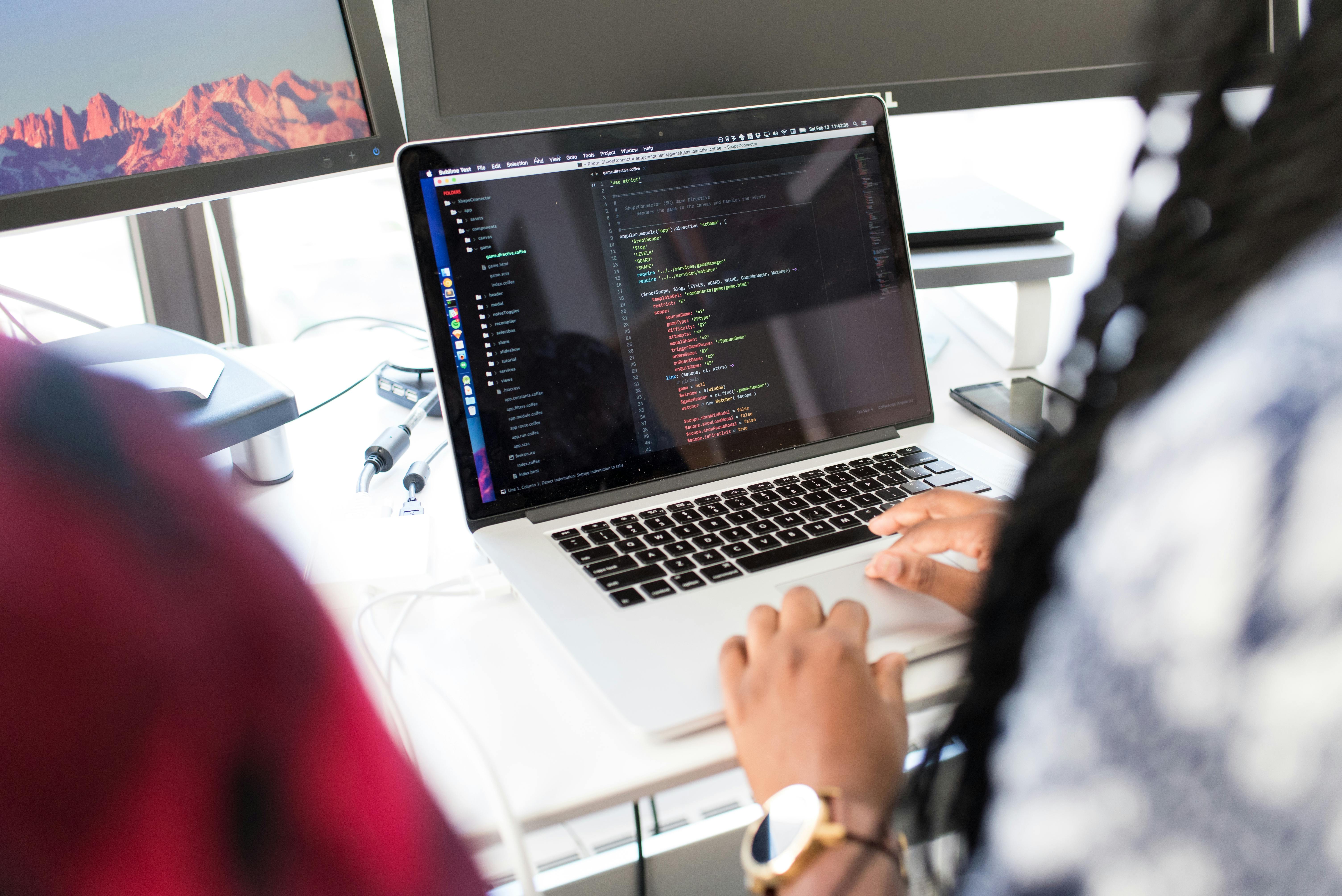
AI for Video and Image Creation
Modern AI video and image tools are often built on diffusion models and vision transformers that learn to construct visuals from noise, guided by text prompts and style controls. Platforms fine-tune these models on large datasets of public or licensed content, while increasingly adding mechanisms to filter harmful or copyrighted material.
- Text-to-video: Users describe scenes (“a neon cityscape with a dancing robot”) and receive short clips for use as B-roll or primary content.
- Video filters & effects: AI segments subjects from backgrounds, applies stylization, and tracks motion in real time.
- Auto-editing: Algorithms detect highlights, faces, and speech to cut, zoom, or insert transitions.
AI for Music and Voice
Music platforms like Spotify now experiment with AI DJs and voice cloning, while YouTube and TikTok test AI tools for background tracks or sound-alikes that respect label agreements.
- Generative music models create royalty-free loops and tracks from genre and mood prompts.
- Voice cloning and dubbing reproduce creator voices in new languages, preserving tone and style.
- Smart mixing tools balance dialogue, music, and effects automatically for mobile listening.
AI for Recommendations and Discovery
Recommendation systems are also becoming “generative-aware.” Instead of only ranking existing videos, they may:
- Detect which elements of content (topic, pacing, sound) best fit each micro-audience.
- Recommend AI-assisted remixes or localized variants of popular clips.
- Boost or suppress AI-generated content based on evolving policy and user feedback.
Discussions on communities like Hacker News often focus on whether platforms will expose these models via APIs or keep them proprietary as competitive moats.
Scientific Significance: A New Human–AI Creative Interface
The shift toward generative AI in social platforms is not only a product feature story; it is a major experiment in human–AI co-creation at massive scale.
Democratizing Creative Tools
For many users, TikTok’s or Instagram’s built-in AI effects are their first encounter with generative models. This lowers the barrier to creative expression in a way that mirrors how smartphone cameras democratized photography.
“In human history, we’ve never had this many people able to create rich media so quickly. AI on social platforms is turning spectators into participants.”
— Paraphrasing insights from AI and media researchers in recent tech conference talks
Data for AI Research and Governance
Social platforms provide real-world feedback loops—billions of interactions per day—on how people respond to AI-generated media. This data is invaluable for:
- Studying human–AI collaboration patterns.
- Understanding how synthetic content spreads and mutates.
- Testing watermarking, labeling, and detection technologies at scale.
Academic and industry labs monitor these developments closely, with research published through venues like arXiv and conferences such as NeurIPS and ICML.
Real-World Tools: From Tutorials to Hardware
On TikTok and YouTube, tutorials about AI storyboarding, scriptwriting, and B-roll generation frequently trend. Creators show how they use AI to plan multi-part series, clone their voice, or localize content.
Popular Creator Workflows
- Using an LLM to brainstorm video ideas and draft hooks.
- Generating moodboards and shot lists from a text description.
- Producing AI B-roll—abstract visuals, cityscapes, or product showcases—to overlay on commentary.
- Auto-generating captions and translations for international audiences.
Many creators complement software tools with accessible hardware such as ring lights and compact microphones to maintain quality.
Helpful Gear for AI-Assisted Creators
While AI can automate much of the editing, a few physical tools still make a large difference in perceived quality:
- Neewer 18-inch Ring Light Kit for even, flattering lighting in TikTok and Reels-style vertical videos.
- RØDE Wireless GO II Microphone System to capture clear audio, which significantly improves the effectiveness of AI-based noise reduction and mixing.
- Joby GorillaPod 3K Tripod for stable, flexible smartphone or camera mounting in tight spaces.
Key Tensions and Risks: Authenticity, Copyright, and Displacement
With the rapid rollout of generative AI features, platforms face growing criticism and regulatory pressure. The most prominent tensions include authenticity, copyright, and the balance between creator augmentation and displacement.
Authenticity and Deepfakes
As AI-generated faces, voices, and scenes become increasingly photorealistic, the risks of misuse grow:
- Political misinformation and synthetic campaign content.
- Non-consensual deepfakes and harassment.
- Fraud and impersonation of public figures and private individuals.
In response, platforms are experimenting with:
- Mandatory labels for AI-generated or heavily AI-edited content.
- Watermarking and cryptographic provenance standards like C2PA.
- Stricter enforcement rules and reporting tools for synthetic abuse.

Copyright, Training Data, and Music Rights
Artists, labels, and rights holders are questioning how AI models are trained and how outputs relate to protected works:
- Were copyrighted songs, artworks, and videos used without adequate permission?
- Is AI-generated content that imitates an artist’s “style” infringing?
- How should royalties be calculated when AI is involved in creation or performance?
Music platforms, particularly, are at the center of these debates as AI-generated tracks multiply. Industry groups and policymakers are exploring frameworks for consent, compensation, and transparency, building on global developments around AI regulation.
Creator Displacement vs. Augmentation
Many creators worry that AI will:
- Flood feeds with low-effort, algorithmically generated content.
- Reduce demand for editors, translators, thumbnail designers, and even scriptwriters.
- Shift platform preference toward synthetic or semi-synthetic media that optimize watch time metrics.
Others see AI as a powerful assistant that:
- Handles repetitive editing and localization tasks.
- Frees up time for higher-level storytelling and community building.
- Enables experimentation with formats that would otherwise be too costly or time consuming.
The likely outcome is a hybrid ecosystem where human creativity and AI infrastructure are tightly interwoven, but with evolving power imbalances between platforms and individual creators.
Recent Milestones in AI-Powered Social and Creator Platforms
Since about 2023, the pace of announcements has accelerated. While specifics change month-to-month, several patterns are clear as of 2026:
Platform-Level AI Suites
Leading platforms have rolled out integrated AI “studios” for creators that bundle:
- Idea generation and script assistance.
- Text-to-image and text-to-video backgrounds.
- Automatic captioning, subtitling, and dubbing.
- AI analytics suggesting optimal posting times and variations.
These suites are usually embedded directly into upload flows, replacing or supplementing third-party tools.
Regulatory and Policy Shifts
Governments and standards bodies are moving toward rules that require:
- Clear labeling of synthetic or heavily AI-assisted media.
- Stronger protections against AI-generated impersonation.
- More transparency about data used to train generative models.
Platforms in turn are publishing more detailed AI policy documents, transparency reports, and research collaborations with academia.
Growing Ecosystem of Educational Content
Tech educators and creators on YouTube and TikTok now maintain channels dedicated to AI-assisted workflows. Many videos walk through:
- Using generative AI to storyboard a short film.
- Combining AI avatars with voice cloning to create faceless channels.
- Deploying AI to repurpose long-form podcasts into shorts and clips.
For example, you can find extensive “AI for creators” playlists on YouTube from channels focused on video editing and productivity that explain tool capabilities, monetization strategies, and ethical considerations.
Governance and Safety: Building Trust in Synthetic Social Content
Governance is emerging as a central differentiator among platforms. Those that fail to manage AI risks may face user backlash, legal penalties, and loss of advertiser trust.
Content Labeling and Provenance
A growing number of companies support initiatives like the Coalition for Content Provenance and Authenticity (C2PA). The goal is to:
- Embed tamper-resistant metadata into images, videos, and audio at creation time.
- Indicate whether AI tools were used and at what stage.
- Help users, journalists, and investigators verify media origins.
This is especially important during elections and crisis events, where deepfakes could influence public opinion.
Open vs. Closed AI Ecosystems
Developer communities debate whether social platforms should:
- Expose creation tools via open APIs, enabling third-party innovation.
- Keep generative models proprietary to preserve competitive advantages and reduce misuse.
The trade-offs involve security, innovation speed, and data governance—core themes in discussions on communities like Hacker News and in research policy papers.
Practical Strategies for Creators in the Age of Generative AI
For individual creators and small teams, the key challenge is to use AI as leverage rather than letting it turn their content into undifferentiated noise.
Best Practices for Responsible, Effective Use
- Maintain a clear creative identity. Use AI for execution (editing, localization), but ensure ideas, values, and narrative voice remain human-driven.
- Disclose AI assistance where material. Transparency fosters trust, especially for voice cloning or synthetic visuals that could be mistaken for reality.
- Respect copyright and likeness rights. Avoid imitating specific celebrities, musicians, or artists without permission, even if tools make it technically trivial.
- Invest in skills that AI complements. Storytelling, interviewing, live performance, and community engagement remain difficult to automate.
- Build resilience across platforms. Algorithm and policy shifts around AI-created content can be sudden; diversify your presence and formats.

Learning Resources
To stay current, creators can follow:
- Official platform blogs and policy updates from TikTok, YouTube, Meta, and Spotify.
- Tech journalism from outlets like TechCrunch, The Verge, and The Next Web, which regularly cover new AI features.
- Expert commentary on professional networks such as LinkedIn, where AI researchers, policy experts, and creator economy analysts share ongoing insights.
- Educational YouTube channels focused on video editing, AI tools, and creator business models.
Conclusion: Toward an Increasingly Synthetic Social Web
Generative AI is evolving from a novelty filter to a foundational layer of the social media stack. Creation, personalization, and monetization are all being reimagined in terms of what AI can generate, adapt, and optimize in real time.
In the near future, many pieces of content in your feed—backgrounds, music, translated voices, and even some faces—will be AI-generated or AI-augmented by default. Whether this future empowers or erodes human creativity will depend on:
- How transparently platforms disclose synthetic media.
- Whether creators retain meaningful control, credit, and compensation.
- How effectively society builds norms, regulations, and technical safeguards.
Navigating this transition thoughtfully offers a chance to expand access to creative expression while preserving trust and authenticity in an increasingly synthetic content landscape.
Additional Tips and Future Directions
For readers interested in going deeper, consider exploring:
- Ethical AI guidelines from organizations like the Partnership on AI.
- Open-source generative models and editing tools that allow more granular control and experimentation.
- Emerging standards for AI disclosures and content provenance, which will likely shape platform policies over the next few years.
Staying informed and critically engaged—both as a creator and as a viewer—is the most reliable way to benefit from generative AI while mitigating its downsides in social media environments.
References / Sources
Further reading and sources on generative AI in social and creator platforms:
- TechCrunch – AI and social media coverage: https://techcrunch.com/tag/generative-ai/
- The Verge – AI features on major platforms: https://www.theverge.com/artificial-intelligence
- The Next Web – Generative AI and creator tools: https://thenextweb.com/topic/artificial-intelligence
- C2PA (Coalition for Content Provenance and Authenticity): https://c2pa.org
- arXiv – Research on generative models and media: https://arxiv.org/list/cs.CV/recent
