
How Apple’s On‑Device AI Could Quietly Redefine iPhones, Macs, and Everyday Computing
Apple’s AI strategy is rapidly becoming one of the most dissected stories in technology. Tech media such as Ars Technica, Wired, The Verge, and Engadget—and communities like Hacker News—are debating whether Apple’s on‑device generative models can balance privacy, performance, and practicality at global scale. While cloud‑first AI remains dominant, Apple is effectively asking: What if AI became a quiet, ambient feature of the operating system, not a destination website or chatbot?
At the core of this strategy is a move from giant frontier models running in data centers toward a hybrid world, where highly efficient models execute directly on consumer hardware, with optional secure cloud assistance for tasks that exceed device limits. This article explores Apple’s approach, the underlying technology, the scientific and societal significance, and the challenges Apple must overcome.
Mission Overview: Apple’s Strategic AI Pivot
From roughly 2023 onward, OpenAI, Google, Anthropic, and Microsoft raced to scale up large language models (LLMs) with hundreds of billions of parameters, delivered almost entirely from the cloud. Apple, by contrast, stayed relatively quiet publicly while publishing a growing stream of research on efficient transformers, quantization, and memory‑optimized architectures aimed squarely at on‑device inference.
Apple’s mission can be summarized in three intertwined objectives:
- Make AI an OS capability, not just an app: Generative features should be available across iOS, iPadOS, and macOS—within Messages, Mail, Photos, Xcode, Safari, and third‑party apps via system APIs.
- Preserve user privacy as a core differentiator: Wherever possible, data like messages, photos, health metrics, and voice samples should never leave the device for AI processing.
- Use AI to deepen platform lock‑in (for better and worse): By baking capabilities like summarization, intent recognition, and code completion into system frameworks, Apple can attract developers while keeping users inside its ecosystem.
“We believe AI should be a capability of your personal device, constrained and protected by its privacy model—not a black‑box service that sees everything you do.”
Visualizing Apple’s On‑Device AI Revolution
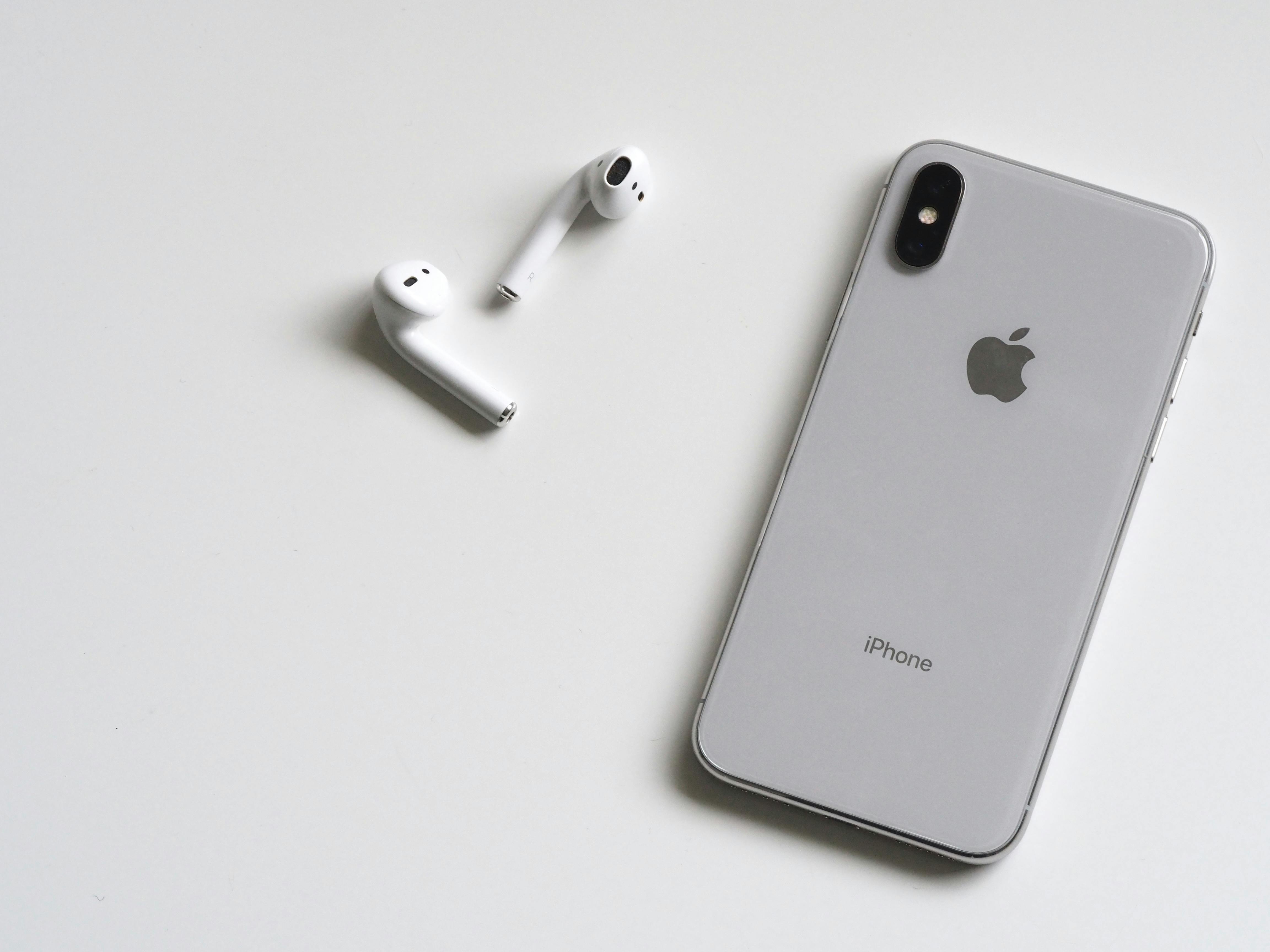


Technology: How On‑Device Generative Models Work
Running generative models on a battery‑powered phone is fundamentally different from serving them from a data center. Apple’s research and product engineering efforts center on squeezing maximum capability from limited compute, memory, and power budgets.
Efficient Architectures and Transformers
Apple’s papers and technical blog posts have highlighted variations of transformer architectures tuned for:
- Low memory footprint: Techniques such as attention sparsity, low‑rank approximations, and improved caching reduce RAM and VRAM usage.
- Streaming and chunked inference: Processing text or audio in segments enables responsiveness even on modest hardware.
- Task‑specialized heads: Rather than one giant generalist model, Apple tends to deploy ensembles or modular heads (e.g., for summarization, classification, or rewriting) attached to a shared backbone.
Aggressive Quantization and Compression
Frontier cloud models often train and serve at 16‑bit or 8‑bit precision. Apple is pushing further, with research into 4‑bit and mixed‑precision quantization schemes, while attempting to preserve output quality.
- Post‑training quantization: Compress a pretrained model without retraining, trading slight accuracy loss for massive memory gains.
- Quantization‑aware training: Train the model while simulating lower precision so it learns to be robust to quantized weights and activations.
- Layer‑wise and group‑wise scaling: Use different scales for different layers or channel groups, mitigating quantization noise.
These methods let Apple run models with tens of billions of effective parameters in a footprint small enough for iPhone‑class devices, especially when combined with high‑bandwidth unified memory in Apple Silicon.
The Apple Neural Engine and Heterogeneous Compute
Each generation of Apple Silicon—A‑series for iPhone and M‑series for Mac—comes with a dedicated Neural Engine (ANE) designed for matrix operations and tensor workloads. Apple’s AI runtime can:
- Partition computations across CPU, GPU, and ANE based on latency and power constraints.
- Fuse operations into kernels that minimize data movement, a big contributor to energy cost.
- Leverage on‑chip caches to speed up recurrent or cached attention in transformers.
“The real breakthrough isn’t any single model; it’s the orchestration layer that dispatches workloads across neural accelerators, GPUs, and CPUs with millisecond‑level precision.”
Hybrid On‑Device + Cloud AI: A Pragmatic Middle Path
Even with aggressive optimization, not every task can run fully on a phone or laptop. Multi‑modal reasoning, long‑context understanding, or complex tool‑use often demands frontier‑scale models and large memory pools. Apple is therefore pursuing a hybrid architecture:
- On‑device by default: Short prompts, quick summaries, simple rewrites, and UI‑level intelligence are handled locally.
- Opt‑in, privacy‑guarded cloud fallback: For more complex tasks, the OS can ask permission to access a secure Apple server model, using anonymization, differential privacy, and strict retention policies.
- Context partitioning: The system may keep the most sensitive data (e.g., health notes, private messages) on device, while sending a partially redacted or abstracted context to the cloud.
Hacker News and Ars Technica communities frequently debate where the boundary between local and remote inference should lie, and whether Apple will allow users or regulators to audit and control those boundaries.
Scientific Significance: From Gigantic Models to Ambient Intelligence
Apple’s AI push has implications well beyond its product line. It reflects a broader shift in AI research from “bigger is always better” to a more nuanced landscape where efficiency, robustness, and privacy are first‑class concerns.
Efficient Foundation Models as a Research Frontier
Academic and industrial labs are increasingly focused on:
- Scaling laws under resource constraints: Understanding how performance scales not just with parameters and data, but with edge‑device limits.
- Robustness and calibration: Smaller models used in high‑frequency, user‑facing tasks must be less prone to hallucinations and more calibrated about uncertainty.
- Personalization without centralization: Techniques like federated learning and on‑device fine‑tuning can adapt models to individual users without pooling raw data in the cloud.
AI as an Operating System Layer
By wiring generative AI into the OS itself, Apple is pushing toward AI‑native computing, where applications treat capabilities like summarization, semantic search, or intent recognition as standard system calls.
Examples include:
- Unified “understanding” APIs: Developers call system frameworks to interpret user text, speech, or images, instead of integrating directly with third‑party LLM providers.
- Shared semantic memory across apps: With user permission, the OS can maintain embeddings and summaries of documents, messages, and media that apps can query without re‑processing raw content.
- Context‑aware assistance: Siri and similar agents can draw on app‑level context, notifications, and documents, while respecting sandboxing and permission models.
“The real disruption is not chatbots; it’s when AI becomes part of the substrate of operating systems, invisible but everywhere.”
Developer Ecosystem and Tools
Tech outlets like TechCrunch, Engadget, and The Next Web are closely following how Apple’s AI APIs will reshape existing app categories and spawn new ones. For developers, the crucial questions are:
- What AI primitives will be exposed via Swift, Objective‑C, and system frameworks?
- How will Apple’s terms and App Store policies treat competing AI services?
- Will Apple provide first‑class tooling for debugging, evaluating, and benchmarking on‑device models?
Xcode, ML Tools, and Local Prototyping
Developers increasingly expect:
- AI‑assisted editing and code completion in Xcode: Similar to GitHub Copilot or Cursor, but running mostly on Apple Silicon.
- Integrated model deployment pipelines: Convert PyTorch or TensorFlow models into Core ML, quantize, and profile them directly within Xcode or dedicated ML tools.
- On‑device evaluation suites: Automated tests that profile latency, energy usage, and quality across iPhone, iPad, and Mac targets.
For developers and researchers wanting to understand transformers and on‑device optimization in practice, a widely recommended reference is “Transformers for Natural Language Processing” (O’Reilly / Packt), which covers architectures, training, and deployment concepts that map conceptually onto Apple’s approach.
Consumer Experience: What Users Will Actually Notice
Outside of developer circles, public conversation on TikTok, YouTube, and Twitter/X is focused on immediate, tangible outcomes: Will my iPhone feel “smarter”? Will Siri finally work the way it was always advertised?
Smarter Siri and Ambient Assistance
On‑device generative models enable:
- More natural dialogue: Reduced latency and better language modeling can make Siri respond fluidly, with fewer awkward pauses.
- Context‑aware commands: Siri can understand “that photo I took last week at the beach” or “summarize the last three emails from my manager” without sending your entire photo library or inbox to the cloud.
- Reliable offline behavior: Core features like timers, messages, reminders, and simple queries can keep functioning even without connectivity.
Productivity, Media, and Accessibility
Across iOS and macOS, Apple’s AI integration is likely to show up in:
- Mail and Messages: On‑device summarization of long threads, suggested replies, and tone editing.
- Notes and Pages: Draft generation, rewriting for clarity, and automatic outlines created locally.
- Photos and Videos: Intelligent cropping, style transfer, object removal, caption generation, and search by semantic concept instead of exact keywords.
- Accessibility features: Real‑time captioning, audio scene analysis, and descriptions of on‑screen content that work with low connectivity and high privacy.

Regulatory and Antitrust Dimensions
Apple’s integration‑heavy playbook inevitably intersects with global regulatory scrutiny, particularly in the EU and US. If generative AI features become deeply tied to iOS and macOS, regulators may ask whether Apple is unfairly disadvantaging third‑party AI apps and services.
Competition, Default Choices, and Fair Access
Key issues being debated by Wired, The Verge, and policy analysts include:
- Preferential treatment for Apple’s AI: Will system‑level prompts or settings push users toward Apple’s models first?
- API parity: Can third‑party developers access the same contextual information and capabilities that Apple apps enjoy, subject to permissions?
- Data portability and switching costs: If AI features rely on OS‑maintained semantic memory, can users export that data or use it with competing platforms?
Privacy, Safety, and AI Governance
Because privacy is central to Apple’s brand, its AI rollout will be closely examined under frameworks like the EU’s GDPR and AI Act:
- Data minimization: Ensuring only the minimum necessary data is processed, and primarily on‑device.
- Transparency: Explaining when and how generative models are used, and whether cloud services are involved.
- Safety controls: Guardrails against harmful content, biased outcomes, or misleading outputs, especially in health and financial contexts.
“Apple’s choice to emphasize on‑device AI may align more naturally with European privacy expectations—but it does not exempt the company from competition concerns.”
Milestones and Emerging Ecosystem
From late 2023 through 2025 and into 2026, Apple’s AI story has accelerated through a series of research releases, OS betas, and rumored WWDC announcements that mark key milestones in its generative strategy.
Research and Engineering Milestones
- Efficient transformer and diffusion models: Peer‑reviewed papers and Apple Machine Learning Research posts detailing high‑performance, low‑resource model designs.
- Core ML updates: Enhancements supporting larger models, more quantization regimes, and improved deployment tooling on Apple Silicon.
- Demo features in beta OS builds: Early access to system‑wide summarization, AI‑assisted writing tools, and enhanced Siri behaviors in developer betas of iOS and macOS.
Community, Media, and Open‑Source Influence
Long‑form YouTube explainers, detailed blog posts, and Hacker News threads have become de‑facto venues for reverse‑engineering how Apple’s AI stack works. Open‑source projects that port or mimic Apple‑style on‑device models (for example, quantized LLaMA‑like models for M‑series Macs) provide valuable reference points.
For those wanting a broader context on generative AI—including ethical and policy dimensions—resources like the arXiv.org preprint server and expert explainers from channels such as Two Minute Papers and Computerphile are frequently cited across tech communities.
Challenges: Technical, Social, and Strategic
Apple’s AI bet is ambitious—and far from guaranteed. Several hard problems stand between today’s prototypes and a polished, reliable experience for hundreds of millions of users.
Technical Limits of On‑Device Models
- Capability gap vs. frontier models: Even highly optimized local models may lag behind 100B+ parameter systems in reasoning, long‑context handling, and multi‑modal performance.
- Thermal and battery constraints: Intensive inference workloads can heat up phones and drain batteries if not carefully managed.
- Fragmentation across devices: Older iPhones or Macs with fewer neural cores may not support the most advanced features, complicating support matrices.
Trust, UX, and User Expectations
Non‑technical users typically judge AI on one metric: does it “just work” when I need it? To succeed, Apple must:
- Minimize hallucinations, especially in productivity and communication tools.
- Provide clear, non‑technical explanations when results are approximate or uncertain.
- Offer intuitive controls for turning AI features on or off and managing privacy choices.
Ecosystem Balance: Apple vs. Third‑Party AI
A subtle but major challenge is keeping Apple’s own AI tightly integrated without suffocating third‑party innovation. If OS‑level AI is too dominant, the App Store’s vibrant ecosystem of AI‑assisted note‑takers, writing tools, creative apps, and developer utilities may struggle to differentiate themselves.
Conclusion: A Quiet but Profound Shift in Everyday Computing
Apple’s on‑device generative AI strategy is not about flashy demos or viral chatbots. It is about turning AI into an almost invisible capability embedded in the fabric of the operating system—faster, more private, and more reliable than cloud‑only alternatives for many day‑to‑day tasks.
Whether this approach will rival the sheer capability of frontier cloud models remains an open question. But for the billions of users who live inside Apple’s ecosystem, the impact could be profound: a phone and computer that “understand” language, media, and context well enough to save time, reduce friction, and provide meaningful assistance—all while keeping sensitive data close to home.
As tech media, researchers, regulators, and developers continue to scrutinize Apple’s every AI move—from research papers to WWDC sessions—one thing is clear: the era of AI as a core OS primitive has begun, and Apple is determined to define what that looks like for the mainstream.
Additional Resources and How to Stay Informed
For readers who want to follow Apple’s AI journey and broader developments in on‑device models, these approaches are particularly useful:
- Track Apple’s official research: Visit the Apple Machine Learning Research site for technical papers and engineering deep dives.
- Monitor OS betas and WWDC content: Developer betas of iOS and macOS, plus WWDC videos, often reveal upcoming AI features and APIs months before public release.
- Read technical media and community discussions: Outlets like Ars Technica, The Verge, Wired, and communities like Hacker News provide thoughtful analyses and critiques.
- Experiment with local models on Macs: Enthusiasts can explore open‑source, quantized LLMs running on M‑series Macs to better understand the trade‑offs Apple is optimizing around.
As AI research increasingly prioritizes efficiency, on‑device privacy, and tight integration with hardware, Apple’s strategy offers a concrete real‑world testbed. Watching how this experiment unfolds will help shape not only the future of iPhones and Macs, but also the broader direction of human‑centered, trustworthy AI.
References / Sources
Further reading and sources related to topics discussed in this article:
- Apple Machine Learning Research
- Apple Developer – Machine Learning and Core ML
- arXiv – On‑device transformer and efficient model research (search results)
- Ars Technica – Gadgets & Apple coverage
- The Verge – Apple section
- Wired – Artificial Intelligence coverage
- Hacker News – Community discussions on Apple and AI
- YouTube – Explaners on Apple on‑device AI (search results)
