
James Webb’s “Too-Early” Galaxies: What JWST Is Really Telling Us About the First Billion Years
Figure 1: The James Webb Space Telescope during pre-launch testing. Image credit: NASA/Chris Gunn (nasa.gov).
Mission Overview: What JWST Was Built to Do
The James Webb Space Telescope (JWST), launched in December 2021 and fully operational since mid‑2022, is a 6.5‑meter segmented infrared observatory positioned at the Sun–Earth L2 Lagrange point. Its primary mirror—more than 2.5 times the diameter of Hubble’s—collects faint infrared light from the earliest galaxies, cool stars, and forming planetary systems.
JWST’s design is optimized for:
- Probing the first generation of galaxies at high redshift (z ≳ 10–20).
- Characterizing the epoch of reionization, when the first luminous objects ionized neutral hydrogen.
- Studying star and planet formation inside dusty molecular clouds.
- Analyzing exoplanet atmospheres via transit and direct-imaging spectroscopy.
Among these goals, the deep-field campaigns—like the Cosmic Evolution Early Release Science (CEERS), JWST Advanced Deep Extragalactic Survey (JADES), and GLASS programs—have triggered intense excitement and controversy by uncovering galaxies that appear unexpectedly bright and massive at very early cosmic times.
The “Too-Early” Galaxies Debate: What Has JWST Actually Found?
Soon after JWST began science operations, astronomers reported candidates for galaxies at redshifts z ≳ 10, corresponding to when the universe was only about 400–500 million years old. Some of these objects appeared:
- Very luminous in the rest-frame UV, suggesting intense star formation.
- Compact but relatively massive, with stellar masses up to ~109–10 M⊙ in early estimates.
- More numerous than predicted by many pre‑JWST simulations.
“It’s not that these galaxies are ‘impossible’ in ΛCDM, but they are certainly at the upper edge of what many of our models expected. That tension is exactly what makes this so scientifically valuable.” — Piero Madau, theoretical astrophysicist, paraphrasing ongoing discussions about JWST results.
Media and social networks quickly adopted the phrase “too big, too early”, implying that these galaxies might violate the standard cosmological model (ΛCDM: Lambda Cold Dark Matter). In ΛCDM, small perturbations in the early universe gradually grow via gravitational instability into galaxies and clusters; extremely massive galaxies are expected to be rare at very high redshift.
However, as follow‑up spectroscopy and refined modeling have accumulated through 2023–2025, the picture is more subtle:
- Some of the earliest “record‑breaking” galaxy candidates turned out to be at lower redshifts after spectroscopic confirmation.
- Stellar mass estimates have been revised downward in many cases once dust, metallicity, and star‑formation histories are modeled more carefully.
- Yet, even with these corrections, JWST still finds a robust population of surprisingly luminous galaxies in the first 500–700 million years.
The current consensus among many cosmologists is that ΛCDM likely survives, but some aspects of high‑redshift galaxy formation—such as star‑formation efficiency, feedback, and dust—need to be recalibrated using JWST’s new constraints.
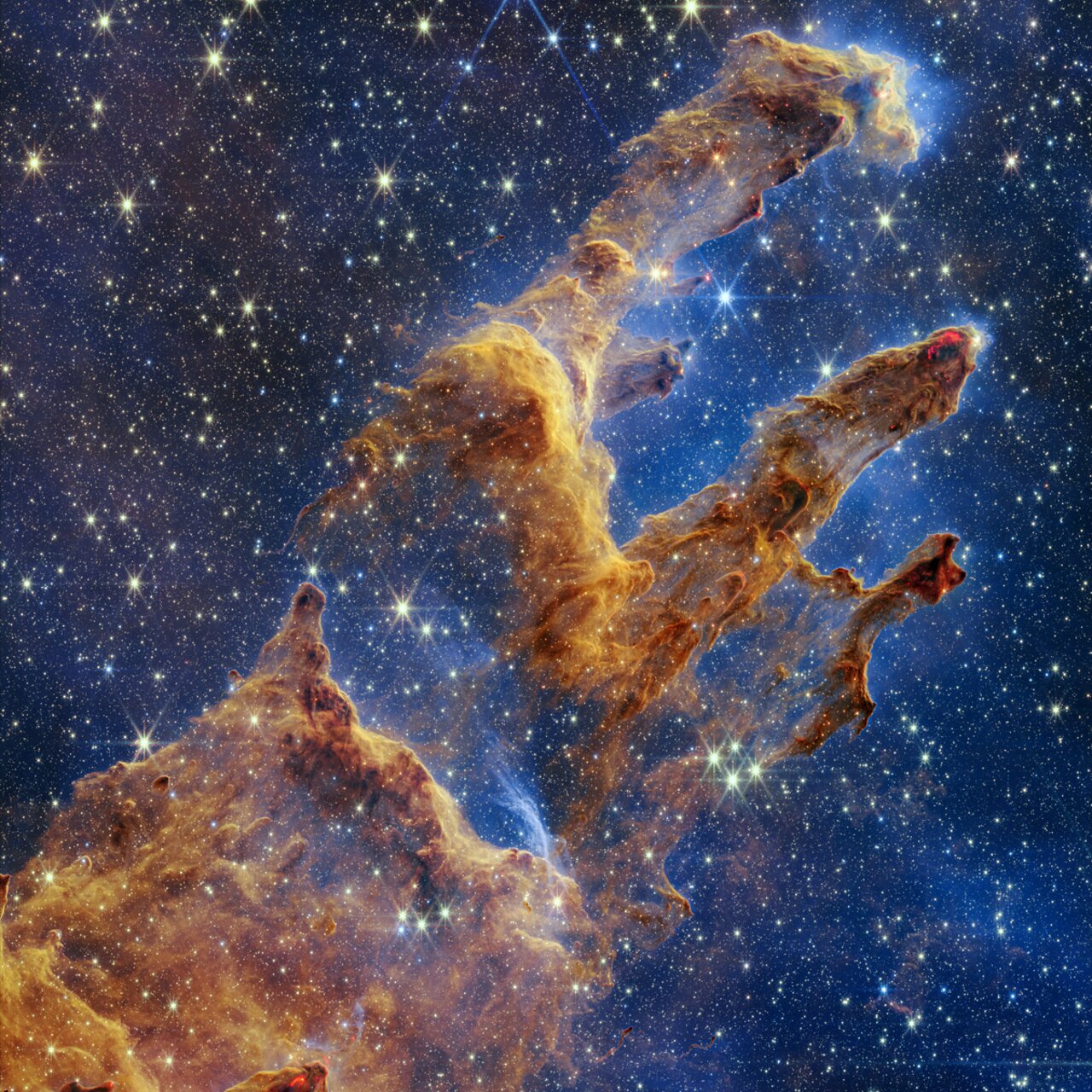
Figure 2: JWST deep field image revealing thousands of galaxies in a tiny patch of sky. Image credit: ESA/Webb, NASA & CSA (esawebb.org).
Technology: How JWST Sees the Early Universe
JWST’s power to uncover “too‑early” galaxies comes from its combination of aperture, infrared optimization, and state‑of‑the‑art instruments:
- Large primary mirror (6.5 m): Collects more light than Hubble, enabling detection of fainter and more distant sources.
- Infrared coverage (0.6–28 μm): Starlight from high‑redshift galaxies is redshifted into the infrared; JWST is tuned exactly for this regime.
- NIRCam (Near-Infrared Camera): High‑sensitivity imaging used to identify galaxy candidates and measure photometric redshifts.
- NIRSpec (Near-Infrared Spectrograph): Provides spectra and precise spectroscopic redshifts, essential for confirming distances and physical properties.
- MIRI (Mid-Infrared Instrument): Probes dust emission and older stellar populations, refining stellar mass and star‑formation rate estimates.
Deep surveys typically use multi‑band NIRCam imaging to locate galaxies via the Lyman-break technique: high‑redshift galaxies appear to “drop out” of bluer filters because neutral hydrogen absorbs photons shortward of the Lyman‑α line. Photometric redshifts are then estimated by fitting spectral energy distribution (SED) models to these multi‑band fluxes. The most interesting candidates are sent to NIRSpec for follow‑up spectroscopy.
For readers interested in the technology side, accessible overviews of JWST’s instruments and optics are available in NASA’s instrument documentation and the ESA/Webb mission pages.
Scientific Significance: Why Early Galaxies Matter for Cosmology
The abundance and properties of high‑redshift galaxies encode information about both cosmology and astrophysics. In ΛCDM, the growth of structure is governed by:
- The primordial power spectrum of density fluctuations.
- The nature and clustering of dark matter.
- The expansion history set by dark energy (Λ) and matter content.
Galaxies “light up” the underlying dark matter halos. If we observe more massive, luminous galaxies than predicted at a given redshift, there are several possible explanations:
- Astrophysical changes within ΛCDM
Star formation could be more efficient in early halos, feedback processes could be weaker or delayed, or stellar populations could be more top‑heavy (favoring massive, luminous stars). - Revised observational inferences
Initial photometric redshifts or stellar mass estimates may be biased by dust, nebular emission lines, or template assumptions. - New physics in cosmology
In more extreme scenarios, properties of dark matter (e.g., warm vs. cold), early dark energy, or non‑Gaussian initial conditions might need modification.
“If JWST is pointing to a tension, it’s likely to guide us toward a deeper, more complete understanding rather than a wholesale replacement of the standard model.” — Becky Smethurst, astrophysicist and science communicator, discussing early JWST galaxy results.
Additionally, early galaxies are central to understanding:
- Reionization: Did galaxies alone provide the ionizing photons, or were quasars essential?
- Metal enrichment: How quickly did the first generations of stars enrich the interstellar medium with heavy elements?
- Black hole growth: How do early massive galaxies host and feed supermassive black holes observed as high‑z quasars?
JWST’s detailed spectroscopy of Lyman‑α, metal lines, and continuum breaks is already refining our understanding of these questions, with a rapid flow of preprints on arXiv (astro‑ph.GA) and astro‑ph.CO.
Mission Overview in Context: From Hubble to Webb
To appreciate why JWST’s discoveries are so disruptive, it helps to compare them with Hubble’s legacy. Hubble’s Ultra Deep Field and subsequent campaigns pushed visible and near‑infrared imaging to the limit, reaching galaxies out to z ≈ 10 in a few cases. But Hubble’s smaller mirror and wavelength coverage limited sensitivity to the highest‑redshift objects.
JWST was conceived partly to:
- Extend deep surveys into the mid‑infrared, where high‑z galaxies are brighter.
- Increase survey volume and depth to build statistical samples, not just a handful of extreme objects.
- Obtain high‑resolution spectroscopy for galaxies in the reionization era, which Hubble could not do efficiently.
This is why Webb’s early deep fields—featured widely on YouTube explainers, TikTok reels, and Twitter/X threads—appear so densely packed with galaxies. The telescope is doing precisely what it was designed to do: reveal the luminous building blocks of cosmic structure across the first billion years.
Methodology: From Pixel to Cosmology
Turning JWST images into cosmological insight requires a carefully layered methodology. A simplified pipeline for early‑universe galaxy studies looks like this:
- Source detection and photometry
Algorithms such as Source Extractor or newer machine‑learning approaches identify sources in deep NIRCam images and measure fluxes in multiple bands. - Photometric redshift estimation
SED‑fitting codes (e.g., EAZY, Bagpipes, Prospector) compare observed colors with template spectra to estimate redshift and associated uncertainties. - Candidate selection
Objects with high‑probability z > 8–10 are flagged as early‑galaxy candidates. Bayesian methods and multiple codes are used to minimize systematic bias. - Spectroscopic follow‑up
NIRSpec or NIRISS obtains spectra of promising candidates, allowing:- Precise spectroscopic redshifts from emission or absorption lines.
- Measurements of metallicity, ionization state, and kinematics.
- Physical modeling
With redshifts fixed, SEDs are refitted to derive stellar masses, star‑formation rates, ages, and dust attenuation, often using flexible star‑formation histories and nebular emission. - Population statistics
Luminosity and mass functions are constructed and compared against semi‑analytic models and hydrodynamical simulations (e.g., IllustrisTNG, FIRE, THESAN, FLARES).
Each step introduces uncertainties and modeling choices, which is why early JWST results can shift as methods improve. For example, including strong nebular emission lines in SED templates can dramatically alter inferred stellar masses and ages.
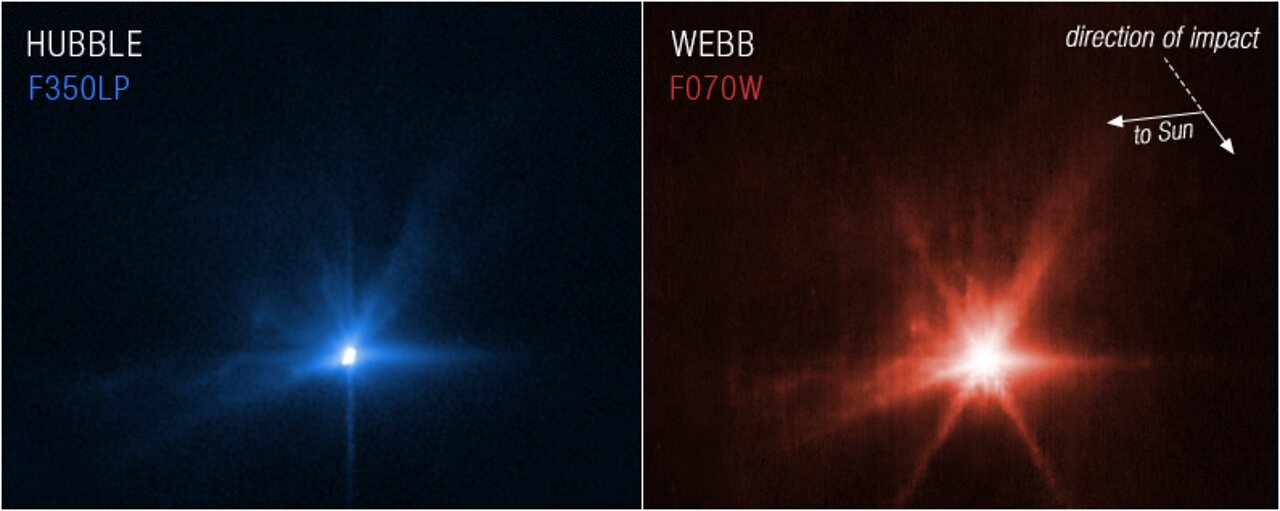
Figure 3: JWST composite image revealing complex galaxy interactions and structures in the early universe. Image credit: ESA/Webb, NASA & CSA (esawebb.org).
Milestones: Key JWST Discoveries Driving the Debate
Several landmark JWST programs have shaped the “too‑early galaxies” discussion. While specific object designations continue to evolve, a few recurring themes stand out:
- Bright galaxy candidates at z ≳ 10–13
Early CEERS and GLASS analyses reported luminous candidates at astonishingly high redshifts. Some were later revised down in redshift, but others have been spectroscopically confirmed at z ≈ 10–13. - Dense populations of z ≈ 8–10 galaxies
Surveys like JADES find more bright galaxies in the reionization era than expected by many pre‑JWST models, especially at the high‑luminosity end of the UV luminosity function. - Surprisingly evolved stellar populations
In some cases, SED fits suggest relatively old stars (several hundred Myr) in galaxies that already exist by z ≈ 7–8, compressing the timeline for early star formation. - Constraints on reionization topology
Measurements of Lyman‑α visibility and damping wings in spectra help map the patchiness and timing of reionization, tying galaxy populations to the ionization state of the intergalactic medium.
For deeper dives, readers can explore:
- The JADES collaboration papers, e.g. via NASA ADS.
- Public talks archived on channels like Space Telescope Science Institute (STScI) on YouTube.
Challenges: Why Interpreting Early Galaxies Is Hard
The apparent tension between JWST observations and ΛCDM is not just about data; it is also about the complexity of modeling galaxies in extreme conditions. Major challenges include:
1. Redshift Uncertainties
Photometric redshifts rely on broad‑band colors and can confuse high‑z dropouts with dusty or emission‑line galaxies at lower z. Spectroscopic confirmation is time‑consuming and limited to smaller samples.
2. Stellar Mass and Star‑Formation Rate Estimates
Inferring stellar masses and star‑formation rates requires assumptions about:
- The initial mass function (IMF) of stars.
- Star‑formation history (continuous vs. bursty).
- Dust attenuation law and geometry.
- Contribution of nebular emission lines to broad‑band fluxes.
Small changes in these assumptions can shift masses by factors of a few—enough to move galaxies from “impossible” to “merely surprising.”
3. Cosmic Variance and Sample Selection
Deep JWST fields typically cover limited areas, so large‑scale structure (overdensities or underdensities) can bias number counts. Ongoing and planned surveys aim to increase both depth and area to mitigate cosmic variance.
4. Theoretical Modeling Limits
Hydrodynamical simulations and semi‑analytic models have finite resolution and must approximate feedback, star formation, and radiative transfer. Pre‑JWST simulations often tuned parameters to match lower‑redshift datasets; high‑z predictions thus carry large intrinsic uncertainties.
“Any time we push into a new regime—fainter, earlier, or more detailed—our first models almost always underestimate nature’s creativity.” — A sentiment often echoed by cosmologists reacting to JWST results.
Public Debate: JWST, Social Media, and the Scientific Process
JWST’s spectacular images are tailor‑made for platforms like YouTube, TikTok, and Twitter/X. Side‑by‑side comparisons of Hubble vs. Webb, time‑lapse zoom‑ins on deep fields, and colorful renderings of infrared data routinely attract millions of views.
This visibility has both benefits and pitfalls:
- Benefit: Rapid public engagement with cutting‑edge research, including preprints and conference talks.
- Benefit: Enhanced transparency about how scientific consensus emerges through peer review and replication.
- Challenge: Sensational headlines using phrases like “cosmology is broken” or “Einstein was wrong” can oversimplify nuanced, technical debates.
Astrophysicists like Katie Mack, Mike Boylan‑Kolchin, and others frequently take to social media and long‑form interviews to explain that tension between theory and data is normal—and desirable. It is how theories are refined.
For thoughtful, technical yet accessible commentary, consider:
- The PBS Space Time episode catalog on JWST cosmology.
- Blog posts and explainer threads by cosmologists on LinkedIn and Twitter/X.
Recommended Tools and Reading for Enthusiasts
If you want to follow JWST discoveries more closely or build a deeper foundation in cosmology, several resources are both accessible and rigorous.
Books and Guides
- An Introduction to Modern Cosmology by Andrew Liddle – A concise, widely used introduction that covers ΛCDM, structure formation, and observational tests.
- The First Three Minutes by Steven Weinberg – A classic exploration of the early universe and big bang physics written for educated non‑specialists.
Online Data and Visualization
- The official JWST news releases and image gallery provide high‑quality, captioned images and press materials.
- Tools like WorldWide Telescope and online viewers from STScI allow interactive exploration of Webb and Hubble fields.
Figure 4: JWST’s first deep field (SMACS 0723), illustrating gravitational lensing and extremely distant galaxies. Image credit: NASA, ESA, CSA, and STScI (nasa.gov).
What Comes Next: Simulations, Surveys, and Synergies
Over 2024–2026 and beyond, several developments are expected to clarify the “too‑early” galaxies debate:
- Larger and deeper JWST surveys will improve statistics on the high‑redshift luminosity and mass functions, reducing cosmic variance.
- Next‑generation simulations will incorporate JWST‑calibrated star‑formation and feedback models, providing more realistic high‑z predictions.
- Synergy with 21‑cm experiments (e.g., HERA, SKA pathfinders) will help map reionization via neutral hydrogen, cross‑correlated with JWST galaxy populations.
- Ground‑based spectroscopy with extremely large telescopes (ELT, TMT, GMT) will provide complementary high‑resolution views of early galaxies and quasars.
Together, these efforts should determine whether the perceived tension reflects:
- Refinements in galaxy formation physics within standard ΛCDM.
- Systematic biases in current observational inferences.
- Or, in the most exciting scenario, hints of genuinely new cosmological physics.
Conclusion: Are the “Too-Early” Galaxies Really a Crisis?
The slogan “too big, too early” is compelling, but the scientific reality is more measured. JWST has undeniably exposed tensions between some pre‑existing models of early galaxy formation and the universe we actually observe. Yet, so far, most lines of evidence indicate that:
- ΛCDM remains broadly consistent with the data, especially once updated with JWST‑informed parameters.
- Astrophysical processes—star‑formation efficiency, feedback, dust, and stellar populations—likely hold the first keys to reconciling models and observations.
- The debate is a sign of a healthy, rapidly advancing field, not a breakdown of cosmology.
Perhaps most importantly, the JWST era showcases science in action: bold early claims, critical scrutiny, improved analysis, and evolving consensus—all in real time, in full view of the public. Whether or not the “too‑early” galaxies force a revision to our cosmological model, they have already transformed our picture of the first billion years and deepened our appreciation of the universe’s capacity to surprise.
Additional Tips: How to Critically Read JWST News
With JWST regularly making headlines, it helps to have a framework for interpreting bold claims:
- Check whether redshifts are spectroscopic or photometric. Spectroscopic redshifts are more reliable and often reported in follow‑up studies.
- Look at sample size. A handful of extreme objects may not represent the typical galaxy population.
- See whether independent teams reproduce the result. Convergence from multiple methods and surveys is a strong sign of robustness.
- Distinguish between ΛCDM and galaxy‑formation models. Often, the tension is with specific implementations of galaxy physics, not with the underlying cosmological framework.
- Read beyond the headline. Many researchers provide accessible summaries in the discussion sections of their papers and in accompanying blog posts or interviews.
Developing these habits not only clarifies what JWST is genuinely telling us but also offers a transferable skill set for engaging critically with all kinds of frontier science.
References / Sources
Selected reputable sources for further reading:
- NASA JWST mission page: https://jwst.nasa.gov
- ESA/Webb science and images: https://esawebb.org
- STScI Webb Telescope portal: https://webbtelescope.org
- arXiv astrophysics galaxy (astro‑ph.GA) preprints: https://arxiv.org/list/astro-ph.GA/recent
- arXiv cosmology (astro‑ph.CO) preprints: https://arxiv.org/list/astro-ph.CO/recent
- NASA ADS abstract service: https://ui.adsabs.harvard.edu
- STScI JWST documentation and instrument handbooks: https://jwst-docs.stsci.edu
