
Inside Apple’s Quiet AI Revolution: How On‑Device Intelligence Is Shaping the 2025–2026 iPhone, Mac, and iPad
By fusing advanced neural engines in its latest A‑series and M‑series chips with selective cloud assistance, Apple is betting that “invisible AI” – not flashy chatbots – will win users’ trust, reshape app ecosystems, and become the next major reason to upgrade.
Across iPhone, Mac, and iPad, Apple’s AI roadmap for 2025–2026 centers on a hybrid approach: run as much intelligence on‑device as silicon allows, and fall back to the cloud for the heaviest workloads. This philosophy is now baked into iOS, macOS, and iPadOS, influencing everything from photo and video editing to real‑time transcription, writing assistance, and proactive system suggestions.
Rather than pushing a single branded chatbot, Apple is trying to make AI feel like a core utility – similar to multitouch or Face ID – that simply “comes with the device.” That positioning has made Apple’s AI push one of the most covered topics in major tech outlets and a constant flashpoint on platforms like X (formerly Twitter), Reddit, and YouTube.
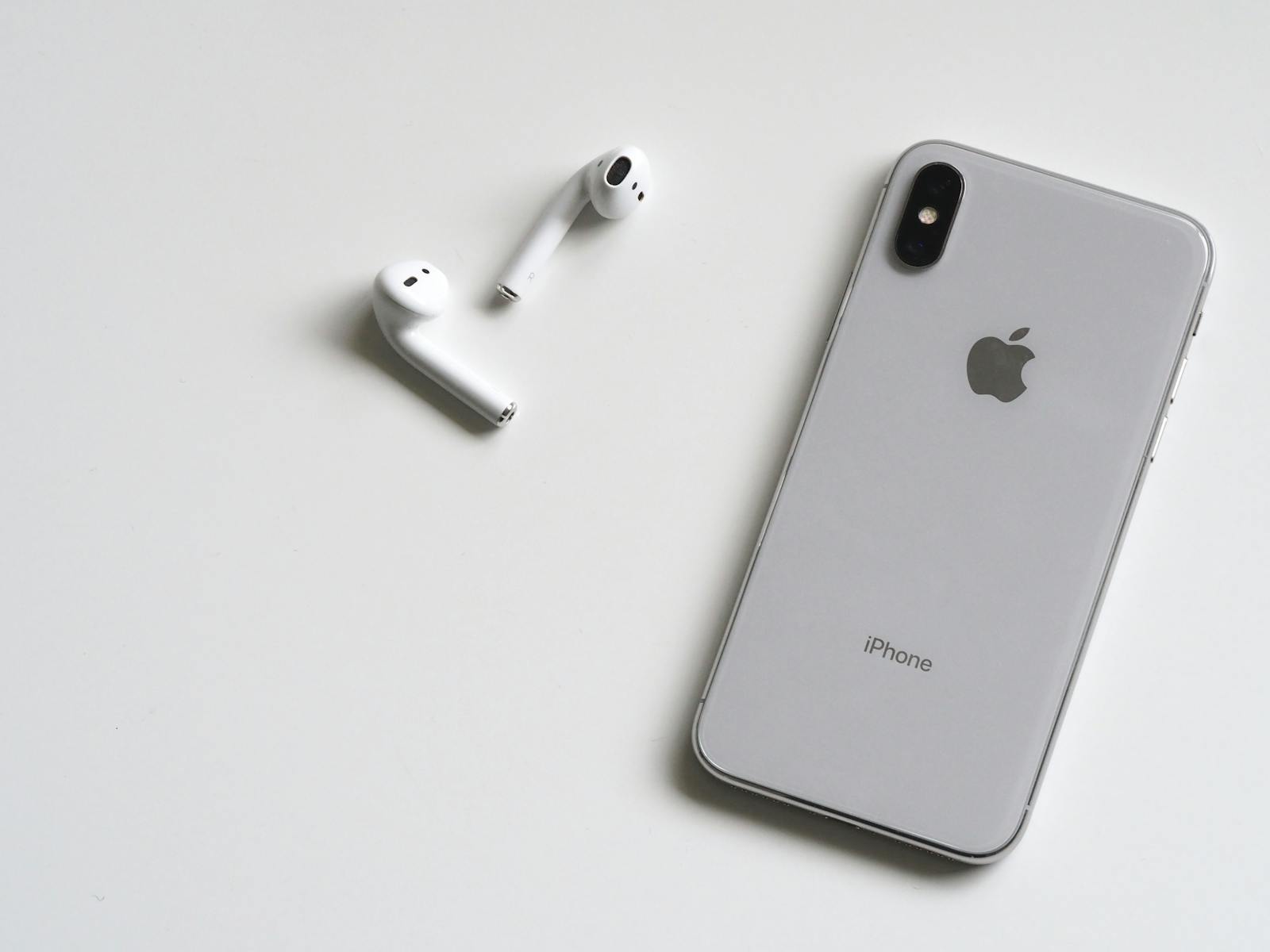
Mission Overview: Apple’s AI Strategy for 2025–2026
Apple’s AI mission for its 2025–2026 flagships spans three intertwined goals:
- Make AI ambient rather than attention‑seeking – Integrate intelligence into core apps like Photos, Mail, Notes, Safari, and iWork instead of pushing standalone “AI apps.”
- Prioritize private, on‑device processing – Use Apple‑designed neural engines in the latest A‑series and M‑series chips to keep sensitive data on the device whenever possible.
- Use AI to deepen ecosystem value – Make the best features exclusive to newer hardware and tightly integrated with Apple services, reinforcing the appeal of staying inside the ecosystem.
“For us, AI isn’t about a single feature or product. It’s about making every Apple device smarter, more personal, and more private by default.”
— Tim Cook, comments on AI strategy, as reported by CNBC
Technology: Inside Apple’s On‑Device Intelligence Stack
At the heart of Apple’s AI capabilities are specialized neural engines built into the latest A‑series chips for iPhone and M‑series chips for Mac and iPad. These dedicated accelerators are optimized for matrix math, enabling efficient execution of neural networks for tasks like image understanding, natural language processing, and speech recognition.
Neural Engines and Apple Silicon
By 2025–2026, Apple’s flagship devices are shipping with significantly upgraded neural engines capable of tens of trillions of operations per second (TOPS). This horsepower underpins features such as:
- On‑device transcription for Voice Memos, phone calls (where legally permitted), and third‑party apps using system APIs.
- Photo and video understanding for search, object recognition, and smart album creation directly on the device.
- Contextual language models for summarization, re‑writing, and intent detection in apps like Mail, Notes, and Messages.
Hybrid On‑Device + Cloud Model
Apple’s modern AI stack uses a layered approach:
- On‑device “everyday” models – Lightweight models optimized for the neural engine handle common tasks: autocorrect, predictive text, smart replies, offline translation, and basic summarization.
- Personalization layer – User‑specific signals (typing patterns, frequently used phrases, typical photo subjects) are stored locally and never leave the device, customizing the behavior of these models.
- Cloud‑backed “heavy” models – For complex generative tasks (long‑form rewriting, multi‑modal editing), Apple routes anonymized or minimally identified data to secure data centers, often with encryption and short retention windows.
From a user’s perspective, this is surfaced as “Apple Intelligence”–style features (naming will vary by marketing cycle) that quietly appear as options in existing interfaces: a “Rewrite” button in Mail, a “Clean Up” tool in Photos, or a “Summarize” button in Safari’s Reader View.

Developer‑Facing APIs and Frameworks
In parallel, Apple is exposing more of this intelligence through frameworks such as:
- Core ML for deploying optimized models on‑device.
- Natural Language for tokenization, tagging, sentiment analysis, and summarization.
- Speech and Vision frameworks for transcription, recognition, and object detection.
This opens the door for third‑party apps to offer AI features that feel consistent with system behavior, while still respecting Apple’s privacy boundaries and resource constraints.
Scientific Significance: Why On‑Device AI Matters
While much of the AI buzz focuses on ever‑larger foundation models hosted in the cloud, Apple’s work highlights a complementary scientific and engineering frontier: small, efficient models that run locally at scale. This has substantial implications for machine learning research, systems design, and human‑computer interaction.
Advances in Efficient Machine Learning
To fit capable models into the power and memory budgets of mobile devices, Apple and the broader research community are pushing advances in:
- Quantization and pruning – Reducing model precision and removing redundant parameters without catastrophic loss in performance.
- Knowledge distillation – Training compact “student” models to emulate larger “teacher” models.
- On‑device personalization – Using techniques like federated learning (where feasible) and local fine‑tuning to adapt models to each user.
“The future of AI won’t be only in giant data centers. It will also be in the tiny, power‑efficient models living on billions of personal devices.”
— Yann LeCun, Meta Chief AI Scientist, paraphrased from public talks and X posts
Human–Computer Interaction and Trust
From a UX and HCI standpoint, Apple’s approach emphasizes:
- Low‑friction invocation – AI appears as context‑appropriate options, not a separate “AI mode.”
- Predictability – Smaller, more specialized models behave more consistently than open‑ended chatbots.
- Trust via privacy – Explicit messaging that personal data stays on the device by default, with clear UI when cloud processing is used.
This design is geared toward long‑term adoption rather than viral novelty, positioning AI as infrastructure rather than spectacle.
Milestones: How Apple’s AI Story Reached 2025–2026
Apple’s “sudden” AI push is built on a decade of incremental milestones that are now converging into a more cohesive strategy.
Key Milestones on the Road to On‑Device Intelligence
- Early neural engines in A‑series chips – Introduced to accelerate vision tasks and Face ID, these laid the hardware foundation for more sophisticated ML workloads.
- Core ML and developer tooling – Apple provided tools for converting and optimizing models, allowing apps to ship ML features without custom accelerators.
- On‑device dictation and translation – These features proved that latency‑sensitive language tasks could be localized to the device for better privacy and responsiveness.
- Unified Apple Silicon transition on Mac – Bringing the neural engine to laptops and desktops enabled cross‑platform AI features and shared model deployments.
- Apple Intelligence era (2024 onward) – A branded set of AI capabilities across messaging, writing, media editing, and system assistance, accelerated through 2025–2026 flagships.

By 2025–2026, reviewers on YouTube and publications like The Verge, Wired, and Ars Technica are benchmarking not just CPU and GPU performance, but also neural engine utilization, model quality, and real‑world AI responsiveness.
Competition: Apple vs. Google, Microsoft, and Samsung
The smartphone and PC markets are entering an “AI feature wars” phase, where capabilities are being marketed as aggressively as camera specs once were. Apple’s strategy sits in deliberate contrast to rivals focused on cloud‑centric large models.
Google and Samsung’s Cloud‑Heavy Approach
Google’s Pixel devices and Samsung’s Galaxy line are leaning heavily on branded AI experiences such as:
- Advanced photo editing (object erasure, composition changes, generative fill).
- Live translation and interpretation features.
- Call screening, AI note‑taking, and summarization.
Many of these features rely on server‑side models. This enables more powerful generative capabilities but raises ongoing debates about privacy, data retention, and reliability when connectivity is limited.
Microsoft and the AI PC
On the PC side, Microsoft’s “AI PC” initiative with Copilot‑branded features and dedicated NPU hardware is competing directly with Apple Silicon Macs. Windows laptops from OEMs like Lenovo, Dell, and HP now emphasize AI acceleration for tasks such as background blur, live captions, and generative assistance in productivity apps.
“We’re at the beginning of a new era where the most important spec on your laptop may soon be the TOPS rating of its NPU.”
— Satya Nadella, Microsoft CEO, summarized from remarks at Build and Ignite events (Microsoft Newsroom)
Apple’s Differentiator: Privacy and Integration
Apple’s counter‑narrative stresses:
- Device‑first computation with explicit privacy guarantees.
- Cross‑device continuity – AI‑powered features that work seamlessly when moving between iPhone, iPad, and Mac.
- Curated experiences – A slower, more controlled rollout, focusing on reliability and UX polish.
Tech reviewers often compare these philosophies side‑by‑side, asking whether Apple’s controlled, privacy‑centric approach can keep pace with the rapid iteration and openness of Android and PC ecosystems.
Hardware Lock‑In and Upgrade Pressure
One of the most contentious aspects of Apple’s AI rollout is how strongly it is tied to newer hardware. Many headline AI features are restricted to devices with recent A‑series or M‑series chips, leaving owners of older iPhones, iPads, and Intel Macs with a subset—or none—of the capabilities.
Why New Chips Matter
From a technical standpoint, modern AI workloads require:
- High TOPS NPUs/neural engines to run medium‑sized models at interactive speeds.
- More RAM and bandwidth to hold weights and activations without constant swapping.
- Advanced power management to avoid thermal throttling and battery drain.
Apple argues that these constraints make it impractical to offer the full suite of AI features on older devices without compromising experience quality.
The Planned Obsolescence Debate
On forums like Hacker News and subreddits such as r/apple, users debate whether:
- Apple could ship lighter versions of features to older devices but chooses not to.
- Some AI features are strategically withheld to stimulate upgrades.
- The company should provide clearer technical explanations for hardware cut‑offs.
This tension feeds into broader antitrust and regulatory scrutiny around ecosystem lock‑in, especially in the EU and US, where regulators are already examining default apps, app store rules, and platform power.
Developer Ecosystem and App Integration
Apple’s choice to expose AI primitives through system APIs is reshaping the iOS, iPadOS, and macOS app landscapes. Third‑party developers can now call into on‑device models for transcription, translation, summarization, and image understanding without bundling massive models themselves.
Opportunities for Developers
Developers are leveraging these APIs to build:
- Note‑taking and productivity apps that auto‑summarize meetings, generate action items, and create outlines.
- Media apps that apply AI‑enhanced filters, remove objects, or auto‑tag content for search.
- Accessibility tools providing live captions, audio descriptions, and on‑device OCR.
Coverage from outlets like TechCrunch and The Next Web highlights a surge of startups pitching “Apple‑first” AI experiences that lean heavily on these native capabilities.
Concerns About Control and Competition
At the same time, developers worry about:
- API opacity – Limited visibility into model behavior and update timelines.
- Platform risk – Apple later integrating similar AI features directly into its own apps, undercutting popular third‑party tools.
- Policy constraints – App Store guidelines that may restrict how AI features can be marketed or monetized.
“Building on platform AI is incredibly powerful—but it also means you live and die by decisions made in Cupertino.”
— Anonymous iOS developer, quoted in a developer round‑up on Apple Developer Forums and independent blogs
Privacy Positioning vs. Cloud AI
Apple’s most distinctive AI talking point is privacy. Marketing materials and keynotes consistently emphasize that “most AI processing happens on your device,” contrasting with the server‑centric approaches of Google, OpenAI, and Microsoft.
How Much Really Stays On Device?
Journalists from The Verge, Wired Security, and Ars Technica IT dissect Apple’s claims by examining:
- Which features are explicitly marked as on‑device only.
- When data is sent to Apple’s servers for heavy processing.
- How Secure Enclave and end‑to‑end encryption are used to protect identifiers and keys.
In many cases, Apple uses techniques like data minimization, on‑the‑fly encryption, and short retention windows to mitigate privacy risk, but independent audits and regulatory filings are increasingly important for validating those claims.
Closed Ecosystem vs. Open Innovation
Critics argue that Apple’s tight control over models and APIs could slow innovation compared to more open ecosystems centered on open‑source models and community fine‑tuning. However, for mainstream consumers, the trade‑off often favors stability, battery life, and predictable UX over experimental flexibility.
Regulatory and Antitrust Dimensions
As Apple embeds AI deeper into its operating systems, regulators are asking whether these features further entrench Apple’s market power. If the best AI experiences are only available within the Apple ecosystem, this could be interpreted as an additional layer of lock‑in.
Areas of Regulatory Attention
- Default AI assistants – Whether Apple allows meaningful choice of non‑Apple assistants for system‑level tasks.
- Preferential treatment of Apple apps – Whether system AI APIs give Apple’s own apps advantages over third‑party equivalents.
- Data and competition – How Apple uses (or limits) cross‑app data access for training while restricting competitors from similar access.
These questions intersect with existing antitrust cases around the App Store, browser defaults, and payment systems, particularly in the EU under the Digital Markets Act (DMA) and in the US through ongoing DOJ investigations.
Real‑World Use: How Users Actually Experience Apple’s AI
On social platforms like YouTube, TikTok, and X, creators are testing Apple’s AI features in real workflows: editing vlogs, drafting emails, organizing photos, or running focus and wellness routines.
Popular Everyday Scenarios
- Content creators using AI‑powered clean‑up tools to remove distractions from photos and videos directly in Photos or Final Cut on iPad.
- Students and professionals relying on summarization and rewrite tools to condense long articles or polish emails.
- Remote workers exploiting on‑device transcription to create searchable archives of meetings without sending sensitive audio to third‑party servers.
Reviewers such as Marques Brownlee (MKBHD) and Mrwhosetheboss commonly evaluate:
- Latency and responsiveness of on‑device features.
- Quality of generative outputs vs. cloud services like ChatGPT or Gemini.
- Battery impact when AI‑powered features are heavily used.
Recommended Gear for Exploring On‑Device AI
For users and developers who want to push Apple’s on‑device AI capabilities to their limits, a few hardware choices can make a tangible difference.
AI‑Ready Apple Devices
- Latest‑generation iPhone Pro models – Offer the newest A‑series chips and neural engines, ideal for mobile AI photography and productivity.
- M‑series MacBooks – Provide powerful NPUs, long battery life, and native support for AI‑enhanced creative and coding workflows.
To complement these devices, consider high‑quality accessories that improve your AI‑augmented workflows:
- Apple USB‑C Charge Cable (1 m) – Useful for fast charging during intensive AI workloads like video editing or local model experimentation.
- Apple 20W USB‑C Power Adapter – A compact power brick that pairs well with modern iPhones and iPads when extended AI processing is expected.
These recommendations are based on widespread popularity and compatibility with current Apple hardware in the US market.
Challenges: Limits and Open Questions
Despite its momentum, Apple’s AI strategy faces technical, competitive, and ethical hurdles that will shape the 2025–2026 landscape.
Technical and UX Constraints
- Model size vs. device resources – There is an upper bound to what can run smoothly on phones and tablets; ultra‑large generative models will remain cloud‑bound for the foreseeable future.
- Explainability and control – Users increasingly want insight into why AI made a suggestion or edit, not just the result.
- Battery and thermal limits – Sustained AI workloads risk heating devices and degrading battery health if not managed carefully.
Ecosystem and Policy Risks
- Regulatory pushback that could force Apple to loosen integration or open more AI hooks to competitors.
- Developer dissatisfaction if system‑level AI gradually replaces popular third‑party innovations.
- Perception of lagging innovation compared with rapidly evolving open‑source and cloud‑based AI services.
Conclusion: The Future of Apple’s On‑Device AI
Apple’s AI strategy for 2025–2026 is less about headline‑grabbing demos and more about reshaping what users quietly expect from their devices. By turning on‑device intelligence into a baseline feature of every flagship iPhone, Mac, and iPad, Apple is betting that the winning AI experience will be the one that feels most natural, private, and integrated.
In the coming years, the key questions will be:
- Can Apple maintain competitive capabilities while prioritizing on‑device processing and privacy?
- Will hardware lock‑in and ecosystem control trigger meaningful regulatory changes?
- How will developers balance the power of Apple’s native AI APIs against the risks of platform dependence?
For now, Apple’s AI push is redefining what “smart device” means—not as a gadget that occasionally calls the cloud for help, but as a tightly integrated, always‑on intelligence system carried in your pocket or sitting on your desk.
Further Reading, Research, and Learning Resources
For readers who want to dive deeper into the technical and policy dimensions of on‑device AI, the following resources provide valuable context:
Technical and Research Resources
- Apple Machine Learning Research – Official blog highlighting Apple’s ML research papers and systems work.
- arXiv.org – Search for topics like “on‑device learning,” “model compression,” and “neural network quantization.”
- Apple Developer – Machine Learning – Documentation, WWDC sessions, and sample code for Core ML, Vision, and Natural Language.
Policy, Ethics, and Competition
- European Commission – A Europe Fit for the Digital Age – Official information on DMA and AI‑related regulation.
- US FTC Business Blog – Ongoing commentary on AI, privacy, and consumer protection.
Educational Content and Video Deep Dives
- YouTube – Apple On‑Device AI Explained – Collections of breakdowns from independent creators.
- LinkedIn Learning – Machine Learning Courses – Introductory and intermediate ML training for professionals.
References / Sources
Selected sources and further reading that informed this overview:
- https://machinelearning.apple.com
- https://developer.apple.com/machine-learning/
- https://www.theverge.com/apple
- https://arstechnica.com/gadgets/
- https://www.wired.com/tag/apple/
- https://www.cnbc.com/apple/
- https://news.microsoft.com
- https://ec.europa.eu/info/strategy/priorities-2019-2024/europe-fit-digital-age_en
