
Eat Your Way to Better Sleep: Simple Nutrition Tweaks for Deeper, More Restful Nights
Why What You Eat Can Help You Sleep a Little Better Every Day
You’ve probably tried the classics: a cup of chamomile tea, a glass of warm milk, maybe even that legendary post‑Thanksgiving turkey coma. It’s tempting to hope that one “magic” food will finally fix your sleep. In reality, research as of early 2026 suggests that it’s not a single snack, but your overall eating pattern that most strongly influences how well you sleep.
If you’re lying awake at 2 a.m. wondering what’s wrong with your body, you’re not alone—and you’re not broken. Sleep is shaped by many factors (stress, light exposure, health conditions, medication), and food is just one piece of the puzzle. The good news: you can make small, realistic nutrition changes that gently nudge your body toward deeper, more consistent rest over time—without restrictive rules or miracle promises.
The Real Problem: Not One Food, but a 24‑Hour Pattern
For years, food headlines have focused on lists of “foods that help you sleep”: bananas, tart cherry juice, almonds, turkey. While some of these foods do contain compounds related to sleep—like tryptophan, magnesium, or melatonin—the doses in a single serving are usually modest.
Based on recent sleep and nutrition research, what matters more is:
- Your overall diet quality (especially fiber, plants, and healthy fats)
- Your timing (when and how late you eat)
- Your blood sugar stability across the day and evening
- Your caffeine and alcohol habits
“Sleep and diet interact in both directions. What you eat influences how you sleep, and how you sleep changes what you’re likely to eat the next day.”
— Summary of findings from multiple sleep–nutrition studies published in journals such as Sleep and the American Journal of Clinical Nutrition (through 2025)
So instead of chasing the perfect “sleep snack,” we’ll focus on building a daily eating style that quietly supports your natural sleep–wake rhythm.
How Food Affects Sleep: The Science in Simple Terms
Several biological systems connect diet and sleep. Here are the key players, translated into everyday language:
- Melatonin and tryptophan
Melatonin is a hormone that signals your brain it’s time to sleep. Your body makes melatonin from serotonin, which comes from the amino acid tryptophan (found in protein foods). A single tryptophan‑rich meal won’t knock you out, but a diet that regularly includes quality protein can support this pathway. - Blood sugar swings
Very high‑sugar or ultra‑refined meals can cause rapid spikes and crashes in blood glucose. These ups and downs are linked to lighter, more fragmented sleep and more awakenings at night in some studies. - Gut health
Your gut microbes help produce and modulate neurotransmitters involved in sleep and mood. Dietary fiber and diverse plant foods are associated with a healthier microbiome and, in several observational studies, better sleep quality. - Inflammation
Diets very high in ultra‑processed foods and added sugars are associated with low‑grade inflammation, which is linked to poorer sleep and conditions like sleep apnea. Anti‑inflammatory dietary patterns (e.g., Mediterranean‑style) tend to align with better sleep outcomes.

Eating Patterns That Support Better Sleep
Instead of memorizing a long list of “good” and “bad” foods, focus on a few big patterns that research consistently supports.
1. Favor a Mediterranean‑style, plant‑forward diet
Studies connecting diet and sleep often point to a Mediterranean‑style pattern: plenty of vegetables, fruits, whole grains, legumes, nuts, seeds, olive oil, and modest amounts of fish, eggs, and fermented dairy.
Core elements to aim for most days:
- At least 2–3 servings of vegetables (including leafy greens if possible)
- 1–2 servings of fruit, especially berries or other colorful fruits
- Whole grains like oats, brown rice, quinoa, or whole‑grain bread
- Beans and lentils several times a week
- Unsalted nuts and seeds as snacks or meal add‑ons
- Olive oil as your main added fat when you can
2. Keep a gentle rhythm: regular meals, not long fasting by accident
Skipping meals and then eating a very large dinner late at night can leave you wired, uncomfortable, or reflux‑y when you’re trying to sleep. As of 2026, some early time‑restricted eating studies suggest that finishing dinner earlier in the evening may support better sleep in some people, but the key is consistency and comfort—not forcing long fasts that make you ravenous.
Consider:
- Eating at fairly consistent times each day
- Avoiding very heavy, high‑fat meals in the 2–3 hours right before bed
- Using a light, balanced snack (if needed) instead of a huge late dinner
3. Build blood‑sugar–steady meals
Pair carbohydrates with protein, fat, and fiber. This slows digestion and may reduce the blood sugar swings that can make some people feel jittery or trigger nighttime awakenings.
For example, instead of:
- Just white toast → try toast + nut butter + sliced banana
- Just plain pasta → try whole‑grain pasta + olive oil + vegetables + beans or chicken
- Just fruit juice at night → try whole fruit + a handful of nuts

What to Eat in the Evening to Sleep Better
No evening snack will act like a sleeping pill, but the right options can keep you comfortable, support stable blood sugar, and provide sleep‑related nutrients.
Sleep‑supportive nutrients to include
- Magnesium (associated with muscle relaxation and stress modulation): found in pumpkin seeds, almonds, cashews, spinach, black beans, and whole grains.
- Calcium (involved in melatonin production): found in dairy or fortified plant milks, yogurt, cheese, tofu set with calcium.
- Tryptophan‑containing proteins: turkey, chicken, eggs, yogurt, cheese, soy products, and other protein foods.
- Complex carbohydrates (can help tryptophan cross into the brain): oats, whole‑grain crackers, brown rice, quinoa.
Practical evening snack ideas
Aim to finish snacks about 1–2 hours before bed if you can, and keep portions modest.
- Plain or lightly sweetened yogurt with a sprinkle of oats and berries
- Whole‑grain toast with almond butter and a few slices of banana
- A small bowl of oatmeal made with milk or fortified soy milk, topped with walnuts
- Whole‑grain crackers with hummus and cucumber slices
- A kiwi or two with a handful of unsalted nuts (kiwi has some emerging evidence for supporting sleep in small studies)
What to Limit or Avoid for Better Sleep
Sometimes what you skip matters as much as what you add. Here are the main culprits that repeatedly show up in sleep research.
- Caffeine too late in the day
Caffeine’s half‑life is about 5–6 hours, but its effects vary by person and genetics. As a general rule:- Stop caffeine at least 6 hours before bedtime; 8–10 hours may be better if you’re sensitive.
- Remember that tea, chocolate, and many sodas contain caffeine, too.
- Alcohol as a “sleep aid”
Alcohol can make you feel sleepy initially but tends to fragment sleep, reduce REM sleep, and worsen breathing issues like snoring and sleep apnea. Try:- Limiting alcohol, especially within 3 hours of bedtime.
- Alternating alcoholic drinks with water or ordering alcohol‑free alternatives more often.
- Very heavy or spicy dinners right before bed
These can trigger indigestion or reflux and may increase nighttime awakenings. If you love spicy food, try having it earlier in the day. - Large sugar loads at night
Big desserts or frequent sugary snacks late in the evening can contribute to blood sugar swings that may disrupt sleep in some people.
A Real‑World Example: From 2 A.M. Snack Attacks to Steadier Sleep
To keep this grounded, here’s a composite case based on patterns commonly seen by dietitians and sleep clinicians.
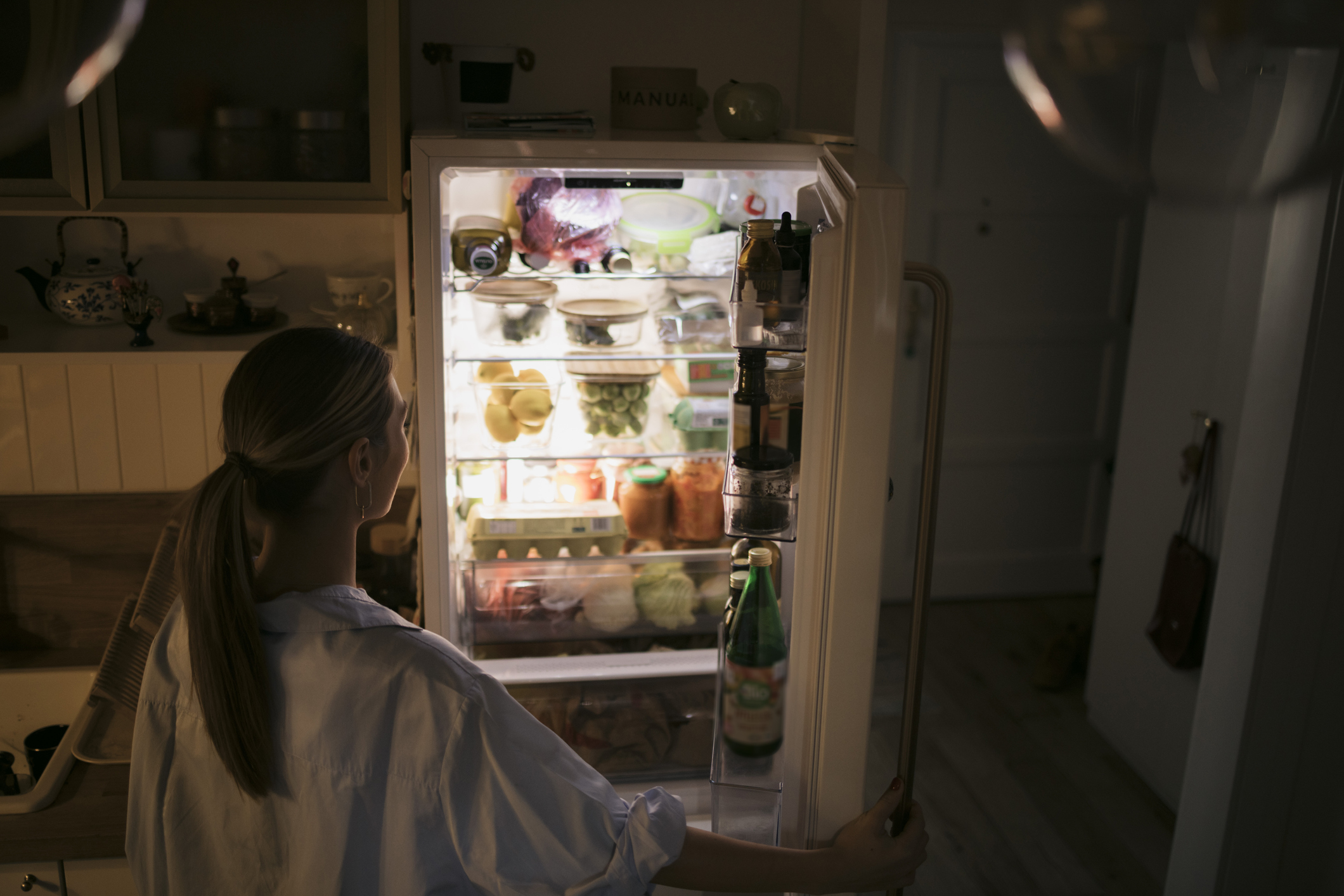
“Lena,” 38, often woke up at 2 or 3 a.m., wide awake and hungry. She’d head to the kitchen for cereal or cookies, scroll her phone, and eventually doze off again around 4:30 a.m.—only to wake up exhausted.
Over eight weeks, she made a few realistic changes:
- Earlier, more balanced dinner
She moved dinner from 9 p.m. to about 7:30 p.m. when possible, including protein, vegetables, and whole grains. - Planned bedtime snack
Instead of random night‑time cereal, she had a small bowl of yogurt with oats and berries around 9 p.m. if she was still hungry. - Caffeine cut‑off
She switched her 4 p.m. coffee to herbal tea and limited caffeine to before 1 p.m.
Lena didn’t transform into a perfect sleeper overnight. But after about three weeks, she noticed that the 2 a.m. awakenings became less frequent, and when she did wake up, she wasn’t as ravenous. Her energy during the day improved enough that she felt more motivated to walk after dinner, which further supported her sleep routine.
“The biggest shift was realizing I didn’t need to be ‘perfect.’ Just eating a little earlier and not going to bed starving—or stuffed—made nights less of a battle.”
A Simple “What to Eat to Sleep Better” Day (Example)
Use this as inspiration, not a strict plan. Adjust portions, foods, and timing to your culture, budget, and preferences.

- Breakfast
Oatmeal cooked with milk or fortified soy milk, topped with berries and chopped nuts. Herbal or green tea if desired. - Lunch
Grain bowl: brown rice or quinoa, mixed vegetables, chickpeas or grilled chicken, olive oil and lemon dressing. - Afternoon
Caffeine‑free or low‑caffeine drink after early afternoon; a piece of fruit and a handful of nuts if hungry. - Dinner (2–4 hours before bed)
Baked salmon or tofu, roasted vegetables, and a small portion of whole‑grain pasta or potatoes with olive oil. - Evening wind‑down snack (optional)
Yogurt with a spoonful of oats, or whole‑grain crackers with hummus, plus a cup of chamomile or other non‑caffeinated herbal tea.
Common Obstacles—and How to Work Around Them
Life is messy. Here’s how to adapt these ideas when things aren’t textbook perfect.
- “I work late and can’t eat dinner early.”
Try a split meal: a substantial, balanced snack in the late afternoon or early evening, then a lighter dinner when you get home. - “My culture’s main meal is late at night.”
Keep your cultural foods, but adjust portion size and richness at night if sleep is suffering—more vegetables, fewer fried or very heavy dishes close to bedtime. - “I crave sweets after dinner.”
Make your main meal more satisfying with enough protein and fiber, and consider a planned small dessert right after dinner rather than repeated grazing late into the night. - “I’m too tired to cook.”
Keep a few low‑effort options: canned beans, whole‑grain bread or wraps, pre‑washed salad greens, microwavable frozen vegetables, and canned fish. Convenience foods that are minimally processed can absolutely be part of a sleep‑supportive plan.
Before vs. After: Small Tweaks That Add Up
Here’s a side‑by‑side look at realistic changes that can support better sleep—no drastic overhauls required.
Typical Pattern
- Coffee at 4–5 p.m.
- Small or rushed lunch, big late dinner
- Heavy, spicy takeout at 9–10 p.m.
- Multiple glasses of wine or beer most nights
- Dessert and snacking until right before bed
Sleep‑Supporting Tweaks
- Caffeine cut off by early afternoon
- More balanced lunch; slightly lighter dinner
- Heavier or spicy meals earlier in the day when possible
- Alcohol most nights reduced or moved earlier with food
- If dessert is important, enjoy a portion after dinner, then switch to herbal tea

Putting It All Together: Your Next Small Step
Better sleep rarely comes from one magical food, but your everyday meals and snacks can quietly stack the deck in your favor. By leaning into a plant‑forward pattern, stabilizing blood sugar, choosing lighter evenings, and setting thoughtful caffeine and alcohol boundaries, you give your body the conditions it needs to rest.
You don’t need to change everything at once. Over the next week, choose one of these steps:
- Set a personal caffeine cut‑off time and stick to it for 7 days.
- Move dinner 30–60 minutes earlier on most nights you can.
- Add one source of fiber (like beans, whole grains, or vegetables) to your evening meal.
- Swap one late‑night “graze” session for a single planned snack plus herbal tea.
Pay attention to how your body responds over 2–4 weeks—not just one night. If sleep problems persist or worsen, or if you suspect an underlying condition like sleep apnea, restless legs, or depression, please reach out to a healthcare provider. Nutrition is a powerful support, but it’s only one piece of truly restorative sleep.
