
Inside Apple’s On‑Device AI Revolution: Privacy, Silicon, and the Post‑ChatGPT Strategy
Apple’s long‑anticipated artificial intelligence roadmap is finally visible: compact yet powerful on‑device models, privacy‑first system design, and selective use of cloud AI when local compute is not enough. While OpenAI, Google, and Microsoft bet on massive cloud‑hosted models, Apple is threading a different needle—turning the iPhone, iPad, and Mac into AI computers that can generate text, understand images, and personalize experiences without constantly phoning home.
This article breaks down Apple’s emerging AI strategy, the role of its A‑ and M‑series chips, how hybrid on‑device/cloud models will likely work, and what this means for developers, users, and the broader AI ecosystem.
Mission Overview: Apple’s Distinct AI Strategy
Apple’s AI push is not about winning benchmark leaderboards at any cost; it is about shipping AI features that feel invisible, trustworthy, and tightly coupled to hardware. Leaks, WWDC keynotes, and research papers point to a mission with three pillars:
- On‑device intelligence first: Run as many AI tasks as possible locally, on the user’s silicon.
- Privacy as a hard constraint: Minimize data sent to the cloud, and keep sensitive context on the device.
- Seamless integration: Bake AI into system apps, frameworks, and developer APIs rather than a single chatbox.
“Our goal is not to chase the largest model, but to deliver the most useful and private intelligence on devices people already love.” — Paraphrased from Apple AI research communications and public privacy statements
In practice, that means generative AI will show up everywhere—Siri, Notes, Mail, Messages, Photos, Xcode, and third‑party apps—often without users even realizing a “model” is involved.
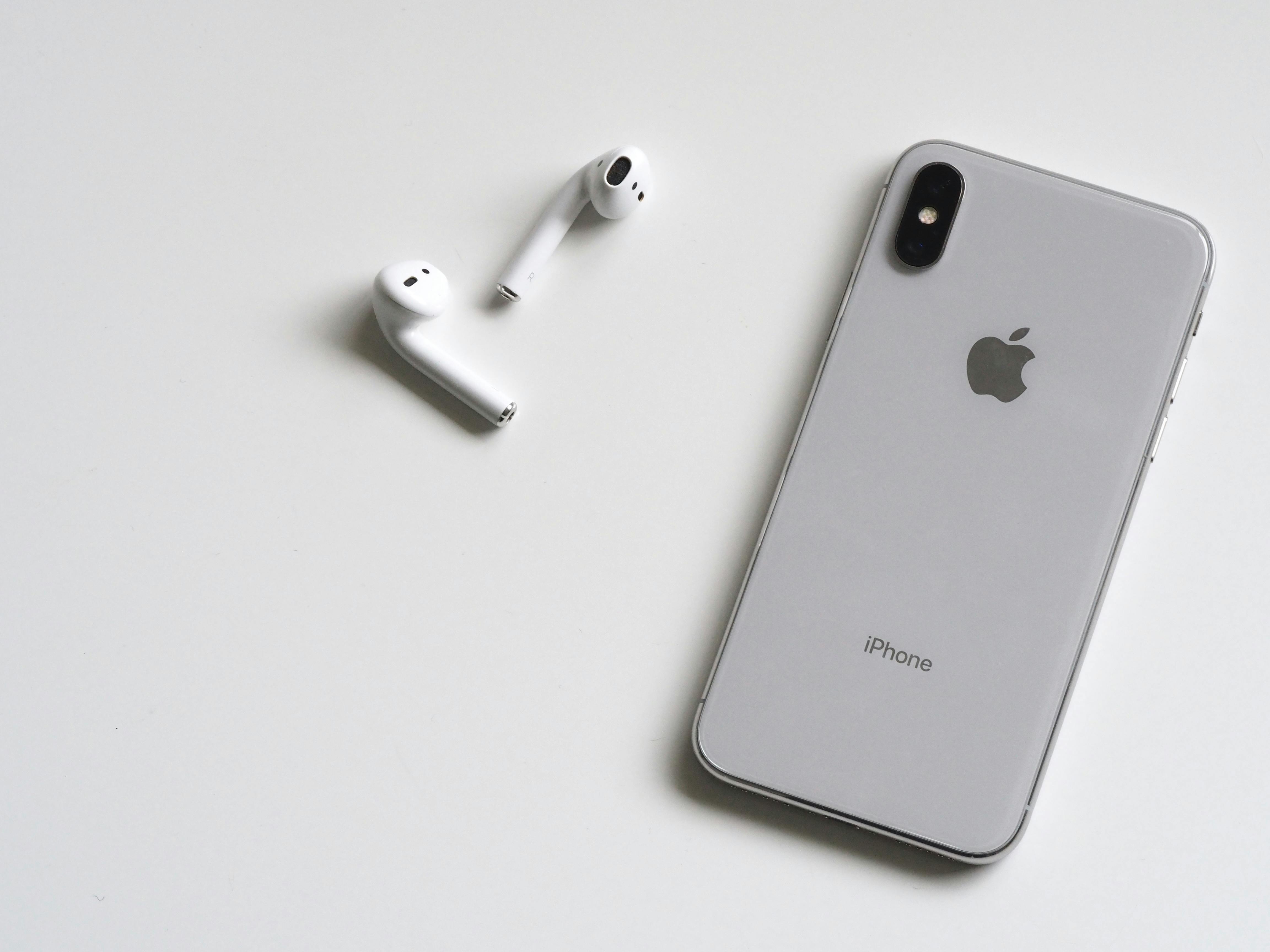
Visualizing the On‑Device AI Era


Technology: Small Language Models, Multimodality, and Apple Silicon
Contrary to the “bigger is better” trend, Apple’s research showcases small language models (SLMs) and multimodal models tuned for mobile and desktop hardware. These models trade raw scale for efficiency, latency, and energy awareness.
Small Language Models Optimized for Devices
Apple’s open research—such as the “Ferret” multimodal work and subsequent small‑model benchmarks—highlights:
- Parameter‑efficient architectures that fit within the memory footprint of A‑ and M‑series chips.
- Quantization (e.g., 4‑bit or 8‑bit weights) to reduce model size while keeping quality acceptable.
- Knowledge distillation from larger teacher models to compact student models.
- NPU‑friendly operators tuned for the Apple Neural Engine (ANE) and GPU pipelines.
These SLMs can handle everyday tasks:
- Context‑aware text suggestions and rewriting.
- Summarizing notifications, emails, or articles already on the device.
- Lightweight code completion in Xcode or Swift Playgrounds.
Multimodal Understanding: Text, Images, and Audio
Apple’s leaked and published work on multimodal models suggests that future devices will be able to:
- Understand screen content, not just raw text (e.g., “summarize what’s on my screen”).
- Interpret photos and videos (“find the video where I’m biking in San Francisco at sunset”).
- Blend voice, text, and images (“draft a caption for this photo I just took and send it to my family group chat”).
“The next wave of AI is not just chat—it’s systems that see, hear, and act in context.” — Inspired by multimodal AI commentary from researchers such as Andrej Karpathy and Yann LeCun
On‑Device Personalization and Fine‑Tuning
One of Apple’s most significant differentiators is local personalization:
- Your writing style in Mail, Notes, and Messages.
- Your photo library: who appears, where you travel, and what you capture.
- Your app usage patterns, calendar, and reminders.
Instead of streaming this data to a cloud LLM, Apple can:
- Maintain a personalization layer on the device—adapters or embeddings updated over time.
- Keep the base model identical across devices while user‑specific deltas never leave local storage.
- Use secure enclaves and encryption to protect these personalization parameters.
This allows Siri and system‑level AI features to feel uniquely “yours” without exposing private context to third parties.
Hybrid On‑Device and Cloud AI: Partnering with OpenAI and Google
Even with heavy optimization, on‑device models have limits. Long‑form writing, complex coding tasks, or deep research queries often demand larger models with more reasoning capacity. Reports from outlets like The Verge and Bloomberg Technology suggest Apple has negotiated or is negotiating with:
- OpenAI (for access to GPT‑class models).
- Google (for access to Gemini‑class models).
Likely User Experience Pattern
The emerging pattern is a tiered, hybrid system:
- Default: On‑device model handles most queries for speed and privacy.
- Optional escalation: When a task exceeds local capability, the OS prompts the user to send a minimized, privacy‑filtered version of the request to a cloud LLM.
- Transparent controls: Settings to opt into or out of specific partners, with clear audit trails and permissions.
Apple can maintain its privacy brand by:
- Stripping identifiers and unnecessary context from prompts.
- Using ephemeral tokens and avoiding long‑term storage of user prompts where possible.
- Publishing privacy nutrition labels for AI features, similar to existing App Store disclosures.
“Hybrid is the only realistic path: small models on your device for privacy and latency, big models in the cloud for depth.” — Common view among AI infrastructure researchers, echoed in conferences like NeurIPS and industry talks
Apple Silicon: A‑ and M‑Series Chips as AI Engines
Apple’s vertical integration gives it an advantage: it designs both the chips and the software stack that sits on top of them. The A‑series (iPhone/iPad) and M‑series (Mac) SoCs include:
- CPU and GPU cores optimized for mixed workloads.
- A dedicated Neural Engine (NPU) with trillions of operations per second (TOPS) capacity.
- Unified memory architecture that reduces data‑movement overhead.
This architecture enables:
- Low‑latency inference for chat, code completion, and media generation.
- Energy‑aware scheduling so AI workloads don’t destroy battery life.
- Co‑processing where CPU, GPU, and NPU cooperate for complex multimodal tasks.
Developer‑Facing Tooling
For developers, Apple’s stack is likely to revolve around:
- Core ML and MLX (Apple’s research‑grade ML framework) for bringing and running models on‑device.
- New Swift and Objective‑C APIs to call system‑level generative features (rewrite, summarize, translate, or generate images).
- Guidelines for energy‑efficient model usage, including profiling and on‑device benchmarking.
Professional developers interested in understanding these patterns more deeply may benefit from hardware‑aware ML texts such as “Designing Machine Learning Systems” by Chip Huyen, which, while not Apple‑specific, explains how to architect production ML systems that align with Apple’s on‑device‑first philosophy.
Scientific Significance: Privacy‑Preserving Intelligence at Scale
From a research and industry perspective, Apple’s move validates an important thesis: frontier AI is not solely a cloud phenomenon. On‑device AI pushes advances in:
- Model compression: quantization, pruning, and distillation.
- Federated learning & personalization: how to adapt models without centralized data.
- Secure ML: keeping sensitive context local while still achieving strong performance.
It also forces a re‑thinking of evaluation metrics:
- Benchmarks must account for latency, memory, and power, not only accuracy or BLEU scores.
- Interactive UX quality (perceived responsiveness, conversational smoothness) becomes a first‑class metric.
- Long‑term safety and privacy become part of the scientific discussion, not an afterthought.
“We are entering an era where who controls the context matters as much as who controls the model weights.” — A perspective increasingly discussed by privacy researchers and AI policy experts on platforms like LinkedIn and in venues like the ACM Digital Library
Milestones: From Siri to System‑Level Generative AI
Apple’s AI journey did not start with the current generative wave. Some key milestones include:
- 2011–2015: Siri as an early voice assistant, primarily cloud‑based and rules‑driven.
- 2016–2019: Rapid adoption of on‑device ML for image classification (Photos), Face ID, and keyboard predictions.
- 2020–2023: Apple Silicon launches; NPUs grow more capable, and Apple begins publishing more AI research (vision transformers, multimodal models, diffusion).
- 2023–2026: Post‑ChatGPT era; Apple iterates on small generative models, personalization layers, and hybrid cloud escalation.
Today, the roadmap points toward:
- Smarter Siri: Natural conversation, app automation, and cross‑app reasoning.
- System‑wide writing tools: Rewrite, summarize, translate, and style‑shift tools accessible from any text field.
- On‑device creative tools: Photo, video, and audio editing powered by generative models that understand your content locally.

Challenges: Trade‑offs, Ecosystem Tensions, and Regulation
Apple’s AI strategy faces significant technical and strategic challenges.
Performance vs. Capability
Even with impressive compression, smaller models have ceilings. Some limitations include:
- Weaker performance on long‑context reasoning and code generation.
- Difficulty maintaining factual accuracy across broad knowledge domains.
- Challenges with large‑scale tool use and multi‑step planning.
Apple must decide when to accept lower capability locally and when to escalate to cloud partners—without confusing users.
Ecosystem Control vs. Developer Freedom
Developers on Hacker News and Reddit have raised concerns that:
- Apple’s tight sandbox and App Store rules could constrain experimental AI apps.
- System‑level AI might crowd out third‑party innovation if Apple replicates key app features at the OS layer.
- Restrictions on model downloading or sideloading might limit open‑source AI on iOS.
“Apple builds incredible platforms, but every time they absorb a category into the OS, developers have to move up the value chain or die.” — A recurring sentiment in developer communities and tech media commentary
Regulation, Transparency, and Safety
As regulators in the EU, US, and beyond look more closely at AI, Apple will be asked to:
- Explain how on‑device models are trained and updated.
- Provide user‑visible controls for data usage, retention, and partner integrations.
- Address concerns about bias, hallucinations, and content safety—even for local models.
Given Apple’s corporate stance on privacy and security, it is likely to lean into strong default protections, but trade‑offs will remain.
Everyday Use Cases: How Users and Developers Benefit
For end users, Apple’s AI shift will feel less like a single “AI app” and more like dozens of small improvements across the OS:
- AI‑assisted text everywhere: better autocorrect, tone adaptation, instant summaries.
- Context‑aware notifications: condensed digests, priority sorting, and smart mute suggestions.
- Photo and video intelligence: object removal, style adjustments, semantic search—all local.
- Smarter automation: Siri and Shortcuts that can reason about what you’re doing and suggest workflows.
For developers, opportunities include:
- Building domain‑specific copilots on top of Apple’s AI APIs.
- Leveraging on‑device inference for privacy‑sensitive sectors like health, finance, and education.
- Creating tools for mobile video editing, note‑taking, and productivity that tap into system‑level summarization and generation.
Creators who want to understand the broader LLM landscape can supplement Apple’s documentation with resources like the Two Minute Papers YouTube channel or the arXiv preprint server for state‑of‑the‑art research.
Conclusion: The Post‑ChatGPT Strategy Comes Into Focus
Apple’s AI roadmap is becoming clear: embrace generative AI, but do it the “Apple way”—on‑device first, privacy‑preserving, deeply integrated, and hardware‑accelerated. Instead of competing head‑on with the largest frontier models, Apple is reframing the question: how do you make AI feel trustworthy and invisible across a billion devices?
The rest of the industry will be watching closely. If Apple succeeds, it will validate a model of AI deployment where:
- Personal context never has to leave the device for common tasks.
- Hybrid local‑plus‑cloud architectures become standard.
- Users gain powerful assistants without sacrificing autonomy or privacy.
For developers, researchers, and tech‑savvy users, the next few OS cycles from Cupertino will not just be about new devices, but about a new paradigm: AI as an ambient capability of the operating system, not a separate product living only in the cloud.
Further Reading, Tools, and Staying Current
To stay on top of Apple’s evolving AI ecosystem and the broader on‑device ML trend, consider:
- Following Apple’s Machine Learning Research blog for technical papers and system deep dives.
- Reading coverage from Ars Technica, TechCrunch, and TechRadar for product‑level analysis.
- Exploring open‑source small models on platforms like Hugging Face to understand the SLM landscape Apple is helping popularize.
- Tracking commentary from AI leaders such as Yann LeCun and Andrej Karpathy, who often discuss on‑device and efficient AI.
As the line between “phone” and “personal AI computer” blurs, understanding Apple’s on‑device model strategy will be key for anyone building or buying into the next generation of intelligent applications.
