
Inside Apple’s AI Gamble: How On‑Device Intelligence Is Challenging the Cloud Giants
Mission Overview: Apple’s AI Strategy in a Cloud‑Dominated World
Over the past two years, Apple’s artificial intelligence strategy has shifted from quiet, incremental upgrades to a central storyline in the global AI race. While OpenAI, Microsoft, and Google showcase cloud‑hosted frontier models, Apple is doubling down on on‑device AI—models that run directly on Apple silicon inside consumer hardware.
This approach aligns with Apple’s decade‑long emphasis on privacy and vertical integration: design the chip, the operating system, and the AI stack together. It also sets up a direct clash between two visions of the future:
- Cloud‑centric AI – massive models, centralized in hyperscale data centers, with rapid iteration and feature velocity.
- Device‑centric AI – compact, efficient models, optimized for local inference, with strong privacy guarantees and tight OS integration.
Tech outlets such as The Verge, TechCrunch, and Wired increasingly frame Apple’s choices as a referendum on how AI should be deployed at scale.
“Apple isn’t trying to win the benchmark wars; it’s trying to win the trust wars. In AI, that might matter more in the long run.”
— Paraphrased from ongoing commentary across major tech analysis outlets
On‑Device vs Cloud: The Core Trade‑Offs
At the heart of the debate is a simple technical tension: bigger models need bigger infrastructure. Apple’s insistence on running many AI tasks locally imposes constraints—but also unlocks unique advantages.
Advantages of On‑Device AI
- Privacy by design: personal data—messages, photos, biometric information, usage patterns—does not need to leave the device for many tasks.
- Ultra‑low latency: local inference eliminates network round‑trips, improving responsiveness for autocomplete, translation, summarization, and image manipulation.
- Cost efficiency at scale: by offloading work to billions of devices, Apple can reduce dependence on expensive cloud GPU clusters.
- Offline functionality: AI features continue to work on planes, in rural areas, or during network congestion.
Limitations and Risks
- Model size constraints: on‑device models must fit within limited memory and power budgets, restricting parameter counts and sometimes reducing raw capability relative to frontier cloud models.
- Update cadence: major upgrades often ship with OS releases or firmware updates, slowing iteration compared with cloud APIs that can update weekly.
- Hardware fragmentation: older iPhones and Macs may not support the most advanced models, potentially widening the capabilities gap across the installed base.
To reconcile these tensions, Apple is pursuing a hybrid model: perform as much inference on‑device as possible, then fall back to privacy‑preserving cloud calls only when necessary. Analysts expect aggressive use of:
- On‑device small and medium models for personalization and real‑time UX.
- Cloud‑side large models for complex reasoning, creative generation, or cross‑device tasks.
- Anonymization and encryption layers to ensure Apple’s servers see minimal personal context.
“The future is not cloud or edge—it’s cloud and edge. Apple’s differentiation is that its ‘edge’ happens to be a billion high‑end devices.”
— Interpreting viewpoints from AI infrastructure researchers and cloud architects
Technology: Apple Silicon, Neural Engines, and Model Optimization
Apple’s AI bet rests heavily on the evolution of its custom chips—the A‑series for iPhone and iPad, and the M‑series for Macs. Each generation has expanded the dedicated Neural Engine, a specialized accelerator optimized for matrix operations central to deep learning.
Apple Silicon as an AI Platform
- Unified memory architecture allows CPU, GPU, and Neural Engine to access the same memory pool, cutting down data copying overhead.
- High TOPS (trillions of operations per second) metrics on the Neural Engine enable real‑time inference for vision and language models.
- Power efficiency is critical: these chips balance high AI throughput with all‑day battery life.
Developers can target these capabilities using frameworks like Core ML and Metal, converting models from PyTorch or TensorFlow into optimized, quantized binaries that run efficiently on Apple hardware.
Model Compression and On‑Device Optimization
To run competitive models locally, Apple and third‑party developers rely on a stack of optimization techniques:
- Quantization: representing weights with lower‑precision formats (e.g., 8‑bit or 4‑bit) to reduce memory footprint and improve throughput.
- Pruning: removing redundant parameters and neurons with minimal impact on quality.
- Distillation: training a smaller “student” model to mimic the behavior of a larger “teacher” model.
- Operator fusion and graph optimization: combining operations and optimizing execution graphs for Neural Engine pipelines.
Independent benchmarks from developers and researchers show that even 7–13B parameter language models can run interactively on newer M‑series Macs, illustrating how far on‑device inference has come.

Platform Lock‑In and Ecosystem Control
Beyond pure engineering, Apple’s AI strategy has deep platform economics implications. If intelligent features are deeply woven into the OS, switching ecosystems becomes more painful.
AI as the New OS Glue
Analysts imagine scenarios where:
- Your writing assistant is tuned to your style across Mail, Notes, and third‑party apps.
- Your photo library is semantically organized, cross‑linked with calendar events and messages.
- Your personal assistant orchestrates tasks across Mac, iPhone, Watch, and HomePod with contextual awareness.
If the underlying models, embeddings, and personalization data are tightly bound to iOS and macOS internals, portability suffers. Leaving the ecosystem could mean losing years of personalized AI behavior.
Developer Concerns and Opportunities
Developers on platforms like Hacker News and X/Twitter frequently debate whether Apple will:
- Expose low‑level APIs for local inference and fine‑tuning.
- Allow access to system‑level context (e.g., user behavior signals) in a privacy‑preserving way.
- Reserve the best models and system hooks for Apple’s own apps.
“Whoever controls the AI runtime controls the future app store.”
— A growing sentiment among platform economists and developer advocates
For independent developers building AI‑enhanced productivity tools, it’s crucial to track WWDC sessions, technical documentation, and early betas to understand where Apple will draw the line between platform and proprietary app advantage.
For a practical sense of how developers run local models on Apple silicon today, see community tools like llama.cpp on GitHub, which has become a de‑facto reference for on‑device LLM experimentation.
Competition: Apple vs OpenAI, Google, and Microsoft
The competitive landscape in 2024–2026 is defined by contrasting priorities:
- OpenAI + Microsoft: cutting‑edge cloud LLMs, deep integration with Windows and Microsoft 365, rapid feature rollouts.
- Google: Gemini‑class models embedded in Search, Android, and Workspace, substantial research output, but a complex privacy narrative.
- Apple: highly polished, hardware‑aware integrations, fewer public frontier‑model demos, but a strong trust and privacy brand.
Coverage in outlets like Ars Technica and Engadget often emphasizes that Apple is trading headline‑grabbing chatbot demos for deeply integrated, everyday capabilities.
Velocity vs Reliability
Cloud‑first players can ship frequent, experimental features, sometimes at the cost of regressions or controversial behavior. Apple historically prioritizes:
- Determinism – consistent behavior across devices and updates.
- Guardrails – strict content and safety policies baked into system features.
- Backward compatibility – ensuring older devices are not broken by new releases.
“Apple tends to move slower in public but faster in private. When it finally ships, it’s more like a platform than a feature.”
— Common theme in analysis from long‑time Apple observers
Scientific Significance: Edge AI as a Research Frontier
Apple’s on‑device emphasis resonates with a broader research trend toward Edge AI—deploying models close to where data is generated. This shift has profound implications for:
- Data minimization and differential privacy.
- Federated learning and on‑device personalization.
- Energy‑aware AI and carbon‑efficient inference.
Academic work from institutions like MIT, Stanford, and ETH Zurich increasingly explores how to co‑design models, compilers, and hardware for constrained devices. Apple’s hardware footprint—hundreds of millions of high‑end devices—acts as a massive, real‑world deployment surface for these ideas.
“The center of gravity of AI is moving from the data center to everyday devices. That’s not just an engineering challenge; it’s a scientific one.”
— Synthesizing viewpoints from leading AI systems researchers
For a deeper dive into edge‑focused architectures, see surveys such as:
Milestones in Apple’s AI Push
While Apple has historically avoided the “AI arms race” rhetoric, its product milestones reveal a steadily escalating commitment to machine learning:
Key Historical Steps
- Early Siri and on‑device speech: gradual transition from cloud‑only to hybrid speech recognition.
- Face ID and Secure Enclave: biometric models tightly integrated with secure hardware execution.
- Photos intelligence: local object and scene detection, people recognition, and semantic search.
- Apple Watch health features: on‑device models for fall detection, ECG analysis assistance, and activity classification.
- Neural Engine expansion: every major A‑series and M‑series update increases AI headroom.
Each cycle increases the share of system behavior influenced by machine learning rather than hand‑crafted rules—often without being explicitly branded as “AI features.”

Challenges: Technical, Economic, and Regulatory
Despite its advantages, Apple’s on‑device AI roadmap faces non‑trivial challenges.
1. Keeping Up with Frontier Model Capabilities
OpenAI, Google DeepMind, Anthropic, and others are pushing frontier models (tens or hundreds of billions of parameters) that excel at reasoning, coding, and multi‑step planning. Compressing similar capabilities into device‑sized models is an open research problem.
2. Cost and Infrastructure
Even with a device‑heavy strategy, Apple still needs robust cloud infrastructure for:
- Occasional heavy‑duty inference.
- Model training and fine‑tuning.
- Telemetry and A/B testing within privacy constraints.
Competing with hyperscalers like Microsoft Azure and Google Cloud on this front is capital‑intensive.
3. Regulation and AI Governance
Emerging AI regulations in the EU, US, and other regions introduce new obligations around:
- Transparency – disclosing AI usage and capabilities.
- Safety and robustness – preventing harmful behavior and misinformation.
- Data protection – especially under frameworks like GDPR and the EU AI Act.
Apple’s privacy‑first reputation is an asset, but regulators may scrutinize platform‑level AI integration just as they have App Store practices.
4. Talent and Research Velocity
Apple is competing for top AI researchers who often value open publication and external visibility. Balancing secrecy (a core Apple trait) with participation in the open research ecosystem is an ongoing cultural and strategic tension.
Practical Implications for Users and Professionals
For everyday users, Apple’s AI direction will increasingly show up as:
- Smarter, less frustrating voice and text assistants.
- More intuitive organization across photos, files, and messages.
- Device‑aware automation that anticipates needs with minimal manual setup.
For professionals—especially in engineering, product management, and IT leadership—the key is to anticipate how this affects workflows and tooling.
Preparing Your Workflow for On‑Device AI
- Audit where your data lives: favor tools that can securely leverage local models without shipping sensitive content to third‑party clouds.
- Learn the ecosystem: follow WWDC sessions on Core ML, Metal, and privacy frameworks to understand what’s available natively.
- Plan for hybrid architectures: design systems that can use local models for fast, private inference and cloud APIs for heavy‑duty tasks.
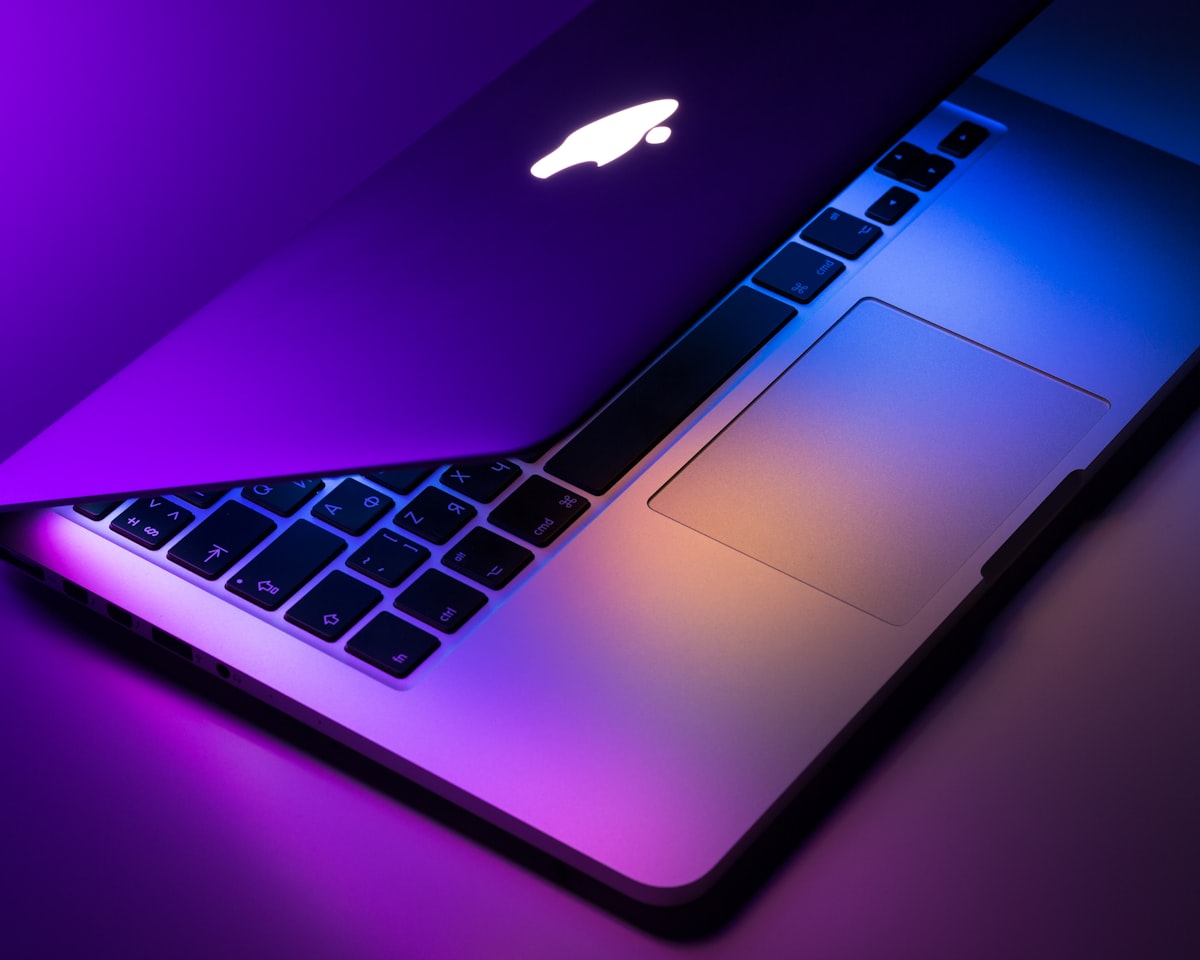
If you want a hands‑on feel for what on‑device AI could look like in personal productivity, consider using a high‑performance MacBook with Apple silicon that can run local models efficiently. For example: Apple MacBook Pro 16‑inch with M3 Pro offers substantial Neural Engine capacity and unified memory, making it a strong platform for local experimentation with LLMs and diffusion models.
Media Discourse and Social Reactions
On platforms like X/Twitter and YouTube, the narrative around Apple’s AI approach is polarized:
- Some creators applaud Apple for shipping when it’s ready and avoiding rushed, unreliable chatbots.
- Others argue Apple is late to the party and risks losing developer mindshare to more open, rapid‑moving ecosystems.
Long‑form explainers from channels such as MKBHD on YouTube and detailed breakdowns by independent researchers on AI benchmarking channels help bridge the gap between marketing claims and real‑world performance.
“In five years, we may not talk about ‘AI features’ at all—just about whether our devices feel genuinely helpful and private by default.”
— A recurring theme in tech podcasts and opinion columns
Conclusion: Who Owns the Next Computing Platform?
Apple’s on‑device AI push is more than a feature roadmap; it is a statement about where intelligence should live in the computing stack. By prioritizing local inference, tight hardware–software integration, and privacy, Apple is betting that users—and regulators—will ultimately favor trustable, embedded intelligence over purely cloud‑hosted smarts.
The outcome of this bet will shape:
- How personal our devices can become without compromising privacy.
- Which ecosystems developers choose as their primary AI platform.
- Whether the “AI runtime” is owned by cloud providers, OS vendors, or some combination of both.
For now, the story is still unfolding. What is clear is that the line between “device” and “cloud” is blurring—and Apple intends to make the device as intelligent, private, and indispensable as possible.
Additional Resources and Further Reading
To stay current on Apple’s evolving AI strategy and the on‑device vs cloud debate, consider:
- Following AI and systems researchers on X/Twitter, such as Yann LeCun (Meta, edge and efficient AI) and Andrej Karpathy (deep learning and systems).
- Reading in‑depth tech journalism from The Verge’s Apple coverage and Wired’s Apple and AI reporting.
- Watching WWDC sessions on machine learning and privacy to understand official APIs and constraints.
