
How Apple’s On‑Device AI Is Rewriting the Rules for Private Generative Models
Apple’s entry into the generative AI arena is fundamentally different from that of cloud-centric players like OpenAI, Google, and Anthropic. Instead of focusing on the largest possible models hosted in hyperscale data centers, Apple is optimizing for the best possible AI that can run directly on consumer hardware—iPhones, iPads, and Macs powered by A‑series and M‑series chips.
This approach is reshaping expectations around privacy-preserving AI. On-device inference keeps more data local, reduces latency, and gives Apple a powerful way to deepen ecosystem lock‑in. At the same time, it forces the industry to confront tricky trade‑offs between model size, capability, energy efficiency, and user trust.
Mission Overview: Why Apple Is Betting on On‑Device Generative AI
Apple’s mission can be summarized as: bring the benefits of generative AI to everyday users, while preserving the company’s longstanding privacy stance and the seamless experience of its ecosystem. Instead of treating AI as a stand‑alone app or chatbot, Apple is weaving it into the operating system itself.
- System‑wide writing tools that can rewrite, summarize, or translate text in any app.
- Notification and email triage that highlights what matters most and summarizes long threads.
- Context‑aware Siri and voice interactions that understand on‑screen content and recent activity.
- Image generation and editing directly in Photos, Messages, and creative apps.
“The most powerful AI is the one that understands you best—and that starts with protecting your data on your device.”
— Tim Cook, Apple CEO (paraphrased from public remarks on privacy and on‑device processing)
Technology: How On‑Device Generative Models Work on Apple Silicon
Running modern language and vision models directly on a smartphone or laptop is non‑trivial. Apple’s strategy depends on tight co‑design of hardware, operating system, and AI runtimes.
Custom Silicon: A‑Series and M‑Series as AI Appliances
Apple’s A‑series (iPhone/iPad) and M‑series (Mac) chips integrate specialized Neural Engines—matrix‑multiplication accelerators optimized for machine learning inference. Newer chips provide:
- Dozens of Neural Engine cores optimized for low‑precision operations (INT8, FP16).
- High memory bandwidth, crucial for large tensor operations in transformers.
- Power‑management logic tuned to burst for AI workloads without overheating.
Model Optimization Techniques
Frontier LLMs with hundreds of billions of parameters are too large and power‑hungry for phones. Apple and its research partners lean on aggressive optimization:
- Quantization
Reducing 32‑bit floating‑point weights to 8‑bit or even lower precision cuts memory and compute requirements dramatically, with carefully managed accuracy loss. - Pruning and Sparsity
Removing redundant connections and enforcing structured sparsity lets the Neural Engine skip work and boost throughput. - Knowledge Distillation
Smaller “student” models are trained to mimic larger “teacher” models, capturing most of the capability in a more compact architecture. - Runtime Scheduling
iOS, iPadOS, and macOS schedule AI tasks across CPU, GPU, and Neural Engine in real time, balancing responsiveness, battery life, and thermals.
System‑Level AI Fabric: Beyond Core ML
Where Core ML provided a way to deploy pre‑trained models, Apple is moving toward a higher‑level “AI fabric” integrated into the OS:
- Unified APIs for text generation, summarization, translation, and image generation.
- Shared system prompts and safety filters, rather than each app rolling its own.
- Context surfaces (like on‑screen content, calendar data, or recent documents) passed in a privacy‑controlled way, often remaining fully on‑device.
“The future of personal AI will be defined by tight integration with devices, not just bigger models in bigger data centers.”
— Research perspective reflected in Apple Machine Learning Journal articles and industry commentary
Privacy and Trust: The Case for “Private” Generative Models
Privacy is Apple’s most potent differentiator. On‑device AI enables a narrative that contrasts sharply with ad‑driven platforms and data‑hungry AI labs.
What Stays on the Device
Many generative tasks can run entirely on‑device, meaning:
- Your message drafts, personal notes, and documents never leave your hardware for routine rewrites or summaries.
- Notification and email analysis can happen locally, avoiding server‑side profiling.
- Image edits and generations leveraging your photo library stay under your physical control.
When the Cloud Is Still Needed: Hybrid Architectures
Apple cannot escape the reality that some tasks benefit from larger, cloud‑hosted models. The evolving pattern looks like:
- On‑Device First: Attempt to satisfy the request using a local model.
- Escalation with Consent: If complexity exceeds local capacity, explicitly ask the user before sending anonymized data to a cloud model.
- Minimal Retention: Apply strong data minimization and retention limits on the server side.
“The real question for AI is not only what it can do, but who it ultimately serves—and that depends on where your data lives.”
— Bruce Schneier, security technologist and privacy advocate (from public commentary on data and AI)
Latency, Reliability, and User Experience
On‑device AI fundamentally changes the time‑scale of interaction. Tasks that once required round‑trips to remote servers can now complete in tens of milliseconds.
Why Latency Matters
- Typing assistance must respond in real time, or users disable it.
- Voice assistants feel “smart” only if they respond almost instantly.
- Accessibility features like live captions or descriptive audio rely on low latency for usability.
Offline and Edge Reliability
On‑device models are inherently robust to spotty or absent connectivity. This is especially valuable for:
- Travelers who may be roaming or offline.
- Professionals working in secure or air‑gapped environments.
- Emerging markets where bandwidth and latency are inconsistent.
Hardware and developer communities are already benchmarking early Apple AI features, measuring inference speed, energy consumption, and thermals across device generations. These metrics will shape upgrade decisions as much as CPU and GPU benchmarks did in the past.
Ecosystem and Developer Implications
Apple’s on‑device AI strategy is also a platform strategy. Instead of requiring every developer to build or license their own model, Apple can expose AI capabilities as a common operating‑system service.
Unified AI APIs for Apps
Developers increasingly expect:
- High‑level text APIs: rewrite, summarize, translate, draft.
- Vision APIs: describe image, generate variation, remove background.
- Conversation APIs: context‑aware chat interfaces that respect system‑wide safety and privacy constraints.
Security and Governance
By centralizing the core models, Apple can:
- Apply consistent safety filters and abuse‑prevention techniques.
- Audit and update models without each app shipping new binaries.
- Expose capabilities in a way that limits data exfiltration by untrusted apps.
For developers, this lowers the barrier to entry while also constraining some forms of experimentation. It mirrors earlier shifts like the introduction of system‑wide health data, location services, and in‑app purchases governed by Apple’s frameworks.
“AI functionality will be as ubiquitous and invisible as networking APIs. The question is who controls that layer.”
— Andrej Karpathy, AI researcher and former Tesla/OpenAI engineer, in public discussions on AI platforms
Hardware Roadmap: Justifying Apple’s Custom Silicon Investments
On‑device AI is not an afterthought for Apple’s silicon teams; it is a central design constraint. Each new generation of A‑ and M‑series chips showcases larger Neural Engines, higher bandwidth, and better efficiency per AI operation.
From Generic Devices to AI Appliances
As generative features become more central, iPhones, iPads, and Macs start to resemble dedicated AI appliances:
- Local vector databases store embeddings of your documents, photos, and activity history.
- Background processes continually update these indexes for fast semantic search.
- Models fine‑tune or adapt on‑device to your writing style or preferences.
Implications for the Upgrade Cycle
In the 2010s, customers upgraded for bigger screens and better cameras. In the late 2020s, “AI performance” will be a marquee spec:
- How many tokens per second can the on‑device LLM generate?
- Can the device run mixed‑modal models (text, image, audio) without overheating?
- How long can it sustain AI workloads on battery?
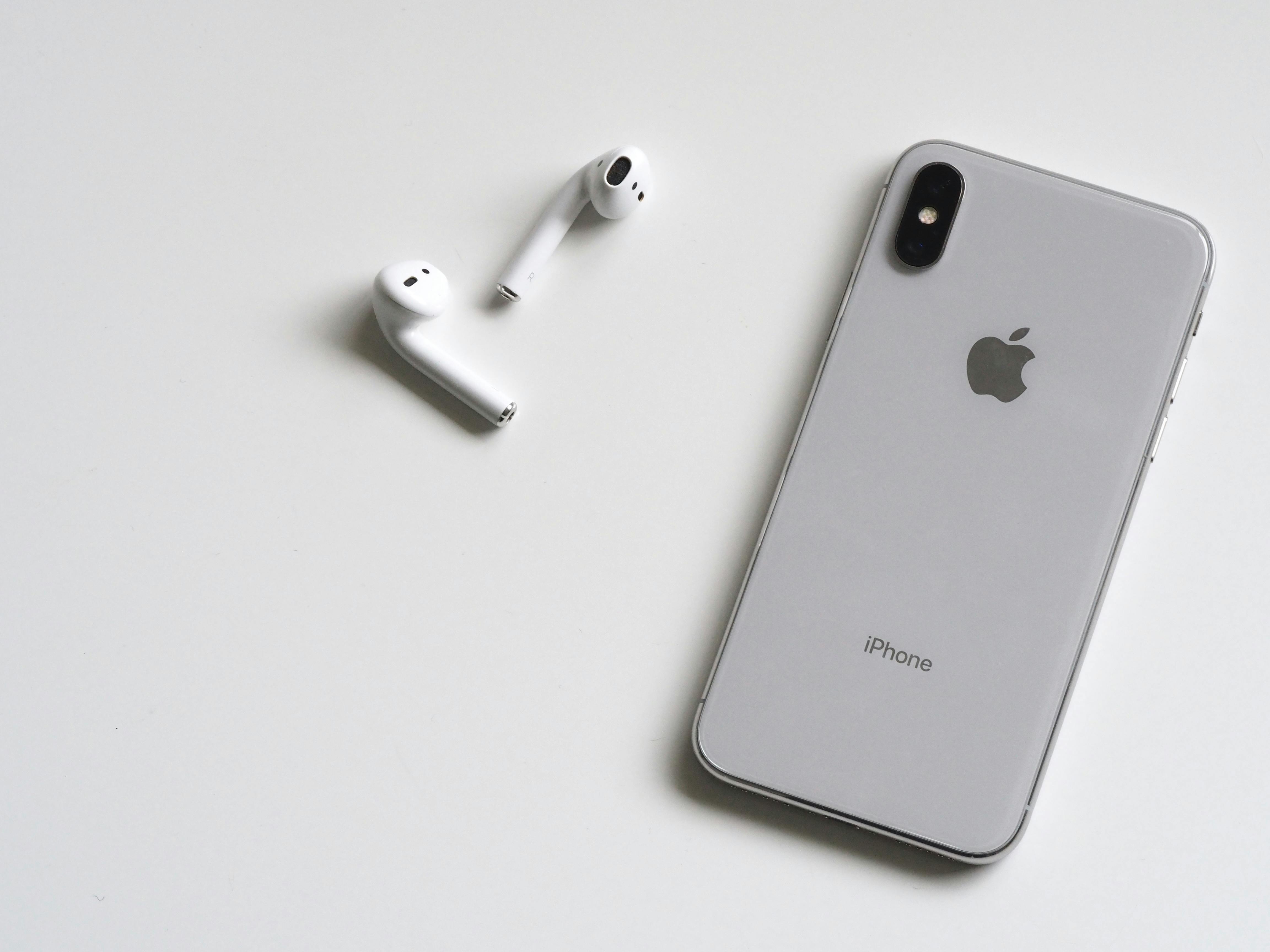
Visualizing Apple’s On‑Device AI Future



Scientific Significance: Edge AI and the Evolution of Model Design
Apple’s on‑device push is part of a larger research trend toward edge AI—moving intelligence from centralized clouds to distributed devices. This has important consequences for how models are built and evaluated.
From “Bigger Is Better” to “Right‑Sized for the Edge”
Frontier labs often chase ever‑larger parameter counts. Edge‑oriented teams, by contrast, optimize:
- Parameter efficiency: achieving high performance per parameter via better architectures.
- Energy efficiency: maximizing useful work per joule, critical for battery devices.
- Latency‑aware training: designing models under strict inference time budgets.
New Benchmarks and Evaluation Metrics
Traditional NLP benchmarks (like MMLU or BIG‑Bench) remain important, but for on‑device deployment, new metrics matter equally:
- End‑to‑end task completion time under thermal constraints.
- Performance degradation as devices age or under reduced power modes.
- Robustness to noisy environments (for speech) and varied lighting (for vision).
Research groups—including those at Apple, Google, and academic labs—are publishing work on quantization‑aware training, hardware‑aware neural architecture search, and privacy‑preserving learning techniques such as federated learning and on‑device adaptation.
For deeper technical context, see the Apple Machine Learning Research site and work by edge‑AI researchers such as Song Han at MIT on model compression and efficient inference.
Milestones: How We Got Here
Apple’s current generative push builds on more than a decade of incremental AI integration.
Key Historical Steps
- 2011–2014: Siri and Early Cloud AI
Siri debuts, relying heavily on server‑side processing and struggling with latency and reliability. - 2016–2019: Neural Engine and Core ML
Apple introduces the Neural Engine and Core ML, enabling on‑device inference for vision, speech, and basic NLP tasks. - 2020–2023: Apple Silicon and Unified Architecture
M‑series chips bring the same ML acceleration to Macs, laying the groundwork for cross‑device AI experiences. - 2024–2026: Generative OS Features
System‑wide writing tools, smarter Siri, and creative AI features begin rolling out as core parts of iOS, iPadOS, and macOS.
Each stage moved more intelligence onto the device and expanded what developers could do without managing their own AI infrastructure.
Challenges: Limits, Risks, and Open Questions
Despite its advantages, Apple’s on‑device strategy faces significant technical, competitive, and regulatory challenges.
Technical Constraints
- Model Capacity: Smaller models can struggle with complex reasoning, niche knowledge, or multi‑step tasks.
- Thermals and Battery: Sustained AI workloads may heat devices and drain batteries, especially on older hardware.
- Update Cadence: Shipping new models via OS updates is slower than updating cloud models, potentially limiting rapid iteration.
Competition and Interoperability
Apple’s privacy‑centric approach contrasts with Google’s Android ecosystem, Microsoft’s Windows + Copilot strategy, and dedicated AI hardware from startups. Key questions include:
- Will developers prefer Apple’s built‑in models or cross‑platform APIs from players like OpenAI or Anthropic?
- How easily can users move AI‑augmented data and models across ecosystems?
- Will regulators scrutinize Apple’s control over the AI layer the way they have over app stores and payment rails?
Trust and Transparency
Even with on‑device processing, users and regulators will demand:
- Clear disclosure of when data leaves the device and why.
- Understandable controls to disable or limit AI features.
- Auditable assurances that private data is not used for ad targeting or undisclosed training.
“We don’t just need powerful AI—we need accountable AI. That includes showing our work.”
— Gary Marcus, cognitive scientist and AI critic, in public commentary on trustworthy AI
Practical Takeaways for Users and Developers
For everyday users, Apple’s on‑device AI push will quietly surface in familiar workflows. For developers and technical professionals, it represents a shift in how AI is accessed and monetized.
What Users Can Expect
- More “magical” features in Messages, Mail, Notes, and Photos that feel fast and private.
- Improved Siri with greater context awareness and better follow‑through on tasks.
- Richer accessibility features powered by real‑time on‑device understanding of content.
What Developers Should Watch
- New AI‑centric WWDC sessions, sample code, and frameworks for integrating system models.
- Guidelines around privacy, safety, and user consent for hybrid (device + cloud) AI flows.
- Evolution of App Store policies related to third‑party LLMs, logging, and data sharing.
Developers who want to prototype on‑device AI can experiment on Macs with Apple silicon using local open‑weight models that are tuned for efficiency, and track Apple’s machine learning documentation and WWDC videos for the latest APIs.
Helpful Gear and Learning Resources (Affiliate Links)
For professionals and enthusiasts exploring on‑device AI, having capable Apple silicon hardware and solid learning resources can make a tangible difference.
Recommended Hardware
- MacBook Pro 16‑inch with M3 Pro – A powerful development and research machine with a strong Neural Engine for local model experimentation.
- MacBook Air 13‑inch with M2 – A portable option that still offers excellent on‑device ML performance for lighter workloads.
- iPhone 15 Pro – A flagship iPhone with advanced Neural Engine capabilities, ideal for testing mobile on‑device AI features.
Recommended Reading and Courses
- TinyML Specialization (Harvard/edX via Coursera) – Great background on running ML models on constrained devices.
- Apple Developer – Machine Learning – Official documentation and sample projects for Core ML, Create ML, and on‑device inference.
- Apple Developer YouTube Channel – WWDC talks and deep dives into ML and system architecture.
Conclusion: Redefining the AI Race Around Privacy and Presence
Apple’s on‑device generative AI strategy reframes the competitive landscape. The race is no longer just about whose model is biggest or whose chatbot scores best on benchmarks. Instead, it is increasingly about who can deliver useful, trustworthy, low‑latency AI woven into the devices people already live with.
By leveraging custom silicon, aggressive model optimization, and a mature privacy narrative, Apple is pushing the industry toward a future where personal AI lives primarily on your hardware—not in someone else’s cloud. Rival platforms will be forced to articulate their own answers to the same questions: How private can AI really be? How fast and reliable can it feel? And who ultimately controls the AI layer that sits between users, apps, and the wider internet?
The outcome will shape not only the smartphone and PC markets, but also broader debates about data governance, digital autonomy, and the balance of power between platforms, developers, and users.
Further Reading and Staying Up to Date
The on‑device AI landscape is evolving rapidly. To track the latest developments, consider following:
- Apple Machine Learning Research – Official papers and articles on Apple’s ML techniques and systems.
- The Verge – Apple Coverage – News and analysis of Apple’s AI features and hardware.
- Benedict Evans’ Newsletter – Strategic commentary on platforms, mobile, and AI.
- Stratechery by Ben Thompson – Deep dives into Apple’s business and ecosystem strategy, including AI.
For technical readers, monitoring arXiv categories like cs.LG (Machine Learning) and cs.CV (Computer Vision), as well as conference proceedings from NeurIPS, ICLR, and ICML, will provide insight into the algorithms that make private, on‑device AI practical.
