
Can Eating Meat Help You Live to 100? What a 20-Year Longevity Study Really Found
For years, many of my older clients have whispered the same question in my office: “Is meat bad for my longevity?” A new 20-year study of more than 5,000 adults over 80 adds an unexpected twist to that conversation. Researchers found that underweight participants who ate meat regularly were more likely to reach 100 than those who didn’t—yet the real message isn’t “eat steak with every meal.” It’s about the vital role of protein and maintaining a healthy weight as we age.
In this guide, we’ll break down what this study actually showed, what it doesn’t prove, and how you can use this information to build a balanced, protein-rich eating pattern that supports healthy aging—whether you choose to eat meat or not.
:max_bytes(150000):strip_icc()/Protein-Source-Live-to-100-20-Year-Study-FT-DGTL0326-02-aaf28508b11a44eeac0eec3cc84009f9.jpg)
What This 20-Year Longevity Study Actually Looked At
The study, recently discussed by Food & Wine and published in a peer‑reviewed journal, followed more than 5,000 adults who were already over 80 years old. Researchers tracked who went on to become centenarians—reaching age 100 or beyond—and how factors like body weight and protein intake, including meat, were related to that outcome.
- Population: Adults over 80 at the start of the study.
- Duration: About 20 years of follow‑up.
- Key factors examined: Body mass index (BMI), dietary patterns, and especially protein and meat intake.
- Outcome: Who lived to at least 100 years of age.
“In very old adults, the risks of frailty and undernutrition can outweigh some of the long‑term chronic disease risks we focus on in midlife,” notes a geriatric nutrition researcher not involved with the study. “Maintaining muscle and body weight becomes a top priority.”
This context matters. These weren’t middle‑aged office workers deciding whether to go vegan. These were already‑older adults, for whom the balance of risks and benefits shifts in important ways.
Key Finding: For Underweight Elders, Regular Meat Intake Was Linked to Longer Life
One of the most attention‑grabbing findings was that underweight adults (those with a low BMI) who ate meat more regularly were more likely to reach 100 than underweight peers who rarely ate meat. For people with a healthy or higher BMI, the association was weaker or not significant.
- Meat appeared protective only in certain groups: The benefit showed up mainly in underweight older adults, who are at higher risk of frailty, falls, and infections.
- Protein—not just meat—seems to be the star: Experts commenting on the study emphasized that protein intake and avoiding undernutrition are likely the true drivers.
- This is an association, not proof: The study cannot prove that eating meat directly caused anyone to live longer—it shows a relationship, not a guarantee.
Why Protein Is So Crucial for Healthy Aging
As we age, our bodies naturally lose muscle mass—a process called sarcopenia. Without enough high‑quality protein and physical activity, that loss speeds up, increasing the risk of weakness, falls, disability, and hospitalizations.
- Muscle maintenance: Protein provides the amino acids your body uses to build and repair muscle tissue.
- Immune function: Antibodies and many immune cells rely on adequate protein.
- Wound healing: After surgery or illness, higher protein needs are common.
- Appetite & energy: Protein helps stabilize blood sugar and can make meals more satisfying, which matters when appetite is low.
Several reviews and position statements (for example, from the PROT-AGE Study Group) now suggest that many adults over 65 may benefit from more protein than the standard minimum recommendation, often in the range of about 1.0–1.2 grams per kilogram of body weight per day, personalized to health status and medical advice.
Is Meat Bad for Longevity? The Nuanced Answer
Meat has developed a reputation as a “longevity villain,” often because of observational studies linking high intakes—especially of processed meats—to higher risks of heart disease, certain cancers, and type 2 diabetes. Those concerns are still valid, especially in midlife and in people with other risk factors.
But the new 20‑year study adds nuance:
- For younger and middle‑aged adults: Replacing some red and processed meat with fish, beans, lentils, and nuts is still strongly supported by evidence for heart and metabolic health.
- For very old, underweight adults: The immediate danger of being too thin and weak may be greater than the long‑term risk associated with modest meat intake.
- Quality and quantity matter: Small portions of lean, minimally processed meat can fit into a longevity‑focused pattern for many people.
“In our oldest patients, I’m less worried about them eating a few ounces of lean meat and more worried if they’re skipping meals and losing muscle,” a geriatrician colleague told me after reading the study.
How Much Protein Do Older Adults Generally Need?
Everyone’s needs are individual, but evidence‑based expert groups suggest higher protein targets for many older adults than the classic 0.8 g/kg/day minimum.
- Typical healthy older adult: Often ~1.0–1.2 g/kg/day, if kidneys are healthy and no contraindications. For a 68 kg (150 lb) person, that’s about 68–82 grams per day.
- Older adults who are ill, recovering from surgery, or very active: Sometimes higher ranges are recommended under supervision, often up to ~1.2–1.5 g/kg/day.
- Kidney disease or specific medical conditions: May require less protein and careful individual planning.
Rather than counting grams obsessively, many of my clients succeed by aiming for protein at every meal and most snacks.

Best Protein Sources for Longevity: Meat and Beyond
The longevity conversation shouldn’t be about “meat vs. no meat,” but rather about building a varied protein toolkit that fits your health, values, and appetite.
Animal-Based Protein Options
- Fish and seafood: Often linked with better heart and brain health; rich in omega‑3 fats. Aim for fatty fish (like salmon, mackerel, sardines) 1–2 times per week if possible.
- Poultry: Skinless chicken or turkey offers leaner protein with less saturated fat than many red meats.
- Dairy: Greek yogurt, cottage cheese, milk, and some cheeses provide protein plus calcium and vitamin D.
- Eggs: Convenient, easy to chew, and versatile—especially helpful if appetite is low.
- Red meat: Beef, lamb, pork—best enjoyed in smaller, less frequent portions, focusing on lean cuts and minimal processing.
Plant-Based Protein Options
- Beans and lentils: Black beans, chickpeas, lentils—great in soups, stews, curries, and spreads.
- Soy foods: Tofu, tempeh, edamame offer complete protein and are staples in many long‑lived cultures.
- Nuts and seeds: Almonds, walnuts, chia, hemp, and pumpkin seeds add protein plus healthy fats.
- Whole grains: Quinoa, oats, and barley provide some protein and fiber.
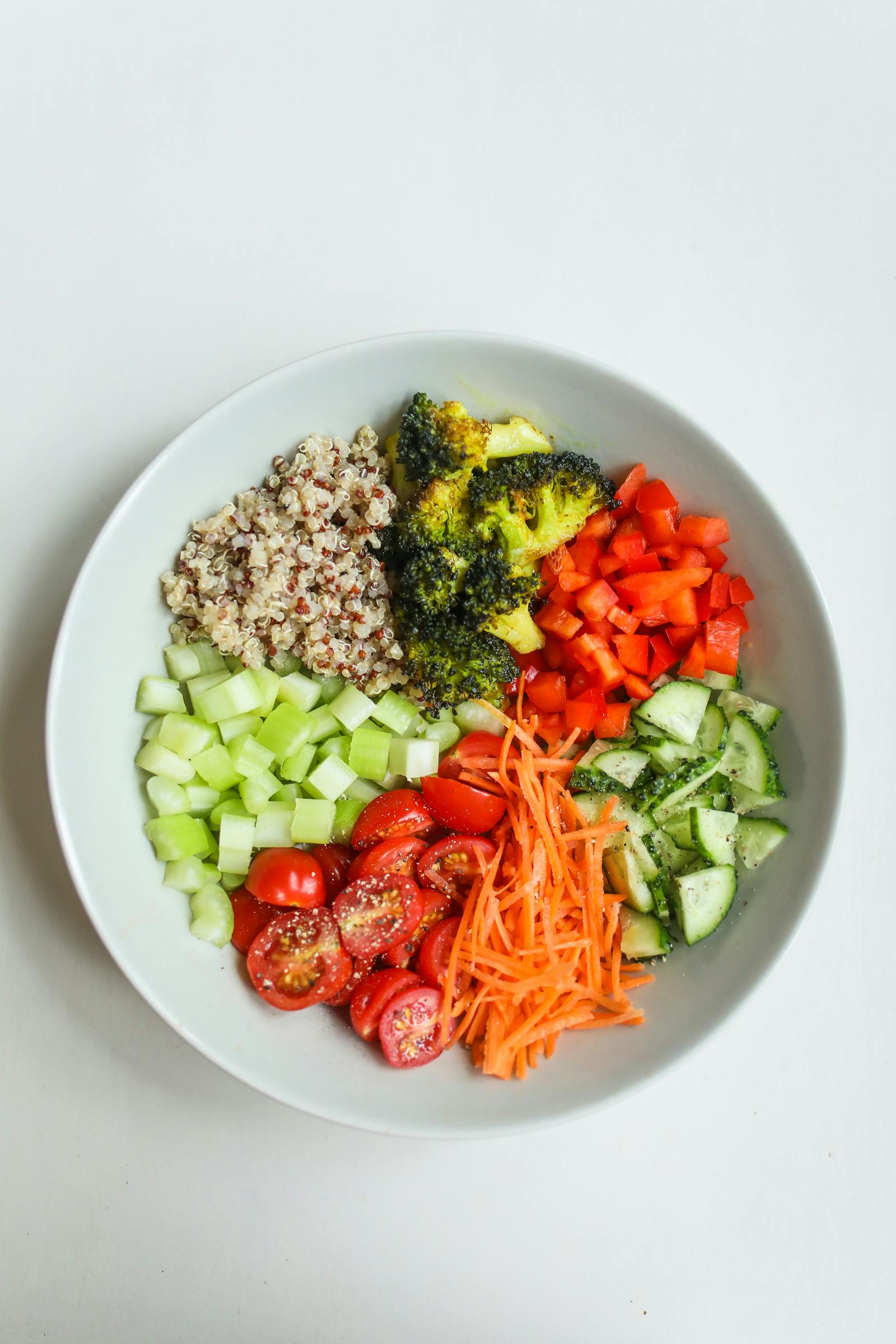
Putting It Into Practice: A Longevity-Focused Plate
Here’s a simple way I often explain a “longevity plate” to clients who want enough protein without overdoing meat:
- Start with protein (about 1/4 of your plate):
- Examples: a palm‑sized piece of fish or poultry, a couple of eggs, or a generous scoop of beans or tofu.
- Fill half your plate with colorful vegetables:
- Think leafy greens, carrots, peppers, broccoli, or whatever you enjoy and can chew comfortably.
- Add whole‑grain or starchy foods for energy:
- Brown rice, quinoa, oats, sweet potatoes, or whole‑grain bread.
- Include healthy fats:
- Olive oil, avocado, nuts, or seeds to support heart and brain health.
Real-World Challenges: Appetite, Chewing, and Confusion About Meat
Many older adults want to eat well but run into practical barriers. Here are some you might recognize, along with strategies that have helped my clients.
1. “I Get Full Fast or Just Don’t Feel Hungry”
- Try smaller, more frequent meals (4–5 mini‑meals instead of 2–3 large ones).
- Use soft, protein‑rich foods like Greek yogurt, scrambled eggs, smoothies with Greek yogurt or soft tofu, and blended soups with beans or lentils.
- Add liquid nutrition if needed: smoothies or shakes made with milk or fortified alternatives, nut butter, and fruit.
2. “Chewing Meat Is Hard for Me”
- Opt for ground or shredded meats in soups, stews, and casseroles if meat is desired.
- Lean on easy‑to‑chew proteins: eggs, yogurt, cottage cheese, tofu, soft beans, and hummus.
- Cook meats slow and moist (stews, braises) to make them more tender.
3. “I’m Confused—Should I Avoid Meat or Eat More of It?”
- If you are underweight, weak, or losing weight unintentionally, work with your clinician or dietitian. Moderate meat intake may be part of the solution.
- If you are at a higher body weight with heart risk factors, prioritizing fish and plant proteins while limiting processed and large portions of red meat is usually wise.
- Either way, aiming for adequate total protein and mostly minimally processed foods is the core goal.
One of my clients in her late 80s was avoiding meat out of fear it would “ruin” her heart. She was losing weight and feeling exhausted. By reintroducing small portions of tender chicken and eggs alongside beans and fish—under her cardiologist’s guidance—she regained strength and stopped losing weight.
What Other Research and Experts Say About Meat, Protein, and Longevity
The new 20‑year study doesn’t stand alone. It fits into a broader evidence base:
- Mediterranean-style diets—which include fish and moderate dairy, with only small amounts of red meat—have been repeatedly linked to longer life and lower chronic disease risk (New England Journal of Medicine).
- Higher plant protein intake has been associated with lower mortality in several cohort studies, especially when it replaces processed meat (BMJ).
- In frail older adults, higher protein intake (from various sources) tends to be linked with better physical function, less disability, and lower risk of hospitalization.
The emerging consensus isn’t that everyone must be vegetarian or that meat is harmless. It’s that:
- Protein adequacy is essential for healthy aging.
- Plant‑forward patterns with modest, high‑quality animal protein seem to support both longevity and quality of life for many.
- The “right” balance depends on your age, health conditions, values, and access to foods.

A Before-and-After Look: When Adjusting Protein Made a Difference
To make this more concrete, here’s a composite case based on several older clients I’ve worked with (details changed for privacy).
Before: Low Protein, High Fatigue
- Age 84, living alone, worried that meat would harm heart health.
- Breakfast: Toast with jam and tea.
- Lunch: Small bowl of plain noodles or rice.
- Dinner: Vegetable soup with a few crackers.
- Result: Unintentional weight loss, weak grip strength, difficulty climbing stairs.
After: Protein at Every Meal (With Modest Meat)
- Breakfast: Greek yogurt with fruit and a sprinkle of nuts.
- Lunch: Lentil soup with a slice of whole‑grain bread and soft cheese.
- Dinner: Small portion of baked fish or tender chicken, plus vegetables and potatoes.
- Snacks: Cottage cheese, hummus with soft pita, or a small handful of nuts.
Over several months—and with clearance from her cardiologist—she gradually regained a few pounds, reported more energy, and felt steadier on her feet. Will this guarantee she reaches 100? No, of course not. But it clearly improved her day‑to‑day quality of life, which is ultimately what most of us are aiming for.
Your Next Steps: Building a Protein Strategy for Longevity
If this new study has you rethinking meat and protein, here’s how to turn insight into action—gently and realistically.
- Check your weight trend.
If you (or an older loved one) are unintentionally losing weight, feeling weaker, or struggling with daily tasks, raise this with a clinician. Undernutrition is a real risk factor in later life. - Audit your protein.
For 2–3 days, write down what you eat. Notice: is there a meaningful source of protein at breakfast, lunch, and dinner? - Decide your comfort level with meat.
If you’re comfortable including it, consider small portions of lean, minimally processed meat a few times per week. If you prefer to limit or avoid meat, emphasize fish (if acceptable), eggs, dairy, soy, and legumes. - Prioritize texture and enjoyment.
Especially for older adults, food must be enjoyable and easy to eat—otherwise even the best plan stays on paper. - Get personalized guidance.
A registered dietitian or knowledgeable clinician can help tailor protein goals and sources to kidney function, medications, cultural preferences, and budget.
The Bottom Line: It’s Less About “Meat vs. No Meat” and More About Enough Protein
The new 20‑year study of adults over 80 doesn’t give meat a free pass, nor does it condemn plant‑based eating. Instead, it highlights something quieter but deeply important: in very old, underweight adults, getting enough protein and calories may help tip the scales toward a longer, stronger life.
You don’t have to eat meat to age well—but you also don’t have to fear it in moderation, especially if you’re struggling to maintain weight and strength. Focus on:
- Aim for steady, adequate protein intake every day.
- Favor minimally processed foods and plenty of plants.
- Adapt texture and timing to your appetite and comfort.
- Work with your healthcare team to personalize your plan.
If you’re ready to take the next step, consider this week’s gentle challenge: add one extra serving of protein—plant or animal—to your day and notice how you feel over the next couple of weeks. From there, you can fine‑tune with your clinician or dietitian’s help.
Longevity isn’t about perfection; it’s about small, thoughtful choices—made consistently—that help you stay strong enough to enjoy the years you’re given.
