
Frozen Brains, Living Questions: How Scientists Just Revived Activity in Deep-Chilled Mouse Brains
Scientists have taken a striking step toward understanding cryosleep by briefly reviving cellular activity in deeply frozen mouse brains. This article explains what the team actually achieved, why it matters for neuroscience and medicine, and why it does not mean humans are close to science-fiction style cryosleep or immortality.
From Sci‑Fi Cryosleep to Real Mouse Brains on Ice
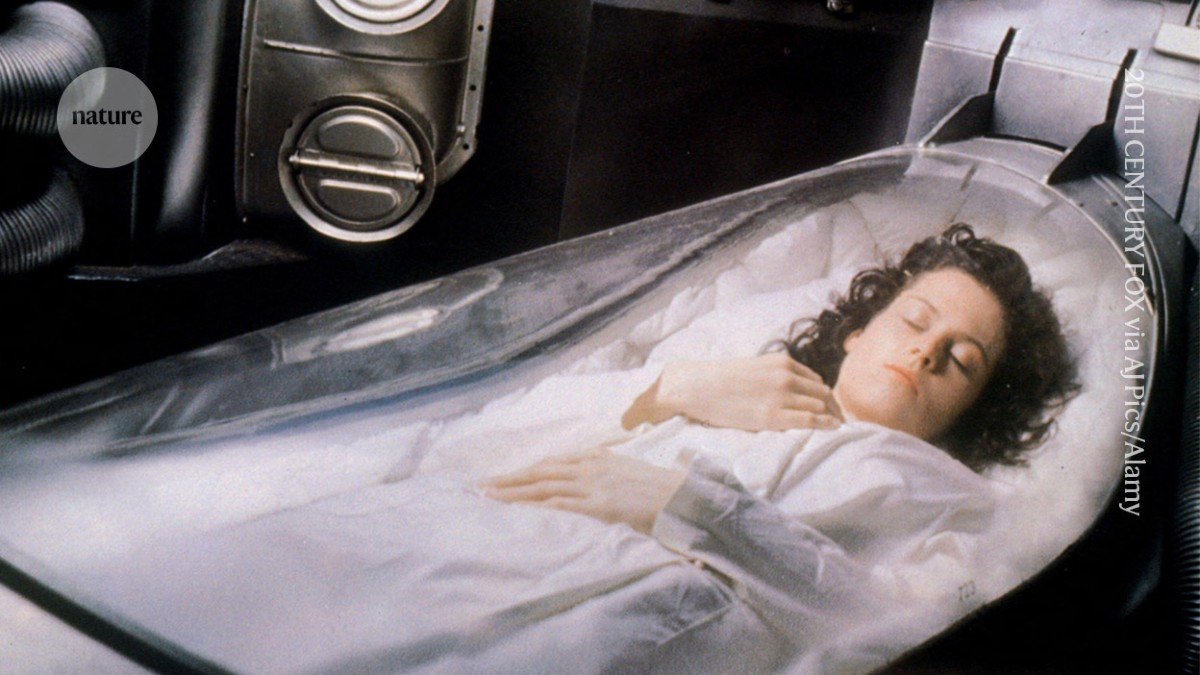
If you’ve ever watched a character in a movie climb into a cryosleep pod and wake up decades later, you’ve seen a fantasy that scientists have long been cautious about. But new research published in Nature reports that scientists have, for the first time, restored some activity in mouse brains that were deeply frozen and then rewarmed.
This doesn’t mean we can freeze people and bring them back to life. It does mean researchers are learning how to protect the brain from extreme cold and revive some of its functions in controlled lab conditions. That knowledge could eventually inform emergency medicine, organ preservation, and our basic understanding of how brains recover from damage.
The Big Question: Can a Frozen Brain Ever Work Again?
When brain tissue is cooled below freezing, ice crystals can rip cells apart, blood vessels are damaged, and the delicate balance of ions and neurotransmitters breaks down. Traditionally, a deeply frozen brain was considered biologically “lost” even if its structure was partly preserved.
Researchers behind this new study wanted to know:
- Can we cool a mammalian brain to very low temperatures without destroying its fine structure?
- After careful rewarming, can we restore any organized electrical activity, not just random noise?
- What does this tell us about the brain’s resilience and the limits of recovery after extreme stress?
“We’re not bringing animals back to life,” one of the study’s authors emphasized. “We’re showing that even after deep freezing, neural circuits can sometimes be coaxed into functioning again under the right lab conditions.”
Understanding those limits matters not just for theoretical questions about cryosleep, but also for very practical reasons, like protecting the brain during heart surgery, stroke, or traumatic injury where blood flow — and thus oxygen — is suddenly interrupted.
How Scientists Revived Activity in Frozen Mouse Brains
The researchers used mouse brains because they are small enough to cool evenly and are widely used as models in neuroscience. Here’s, in simplified form, what they did.
- Careful preparation of the brain
Brains were removed and perfused (gently flushed) with special solutions designed to:- Limit ice formation (using cryoprotective agents, or CPAs)
- Support neurons with nutrients and oxygen carriers
- Stabilize ion balances across cell membranes
- Deep cooling and storage
The tissue was cooled to very low temperatures — much colder than typical refrigeration — to drastically slow down biochemical reactions. Cooling was controlled to minimize damaging ice crystals. - Controlled rewarming
Instead of simply letting the brains thaw, the team rewarmed them carefully to avoid thermal stress and uneven heating, both of which can cause cracks or localized damage. - Reviving circulation and oxygen
Once rewarmed, the brains were connected to a perfusion system — similar in spirit to the BrainEx system used in earlier pig brain experiments — delivering oxygenated, nutrient-rich fluid through the blood vessels. - Testing electrical activity
Using electrodes and imaging, the team looked for:- Whether neurons could still fire action potentials
- Whether groups of neurons showed organized patterns of activity
- Whether key brain structures remained intact under the microscope
The results showed that, under these very specific conditions, parts of the frozen-then-rewarmed brains could generate coordinated neural activity again — a sign that some circuits were still operational.
What Was Actually Revived — And What Wasn’t
It’s important to be precise about what “revived activity” means here. The study did not bring mice back from the dead, nor did it recreate full brain function.
Evidence of revival
- Neurons in several regions could fire electrical signals again.
- Some networks showed patterned activity, not just random spikes.
- Microscopy revealed that many synapses and fine structures remained surprisingly well preserved.
Clear limitations
- No evidence of global, coordinated activity suggestive of consciousness.
- Brains were isolated organs in a lab system, not part of a living animal.
- Recovery was partial and fragile; activity depended on the artificial perfusion environment.
The study demonstrates cellular and circuit-level resilience, not the restoration of a thinking, feeling mind.
Why This Matters for Medicine and Neuroscience
Even without sci‑fi cryosleep, preserving and reviving brain tissue has real-world implications.
1. Safer surgeries and medical cooling
Surgeons sometimes deliberately cool patients during complex heart or brain procedures to protect tissues when blood flow is temporarily interrupted. Understanding how extreme cold damages or preserves neurons could:
- Refine cooling protocols to reduce brain injury
- Guide the development of better protective drugs and perfusion fluids
- Extend the safe duration of certain life‑saving procedures
2. Organ preservation and transplantation
Extending the viable storage time of organs could save lives by making more transplants possible. While whole-brain transplantation is not realistic or ethical, the same physics and chemistry of freezing and rewarming apply to:
- Hearts and lungs
- Kidneys and livers
- Delicate tissues like corneas or pancreatic islets
3. Stroke and cardiac arrest research
In stroke or cardiac arrest, the brain loses oxygen. Some therapies explore brief, controlled cooling as a way to buy time and reduce long‑term damage. By mapping how neurons survive and recover after deep chill, scientists can:
- Identify which cell types are most vulnerable
- Test protective strategies in a controlled setting
- Develop new drugs to support recovery during reperfusion (when blood flow returns)

Cryosleep vs. Reality: How Far Are We, Really?
It’s tempting to leap from “frozen mouse brain cells are active again” to “humans in cryosleep ships.” The gap between those two is enormous.
Key differences from science fiction cryosleep
- Scale: A mouse brain is about the size of a grape. A human brain is roughly 1,300–1,400 grams with vastly more connections.
- Whole body complexity: Freezing an intact human would mean preserving every organ, blood vessel, and microscopic structure without damage — something far beyond current technology.
- Rewarming challenges: Even heating is extremely difficult in large tissues; uneven warming can cause catastrophic cracking or localized damage.
- Consciousness: We have no evidence that a conscious mind can be “paused” and restarted after deep freezing.

What the study does not show
- No method to freeze and revive a whole animal, let alone a person
- No evidence that memory or identity can survive deep freezing
- No validation of commercial cryonics claims about future revival
Ethical Questions: Where Is the Line?
Any time we talk about partially reviving brain activity, serious ethical issues arise. Researchers and ethicists are asking:
- At what point does restored activity approach something like consciousness?
- How can we monitor and prevent suffering in isolated brain tissue?
- What limits should exist on experiments that might blur the line between tissue and sentient beings?
In earlier pig brain studies, scientists specifically used drugs to suppress coordinated electrical activity that could resemble awareness, and they carefully monitored for signs of global brain function.
“The goal is to learn how cells and circuits respond to extreme conditions — not to create disembodied consciousness,” ethicists have stressed in commentary on this line of research.
Expect future guidelines to evolve as techniques become more powerful, balancing scientific insight with respect for potential forms of experience we do not fully understand.
At a Glance: From Frozen Brain to Flicker of Activity
Here is a simplified “before and after” style overview of what the study observed:
Before Freezing
- Normal electrical activity in intact mouse brain
- Blood vessels carry oxygen and nutrients
- Synapses transmit signals between neurons
After Deep Freezing
- Biochemical reactions nearly halted
- High risk of ice crystal damage
- No spontaneous brain activity
After Rewarming & Perfusion
- Some neurons fire again
- Certain circuits show organized patterns
- Structures largely intact but not fully normal

What This Means for You Today
For most of us, the direct impact of this research is less about “freezing ourselves” and more about how we think about brain health and medical innovation.
- Be wary of exaggerated claims. Media headlines and marketing sometimes stretch findings well beyond what the data support.
- Support responsible research. Studies like this deepen our understanding of brain resilience and may, over time, contribute to better emergency and surgical care.
- Focus on proven brain-protective habits. While deep freezing is experimental, everyday choices — blood pressure control, exercise, sleep, and avoiding smoking — remain the most powerful tools for protecting your brain.
Looking Ahead: A Careful Step Toward Understanding Frozen Brains
By restoring some activity in deeply frozen mouse brains, scientists have shown that neural circuits can be more resilient than we once believed. It’s a technical and conceptual breakthrough, but it is not a shortcut to human cryosleep or immortality.
In the years ahead, expect this line of research to focus on:
- Improving tissue preservation with safer cryoprotective agents
- Mapping which brain regions recover best — and why
- Translating principles to emergency medicine and organ preservation
- Refining ethical guidelines as capabilities grow
If the idea of frozen brains sparks your curiosity or anxiety, that’s completely understandable. The healthiest response is to stay informed, ask critical questions about how studies are designed, and keep your hopes grounded in evidence rather than wishful thinking.
If you’d like to explore further, look for coverage and commentary in peer‑reviewed journals like Nature and reputable science news outlets that link directly to the original research, not just sensational headlines.
Meta title (SEO): Scientists Partially Revive Activity in Deep-Frozen Mouse Brains: What the New Nature Study Really Means
Meta description (SEO): A new Nature study reports partial restoration of activity in mouse brains after deep freezing and rewarming. Learn what was actually revived, why it matters for medicine and neuroscience, and why it doesn’t mean humans are close to sci‑fi style cryosleep.
