
Can You Trust Anything You See Online? Inside the New War on Deepfakes and AI Media
Mission Overview
AI-generated media has moved from research labs to our social feeds with astonishing speed. In 2026, photorealistic images, cloned voices, and synthetic videos circulate on TikTok, YouTube, Instagram, and X in volumes that would have been unthinkable just a few years ago. Tech outlets such as The Verge, Wired, and Ars Technica now track this space almost daily.
At the core of the discussion is a simple but unsettling question: when anything can be faked convincingly, how do we know what to trust? The “mission” for platforms, regulators, and creators is no longer just to remove harmful content, but to rebuild an infrastructure of authenticity online—one that can survive in a world awash in synthetic media.
“The real risk is not that people will believe deepfakes, but that they will stop believing in anything.”
The New Landscape of AI‑Generated Media
From AI-augmented selfies to complex, fully synthetic news-style videos, AI-generated media is now a mainstream creative tool and a potential weapon. Its rise is driven by three converging forces:
- Rapid model progress: Diffusion and transformer-based architectures have achieved impressive fidelity in images, video, and audio.
- Cheaper compute: Cloud GPUs and optimized inference runtimes make real-time generation accessible to small teams and hobbyists.
- Viral platforms: Social networks heavily reward eye-catching, shareable content—regardless of whether it’s synthetic.
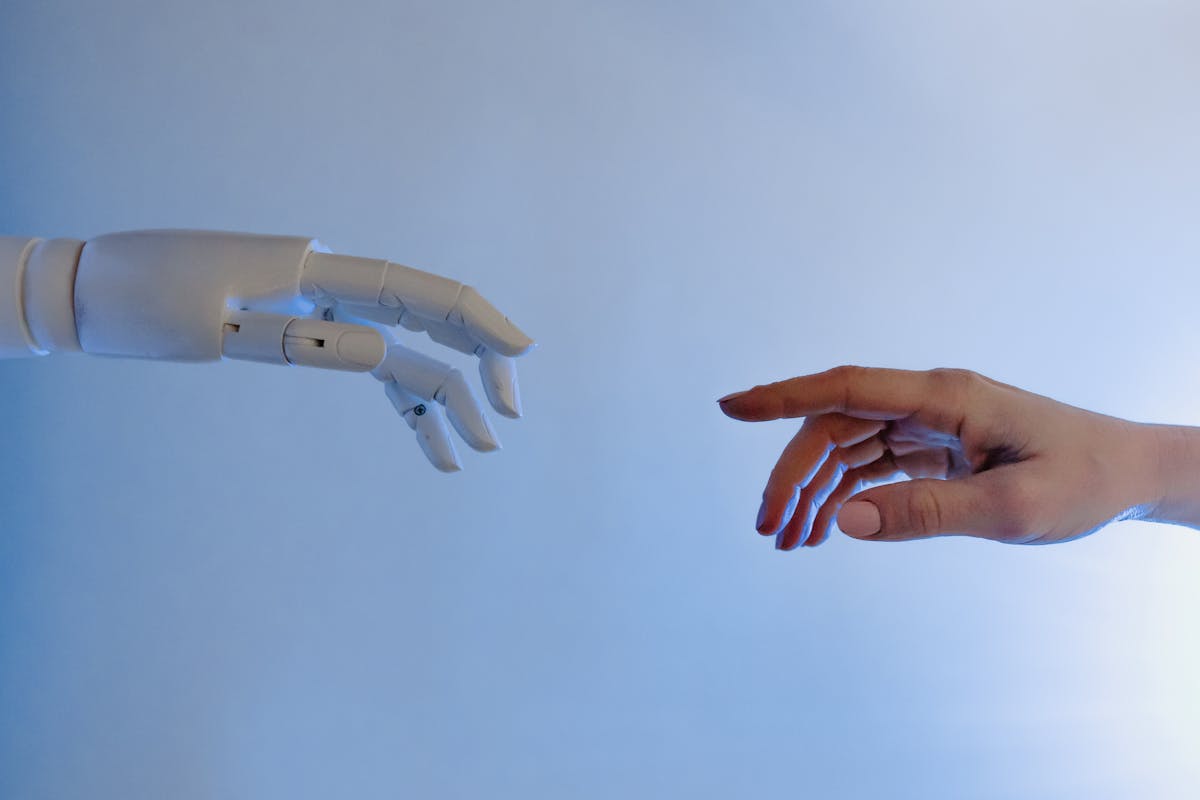
For educated non-specialists, what matters is not mastering every algorithm, but understanding that today’s systems can:
- Generate photorealistic faces that do not belong to real people.
- Clone a voice from a few minutes of public audio and speak arbitrary text.
- Re-enact a person’s facial expressions or full body movements in video.
- Compose music in the style of popular artists, often trained on scraped catalogs.
This capability underpins both the extraordinary creative potential of generative AI and its most serious abuses.
Technology: How Modern Deepfake Systems Work
Under the hood, today’s deepfake and generative media stack revolves around powerful generative models—mainly diffusion models and transformers—often combined into pipelines tailored for images, video, and audio.
Diffusion models for images and video
Diffusion models learn to gradually denoise random noise into coherent images or video frames. Popular systems like Stable Diffusion and its successors use a text encoder (often a transformer) to map your prompt into a high-dimensional space, and the diffusion process iteratively refines noise into an image consistent with that text.
- Text-to-image: “A 4K ultra-realistic portrait of a city mayor giving a speech” produces a convincing still image.
- Image-to-image: Starting from a real frame, the model modifies style, lighting, or identity.
- Text-to-video: Newer models extend diffusion to sequences of frames with temporal consistency.
Transformers and temporal consistency
Transformers excel at modeling sequences, making them ideal for speech, music, and video. In deepfake pipelines they:
- Model phonemes and prosody in speech synthesis.
- Predict motion and lip synchronization frame-by-frame in video re-enactment.
- Align text scripts with generated video for automatic dubbing or narration.
Voice cloning and audio synthesis
Modern voice cloning stacks typically combine:
- Speaker encoder: Extracts a compact “voiceprint” from a few minutes of sample audio.
- Text-to-speech model: Generates the target utterance in the cloned timbre.
- Neural vocoder: Converts spectrograms into high-quality waveforms in real time.
Open-source tools and consumer apps can now convincingly replicate many voices after ingesting a podcast episode, YouTube video, or interview—often without explicit consent.
Open-source fine-tuning and style emulation
Because many generative models are available under permissive licenses, hobbyists can fine-tune them on:
- A specific person’s photos to create personalized avatars.
- An artist’s portfolio to mimic their visual style.
- A brand’s visual guidelines for marketing content.
This is technically impressive but raises serious questions about consent and copyright, especially when creators never agreed to have their work used as training data.
Societal Impact: Fraud, Politics, and the “Liar’s Dividend”
The reason AI-generated media dominates public debate is not only the technology, but its real-world consequences across finance, politics, and everyday social life.
Financial fraud and impersonation
Criminals have used cloned voices and synthetic video to:
- Impersonate executives in urgent audio calls to authorize wire transfers.
- Fool relatives with fake “emergency” calls demanding money.
- Create bogus announcements that can move stock prices or crypto markets.
Cybersecurity experts now treat deepfake-based social engineering as a core business risk, alongside phishing and ransomware.
Disinformation and political manipulation
In election contexts, deepfakes can be used to fabricate:
- Videos of candidates making inflammatory or racist remarks.
- Fake concessions or endorsements timed to influence turnout.
- Deceptive “leaks” that exploit plausible deniability.
The danger is not only that people might believe synthetic videos, but that real evidence can be dismissed as fake—a phenomenon often termed the “liar’s dividend.”
“As synthetic media improves, bad actors no longer have to convince you a fake is real; they only have to convince you that nothing is provably real.”
Cultural and psychological effects
For everyday users, the blurring line between authentic and synthetic content can:
- Increase cynicism toward journalism and scientific evidence.
- Complicate harassment and defamation cases when perpetrators use fake but convincing material.
- Erode interpersonal trust as more interactions are mediated by avatars, filters, and AI voices.
Tech media such as Recode and MIT Technology Review have documented how this erosion of trust is already changing user behavior online.
Platform Responses and Provenance Technology
Major platforms and startups are racing to build technical and policy defenses against malicious deepfakes, while still enabling beneficial uses of generative AI.
Content labeling and user-facing signals
Social networks are experimenting with:
- “Made with AI” labels that signal synthetic content to viewers.
- Fact-check overlays linking to verified sources or debunking articles.
- Account verification for public figures to reduce impersonation risk.
Labels are a necessary but insufficient step; they rely heavily on truthful self-disclosure or reliable detection, both of which can be gamed.
C2PA and cryptographic provenance
A more structural response is the C2PA (Coalition for Content Provenance and Authenticity) standard, backed by organizations including Adobe, Microsoft, BBC, and others. C2PA aims to:
- Cryptographically sign media at the point of capture (e.g., camera or editing software).
- Attach a tamper-evident log of edits, transformations, and AI usage.
- Enable viewers and platforms to verify whether media has authentic, verifiable provenance.
In practice, this can look like a “nutrition label” for media that shows its creation device, editing history, and whether AI tools were used. If the signature breaks, systems can mark the content as “unverified.”

Verification layers and third-party tools
Beyond the platforms themselves, startups and research groups are creating:
- Browser extensions that surface provenance data and deepfake risk scores.
- APIs for media outlets to batch-verify user-submitted photos and videos.
- On-chain attestation services that anchor hashes of authentic media to public blockchains.
TechCrunch and other outlets have chronicled this emerging “authenticity infrastructure,” which may soon be as ubiquitous as TLS certificates are for web security.
Mission Overview: Balancing Innovation and Protection
The overarching mission in the age of AI-generated media is not to eradicate synthetic content—that would be impossible and undesirable—but to:
- Empower legitimate creative and productive uses of generative AI.
- Contain and mitigate the harms of malicious deepfake abuse.
- Preserve a shared epistemic foundation: a baseline of facts and evidence we can agree on.
That mission involves coordinated action across research, regulation, platform design, and public education.
Scientific Significance: An Arms Race of Generation vs. Detection
For the machine learning community, AI-generated media is a fertile research domain that exposes both the power and the fragility of modern AI systems.
Detection research
Deepfake detection models try to distinguish synthetic from real media using:
- Spatial artifacts: Inconsistent lighting, textures, or biological impossibilities (e.g., unrealistic eye reflections).
- Temporal cues: Subtle motion irregularities, unnatural blinking, or lip-sync drift.
- Statistical fingerprints: Frequency-domain signatures left by specific model architectures or compression pipelines.
However, as generative models improve and adversaries adapt, detection performance often degrades in the wild. This forms a classic adversarial ML arms race.
Watermarking and robust signatures
Another line of work explores watermarking: embedding hidden signals into generated media that:
- Are imperceptible to humans.
- Survive common transformations like cropping, compression, and mild editing.
- Can be reliably detected by authorized tools.
Researchers such as those at Google DeepMind and OpenAI have discussed watermarking schemes for AI text and images, though robust, standardized solutions for multimedia remain an active area of study.
“No detection system is perfect, and any system will need to be combined with other approaches and societal responses to be effective.”
Dataset ethics and consent
The scientific community is also grappling with the ethics of training data:
- Were faces, voices, and artworks collected with informed consent?
- Can creators opt out of being used to train generative models?
- What constitutes “fair use” in the era of large-scale scraping?
Artists and musicians have pushed back against models trained on their work without permission, leading to lawsuits, policy debates, and new opt-out mechanisms.
Creators, Music, and the Economics of AI‑Generated Media
Professional creators are among the heaviest users of AI tools—and also among those most vulnerable to being replaced or impersonated by them.
AI as a creative co-pilot
Many artists, filmmakers, and podcasters now use AI to:
- Storyboard scenes and visualize concepts rapidly.
- Generate backgrounds, B-roll, and layout variations.
- Draft voice-overs or temp music before hiring professionals.
When used transparently and ethically, these tools can cut production time and free humans to focus on high-level creative decisions.
Music platforms and AI catalogs
Streaming services such as Spotify have seen tens of thousands of AI-generated tracks uploaded, often via third-party distributors. This raises questions like:
- How should royalties be assigned if models were trained on copyrighted catalogs?
- Should recommendation algorithms treat AI tracks differently from human-created music?
- How can artists protect their vocal likenesses from unauthorized cloning?
Several labels and rights organizations now advocate for “voice rights” and explicit consent requirements for training on vocal performances.
Practical tools for creators
Creators who want to experiment with AI while protecting their brand can:
- Use tools that support C2PA or similar provenance tags.
- Watermark their content and monitor for misuse via content ID services.
- Include explicit licensing terms about AI training in their contracts.
For hands-on learning, resources like Two Minute Papers’ explainer on diffusion models and ColdFusion’s overview of deepfakes provide accessible introductions.
Policy and Regulation: Watermarking, Disclosure, and Liability
Lawmakers worldwide are drafting rules to address AI-generated media, though the legal landscape remains fragmented and fast-moving.
Disclosure and labeling requirements
Emerging regulations and proposals frequently include:
- Mandatory disclosure when political ads or campaign materials use synthetic media.
- Trusted marks for outlets that adopt provenance standards and robust verification practices.
- Penalties for failure to label AI-generated media in sensitive contexts (elections, public safety, finance).
Platform liability and safe harbors
Policymakers are revisiting intermediary liability frameworks—like Section 230 in the U.S.—to determine:
- When platforms are responsible for enabling or failing to remove malicious deepfakes.
- Whether AI model providers can be held liable for foreseeable abuse.
- How to balance free expression with the need to reduce targeted harassment and fraud.
Analyses in outlets such as Lawfare and EFF highlight the difficulty of crafting narrowly tailored law that addresses genuine harms without chilling legitimate speech and satire.
Consent, defamation, and voice rights
Legal scholars are exploring:
- Right of publicity applied to voice and likeness in synthetic media.
- Defamation standards for highly realistic but fake content that harms reputation.
- Data protection rules governing how biometric data (faces, voices) may be collected and used for training.
Over the next few years, court decisions in these areas will set critical precedents for how generative AI can be used commercially and politically.
Milestones in the AI‑Generated Media Era
The story of deepfakes and AI-generated media is punctuated by several key milestones that shaped both public perception and policy responses.
Key milestones to date
- 2017–2018: Early deepfake videos appear on Reddit, sparking initial media coverage and the term “deepfake.”
- 2019–2021: Major research labs release high-quality image and video models (StyleGAN, early diffusion systems), while social platforms ban non-consensual deepfakes.
- 2022–2024: Large-scale, easily accessible diffusion models (e.g., Stable Diffusion derivatives) and consumer voice cloning tools go mainstream; deepfake scams hit financial and political sectors.
- 2024–2026: Provenance standards like C2PA gain traction; multiple governments draft or pass AI transparency and election integrity laws; watermarked and labeled AI content becomes more common.
What to watch in the near term
- Integration of C2PA-like provenance into smartphone cameras and major editing suites by default.
- Election cycles where synthetic media is explicitly regulated—and stress-tested in the real world.
- Standardized watermarking APIs embedded directly in popular generative models.
- High-profile legal decisions on training data, voice rights, and AI-generated defamation.
Challenges: Why Authenticity Is So Hard Online
Even with advanced detection, provenance standards, and new laws, ensuring authenticity online remains deeply challenging.
Technical limitations
- Adaptive adversaries: As detectors improve, attackers tweak generation pipelines to evade them.
- Domain shift: Models trained on benchmark datasets can struggle with new, unseen types of synthetic media.
- Robust watermarking: Watermarks that survive cropping, recompression, and re-editing are hard to design and standardize.
Human and social factors
- Many users share content impulsively without verifying sources.
- Confirmation bias makes people more likely to believe content that aligns with their views.
- Bad actors exploit language and cultural gaps to target specific communities.
Economic incentives
Platforms optimize for engagement, which can favor sensational synthetic content. Meanwhile, rigorous verification is costly and can slow down user experience—creating a tension between safety and growth.
“We’ve optimized the internet for virality, not veracity.”
Practical Guidance: Staying Grounded in a Synthetic World
While systemic solutions are essential, individuals and organizations can adopt practices to reduce their exposure to deepfake harms and misinformation.
For everyday users
- Check the source: Who posted the content? Is it from a verified account or a reputable outlet?
- Look for corroboration: Are multiple independent sources reporting the same event?
- Be cautious with emotional triggers: Deepfakes often aim to provoke anger or fear; pause before sharing.
- Use verification tools: Reverse image search, video provenance checkers, and browser extensions can help.
For organizations and journalists
- Establish verification protocols for user-submitted media, especially in breaking news.
- Adopt provenance tags and disclose when AI tools are used in content production.
- Train staff on deepfake detection basics and social engineering risks.
Useful learning and hardware resources
For readers who want to go deeper into the technical side of generative media and experiment responsibly:
- Architects of Intelligence – interviews with leading AI researchers on the future of AI and society.
- AI-Generated Media and Disinformation – a focused look at deepfakes, disinformation, and democratic resilience.
- Károly Zsolnai-Fehér (Two Minute Papers) on deepfake research – concise explanations of new papers and methods.
Conclusion: Building an Authenticity Infrastructure
AI-generated media and deepfakes are not a passing fad; they are a structural shift in how information is produced and distributed. They touch everything from entertainment and advertising to elections, finance, and interpersonal relationships.
The fight for authenticity online will not be won by a single breakthrough. It will require:
- Continual advances in detection, watermarking, and provenance.
- Clear, enforceable rules around disclosure, consent, and liability.
- Platform designs that reward trustworthy content, not just engagement.
- A more media-literate public that understands both the power and the limits of what they see on screens.
If we can align technical innovation with ethical design and thoughtful governance, AI-generated media can enrich culture and creativity without collapsing our shared sense of reality.
Additional Resources and Next Steps
For those interested in monitoring this space and contributing to better practices:
- Follow researchers like Sina Fazelpour and organizations like the Partnership on AI, which publish guidelines on responsible AI media.
- Explore the C2PA and Content Authenticity Initiative for technical and policy documentation.
- Read investigative coverage from outlets like The New York Times AI spotlight and BBC AI and technology features.
Whether you are a developer, policymaker, journalist, or everyday user, engaging with these resources is a concrete step toward a healthier, more trustworthy information ecosystem in the age of AI-generated media.
References / Sources
- Coalition for Content Provenance and Authenticity (C2PA)
- Content Authenticity Initiative
- The Verge – AI and Artificial Intelligence
- Wired – Artificial Intelligence Coverage
- Ars Technica – Information Technology
- OpenAI Research Publications
- Google AI / DeepMind Blog
- Brookings – AI & Emerging Technology Initiative
- Lawfare – Deepfakes Coverage
- MIT Technology Review – Artificial Intelligence
