
Amazon’s ‘Project Hail Mary’ Blasts Past Expectations to Score Record-Breaking Box Office Launch
Amazon’s MGM release Project Hail Mary has rocketed to the top of the US and Canadian box office with an $80.5 million opening weekend, becoming Amazon’s highest-grossing film debut and signaling a new era in the streaming giant’s theatrical ambitions. This review looks at how the adaptation of Andy Weir’s beloved sci-fi novel balances crowd-pleasing spectacle with smart, character-driven storytelling—and what its success means for Hollywood’s future.
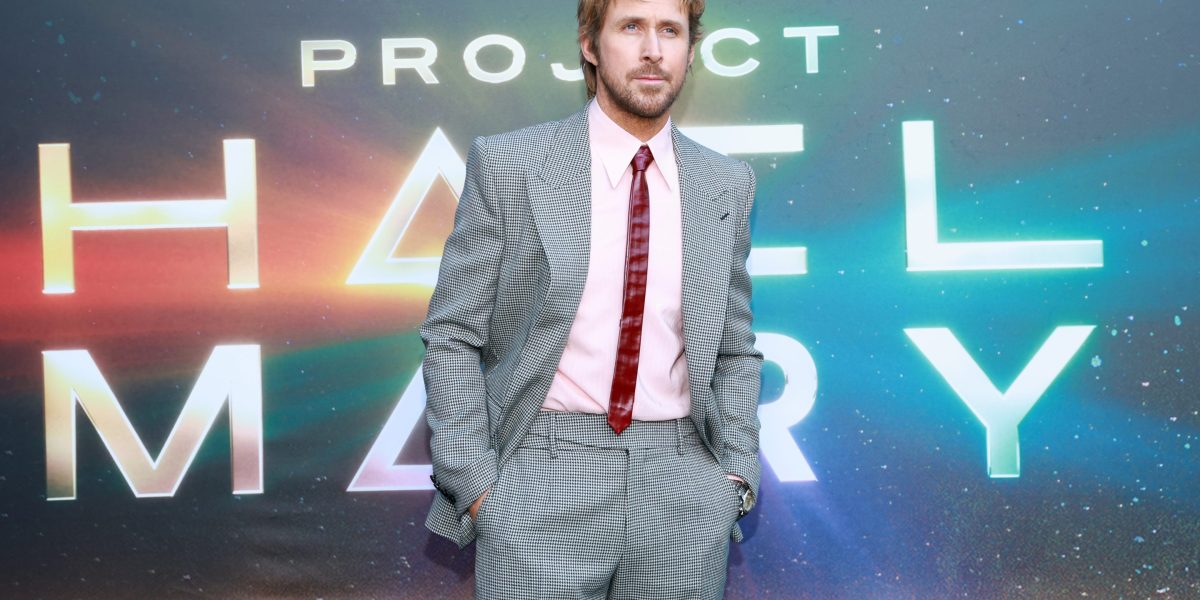
A Record-Breaking Launch in a Streaming-Dominated Era
In a landscape where studios still can’t quite decide if the future is theatrical or streaming, Project Hail Mary has done something refreshingly old-fashioned: it got people back into cinemas in huge numbers. With an estimated $80.5 million in ticket sales across the US and Canada on opening weekend, the film has not only topped the box office but also set a new benchmark for Amazon’s foray into big-screen entertainment.
The movie adapts Andy Weir’s 2021 sci-fi novel of the same name, and early returns suggest it’s hitting that rare sweet spot between hardcore genre fans, casual moviegoers, and viewers who usually wait for streaming but decided this one was worth the trip.
The Story: One Man, One Alien, One Extremely High-Stakes Science Problem
Project Hail Mary centers on Ryland Grace, a lone astronaut who wakes up on a spaceship with no memory of who he is or why he’s there. Gradually, he learns that he’s humanity’s last shot at stopping a mysterious cosmic phenomenon that’s draining the sun’s energy and threatening life on Earth.
The film preserves the novel’s blend of mystery, survival thriller, and science puzzle-box. Flashbacks reveal how Grace—a middle-school science teacher with a complicated past in research—was recruited into a desperate, global effort to save the planet. The twist (which the marketing has leaned into without fully spoiling) is an unexpected first-contact storyline that reframes the mission from a solitary survival tale into an oddball sci-fi buddy movie.
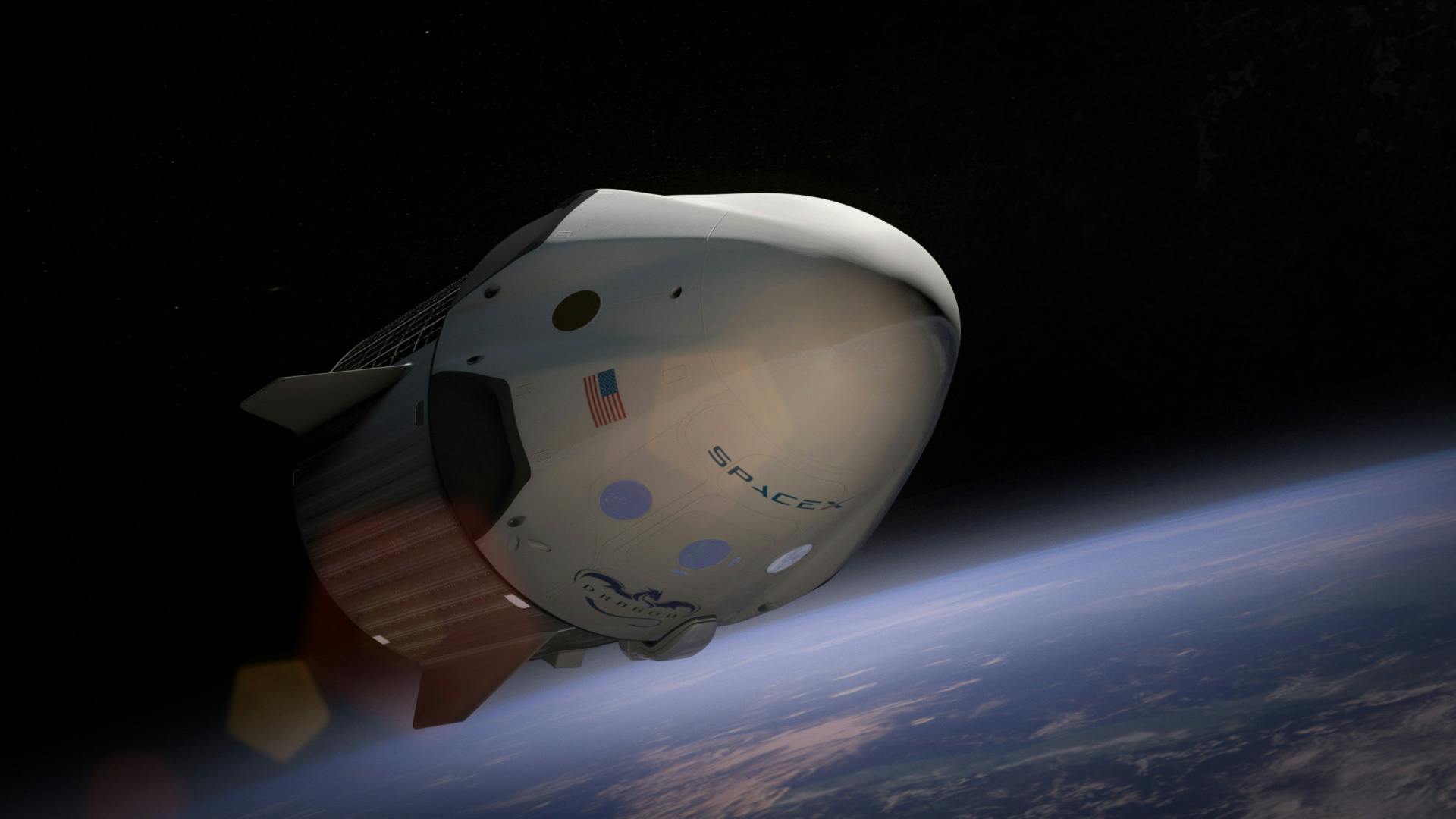
Structurally, the movie toggles between Grace’s present-tense improvisations aboard the Hail Mary and the slow-drip revelations of how the world rallied, fractured, and finally compromised to launch this one-way mission. It’s as much about messy human cooperation as it is about orbital mechanics.
From Page to Screen: How Faithful Is the Adaptation?
Andy Weir’s novel is famously dense with math, chemistry, and engineering details. The film, wisely, doesn’t try to show its work on every equation. Instead, it keeps enough jargon to stay plausible while streamlining the rest into visual storytelling and character beats. Think less textbook, more momentum.
“The goal was always to keep Andy Weir’s love of problem-solving intact, but make sure nobody in the audience felt like they were failing a physics exam,” a producer explained in pre-release interviews.
Fans of the book will recognize key set-pieces: the makeshift lab work, the perilous course corrections, the bittersweet moral decisions Grace has to make as his mission scope expands. Some subplots and scientific digressions are compressed or excised, but the core emotional arc—Grace rediscovering who he is, what he’s done, and why he agreed to sacrifice everything—remains intact.
Performances and Chemistry: Carrying a Cosmic Two-Hander
For long stretches, Project Hail Mary essentially becomes a two-character drama set in a cramped spaceship—and it works because the performances sell both the isolation and the unexpected camaraderie. The lead actor playing Ryland Grace shoulders a heavy load: he has to be funny without undercutting the stakes, and smart without drifting into condescension.

The surprise MVP is the portrayal of Grace’s extraterrestrial counterpart. Bringing that character from page to screen was always going to be a tightrope walk—too alien, and you lose empathy; too human, and you lose the uncanny awe. Here, vocal performance, sound design, and visual effects collaborate to create a being that feels designed by a different evolutionary logic but still heartbreakingly relatable.
“It’s basically a buddy comedy in deep space, except one of the buddies evolved in a star system you’ve never heard of,” one critic quipped in an early review.
Supporting roles in the Earth-bound flashbacks—scientists, politicians, and administrators from around the world—round out the ensemble, giving a sense of global scope without bogging down the narrative.
Direction, Visual Effects, and Sound: Elegance Over Excess
Visually, Project Hail Mary sits in the lineage of grounded sci-fi like The Martian, Gravity, and Interstellar rather than the flashier end of the spectrum. The production design favors functional, believable technology over sleek fantasy gadgets, which helps sell the “near-future problem-solving” vibe.

The VFX work shines most in the depiction of the astrophysical threat and the alien technology, which feel fresh without devolving into abstract screensavers. The score leans minimalist and atmospheric, reserving its bigger emotional swells for moments of genuine breakthrough rather than trying to manufacture them.
Where some recent blockbusters have felt like showreels for their effects houses, Project Hail Mary uses its spectacle in service of tension and emotion. When something explodes, it’s not just because the third act needed more noise; it’s usually the consequence of a failed calculation, a misjudged risk, or an ethical corner cut back on Earth.
Themes: Collaboration, Redemption, and the Science of Hope
Beneath the gadgets and orbital dynamics, Project Hail Mary is ultimately a movie about what cooperation looks like under existential pressure. The Earth sequences give us an unusually pragmatic vision of global crisis response—political tensions and ethical compromises included—while the space storyline imagines interspecies collaboration under even higher stakes.
Ryland Grace himself embodies a quieter thematic thread: scientific responsibility. The film doesn’t let him off the hook for past decisions; part of his journey is accepting that genius and good intentions don’t excuse harm, and that sacrifice has to be chosen, not assigned.

Compared to more nihilistic sci-fi, Project Hail Mary is almost disarmingly optimistic. It argues that ingenuity plus empathy can still move the needle, even when the problem is literally star-sized. That tonal choice—hopeful without being naive—likely helped broaden the film’s appeal beyond hardcore sci-fi fans.
Where It Stumbles: Pacing and Science-Lite Shortcuts
For all its strengths, the film isn’t flawless. The first act occasionally rushes through Earth-side context in order to get Grace into space, which may leave viewers who haven’t read the book wanting a bit more grounding in how the world slid into crisis mode.
On the flip side, the midsection leans heavily into problem-solving montages and scientific exposition. If you’re allergic to watching people run simulations and argue about protocols, some sequences may feel repetitive—even if that’s the point.
Purists of “hard” science fiction might also bristle at a few of the film’s more convenient contrivances, where the script smooths over real-world limitations for the sake of emotional payoffs or time. The novel had more room to justify those leaps; on screen, they occasionally just feel like “because movie.”
What This Means for Amazon, MGM, and Theatrical Sci-Fi
From an industry perspective, Project Hail Mary is a statement film for Amazon. Following its acquisition of MGM, the company has been experimenting with how aggressively to pursue theatrical releases instead of sending its biggest titles straight to Prime Video. This box office result strongly suggests that, under the right circumstances, theatrical-first sci-fi can still play like an event.

The film also reinforces a trend: adaptations of well-regarded, relatively recent sci-fi novels—especially ones grounded in real science—are reliable tentpole material when paired with star power and a clear marketing hook. It’s the same playbook that worked for The Martian, just updated for a post-streaming, post-pandemic landscape.
- For Amazon: Proof that its MGM library and production capacity can anchor genuine theatrical events, not just streaming content.
- For theaters: Another data point that audiences will turn out for non-franchise, non-superhero sci-fi when the premise is strong.
- For sci-fi creators: A signal that emotionally grounded, science-forward stories still have mainstream appeal.
Expect Amazon and other studios to mine the “elevated, scientifically literate sci-fi” bookshelf even more aggressively if these numbers hold up in the coming weeks and in international markets.
If You Liked This, You Might Also Like...
Project Hail Mary sits at the intersection of survival thriller, character drama, and brainy science fiction. If it worked for you, there’s a clear constellation of related films and series worth exploring.
- The Martian – Another Andy Weir adaptation, more comedic but similarly rooted in practical problem-solving.
- Gravity – A lean, visually intense survival story in low Earth orbit.
- Interstellar – Bigger in scope and sentiment, but aligned in its love for theoretical physics and emotional stakes.
- Arrival – A more meditative take on alien contact and communication.
Watch the Trailer and Experience the Atmosphere
The official trailer for Project Hail Mary leans heavily into the mystery of Ryland Grace’s mission and teases the film’s blend of high-stakes tension and offbeat humor. For anyone on the fence, it’s a concise snapshot of the movie’s tone: not grimdark apocalypse, but high-pressure problem solving with a heartbeat.
Verdict: A Smart, Earnest, Crowd-Pleasing Sci-Fi Swing
Project Hail Mary isn’t trying to reinvent science fiction cinema so much as deliver a modern, emotionally grounded take on it—and on that front, it largely succeeds. It’s brisk, funny, and surprisingly tender, anchored by strong performances and a genuine belief in human (and not-so-human) ingenuity.
The film’s occasional pacing wobbles and science-lite shortcuts don’t substantially diminish its impact. If anything, they’re the trade-offs that come with translating a detail-rich novel into a two-plus-hour movie aimed at both enthusiasts and date-night crowds.
As an entertainment product, it’s a confident, satisfying night at the movies. As a business move, it’s a loud declaration that Amazon intends to compete seriously in theatrical filmmaking, not just in the streaming wars. And as a cultural artifact, it slots comfortably into the lineage of big-hearted, brain-forward sci-fi that treats curiosity as a superpower rather than an eccentric hobby.
Rating: 4 out of 5 stars

Whether you’re in it for the science, the sentiment, or just the thrill of seeing original-ish sci-fi dominate the box office again, Project Hail Mary feels like a hopeful data point—for cinema, for studios willing to bet on brainy genre films, and for audiences who still like a little physics sprinkled on their popcorn.
For more details on cast, crew, and release formats, visit the film’s page on IMDb or check official updates via Amazon MGM Studios.
