
Why Right‑to‑Repair Could Break Open the Sealed Tech Ecosystem
Right‑to‑repair is no longer a fringe cause debated only on specialist forums. It now shapes how smartphones, laptops, tractors, and even medical devices are designed, sold, and disposed of. As high‑profile teardowns expose glued‑in batteries, parts pairing, and software locks, consumers are asking a simple question with profound implications: if we pay for a device, why aren’t we allowed to fix it?
At the same time, lawmakers in the United States, European Union, and beyond are passing or proposing rules that force manufacturers to provide parts, tools, and documentation. Environmental groups highlight the climate cost of disposable electronics, while engineers debate whether strong security and repairability can truly coexist.
What emerges is a complex, global negotiation over ownership, sustainability, safety, and control—one that is likely to define the next decade of consumer technology.

Figure 1: Independent technician repairing a smartphone, symbolizing the growing right‑to‑repair movement. Photo by Anton Mislawsky via Pexels (royalty‑free).
Mission Overview: What Is the Right‑to‑Repair Movement Really About?
At its core, the right‑to‑repair movement is about redefining digital ownership. Supporters argue that when you buy a device, you should have:
- The legal right to open and repair it—yourself or via an independent shop.
- Access to genuine spare parts at reasonable prices.
- Service manuals, schematics, and calibration procedures.
- Diagnostic software and firmware necessary to complete a repair.
Opponents—including many large tech and equipment manufacturers—counter that broad repair access could:
- Compromise device safety (e.g., faulty battery replacements).
- Weaken cybersecurity by exposing diagnostic interfaces and firmware.
- Reveal trade secrets and proprietary design information.
- Increase liability for manufacturers if third‑party repairs go wrong.
“Restrictive repair practices can significantly raise costs for consumers, generate more e‑waste, and undermine competition in the repair market.”
The “mission” of right‑to‑repair, therefore, is to rebalance this equation: protect safety and security without allowing them to become pretexts for unnecessary lock‑in and premature obsolescence.
Global Policy Landscape: How Laws Are Catching Up
Over the past few years, legislative momentum has accelerated dramatically. As of early 2026, several major developments stand out:
United States: State and Federal Action
- State laws: States including New York, Minnesota, and California have passed variants of digital fair repair acts targeting consumer electronics and, in some cases, appliances and agricultural equipment.
- FTC enforcement: Following a 2021 report, the FTC has signaled that overly restrictive repair policies may violate antitrust or consumer protection laws, putting pressure on large manufacturers to soften their stance.
- Sector‑specific debates: Farm equipment and medical devices remain contested arenas, with intense lobbying from both industry and advocacy groups.
European Union: Ecodesign and Repairability Scores
- The EU has introduced ecodesign regulations that require certain products to provide spare parts for a minimum number of years and to be assembled in a repair‑friendly way.
- Several countries, led by France, are experimenting with repairability labels—numeric scores displayed at point of sale, influenced by teardown analyses from outlets like iFixit and reported by The Verge and Ars Technica.
Beyond the US and EU
- India, Australia, and Canada are exploring frameworks that combine consumer‑rights law with sustainability mandates.
- Global organizations such as the OECD are studying the link between repairability, e‑waste, and circular‑economy goals.
These policies increasingly push manufacturers to design for a longer service life and to reconsider sealed, glue‑heavy architectures.
Technology: How Modern Design Choices Shape Repairability
Right‑to‑repair debates are deeply technical. Teardowns by independent outfits and YouTube channels highlight how design decisions can either enable or block repair.
Common Design Patterns That Hinder Repair
- Glued‑in batteries and displays that require heat guns, solvents, or specialized jigs to remove safely.
- Proprietary screw heads and fasteners that require uncommon bit sets or manufacturer‑only tools.
- Parts pairing via software, where components like cameras, batteries, and fingerprint sensors must be cryptographically “approved” by the manufacturer’s servers after replacement.
- Non‑modular boards, where inexpensive components (like charging ports) are soldered to multi‑hundred‑dollar logic boards.
- Closed diagnostics, with service tools available only to authorized centers.
“When a device refuses to accept a perfectly functional, genuine part just because it wasn’t installed in an authorized facility, that’s not about safety—that’s about control.”
Teardowns as a Transparency Mechanism
Outlets like Ars Technica, TechCrunch, and independent channels such as JerryRigEverything or Mrwhosetheboss perform systematic teardowns that:
- Score devices for ease of opening, part replacement, and reassembly.
- Call out anti‑repair practices (e.g., single‑use clips, fragile flex cables).
- Reward modularity and use of standard fasteners.
These reviews often go viral, creating reputational pressure. A high repairability score can become a selling point; a poor score can tarnish a flagship launch.
Balancing Security and Repair
Security engineers raise legitimate concerns:
- Secure enclaves and biometric sensors must resist tampering.
- Firmware locks help prevent malicious component swaps and supply‑chain attacks.
- Battery safety requires strict quality and calibration controls.
Yet many researchers argue that secure, repairable designs are possible. Modular security modules, well‑documented authentication protocols, and zero‑knowledge attestation methods can protect users without blanket bans on third‑party repairs.
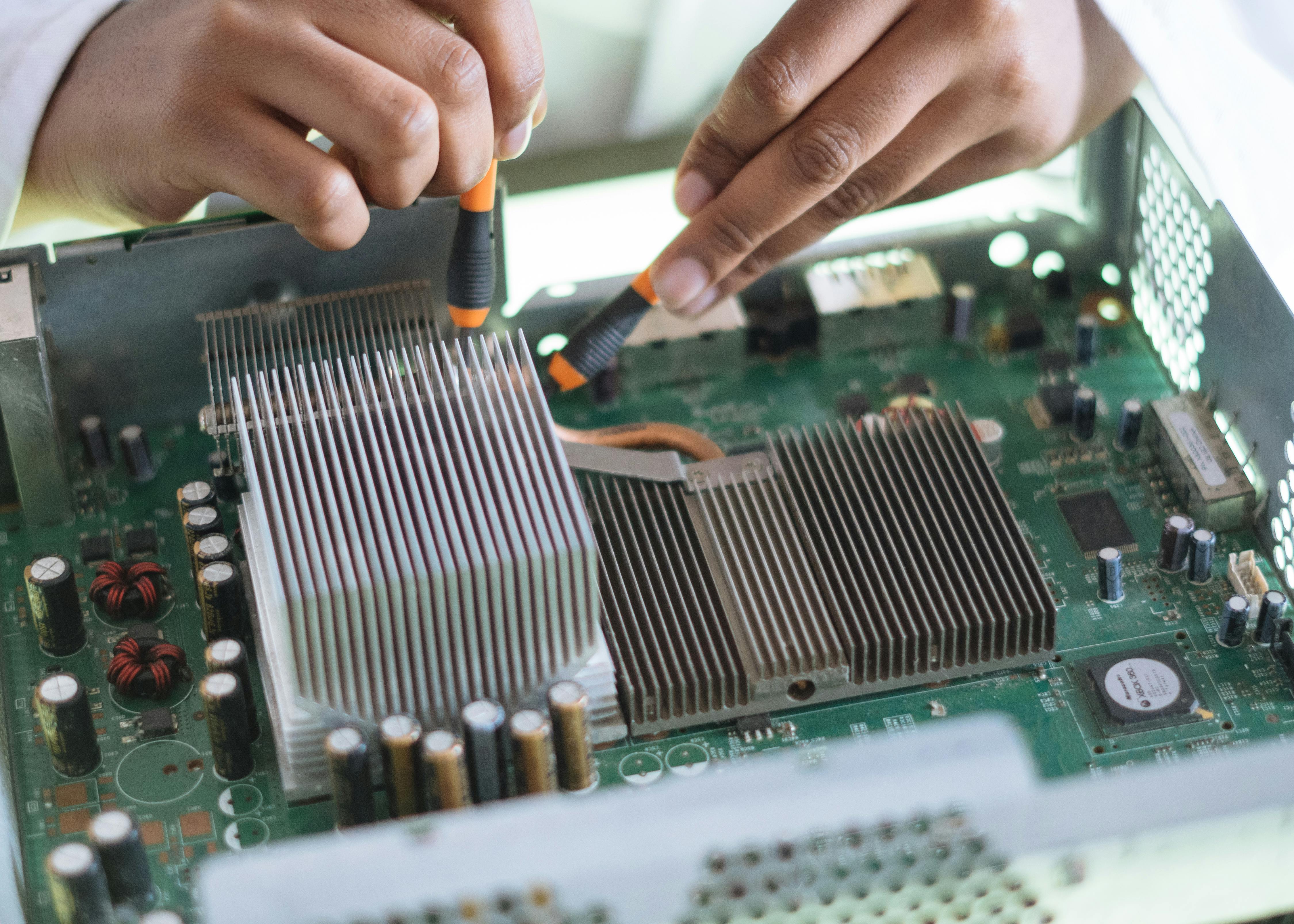
Figure 2: Open, modular laptop design with accessible battery and storage, a positive example for repairability scores. Photo by ThisIsEngineering via Pexels (royalty‑free).
Scientific Significance: Sustainability, E‑Waste, and the Climate Equation
Beyond consumer rights, right‑to‑repair is increasingly framed as a climate and resource‑efficiency issue. The environmental footprint of a typical smartphone or laptop is dominated not by day‑to‑day electricity use, but by manufacturing and supply‑chain emissions.
Lifecycle Assessments and Emissions
- Studies cited by the European Commission suggest that 50–80% of a smartphone’s lifetime carbon footprint comes from production and distribution.
- Extending the useful life of a device from 3 to 5 years can substantially reduce its annualized emissions.
- Right‑to‑repair policies align with circular‑economy strategies by promoting reuse, refurbishment, and parts harvesting.
“From a systems perspective, the greenest device is often the one you already own. Policy that enables economical repair is therefore directly linked to emissions reduction.”
E‑Waste and Resource Extraction
Wired, The Verge, and TechRadar frequently highlight that:
- Millions of tons of electronic waste are generated annually, much of it poorly recycled.
- Critical materials—cobalt, rare earths, gold—are extracted via environmentally intensive mining.
- Repair and refurbishment can dramatically reduce demand for virgin materials.
In this context, sealed ecosystems that push frequent device replacement are increasingly hard to reconcile with national and corporate net‑zero commitments.
The Social Dimension: Consumer Frustration and Viral Teardowns
On platforms like TikTok and X (formerly Twitter), short, emotionally charged videos have become a powerful force. Common themes include:
- Devices declared “vintage” or “obsolete” while still functional.
- Minor faults—like a broken charging port—leading to total replacement.
- Out‑of‑warranty repair quotes that rival the cost of a new device.
These personal stories feed into a broader narrative of asymmetry of power between manufacturers and users. Many people feel they are “renting” their devices under harsh terms, even when they have paid in full.
Hacker News and specialist communities go deeper, dissecting:
- Firmware signing mechanisms and secure boot chains.
- How component authentication is implemented in modern SoC platforms.
- Whether open‑hardware initiatives (e.g., RISC‑V boards, Framework‑style laptops) can achieve competitive performance while remaining repairable.
Milestones: How We Got Here
Key Historical Inflection Points
- Early 2010s – Emergence of teardown culture: Sites like iFixit popularized step‑by‑step device disassembly and repair guides.
- Mid‑2010s – Agricultural flashpoints: Farmers began organizing against software locks on tractors and heavy machinery, particularly in North America.
- Late 2010s – Smartphone glue era: Thinner designs and water resistance led to extensive use of adhesives, sparking criticism from repair advocates.
- 2020s – Legislative breakthroughs: Multiple U.S. states and the EU moved from discussion to concrete laws.
- 2020s – Manufacturer pilot programs: Major brands launched self‑service repair initiatives, though with mixed reception due to pricing, complexity, and parts pairing.
Tech journalism—from Ars Technica to TechCrunch—has chronicled these shifts, often providing technical depth that informs policymakers and the public.
Tools, Skills, and Education: Empowering Repair in Practice
Legislation alone is not enough; people need tools, knowledge, and safe practices.
Essential Tools for Modern Electronics Repair
- Precision screwdriver kits with Torx, Pentalobe, and tri‑point bits (for example, the popular iFixit Mako Precision Bit Set).
- ESD‑safe work mats and wrist straps to prevent electrostatic damage.
- Plastic spudgers, opening picks, and suction cups for non‑destructive prying.
- Hot‑air rework stations and precision tweezers for board‑level repairs (more advanced).
For many users, the goal isn’t to become a microsoldering expert, but to safely perform basic tasks like battery and SSD replacement. High‑quality online guides and video walkthroughs lower the barrier to entry.
Educational Resources
- Step‑by‑step guides from iFixit and similar communities.
- Practical electronics courses on platforms like Coursera and Udemy.
- University and makerspace initiatives that teach repair as part of sustainability curricula.
Combined with legal rights, these resources help transform passive consumers into capable maintainers, aligning with broader STEM education and circular‑economy goals.

Figure 3: Precision tools that enable safe do‑it‑yourself repairs and independent service shops. Photo by ThisIsEngineering via Pexels (royalty‑free).
Business Dynamics: Why Sealed Ecosystems Persist
Manufacturers do not design sealed ecosystems purely out of malice. Several powerful incentives converge:
- Service revenue: Proprietary repair networks can be highly profitable and provide predictable post‑sale income.
- Brand control: Companies fear that poor‑quality third‑party repairs will damage their reputation and lead to support burdens.
- Design freedom: Ultra‑thin, water‑resistant devices are easier to achieve with glued components and tightly integrated boards.
- Upgrade cycles: Frequent hardware refreshes help sustain growth in mature markets.
However, there is growing evidence of alternative models:
- Brands that emphasize durability and modularity—such as repair‑friendly laptops and some open‑hardware phones—are carving out loyal niches.
- Enterprises and governments increasingly demand long‑lived, repairable equipment to meet sustainability metrics and reduce total cost of ownership.
“The companies that win the next decade of hardware will be those that can monetize services and software without treating physical devices as disposable.”
Challenges: Security, Safety, and Unintended Consequences
Even strong right‑to‑repair supporters acknowledge real tensions that must be managed carefully.
Technical and Safety Challenges
- Battery safety: Lithium‑ion cells are energy‑dense and can cause fires if mishandled or punctured.
- Medical and industrial devices: Incorrect repairs could have life‑or‑death consequences or cause serious financial damage.
- Cybersecurity: Exposed debug ports or poorly controlled firmware access could be exploited by attackers.
Policy and Implementation Risks
- Laws that are too vague may create loopholes; laws that are too rigid may stifle innovation.
- Manufacturers might technically comply (e.g., offering parts) but set prices or processes so high that repair remains impractical.
- Low‑quality counterfeit parts could proliferate if supply chains are not well regulated.
Addressing these challenges requires nuanced regulation, industry standards, and independent certification schemes that reward safe, high‑quality repair rather than simply cheap fixes.
Practical Advice: How Consumers and Organizations Can Respond
For Individual Consumers
- Check repairability before you buy. Consult teardown scores and reviews from reputable sources.
- Invest in basic tools. A solid precision kit and ESD protection can pay for themselves in a single successful repair.
- Start small. Attempt low‑risk repairs first (e.g., upgrading RAM or SSD in a compatible laptop) using detailed guides.
- Support repair‑friendly brands. Reward companies that publish manuals, sell parts, and design modular hardware.
For Organizations and IT Departments
- Include repairability and parts availability as criteria in procurement RFPs.
- Establish relationships with reputable independent repair partners.
- Track device lifecycles and total cost of ownership, not just purchase price.
- Provide staff with training or workshops on basic maintenance and safe handling.

Figure 4: Electronic waste from discarded devices underscores the environmental stakes of repairability. Photo by Pixabay via Pexels (royalty‑free).
Conclusion: From Sealed Boxes to Shared Stewardship
Right‑to‑repair has evolved into a defining issue at the intersection of technology, law, business, and climate policy. Teardowns and social‑media campaigns have exposed the practical consequences of sealed ecosystems, while policymakers are beginning to draw clear lines around what constitutes fair repair access.
The path forward is unlikely to be binary. Some categories of devices will remain tightly controlled for legitimate safety or security reasons; others are ripe for radical openness and modularity. The real opportunity is to move toward a shared stewardship model, where manufacturers, repair professionals, and end‑users all play constructive roles in extending device lifespans, reducing waste, and preserving trust.
For now, every purchasing decision, policy vote, and viral teardown contributes to this ongoing negotiation. The more transparent and technically literate the conversation, the more likely we are to arrive at hardware ecosystems that are both secure and repairable—and truly owned by the people who pay for them.
Further Reading, Key Resources, and Next Steps
To explore the topic in more depth, consider the following actions and resources:
Stay Informed
- Follow coverage on Ars Technica, The Verge, Wired, and TechCrunch.
- Track legislation via organizations such as U.S. PIRG and the Right to Repair Europe coalition.
Learn and Practice
- Browse community repair guides on iFixit.
- Watch device teardowns and repair tutorials on YouTube from channels that emphasize safe practices and accurate information.
Consider Long‑Term Value
When planning your next hardware purchase, factor in:
- Availability of spare parts and official manuals.
- Repairability scores and long‑term software support windows.
- Resale and refurbishment options in your local market.
References / Sources
- Ars Technica – Right‑to‑Repair coverage
- The Verge – Right‑to‑Repair stories
- Wired – Right‑to‑Repair tag
- TechCrunch – Right‑to‑Repair tag
- FTC – “Nixing the Fix” report on repair restrictions
- Right to Repair Europe coalition
- European Commission – E‑waste and ecodesign policy
- OECD – Waste and circular economy resources
- Harvard Business Review – Analysis of the right‑to‑repair movement
