
AI Everywhere: How Generative Assistants Are Quietly Rewiring Your Phone, PC, and Workday
Generative AI has broken out of the browser tab. What began as isolated chatbots has evolved into assistants woven deeply into operating systems, messaging apps, and productivity suites. From “AI PCs” with dedicated neural processors to smartphones that summarize your day on‑device, the consumer technology stack is being rebuilt around continuous, low‑latency AI. This article explains how that shift is unfolding, the hardware and software driving it, why privacy and regulation are now central, and what this “AI everywhere” reality means for everyday users and professionals.

Illustration of a user interacting with an AI assistant on a laptop. Image credit: Pexels / Tara Winstead.
Mission Overview: From Chatbots to Ambient AI Assistants
The “mission” of consumer-grade generative AI assistants is no longer to impress with single clever responses. The goal is to become an ambient layer that quietly augments every digital interaction—writing, reading, searching, organizing, calling, and creating—without demanding extra effort from the user.
Across coverage in Engadget, TechRadar, The Verge, Wired, and Hacker News discussions, a few converging trends define this new phase:
- Deep integration: Assistants are being embedded directly into operating systems (Windows, macOS, Android, iOS), browsers, email clients, IDEs, and office suites.
- On‑device intelligence: Phones and laptops ship with NPUs that handle speech recognition, translation, summarization, and image editing locally.
- Continuous context: Assistants are beginning to track recent tasks, open documents, and communication history (within policy) to provide context‑aware help.
- Regulatory pressure: The EU AI Act, US policy guidance, and global privacy regulations are forcing tech companies to design for transparency and data minimization.
“The next wave of AI won’t feel like a chatbot at all. It’ll feel like your computer suddenly got much better at understanding you.” — Paraphrased from ongoing commentary in Wired’s AI coverage
Technology: AI Phones, AI PCs, and the New Hardware Stack
Generative AI everywhere is fundamentally a hardware story. To make assistants fast, private, and battery‑friendly, device makers are adding specialized accelerators designed for neural workloads.
On‑Device NPUs and Accelerators
Modern “AI PCs” and flagship smartphones typically include:
- Neural Processing Units (NPUs): Low‑power chips optimized for matrix operations, enabling tasks like real‑time transcription or image upscaling without waking up the main CPU/GPU.
- Tensor or AI cores in GPUs: Initially built for deep learning training, now used for local inference of larger models and accelerated graphics effects.
- Secure enclaves: Isolated hardware regions for storing and processing biometric and sensitive data used by AI features.
TechRadar and Engadget’s reviews increasingly emphasize sustained NPU performance and thermal behavior, not just traditional CPU benchmarks. The key metric is: Can the device run AI features all day without killing the battery or requiring constant cloud access?
Example “AI Features” Shipping Today
- Real‑time transcription and translation: Meeting audio converted to text and summarized on‑device.
- Smart photo and video editing: Background object removal, portrait re‑lighting, and upscaling using generative models.
- Noise suppression and audio cleanup: AI filters that isolate your voice, cut background noise, and normalize volume in calls.
- Context‑aware system search: “Find the spreadsheet where we planned Q3 budget changes” instead of remembering exact filenames.
For power users, choosing the right hardware matters. High‑end “AI laptops” with strong NPUs and GPUs are becoming the standard recommendation for heavy AI-assisted workflows such as video editing, coding, or data science.
For readers building AI‑intensive setups at home or in small offices, high‑performance yet energy‑efficient laptops such as the ASUS ROG Zephyrus G16 AI‑powered laptop have become popular in the US, balancing GPU power with portable design for on‑device model inference and creative workloads.
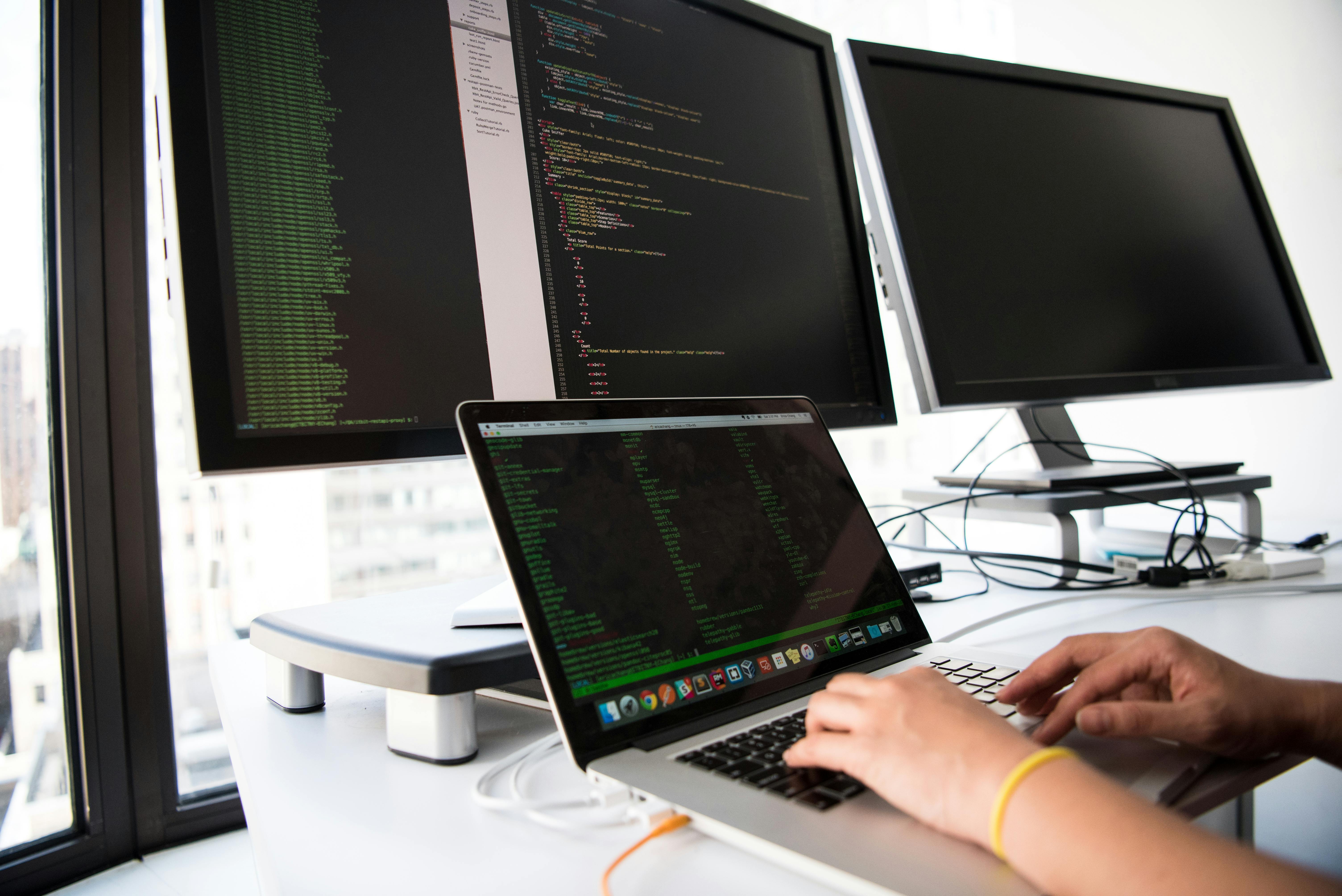
Modern devices pair CPUs, GPUs, and NPUs to support always‑on AI workloads. Image credit: Pexels / Markus Spiske.
Software Integration: Assistants Inside the Tools You Already Use
On the software side, tech platforms are racing to define how users will interact with AI day‑to‑day. Instead of asking you to open a separate chatbot, AI is being embedded where your work already happens.
Productivity Suites and Operating Systems
Major ecosystems are converging on similar capabilities:
- Email and documents: Drafting, rewriting, tone adjustment, and summarization inside your inbox and word processor.
- Spreadsheets and slides: Formula suggestions, chart explanations, and automatically generated slide decks.
- IDE integration: Code completion, refactoring suggestions, test generation, and inline documentation.
- System‑level copilots: Assistants that can open apps, change settings, find files, and perform multi‑step actions via natural language.
TechCrunch and The Next Web report a booming startup ecosystem building on top of these primitives: meeting summarizers, AI‑augmented CRMs, customer support bots, and personal knowledge managers that index your notes and documents.
Will Assistants Become Commodities?
A core strategic question is whether assistants are interchangeable “skills” or deeply tied to their host platforms. In practice, three factors determine defensibility:
- Depth of OS integration: How much can the assistant actually do—file operations, settings, notifications—or is it just text in a box?
- Access to proprietary data: Enterprise knowledge bases, email archives, and internal documentation can create strong network effects.
- Ecosystem lock‑in: Developers building plugins, automations, and workflows around one assistant make switching increasingly costly.
“The assistant that wins is the one that can see the most of your digital life—without freaking you out about privacy.” — Summarizing sentiment often expressed in The Verge’s AI commentary

AI assistants are increasingly embedded in email, documents, and collaboration apps. Image credit: Pexels / rawpixel.com.
Scientific Significance: Models, Architectures, and Open vs. Proprietary
While mainstream users see polished chat interfaces, Hacker News and research communities focus on the science: model architectures, training data, evaluation, and safety.
Core Technologies Behind Consumer Assistants
- Large Language Models (LLMs): Transformer-based models trained on massive text corpora to predict the next token, enabling fluent generation, summarization, and reasoning.
- Multimodal models: Architectures that combine text, images, and sometimes audio or video, powering features like describing photos or generating illustrations from prompts.
- Retrieval-Augmented Generation (RAG): Systems that search a document index or web corpus and feed results into the model to ground its output and reduce hallucinations.
- On-device distilled models: Smaller variants of large models compressed via distillation, quantization, and pruning to run on consumer hardware.
Open-Source vs. Proprietary Systems
A recurring theme on Hacker News is the tension between open and closed models:
- Open models (e.g., those from Meta, Mistral, and the broader open‑source community) enable local deployment, fine‑tuning, and transparent inspection.
- Proprietary models offer state‑of‑the‑art quality and integrated services but restrict how models can be used, audited, or extended.
In practice, consumer‑grade assistants are increasingly hybrid: local models handle sensitive, latency‑critical tasks, while cloud models tackle complex queries. This layered architecture allows vendors to balance privacy, cost, and performance.
Real-World Workflows: How Users Are Actually Using AI Assistants
On YouTube, TikTok, and professional networks like LinkedIn, creators are sharing detailed walkthroughs of AI‑enhanced workflows. These reveal how generative assistants are changing daily work patterns.
Common High-Impact Use Cases
- Knowledge workers: Drafting emails, summarizing long reports, extracting action items from meetings, and generating slide outlines.
- Developers: AI pair‑programming, boilerplate generation, test creation, refactoring suggestions, and code review assistance.
- Students and lifelong learners: On‑demand explanations, practice questions, study note generation, and language learning.
- Creators: Script drafting, idea generation, thumbnail design, and basic video editing augmented by generative effects.
- Small businesses: Customer support automation, FAQ bots, templated proposals, and marketing copy generation.
Many creators emphasize that assistants shine when:
- They are treated as collaborators, not oracles.
- Users maintain a verification step for any critical content.
- Workflows are redesigned around prompting + editing, not manual production from scratch.
For those looking to explore these workflows more deeply, videos from channels such as Two Minute Papers and ColdFusion offer accessible, up‑to‑date explorations of AI tools and their capabilities.
Privacy, Security, and Data Ownership: The Critical Fault Lines
As AI assistants gain deeper access to personal and business data, privacy and security become existential concerns. Wired and Ars Technica consistently highlight several risk vectors.
Key Risks
- Training data sourcing: Use of web‑scraped content and user interactions in training raises copyright and consent questions.
- Prompt and output logging: Storing conversations and documents in the cloud can create long‑lived sensitive records.
- Prompt injection and data leakage: Malicious content can trick models into exfiltrating data or performing unintended actions.
- Model hallucinations: Confident but incorrect outputs can mislead users in high‑stakes contexts like health, law, or finance.
Design Principles Emerging from Regulation and Best Practice
Leading companies and regulators are pushing toward:
- Data minimization: Collect only what is necessary, for as short a time as possible.
- Explicit consent and control: Clear toggles for data retention, model training usage, and personalization.
- On‑device processing by default: Whenever feasible, run models locally and keep raw data on the device.
- Transparency and labeling: Mark AI‑generated content and provide model cards describing capabilities and limitations.
- Robust access controls: Especially in enterprise, ensure assistants respect document permissions and role‑based access.
“The AI that knows you best is also the AI that can hurt you most if it’s compromised.” — Paraphrased from Ars Technica’s security-focused AI coverage
From a user perspective, a few practical steps can drastically improve safety:
- Regularly review data usage settings in your AI apps.
- Avoid pasting highly sensitive information unless policies explicitly guarantee local‑only processing.
- Use separate work and personal accounts to segment data.
- Treat AI outputs as drafts, not truth, especially in regulated domains.
Milestones: What Has Changed Between 2023 and 2026
The period since 2023 has seen rapid progress in bringing generative AI from labs to living rooms and offices. Some notable shifts include:
- From web apps to OS features: Assistants moved from isolated websites to being pinned on taskbars, docks, notification shades, and home screens.
- From single device to multi‑device presence: Users can start a conversation on a phone, continue it on a laptop, and pick it up on a tablet or smart display.
- From text‑only to multimodal: Support expanded from chat to images, screenshots, PDFs, and in some cases audio and video.
- From generic to personalized: Systems incorporate user preferences, writing style, and domain‑specific knowledge—within privacy constraints.
- From opt‑in novelty to default experience: New devices increasingly ship with assistants enabled or heavily promoted during onboarding.
These milestones collectively underpin why AI assistants now dominate tech coverage: they are redefining what “using a computer” feels like.
Challenges: Reliability, Over-Reliance, and Social Backlash
Despite remarkable progress, generative AI assistants face significant technical and social headwinds.
Technical and UX Challenges
- Hallucinations and factual errors: Even top models can fabricate citations, numbers, or reasoning steps.
- Long‑term memory and context: Maintaining accurate, privacy‑respecting user models over months is still an open problem.
- Evaluation and benchmarks: Existing tests do not fully capture real‑world performance across diverse users and languages.
- Edge cases and adversarial prompts: Robustly defending against cleverly crafted prompts remains difficult.
Social and Economic Concerns
On social media and forums, critiques often focus on:
- Over‑reliance: Fears that users, particularly students, may offload too much cognitive work to AI.
- Impact on creative professions: Concerns about commoditization of writing, design, and illustration.
- Platform power: Worries that a few companies may control the “interface to knowledge” for billions of people.
Many researchers and practitioners argue for a “centaur model” of human‑AI collaboration—where humans retain final authority and critical thinking, while delegating mechanical or repetitive work to assistants.
Practical Best Practices for Using AI Assistants Wisely
To get the most from generative AI while minimizing risk, it helps to adopt deliberate habits.
For Individuals
- Use AI for structure, not final copy: Let it propose outlines, drafts, or alternative phrasings, then revise.
- Ask for reasoning and sources: Prompt assistants to explain their steps or provide citations when possible.
- Maintain a feedback loop: Correct mistakes so personalization gradually improves.
- Segment tasks: Use different assistants or profiles for work, study, and personal experimentation.
For Teams and Organizations
- Define acceptable use policies for AI tools, especially around sensitive data.
- Choose vendors that support data residency, audit logs, and role‑based access control.
- Provide training on prompting, verification, and bias awareness.
- Pilot assistants in low‑risk workflows first (e.g., internal documentation, brainstorming).
For further reading on integrating AI into professional workflows, white papers from organizations such as OpenAI Research, Google DeepMind, and Microsoft Research offer in‑depth technical and ethical analyses.
Conclusion: The New Interface Layer of Computing
Generative AI assistants are quietly becoming the default way many people interact with technology. Instead of thinking in terms of apps and menus, users increasingly issue goals in natural language and let the system orchestrate the rest.
Whether this transition is ultimately empowering or constraining will depend on several unresolved questions:
- Can assistants become reliable enough for high‑stakes tasks without obscuring their limitations?
- Will open and local models keep pace with proprietary systems to preserve user autonomy?
- Can regulators strike a balance that protects users without freezing innovation?
- Will AI be designed to augment human judgment rather than replace it?
What is clear is that generative AI is no longer a niche developer toy. It is evolving into a pervasive interface layer—one that will define how the next generation learns, works, and creates. Understanding its technical foundations, strengths, and weaknesses is now part of basic digital literacy.
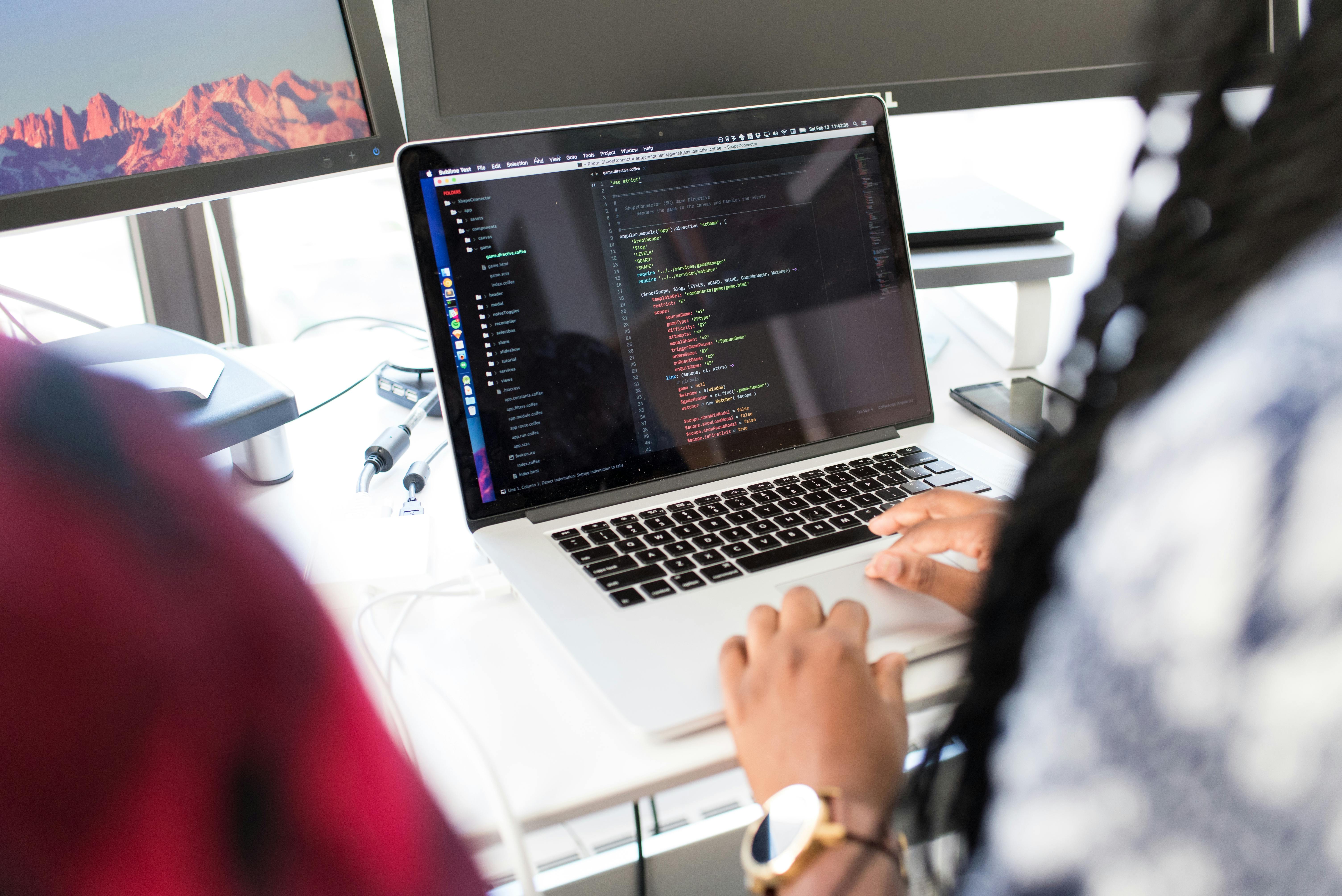
AI assistants are becoming the new interface layer between humans and computers. Image credit: Pexels / Markus Spiske.
Additional Resources and Next Steps for Curious Readers
To stay current in this fast‑moving field, consider:
- Following AI researchers and practitioners on X / Twitter and LinkedIn, such as Yann LeCun or Andrew Ng.
- Subscribing to reputable AI newsletters like Axios AI or MIT Technology Review newsletters.
- Experimenting with both cloud‑based assistants and local models to understand trade‑offs in speed, privacy, and cost.
As you adopt AI assistants, the most valuable mindset is experimental curiosity: treat these systems as powerful but imperfect tools, learn their failure modes, and design your workflows so that they amplify—rather than replace—your expertise.
