
How Childhood Junk Food Rewires the Brain (and What Parents Can Still Do About It)
If you’ve ever worried that too many chicken nuggets, fries, or sugary snacks might have “ruined” your child’s health, you’re not alone. Many parents quietly carry that fear—especially if early years were hectic, money was tight, or picky eating ruled the dinner table.
Emerging neuroscience research, including a 2026 report from Neuroscience News, suggests that childhood diet doesn’t just affect weight in the moment. It can leave a lasting mark on the brain’s appetite control center. The surprising twist: supporting the gut microbiome later in life may help restore healthier feeding behavior—even after a rough nutritional start.
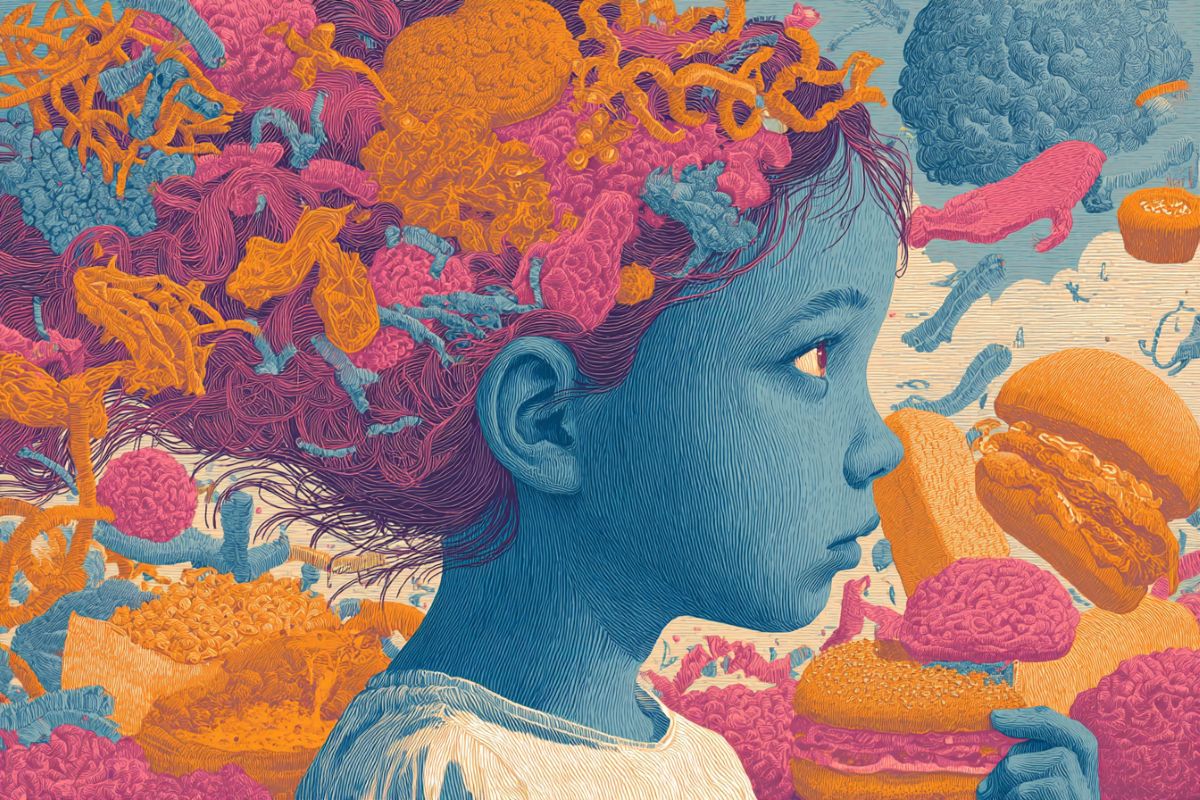
This article unpacks what the latest science actually says—without scare tactics—and offers realistic, science-informed steps you can start using today, whether you’re parenting a toddler, tween, or teen.
What the New Research Actually Found
The study highlighted by Neuroscience News explored how a high-fat, high-sugar “junk food” diet in early life affects the brain’s appetite center. In animal models, researchers found that:
- Early exposure to energy-dense, ultra-processed foods disrupted normal signaling in the brain areas that control hunger and fullness.
- Even when body weight later normalized (for example, when diet improved), some brain changes persisted.
- These persistent changes made the animals more prone to seek out and overconsume high-calorie foods.
- However, targeted changes to the gut microbiome helped restore more normal feeding behavior.
“Early-life junk food permanently alters the brain’s appetite center, but gut microbiome interventions can restore healthy feeding behavior.”
— Summary of 2026 research highlighted by Neuroscience News
Most of this work has been done in animals, which means we must be cautious about applying it directly to humans. Still, the mechanisms—brain plasticity, inflammation, and gut–brain communication—are highly relevant to children and adults.
How Childhood Junk Food Can Rewire the Brain
The brain’s appetite center—especially the hypothalamus and reward pathways—develops rapidly in childhood. During this time, food doesn’t just provide calories; it helps “train” the brain on what to expect and when to stop.
Research suggests several ways a junk-food-heavy childhood diet can leave lasting fingerprints:
- Blunted fullness signals. Hormones like leptin and insulin help the brain sense when we’ve had enough. Constant exposure to high-sugar, high-fat foods can make the brain less sensitive to these signals, a phenomenon often called “leptin resistance.”
- Supercharged reward pathways. Ultra-processed foods light up dopamine pathways—the brain’s reward system—more intensely than simpler foods. Over time, the brain may “expect” that level of stimulation, making everyday foods feel boring or unsatisfying.
- Inflammation in appetite-control regions. Diets high in saturated fat and refined sugar can trigger low-grade inflammation in the brain, particularly in the hypothalamus, which helps regulate hunger and metabolism.
- Learned habits and emotional patterns. Beyond biology, kids learn to associate certain foods with comfort, reward, or stress relief. Those patterns often carry into adulthood, even when life circumstances change.

The key point: early diet helps set the “default settings” of the appetite system. But defaults can be adjusted—they are not a final verdict on your child’s future health.
The Gut–Brain Axis: Why the Microbiome Matters
The most hopeful part of the new research is the role of the gut microbiome—the community of trillions of bacteria and other microbes that live in the digestive tract. These microbes:
- Help break down fiber and produce short-chain fatty acids that support brain health.
- Influence inflammation throughout the body, including the brain.
- Send signals back to the brain that affect mood, appetite, and cravings.
In the study summarized by Neuroscience News, when researchers shifted the microbiome—through diet and other interventions—animals began to show healthier feeding behavior, despite earlier junk-food exposure. Their brains seemed more responsive to internal cues of hunger and fullness.
“We’re discovering that the gut–brain axis is a two-way street. Changing the gut environment can sometimes ‘talk back’ to the brain in ways that support healthier eating behavior.”
— Clinical nutrition researcher, paraphrased from current gut–brain axis literature
Is It Ever Too Late to Change? What Brain Plasticity Tells Us
The words “permanent changes” can sound terrifying. But in neuroscience, “permanent” usually means “not easily reversed,” not “hopeless forever.”
The brain remains plastic—capable of change—throughout life. Children and teenagers, in particular, still have a tremendous capacity to build new habits, strengthen alternative pathways, and reshape how they respond to food cues.
- New routines can weaken old food-reward associations.
- Improved sleep, stress management, and physical activity support better appetite regulation.
- Gradual diet improvements can reduce inflammation and nourish the microbiome.

So while early diet may set a harder starting point for some kids, it does not doom them. Think in terms of “nudging the system” over months and years, rather than flipping a switch in a week.
Evidence-Informed Steps to Support a Healthier Appetite System
Below are practical, research-aligned ways to support your child’s (or your own) appetite regulation and gut health. You don’t need to do all of them at once—choose one or two that feel realistic this month.
1. Gently Crowd Out Ultra-Processed Foods
Instead of trying to “ban junk food” overnight—which usually backfires—focus on gradually increasing the amount of minimally processed foods on the plate.
- Add one fruit or vegetable to just one meal per day.
- Swap sugary drinks for water or diluted juice a few times per week.
- Keep favorite “fun foods” but serve them alongside more filling options like nuts, yogurt, or whole grains.
2. Feed the Microbiome with Fiber and Fermented Foods
Many children (and adults) fall short on fiber, which is crucial for a diverse, resilient microbiome.
- Offer more beans, lentils, oats, whole-grain bread, and brown rice.
- Include a small handful of nuts or seeds (where age-appropriate for choking risk).
- Try fermented foods like yogurt with live cultures, kefir, or small amounts of sauerkraut, if culturally appropriate and tolerated.
3. Create Consistent Meal Rhythms
Appetite systems like predictability. Chaotic eating patterns can make it harder for the brain to interpret hunger and fullness signals.
- Aim for regular meals and snacks (for example, breakfast, lunch, after-school snack, dinner).
- Offer balanced options, then allow your child to decide how much to eat from what is offered.
- Try to keep distractions (like TV or phones) minimal so kids can tune into their internal cues.
4. Protect Sleep and Reduce Chronic Stress
Short sleep and high stress are strongly linked to increased cravings for high-sugar, high-fat foods and disrupted appetite hormones.
- Maintain a consistent bedtime routine suited to your child’s age.
- Build in a few minutes of calm (reading, chatting, cuddling) before bed.
- Support stress relief through play, physical activity, and open conversations, especially for older children and teens.
5. Seek Professional Support When Needed
If your child has intense food cravings, weight changes, or medical conditions like diabetes, celiac disease, or severe picky eating, a healthcare team can help tailor a plan.
- Pediatrician: to rule out medical issues and track growth.
- Registered dietitian (RD or RDN): to design realistic meal strategies that fit your culture and budget.
- Mental health professional: if food is tightly tied to anxiety, trauma, or family conflict.

Common Obstacles—and How Real Families Work Through Them
Changing eating patterns in the real world is messy. Here are some frequent challenges and realistic responses.
“Healthy food is too expensive.”
Budget constraints are real. You don’t need organic everything or specialty products to support the microbiome.
- Frozen fruits and vegetables are often cheaper and just as nutritious as fresh.
- Canned beans, lentils, and tomatoes can form the base of hearty, fiber-rich meals.
- Oats, brown rice, and store-brand whole-grain bread are typically cost-effective staples.
“My child refuses anything new.”
Many kids go through phases of neophobia (fear of new foods). The brain’s reward system also plays a role: highly processed foods can overshadow gentler flavors.
- Serve a tiny portion of a new food alongside familiar favorites, without pressure to finish it.
- Let your child help choose and prepare foods; involvement often increases willingness to taste.
- Expect that it may take 10–15 exposures before a food is accepted—that’s normal.
“I feel guilty about past food choices.”
Many parents I’ve worked with carried quiet shame about relying on drive-thru meals or packaged snacks during tough seasons—postpartum exhaustion, shift work, or financial strain.
One parent of a now-10-year-old told me:
“For years, I felt like I’d ‘broken’ my son’s appetite by feeding him whatever he’d eat when he was little. What helped was realizing I could still influence where we go from here, even if I can’t rewrite the past.”
Shame rarely leads to healthy change; self-compassion and small, consistent steps usually do.
Before and After: What Change Can Realistically Look Like
Long-term changes often look subtle from the outside but feel significant inside the family. Here’s a realistic “before and after” pattern I often see—not overnight, but over 6–12 months.
Typical “Before”
- Irregular meals, frequent grazing on snacks.
- Daily sugar-sweetened drinks and desserts.
- Limited fruits, vegetables, or whole grains.
- Parents feeling stuck, guilty, or in conflict with their child about food.
Realistic “After” (Months Later)
- More predictable meals and snack times.
- Sugary drinks now “sometimes foods” rather than daily staples.
- A few reliably accepted fruits, vegetables, and high-fiber foods.
- Less mealtime conflict; more shared cooking and decision-making.
- Child occasionally asking for water or fruit on their own—small signs that the appetite system is recalibrating.
Not every marker of brain change can be seen from the outside, but these day-to-day shifts are exactly the kind that support healthier appetite regulation and gut–brain communication.
Moving Forward: One Small Experiment at a Time
Early-life junk food can indeed leave a mark on the brain’s appetite center—but that’s only part of the story. The other part is that the brain and gut remain responsive to what we do next.
You don’t need a perfect plan. You need a starting point. Over the next week, consider choosing just one of these experiments:
- Add one fiber-rich food (like beans, oats, or a new fruit) to a meal twice this week.
- Replace one sugary drink with water or milk each day.
- Schedule consistent snack and meal times for three days in a row.
- Invite your child to help prepare one meal, even if it’s simple.
Notice how your child—and you—feel over time: energy, mood, cravings, and mealtime stress. Those subtle shifts are often the first signs that the brain and gut are listening.
If you’d like more personalized guidance, consider reaching out to a pediatric dietitian or healthcare professional. Bringing this research into your real life is a long game, and you don’t have to play it alone.
