
High-Protein, High-Fiber Gut-Loving Power Bowl that Feeds Your Microbiome
High‑Protein, High‑Fiber Gut‑Healthy Power Bowl (Microbiome-Friendly)
This high‑protein, high‑fiber gut‑healthy power bowl is built for today’s microbiome moment: beans, quinoa, crunchy veggies, herbs, and seeds all piled into one colorful bowl, then finished with a tangy yogurt‑tahini dressing that’s rich in live cultures and prebiotic goodness. It’s inspired by the modern wave of “gut‑friendly” recipes you see all over TikTok and YouTube—those generous bowls that keep you full, support digestion, and quietly do wonders for your microbiota.
At its heart, this recipe leans into two big nutrition pillars: plenty of fiber from diverse plant foods to feed your beneficial bacteria, and satisfying protein to support muscles, blood sugar balance, and long‑lasting satiety. Think Mediterranean‑meets‑flexitarian: vibrant, wholesome, and endlessly customizable for vegan, vegetarian, or omnivore eating patterns.
Prep time: 20 minutes
Cook time: 20 minutes
Total time: 40 minutes
Servings: 4 bowls
Difficulty: Easy
Equipment You’ll Need
Nothing fancy—just a few basics to turn everyday ingredients into a nourishing gut‑healthy meal.
- Medium saucepan with lid (for quinoa or other whole grains)
- Fine‑mesh strainer (for rinsing quinoa and canned beans)
- Cutting board and sharp knife
- Large mixing bowl (for tossing veggies and beans)
- Small bowl or jar with lid (for shaking the dressing)
- Baking sheet (optional, for roasted veggie variation)
- Measuring cups and spoons
Ingredients for a High‑Protein, High‑Fiber Gut‑Healthy Bowl
This recipe is built around plant diversity: whole grains, legumes, veggies, herbs, nuts, and seeds. That mix delivers prebiotic fibers that your gut bacteria ferment into short‑chain fatty acids (SCFAs), plus satisfying protein to keep you energized.
For the Power Bowls
- 1 cup (185 g) quinoa, uncooked, rinsed well (or brown rice/farro)
- 2 cups (480 ml) low‑sodium vegetable broth or water
- 1 can (15 oz / 425 g) chickpeas, drained and rinsed
- 1 can (15 oz / 425 g) black beans, drained and rinsed
- 1 cup (about 150 g) cucumber, diced
- 1 cup (about 150 g) cherry tomatoes, halved
- 1 medium carrot, grated or julienned
- 1 small red bell pepper, diced
- 1 small red onion or 3 spring onions, finely sliced
- 1 small ripe avocado, sliced (for healthy fats and creaminess)
- 2 cups (about 60 g) mixed leafy greens (spinach, arugula, or lettuce)
- 1/4 cup (30 g) walnuts or almonds, roughly chopped
- 2 tbsp pumpkin seeds or sunflower seeds
- 2 tbsp ground flaxseed or chia seeds (for extra fiber & omega‑3s)
- 1/2 cup (about 15 g) fresh herbs (parsley, cilantro, or mint), chopped
Optional Protein Boosts
- 1 cup (250 g) plain Greek yogurt or skyr (for extra protein & live cultures)
- Or 1 block (14 oz / 400 g) firm tofu, cubed and pan‑seared
- Or 2 cups (about 300 g) cooked chicken breast or baked salmon, flaked
For the Gut‑Friendly Yogurt Tahini Dressing
- 1/2 cup (120 g) plain Greek yogurt (or unsweetened plant yogurt)
- 2 tbsp tahini
- 2 tbsp extra‑virgin olive oil
- 2 tbsp lemon juice (freshly squeezed)
- 1–2 tbsp water, to thin as needed
- 1 small garlic clove, finely grated or minced
- 1 tsp maple syrup or honey (optional, for balance)
- 1/2 tsp ground cumin
- 1/4 tsp sea salt, plus more to taste
- Freshly ground black pepper, to taste
Step‑by‑Step Instructions
Each step is designed to be simple and forgiving. Taste as you go, and adjust the textures and flavors so the bowl feels like it was made just for you.

- Cook the quinoa (or grain base).
Rinse the quinoa under cold water in a fine‑mesh strainer until the water runs mostly clear. In a medium saucepan, combine rinsed quinoa and vegetable broth (or water). Bring to a boil over medium‑high heat, then reduce heat to low, cover, and simmer for 15 minutes, or until the liquid is absorbed and the quinoa is fluffy. Remove from heat, keep covered, and let it steam for 5 minutes. Fluff with a fork and set aside. - Prep the beans.
Drain and rinse the chickpeas and black beans well. This simple step not only reduces excess sodium but can also make legumes gentler on digestion by washing away some of the fermentable carbohydrates that cause gas. - Chop the veggies and herbs.
Dice the cucumber and bell pepper, halve the cherry tomatoes, grate the carrot, and finely slice the red or spring onions. Roughly chop your fresh herbs. Arrange everything in separate piles or small bowls—it keeps assembly easy and visually satisfying. - Make the gut‑friendly yogurt tahini dressing.
In a small bowl or jar, whisk together the Greek yogurt, tahini, olive oil, lemon juice, garlic, cumin, and optional maple syrup or honey. Add 1–2 tablespoons of water, whisking until you have a smooth, pourable consistency. Season with salt and black pepper to taste. The dressing should taste bright, creamy, and just garlicky enough. - Optional: Prepare extra protein.
If using tofu, pat it dry, cut into cubes, and pan‑sear in a little olive oil over medium‑high heat until golden on all sides, 6–8 minutes, seasoning with a pinch of salt and pepper. If using chicken or salmon, ensure it’s fully cooked, then slice or flake into bite‑size pieces. - Build the bowls.
Divide the cooked quinoa among 4 wide bowls. Top each with a handful of leafy greens. Arrange the chickpeas, black beans, cucumber, tomatoes, carrot, bell pepper, onion, and avocado in colorful sections over the top. Tuck your protein of choice into one side of the bowl. - Add crunch and gut‑loving extras.
Sprinkle each bowl with chopped walnuts or almonds, pumpkin seeds, and ground flaxseed or chia seeds. Shower everything with fresh herbs for aroma and freshness. - Dress and serve.
Drizzle the yogurt tahini dressing generously over each bowl right before serving. Taste and add a sprinkle of salt, a squeeze of lemon, or more herbs if desired. Enjoy warm or at room temperature.
Flavor, Texture & That Gut‑Healthy Glow
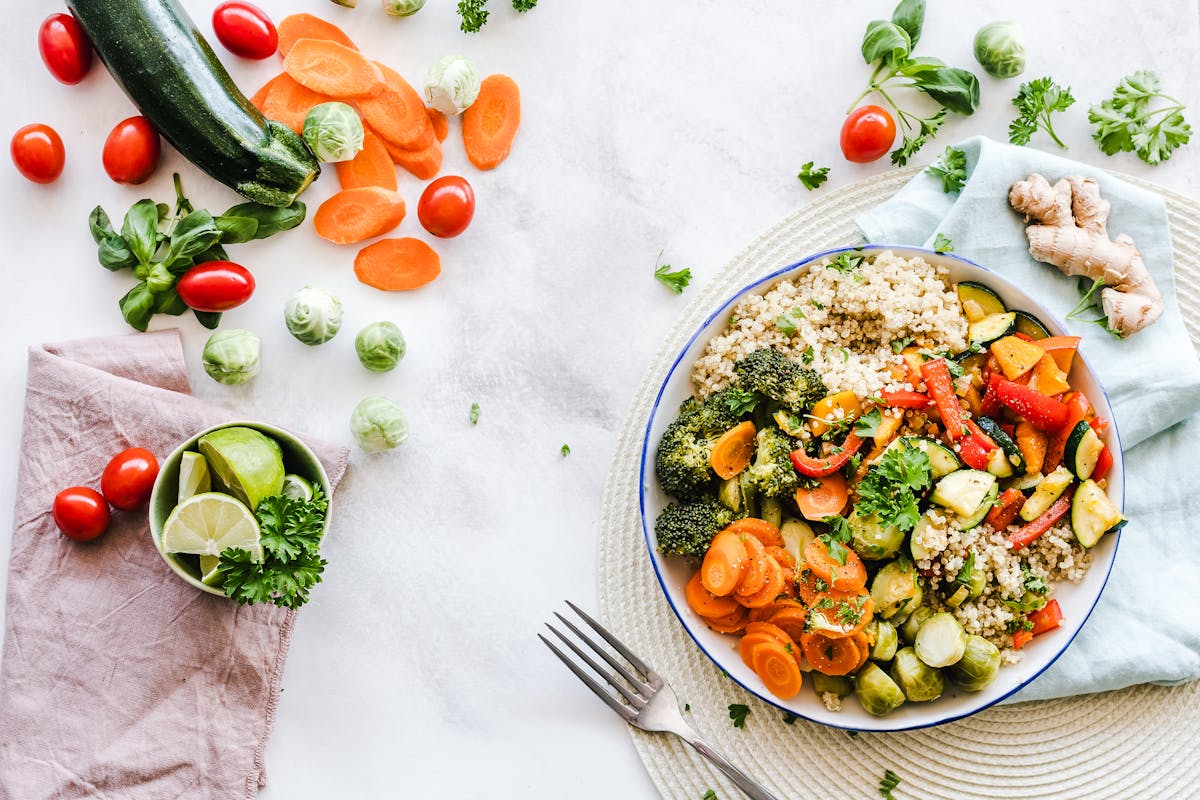
Every forkful of this bowl is designed to feel abundant: the fluffy warmth of quinoa against the creamy bite of beans, the cool crunch of cucumber and peppers, and the velvety richness of avocado and tahini. Fresh herbs and lemon lift everything with a bright, almost Mediterranean aroma, while the yogurt brings a subtle tang and gentle fermented note.
Texturally, you get a dance of soft, crunchy, chewy, and creamy in every bite—a pattern that keeps your palate interested and helps you slow down enough to really taste your food (which is wonderful for digestion in itself).

“Bowls like this are why high‑fiber, high‑protein eating has gone mainstream: they feel like comfort food, but leave you light, steady, and nourished for hours.”
Variations, Swaps & Dietary Adaptations
This gut‑healthy power bowl is more of a framework than a rigid recipe. Use what you have, and swap ingredients to match your preferences, season, and dietary needs.
Seasonal & Vegetable Variations
- Winter: Roast cubes of sweet potato, carrot, or Brussels sprouts with olive oil, cumin, and smoked paprika, then add to the bowls for extra warmth and sweetness.
- Spring: Fold in blanched asparagus, peas, or radishes for a crisp, peppery edge.
- Summer: Use juicy tomatoes, grilled zucchini, and fresh corn off the cob.
- Autumn: Add roasted pumpkin or butternut squash and a sprinkle of toasted pecans.
Protein Options
- Vegetarian / High‑Protein: Greek yogurt + beans + quinoa give a powerful combo of protein and fiber.
- Vegan: Swap Greek yogurt for unsweetened soy or coconut yogurt with live cultures; use tofu, tempeh, or extra beans for protein.
- Pescatarian: Top with grilled salmon or sardines for additional omega‑3 fats that support the gut–brain axis.
Gluten‑Free & Low‑FODMAP Notes
- Gluten‑Free: Use quinoa, buckwheat, or certified gluten‑free oats as your base. Avoid farro, barley, or regular couscous.
- Lower FODMAP (for sensitive guts): Swap chickpeas/black beans for firm tofu or canned lentils (rinsed well, in small portions), use the green tops of spring onions instead of red onion, and omit the garlic (or use garlic‑infused oil in the dressing).
How to Serve Your Gut‑Healthy Power Bowl
These bowls are wonderful for meal prep, quick weeknight dinners, or a nutrient‑dense lunch that keeps you focused all afternoon. Serve them slightly warm or at room temperature for maximum flavor.
- Top with extra lemon wedges and chili flakes for those who like a little heat.
- Serve alongside a small bowl of plain kefir or a glass of water infused with citrus and mint for added hydration.
- Pair with a simple olive oil and lemon–dressed green salad if you’re feeding a crowd and want even more plant diversity on the table.
Storage & Meal Prep Tips
This recipe was practically made for Sunday meal prep and busy weekday lunches. The flavors deepen as they sit, and the fiber‑rich ingredients hold up beautifully.
- Fridge: Store components separately in airtight containers for up to 4 days: grains, beans, chopped veggies, greens, and dressing.
- Assembled bowls: Can be stored (without avocado and dressing) for 3–4 days. Add avocado and dressing just before serving to keep them fresh.
- Freezer: Cooked quinoa and beans freeze well for up to 2–3 months. Thaw overnight in the fridge and refresh with a squeeze of lemon.
Reheating Guidelines
- Warm the quinoa and beans gently in a skillet over low heat with a splash of water or broth, or microwave in 30‑second bursts until just warm.
- Keep the leafy greens, fresh veggies, avocado, and dressing cold or room temperature, then combine. The contrast is lovely.
- If using animal proteins like chicken or salmon, reheat until steaming hot throughout (74°C / 165°F) for food safety.
Why This Bowl Loves Your Microbiome
The recent boom in gut‑health content has highlighted how deeply our daily meals shape the microbiome. This bowl reflects that shift away from calorie‑only thinking and toward nutrient density and plant diversity.
- Fiber as microbiome fuel: Beans, quinoa, vegetables, nuts, and seeds provide a wide spectrum of fibers that your gut microbes ferment into SCFAs, which support gut lining integrity and may help regulate inflammation.
- Protein for satiety and metabolic health: Greek yogurt, tofu, legumes, and optional lean meats or fish help maintain muscle, support blood sugar balance, and keep you comfortably full.
- Polyphenols and healthy fats: Olive oil, herbs, colorful vegetables, and walnuts bring in antioxidant‑rich compounds and fats that dovetail with Mediterranean‑style, microbiome‑supportive eating.
- Gut–brain connection: Stable blood sugar, fiber‑rich meals, and omega‑3s from flax, walnuts, or fish are aligned with emerging “mood‑supportive” eating patterns.

Trends come and go, but the core idea here is timeless: feed yourself generously with foods that also feed your gut microbes. When fiber and protein work together, you get bowls that feel indulgent and grounding, yet are fully aligned with long‑term digestive well‑being.
Recipe Structured Data
The following embedded JSON‑LD provides structured data for search engines following schema.org/Recipe guidelines.
