
Bad Bunny Turned the Super Bowl Halftime Show Into a Love Letter to the Americas
Bad Bunny’s Super Bowl Halftime Show: A Hemispheric “God Bless America”
Bad Bunny’s historic Super Bowl halftime show framed “America” as the entire hemisphere, blending Puerto Rican pride, Latin pop spectacle, and a subtle message of unity that reached far beyond the stadium in New Orleans. By closing with “God Bless America” and then naming countries across North, Central, and South America, he rewired one of the most traditional phrases in U.S. pop culture and turned it into an inclusive shout-out to the whole region.
Why This Super Bowl Halftime Show Mattered
The Super Bowl halftime show has evolved into a referendum on where American pop culture is at any given moment. From Michael Jackson’s globalist spectacle in 1993 to Beyoncé’s politically charged “Formation” moment and the hip-hop celebration led by Dr. Dre in 2022, halftime is no longer just a medley of hits—it’s a statement.
Bad Bunny’s set continues that tradition, but with a twist: instead of centering the United States alone, he treated the Americas as a shared cultural ecosystem. For a Puerto Rican artist who largely records in Spanish to headline one of the most-watched broadcasts on U.S. television is already historic; to then stretch the definition of “America” in front of that audience is quietly radical.
“God Bless America” – But Which America?
To understand the deeper resonance of the show, it helps to start where AP News does: at the end. After delivering a high-energy run of hits, Bad Bunny stepped into one of the most loaded phrases in U.S. vernacular—“God Bless America”—and then effectively remixed it in real time.
God Bless America, were the first and few English-language words. Then he proceeded to name countries across the Americas, including the United States and Canada, as though he were gently reminding viewers that “America” is bigger than a single nation.
In a show built on reggaeton, trap, and Caribbean rhythms, that sign-off was a thesis statement. It reframed patriotism less as a narrow nationalism and more as a shared continental identity. For an NFL event long criticized for its uneasy relationship with race, protest, and global audiences, this was a quiet but pointed reframing.
The Performance: Stadium-Scale Reggaeton with Caribbean DNA
Visually and sonically, the halftime show leaned into Bad Bunny’s strengths: a mix of rowdy party energy, theatrical flair, and a deep well of Caribbean influence that refuses to sand off its edges for mainstream comfort.
- Setlist built for impact: Stadium-tested bangers anchored the show, prioritizing hooks and beats that translate even if you don’t know a word of Spanish.
- Choreography and staging: Dancers and staging leaned into street-party aesthetics and carnival vibes rather than a generic pop-show template.
- Visual storytelling: Color palettes, lighting, and camera work underlined a hemispheric narrative—Caribbean, Latin American, and North American iconography crossing over on one of TV’s biggest stages.
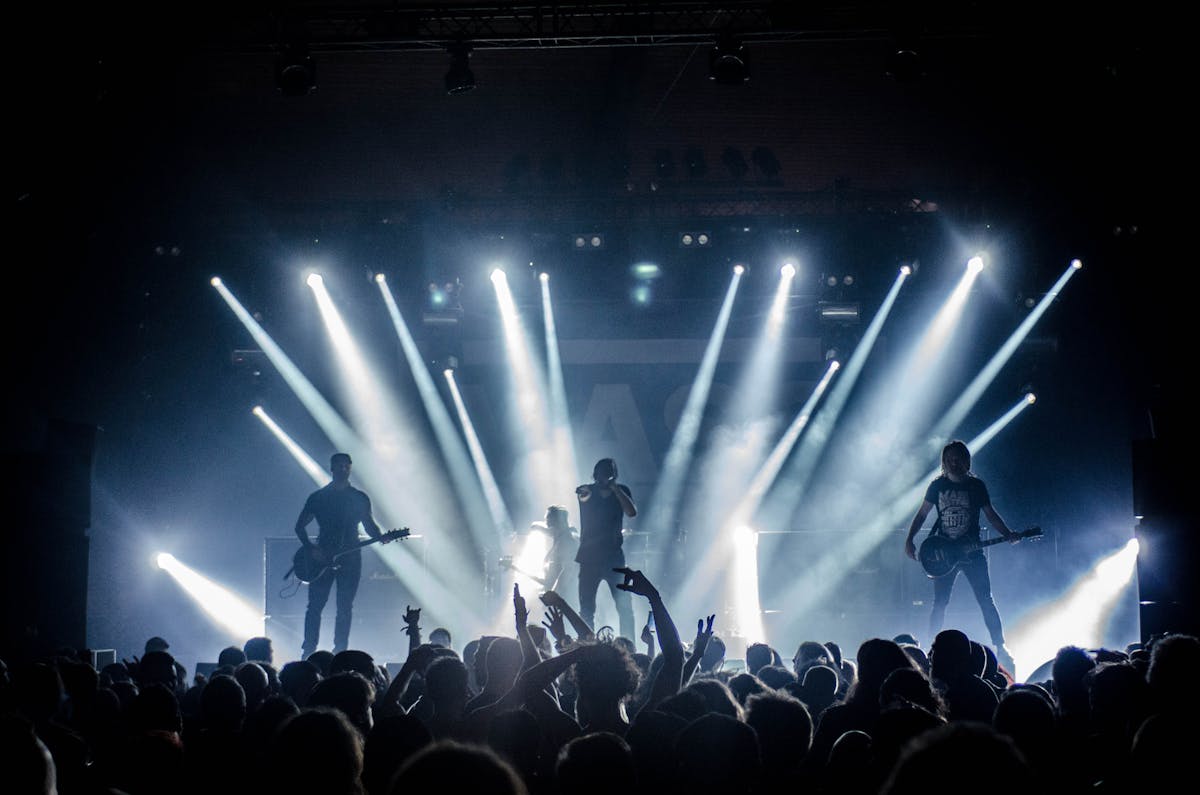
Importantly, Bad Bunny didn’t code-switch his artistry to fit the event. Much like his arena tours, the show was overwhelmingly in Spanish, with English functioning as an accent rather than a requirement. That choice matters in a country where Latin music has often had to pass through English-language filters to reach “mainstream” status.
Puerto Rico, Latinidad, and a Wider American Story
Bad Bunny’s presence at midfield is inseparable from Puerto Rico’s complicated place in U.S. politics and culture. As a territory that is American yet often treated as peripheral, Puerto Rico has long lived in a liminal space. Bad Bunny has made a point of centering the island in his music, visuals, and public activism—from highlighting Hurricane Maria’s impact to calling out local corruption.
That history shadows his Super Bowl appearance. A Puerto Rican superstar, performing in Spanish, headlining the most “American” television event, and then redefining “America” on live TV—that’s a layered cultural moment, even if the show itself remained largely celebratory rather than confrontational.
Industry Impact: From Latin Crossover to Latin Center Stage
In industry terms, Bad Bunny’s halftime show is the latest confirmation that Latin music is no longer a niche “crossover” play—it’s infrastructure. For several years running, he has topped global streaming charts, often without English-language features. The NFL and its broadcast partners are simply catching up to reality.
This show also signals a few key shifts in entertainment economics and strategy:
- Global-first booking: The league is programming for a worldwide audience, not just U.S. viewers, mirroring how streaming platforms think about content.
- Language isn’t a barrier: Hit-driven, rhythm-heavy music travels; subtitles and translations pick up the slack on social media.
- Brand alignment: Associating with Bad Bunny positions the NFL closer to younger, more diverse, and more global audiences the league has been eager to court.
Strengths, Weaknesses, and the Limits of a 13-Minute Statement
As a piece of live television, Bad Bunny’s halftime show largely delivered: it was tight, visually coherent, and musically on-brand. Still, within the context of the AP News framing—a celebration of “all” of America—there are a few tensions worth noting.
- Strength – Cohesive artistic identity: He didn’t dilute his sound or persona. Fans got the Bad Bunny they recognize from albums and tours.
- Strength – Inclusive framing: The closing dedication to multiple countries in the Americas turned a generic phrase into a subtle political and cultural gesture.
- Weakness – Limited narrative arc: Given the time constraints, the show prioritized energy over storytelling; some viewers might have wanted a more explicit through-line or clearer visual symbolism.
- Weakness – Accessibility of nuance: For casual viewers unfamiliar with his background, the significance of the countries list and Puerto Rican context may have flown under the radar.
In other words, this wasn’t a protest performance in the mold of some past Super Bowl controversies. But it was a rebalancing of who gets to represent America on its biggest stage—and in what language.
Cultural Context: From Selena to Bad Bunny
Bad Bunny’s halftime show doesn’t exist in a vacuum. It’s part of a long arc of Latin and Latinx artists pushing against the boundaries of U.S. pop culture. Where Selena once had to navigate between English- and Spanish-language markets and Ricky Martin’s late-’90s success was framed as a “Latin explosion,” Bad Bunny belongs to a generation for whom the binary has eroded.
His Super Bowl appearance also resonates with broader conversations about:
- Language politics: The idea that English is not a prerequisite for “American” pop.
- Geographic imagination: Treating “America” as a hemisphere, not just a nation.
- Media responsibility: How outlets like AP News frame these performances can shape whether audiences see them as pure entertainment or as cultural milestones.
Voices Around the Show: Critics and Creators
While AP News emphasized the hemispheric reading of “America,” critics and fans online highlighted how natural the whole performance felt—like Bad Bunny simply scaled up the world he already occupies rather than stepping into a sanitized Super Bowl costume.
“This wasn’t Latin flavor sprinkled onto a football game; this was the NFL acknowledging that one of the defining sounds of the hemisphere now comes from San Juan as much as from Los Angeles or Atlanta.” – Cultural critic, via social media commentary
That reaction underscores why the show landed the way it did: it wasn’t framed as diversity optics; it felt like an overdue recognition of where popular music has lived for years.
Conclusion: A Bigger, Messier, Truer “America”
Bad Bunny’s Super Bowl halftime show will be remembered less for one viral stunt and more for the quiet recalibration it performed on a massive cultural ritual. By centering Spanish, Puerto Rico, and a list of countries usually edited out of U.S. conversations about “America,” he widened the frame without turning the event into a lecture.
As the NFL and its broadcast partners keep chasing younger and more global audiences, this performance suggests a path forward: don’t just invite the world to America—admit that America, in the broadest sense, was already here. From here on, any halftime show that leans on patriotism will have to contend, at least a little, with the version of “America” Bad Bunny just laid out: multilingual, multiethnic, and stretching from the Arctic to Tierra del Fuego.
Verdict: ★★★★½ – A landmark hemispheric moment disguised as a party.
