
AJ Styles Raw Tribute: How WWE Is Honoring The Phenomenal One In Atlanta
WWE is reportedly expanding its plans for a major AJ Styles tribute on the February 23, 2026 edition of Monday Night Raw in Atlanta, Georgia, with new details pointing to a more elaborate, career-spanning celebration of “The Phenomenal One” than originally teased.
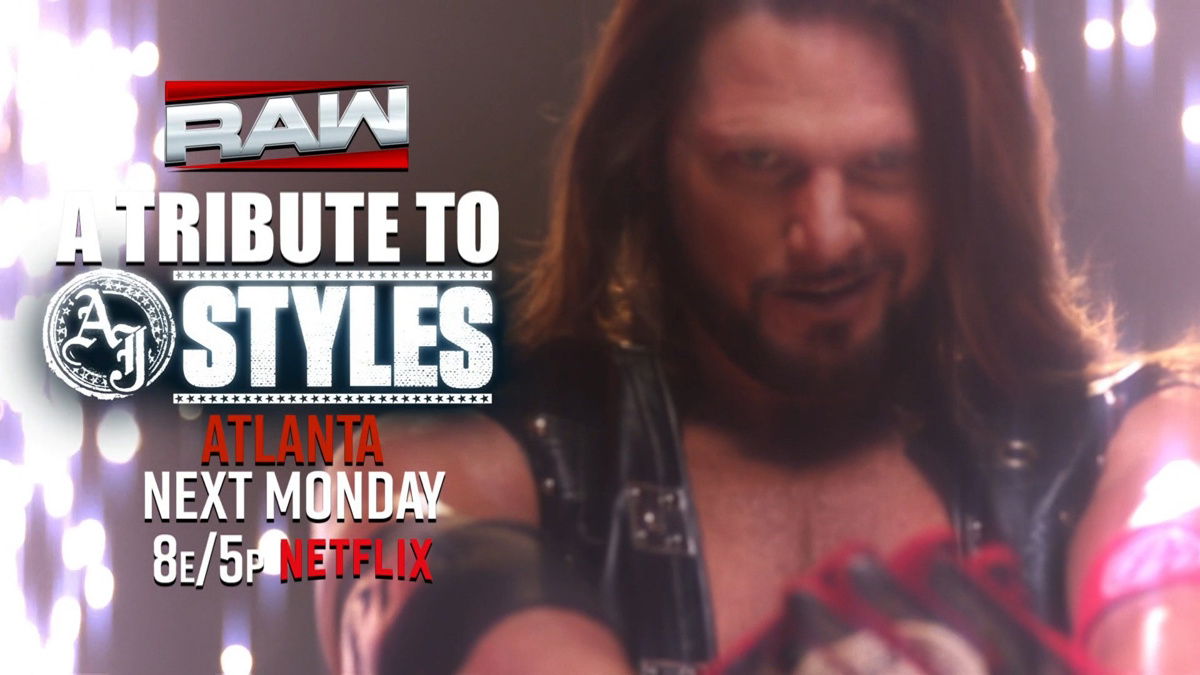
Why This AJ Styles Tribute Episode Of Raw Actually Matters
Tribute shows in wrestling usually follow a familiar pattern: somber graphics, video packages, maybe a ten-bell salute. The buzz around WWE’s updated plans for an AJ Styles tribute on Raw, however, suggests something a little different—less memorial, more celebration, firmly in the “legend appreciation night” tradition that WWE dusts off for performers who have crossed over from fan-favorite to foundational.
Holding it in Atlanta, within Styles’ home state of Georgia, gives the episode an extra layer of authenticity. WWE isn’t just honoring a veteran; it’s acknowledging a homegrown modern icon who took the long route to Stamford by way of TNA, New Japan, and every indie ring that would have him.
From Gainesville To Global: The Road To A WWE Tribute Night
A special AJ Styles episode of Raw would’ve sounded like fantasy booking a decade ago. For years, he was the poster child of “anywhere but WWE,” the guy hardcore fans would cite when arguing that workrate lived outside Vince McMahon’s empire.
Now, a decade after his stunning 2016 Royal Rumble debut, a tribute show functions as WWE’s way of rewriting that narrative: Styles isn’t just the best wrestler they signed late; he’s a pillar of the modern WWE style—equal parts indie innovation, Japanese stiffness, and sports-entertainment showmanship.

Placing the tribute in Atlanta is smart branding and smarter storytelling. WWE has leaned harder in recent years into regional identity—think of how often shows in Canada push hometown heroes or how UK specials play to local pride. A Georgia-flavored AJ Styles celebration lets WWE tap into:
- The Southern wrestling tradition that pre-dates the “sports entertainment” era.
- Styles’ own deep connection to Georgia indies and fans who watched him before the Phenomenal moniker hit TV.
- A demographic that remembers WCW, TNA, and the pre-Network days of tracking down matches on DVD and YouTube.
What The Updated AJ Styles Raw Tribute Plans Reportedly Include
While WWE’s official announcement kept things fairly vague, later reporting—such as the update highlighted by WrestleTalk—indicates that internal plans for the February 23 Raw have grown into something closer to a themed celebration than a single segment.
Specifics can always change day-of, but a “major update” in WWE terms typically signals that what started as a simple video package and promo has evolved into a show-long thread. Expect WWE to lean on the tools it knows best:
- Career-spanning video packages:
From his WWE debut in the 2016 Royal Rumble to classics against John Cena, Roman Reigns, and Finn Bálor, a tribute Raw is the perfect excuse to remind casual viewers why online fans speak about Styles in “best in the world” terms.
- On-air testimonials and interviews:
Expect current and former Bullet Club allies, indie contemporaries, and WWE rivals to weigh in. WWE loves the “superstars talking to camera” format when legitimizing a legacy act.
- A showcase match in the main event slot:
If Styles is cleared and active, the best tribute is still bell-to-bell. A high-stakes match in Atlanta would let him pay back the segment with the currency he values most: performance.
- Archival nods to pre-WWE work:
WWE has grown more comfortable acknowledging non-WWE history on its own terms. Subtle nods to TNA and New Japan—clips, graphics, or just commentary lines—would cement Styles as a trans-promotional legend rather than merely a late-game WWE signing.
“Anywhere I went, I wanted to prove I was the best. Coming to WWE wasn’t about starting over—it was about showing the world I’d always belonged on this stage.”
The Phenomenal Legacy: Why AJ Styles Deserves A Full-Scale WWE Tribute
The wrestling industry is littered with “best to never make it to WWE” lists. Styles spent the prime of his career topping those, to the point where his Royal Rumble arrival felt like a glitch in the Matrix. The last decade has turned that glitch into a new canon.

A tribute episode acknowledges a few uncomfortable truths that WWE usually tiptoes around:
- The style shifted underneath them. Matches led by performers like Styles, Seth Rollins, and Daniel Bryan redefined what a WWE main event could look like, blending high-flying, stiff striking, and long-form storytelling.
- WWE doesn’t have a monopoly on greatness. By showcasing Styles’ full journey, the company quietly admits that a lot of vital work was done outside their walls—and still counts.
- Longevity matters. Styles managed to carry his reputation into his late thirties and early forties in a business that often chews up bodies far sooner. A tribute show doubles as a celebration of how he adapted without losing his identity.
“Styles is the rare wrestler whose highlight reel is split almost evenly between WWE and everywhere else—and both halves could stand alone as a Hall of Fame career.”
— Wrestling columnist commentary
Strengths And Weaknesses Of WWE’s Tribute-Show Formula
As polished as WWE is at producing glossy nostalgia, tribute nights are always a balancing act. They can be genuinely moving or feel like three hours of brand management in a vintage T-shirt.

What WWE Usually Gets Right
- Production values: WWE is unmatched at editing together emotionally charged video packages that make even lapsed fans sit up.
- Context for casual viewers: Tribute shows double as crash courses, efficiently explaining why a name like AJ Styles matters if you only know him as “the guy with soccer mom hair from SmackDown Live.”
- Star-powered cameos: Big names returning for a night, even via pre-taped messages, anchor the tribute in the broader WWE universe.
Where It Can Go Wrong
- Over-branding the emotion: When every heartfelt moment is framed as “only in WWE,” the tribute can feel more like a commercial than a celebration of the person.
- Ignoring uncomfortable history: If the show leans too hard on the WWE years and barely nods to Styles’ TNA or NJPW work, it risks feeling incomplete to the fans who’ve been there from the start.
- Booking contradictions: If the company has recently downplayed Styles on TV, a sudden “all-time legend” night can cause tonal whiplash.
Navigating those pitfalls will determine whether the AJ Styles Raw becomes a replay-worthy episode in its own right or just another themed stop on the Road to WrestleMania.
AJ Styles In The Bigger Picture Of Wrestling Culture
Styles is part of a specific generation of wrestlers—alongside names like Samoa Joe, Christopher Daniels, and CM Punk—who helped bridge the gap between early-2000s independent wrestling and the global boom of the 2010s. In many ways, he’s the cleanest avatar of that arc: a wrestler who could headline any promotion on earth without changing who he was.

A tribute Raw, handled well, can serve a few cultural functions:
- Preserving history for newer fans: Not everyone watching USA Network on a Monday night has seen Styles in the Tokyo Dome. A curated, accessible version of that history helps keep it alive.
- Legitimizing non-WWE ecosystems: When WWE presents TNA and NJPW footage respectfully, it signals to younger fans that wrestling doesn’t—and never did—begin and end with one company.
- Reframing the “WWE style” debate: Styles’ success inside WWE rings shows that the line between “indie style” and “sports entertainment” is thinner than online arguments pretend.
What To Watch For On The AJ Styles Raw Tribute Night
Beyond the obvious nostalgia, this episode of Raw could quietly plant seeds for what comes next in Styles’ career—whether that’s a final major program, a soft launch toward retirement, or a transition into a more part-time, legend-status role.

- Who shares the screen with him: If WWE puts rising talents opposite Styles in promos or multi-man segments, that’s a sign they’re using his aura to elevate the next wave.
- How commentary frames his future: Language about “final chapters,” “legacy,” and “cherish every time he steps in the ring” will hint at where WWE sees him on the timeline.
- Any Hall of Fame foreshadowing: Even a light tease—graphics, phrasing, or a pointed “future Hall of Famer” line—positions this Raw as a prelude to a bigger honor.
Final Thoughts: A Phenomenal Opportunity For WWE And Fans
The updated plans for the AJ Styles tribute episode of Raw show WWE recognizing that it has something rare on its hands: a still-active performer whose career you can already talk about in past-tense, greatest-of-his-generation terms, without feeling premature. If the company leans into honesty—about where he came from, what he changed, and how much of today’s main-event DNA can be traced back to him—Atlanta could get a genuinely special night.
For fans, this Raw is a chance to time-travel a bit: to remember the shock of that Royal Rumble entrance, the first Cena match that outperformed expectations, the way “TNA guy” became “the guy” on SmackDown. For WWE, it’s an opportunity to prove that its tribute-show formula can do more than just repackage nostalgia—it can tell the story of an industry that had to evolve to catch up with AJ Styles.
If the episode sticks the landing, “The Phenomenal One” won’t just be getting a tribute; he’ll be getting the kind of canonization that ensures new fans in 2036 will still be pulling up his highlights the way today’s fans revisit Shawn Michaels or Eddie Guerrero. And honestly, that feels about right.
