
AI-Designed Proteins: How Generative Models Are Rewriting the Rules of Synthetic Biology
Over the past few years, AI models have broken through a barrier that limited biology for decades: the ability to reliably move from an amino acid sequence to a three-dimensional protein structure, and now from a desired function to entirely new protein designs. After the success of DeepMind’s AlphaFold2 and related systems in protein structure prediction, a new generation of models—such as RoseTTAFold, OpenFold, diffusion-based generative models, and large language models trained on protein sequences—has pushed the field toward de novo design. Instead of tweaking existing enzymes or antibodies, scientists can increasingly specify a goal—like binding a viral receptor or catalyzing a specific reaction—and let AI propose candidates that are then tested in the lab.
This article explores how AI-designed proteins fit into the broader wave of synthetic biology: the scientific foundations, design workflows, applications in drug discovery and green chemistry, and the societal and ethical implications of being able to program biology at the molecular level.

Mission Overview: From Prediction to Creation
The central mission of AI-driven protein design is to turn biology into an engineering discipline: predictable, programmable, and scalable. AlphaFold2’s near-experimental accuracy on many protein structures proved that AI could internalize much of the physics and evolutionary history encoded in protein sequences. By 2024–2026, the community has been moving quickly from:
- Predicting how natural proteins fold, to
- Designing new proteins that may never have existed in nature, and
- Optimizing them for therapeutic, industrial, or research uses.
“We’re entering an era where we don’t just read genomes—we write new molecular functions into them. AI-designed proteins are the core parts library for that future.”
— Paraphrased perspective inspired by David Baker’s protein design work (Baker Lab)
This shift has transformed synthetic biology from a discipline of tuning natural components into one of inventing bespoke proteins for health, climate, and materials science.
Scientific Background: Protein Structure, Function, and Evolution
Proteins are polymers of amino acids that fold into intricate three-dimensional shapes. These shapes determine what a protein can do: binding a ligand, catalyzing a reaction, forming a scaffold, or transmitting a signal. Classical structural biology—X-ray crystallography, NMR, cryo-EM—revealed many such structures, but at immense experimental cost.
Evolution explores protein sequence space slowly, through mutation and natural selection. The number of possible 100-amino-acid sequences alone is astronomically large (20100 possibilities). Natural history has only sampled a tiny fraction of this space. AI models trained on millions of natural protein sequences and structures allow us to:
- Approximate the rules that map sequences to structures and functions.
- Generalize those rules to generate new sequences that are likely to fold and function.
- Identify “fitness peaks” in regions of sequence space evolution may never have reached.
This not only accelerates engineering but also tests deep hypotheses about the structure of protein fitness landscapes and the constraints that shaped life on Earth.
Technology: The AI Stack Behind Protein Design
Modern AI-based protein design typically combines several technical building blocks:
1. Foundational Models for Proteins
Large-scale models trained on protein databases such as UniProt and the Protein Data Bank (PDB) serve as the foundation. Families include:
- Structure predictors: AlphaFold2, RoseTTAFold, OpenFold, ESMFold—predict 3D coordinates from sequence.
- Sequence language models: ESM-2, ProtGPT2, and similar transformers that learn statistical “grammar” of protein sequences.
- Generative models: Diffusion models and VAEs that sample new sequences or backbones conditioned on design goals.
2. The Design–Build–Test–Learn Loop
The core workflow for AI-designed proteins usually follows an iterative loop:
- Design: A generative model proposes many candidate sequences or backbones targeting a property (binding site shape, catalytic pocket, stability, etc.).
- Predict: Structure prediction and in silico screening assess stability, folding, binding energy, and potential off-target interactions.
- Build: Top candidates are synthesized (DNA synthesis), cloned, and expressed in cells or cell-free systems.
- Test: High-throughput assays measure activity, binding affinity, thermostability, toxicity, and expression yield.
- Learn: Experimental results are fed back into the training data, improving the model’s understanding of “what works.”
This loop is analogous to reinforcement learning or Bayesian optimization in engineering, but the environment is wet-lab biology rather than a simulated game.
3. Computational Infrastructure
Designing millions of candidate sequences and running structural predictions requires significant compute. Cloud-based GPU clusters and optimized inference engines are now standard. Open-source tools such as OpenFold and RoseTTAFold have made advanced modeling more accessible to academic groups and smaller startups.

De Novo Protein Design: Engineering New Biological Parts
De novo protein design is the effort to create proteins that have never existed in nature but are predicted to be stable, fold correctly, and perform useful functions. With AI, this is shifting from art to semi-automated engineering.
Key Capabilities Emerging Today
- Custom binding proteins: Designing minibinders that target viral proteins, inflammatory cytokines, or tumor antigens with exquisite specificity.
- Novel enzymes: Creating catalytic sites for reactions that no known natural enzyme performs, opening doors for new metabolic pathways and chemistries.
- Self-assembling nanostructures: Engineering protein cages, fibers, and lattices that can serve as vaccines, delivery vehicles, or nano-scaffolds.
- Responsive biomaterials: Proteins that change conformation upon light, pH, or ligand binding, enabling smart materials and biosensors.
“The real revolution isn’t just understanding existing proteins—it’s composing new functions like we write software.”
— Perspective echoed by multiple synthetic biology leaders on YouTube discussions on AI protein design
This perspective is why many compare AI-designed proteins to a “standard library” in programming: reusable, composable building blocks for biological circuits and systems.
Drug Discovery and Therapeutics: AI-Designed Proteins in Medicine
Pharmaceutical and biotech companies are investing heavily in AI-designed proteins for therapeutic applications. These efforts span enzymes, antibodies, and novel biologics.
Therapeutic Use Cases
- Enzyme replacement and enhancement: Designing enzymes that break down toxic metabolites more efficiently than natural counterparts, useful for metabolic disorders.
- Synthetic antibodies and binders: Engineering binding proteins with optimized affinity, specificity, and stability for oncology, autoimmune diseases, and infectious disease.
- Protein-based gene editing tools: Creating new Cas variants, base editors, and prime editors with tailored PAM requirements, reduced off-target activity, or better delivery properties.
- Next-generation cytokines: Rationally tuning signaling proteins to retain therapeutic benefits while reducing side effects.
AI accelerates early discovery by rapidly exploring large design spaces and providing structurally informed hypotheses before any lab work begins, significantly shortening the cycle time for hit discovery and optimization.
For readers interested in hands-on understanding of protein structure and biochemistry, high-quality introductory resources such as the textbook Lehninger Principles of Biochemistry provide a solid foundation for appreciating how small structural changes can lead to major functional shifts.
Enzymes for Green Chemistry and Sustainability
Beyond medicine, AI-designed enzymes are central to visions of a more sustainable industrial economy. Companies and academic labs are designing catalysts for:
- Biodegradation of plastics: Enhancing PETases and other enzymes that break down polyethylene terephthalate and related polymers.
- Bio-based manufacturing: Engineering enzymes for more efficient synthesis of pharmaceuticals, fine chemicals, and materials, reducing the need for harsh solvents and high temperatures.
- Biofuels and biomaterials: Improving cellulases, lipases, and other enzymes to convert biomass to fuels and bioplastics more efficiently.
- Carbon capture: Designing proteins that bind or convert CO2 with higher affinity or novel chemistries.
This aligns AI-designed proteins with broader ESG and climate strategies, making synthetic biology a key piece of decarbonization roadmaps.
New Tools for Gene Therapy and Delivery
Gene and cell therapies face a core challenge: how to deliver DNA, RNA, or protein cargo precisely to the right cells with minimal side effects. AI-designed proteins are increasingly being used to optimize delivery vehicles.
Examples of AI-Enabled Delivery Innovations
- Capsid engineering: Designing adeno-associated virus (AAV) and other viral capsids with altered tropism, immune evasion, or packaging capacity.
- Non-viral carriers: Protein-based nanoparticles and cages that encapsulate nucleic acids or small molecules and home to specific tissues.
- Targeting ligands: De novo designed binders fused to delivery platforms to hone in on receptors on neurons, hepatocytes, or tumor cells.
Several preclinical studies and early-stage trials are exploring whether these tailored proteins can overcome some of the limitations of first-generation gene therapies, such as dose-limiting toxicity or off-target organ accumulation.
Open vs Proprietary Ecosystems and Ethical Debates
The AI protein design ecosystem is a mix of open science and proprietary platforms:
- Open-source models and datasets (e.g., OpenFold, academic diffusion models, community-curated structure databases) democratize access and accelerate basic research.
- Commercial platforms from startups and major pharma companies often combine proprietary training data, specialized lab automation, and tightly integrated design loops.
This split raises several questions:
- Who owns the intellectual property for AI-designed proteins trained on public datasets?
- How do we manage dual-use risks, where the same tools that design therapeutic proteins could, in principle, design harmful agents?
- How do regulators evaluate safety for proteins with no natural precedent?
“As we gain the power to design biology, our governance frameworks must evolve just as quickly.”
— Ethical sentiment echoed in policy reports from groups like the National Academies and World Economic Forum
Debates on Twitter/X, LinkedIn, and specialized forums focus on finding the right balance between openness for scientific progress and safeguards against misuse.
Scientific Significance: Probing Fitness Landscapes and Biological Principles
AI-designed proteins are more than practical tools; they are experiments in fundamental biology. When a computer-designed protein folds and functions as predicted, it validates our current models of sequence–structure–function relationships. When it fails, the discrepancy reveals missing physics, dynamics, or cellular context.
Key Scientific Questions Being Explored
- How dense are functional sequences? Are useful proteins rare needles in a haystack, or are there many “good enough” solutions in sequence space?
- What are the limits of stability and function? Can AI find ultra-stable proteins or catalysts that outperform evolved enzymes by large margins?
- How do dynamics matter? Most AI models focus on static structures, but many functions rely on conformational changes and long-timescale dynamics.
- Can we systematically design allosteric regulation? Building in on/off switches controlled by small molecules, light, or other signals.
Answers to these questions are reshaping our understanding of what is possible in protein engineering and, more broadly, in the evolution of life’s molecular machinery.
Milestones: Key Achievements and Trends (2020–2026)
Since the announcement of AlphaFold2’s performance in 2020, several milestones have defined the trajectory of AI-enabled protein science:
- Near-complete structural coverage of many known protein families, enabling hypotheses about function across entire proteomes.
- Demonstrations of de novo binders and enzymes that perform targeted tasks, including antiviral minibinders and catalysts for non-natural reactions.
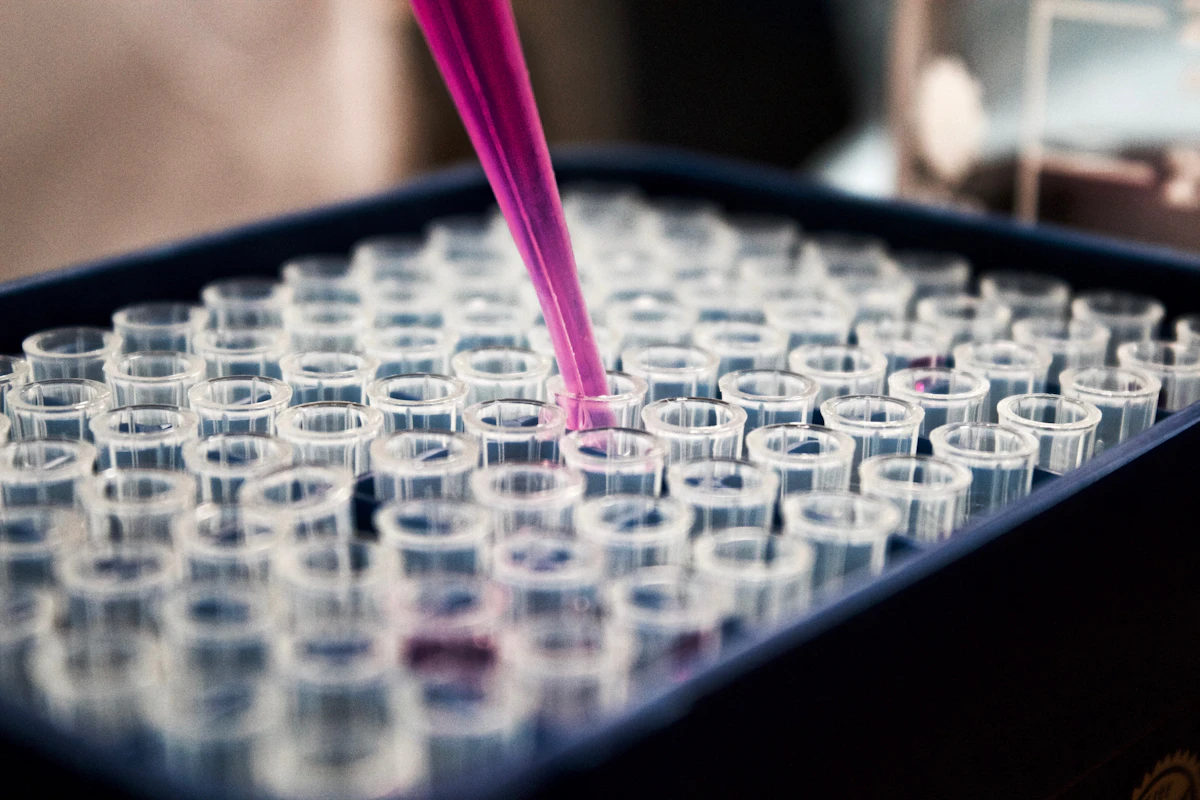
- Integration with lab automation: Robotic platforms and microfluidics now test thousands of AI-designed variants per week, closing the loop between in silico design and wet-lab validation.
- Commercialization at scale: Multiple well-funded startups and partnerships between tech companies and pharma, positioning AI-designed proteins as mainstream drug discovery tools.
- Community benchmarks and open challenges that compare different models and encourage reproducible science.
These milestones signal that AI protein design is moving from proof-of-concept projects to an industrial and clinical reality.
Challenges: Technical, Biological, and Societal
Despite rapid progress, major challenges remain before AI-designed proteins become routine building blocks in medicine and industry.
1. Model Limitations and Data Gaps
- Static vs dynamic behavior: Most predictors model one (or a few) low-energy conformations, but real proteins fluctuate and may adopt multiple states.
- Cellular context: Proteins do not act in isolation; chaperones, post-translational modifications, and crowding can affect folding and function.
- Biased training data: Structural databases overrepresent certain protein families and organisms, biasing learned rules.
2. Experimental Bottlenecks
- DNA synthesis costs, expression problems, and purification hurdles can slow the build–test phase.
- Functional assays for complex tasks (e.g., multi-protein complexes, whole-cell phenotypes) are hard to miniaturize and scale.
3. Safety, Regulation, and Public Trust
- Dual-use concerns: Theoretically, design tools could be misused to enhance harmful agents, even if most work focuses on beneficial applications.
- Regulatory frameworks: Agencies must determine how to evaluate safety for proteins with no evolutionary history.
- Transparency and oversight: Balancing proprietary interests with the need for oversight and international norms.
Addressing these issues will require collaboration between scientists, ethicists, policymakers, and the public. Educational materials—such as introductory videos on protein folding and design—also play a role in making the field more understandable and trustworthy.
Conclusion: Programmable Proteins and the Future of Synthetic Biology
AI-designed proteins represent a pivotal step toward programmable biology. They expand our toolkit from a finite catalog of natural components to a vast, continually growing library of synthetic parts. As models, datasets, and experimental platforms improve, we can expect:
- More on-demand enzymes for specific industrial and environmental challenges.
- Personalized protein therapeutics tuned to an individual’s genetics or tumor profile.
- Smart biomaterials and sensors that dynamically respond to their environment.
- New insights into evolution and molecular design principles that extend beyond proteins to RNA, DNA, and hybrid systems.
The promise is enormous, but realizing it responsibly will require transparent governance, robust safety practices, and continued public engagement. Synthetic biology is no longer confined to academic labs; it is becoming an integral part of how we design medicines, materials, and manufacturing. AI-designed proteins are at the heart of this transformation.
Practical Tips and Further Exploration
For students, developers, or professionals interested in engaging with AI-driven protein design, here are practical ways to dive deeper:
1. Learn the Fundamentals
- Study basics of biochemistry, structural biology, and machine learning.
- Use free online courses from platforms like Coursera or edX.
2. Experiment with Open Tools
- Run protein structure predictions with tools like ColabFold notebooks.
- Explore sequence language models and design pipelines shared on GitHub by academic labs.
3. Follow the Research and Community
- Track preprints on bioRxiv and publications in journals like Nature Biotechnology and Science.
- Follow leading groups and researchers on LinkedIn and Twitter/X for up-to-date discussions and benchmarks.
- Listen to science podcasts on Spotify or Apple Podcasts that feature synthetic biology and AI, such as “The Bioinformatics Chat” or “The SynBioBeta Podcast.”
As computational and experimental tools continue to converge, the barrier to entry for contributing to AI-driven protein engineering is dropping. For those who can bridge biology, computation, and ethics, the next decade will offer unparalleled opportunities to shape how we design and deploy new molecular technologies.
References / Sources
Selected resources for further reading on AI-designed proteins and synthetic biology:
- Jumper, J. et al. (2021). “Highly accurate protein structure prediction with AlphaFold.” Nature.
https://www.nature.com/articles/s41586-021-03819-2 - Baek, M. et al. (2021). “Accurate prediction of protein structures and interactions using a three-track neural network (RoseTTAFold).” Science.
https://www.science.org/doi/10.1126/science.abj8754 - OpenFold GitHub repository.
https://github.com/aqlaboratory/openfold - Baker Lab – Institute for Protein Design.
https://www.ipd.uw.edu - SynBioBeta – News and analysis on synthetic biology and bioengineering.
https://synbiobeta.com - AlphaFold Protein Structure Database by EMBL-EBI and DeepMind.
https://alphafold.ebi.ac.uk - UNSPLASH – Open-licensed scientific and lab photographs used in this article.
https://unsplash.com
