
Room-Temperature Superconductors? Inside the Global Race for Lossless Power
Superconductivity is a quantum state of matter in which a material carries electric current with exactly zero electrical resistance and expels magnetic fields via the Meissner effect. Traditionally, superconductors require temperatures close to absolute zero, demanding bulky cryogenic systems with liquid helium or advanced closed-cycle refrigerators. These constraints have limited widespread use to specialized applications such as MRI scanners, particle accelerators, some quantum computing platforms, and niche research instruments.
The dream driving decades of research is a practical, stable superconductor that works at or near room temperature and moderate pressures. Such a material could enable global power transmission with negligible losses, ultra-compact and efficient motors, powerful yet energy-frugal data centers, and new sensing and imaging technologies. The economic and climate implications would be profound: less wasted electricity, more feasible long-distance transmission from renewables, and new options for electrified transportation and fusion energy systems.
“A verified room-temperature superconductor would be one of the most transformative materials discoveries in history, comparable to the invention of the transistor.” — Paraphrased from discussions among condensed-matter physicists in Nature news coverage.
Over the past few years, a series of high-profile claims of near-room-temperature superconductivity—especially in hydrogen-rich compounds under enormous pressures—have attracted enormous attention. Some of these, notably work associated with Ranga Dias’s group, were later retracted amid allegations of data manipulation and failures of independent labs to reproduce the results. The resulting drama has unfolded not only in journals, but also on Twitter/X, YouTube, and podcasts, turning superconductivity into a recurring mainstream science story instead of a niche physics topic.
Mission Overview: Why Room-Temperature Superconductivity Matters
The “mission” behind the current global race is simple to state but extremely hard to realize: discover or engineer a material that exhibits superconductivity:
- At or near room temperature (≈ 20–30 °C),
- At ambient or modest pressure (far below the hundreds of gigapascals used in diamond anvil cells),
- In a form that can be manufactured, shaped into wires or films, and operated reliably over years,
- With sufficient critical current density and critical magnetic field for real devices.
To appreciate the stakes, consider global electricity losses. According to the International Energy Agency and World Bank estimates, typical transmission and distribution losses range from about 5–15% depending on the country. A mature, cost-effective superconducting grid technology—even if used only on high-voltage backbones or in dense urban centers—could save terawatt-hours of energy annually and reduce the need for new generation capacity.
At the same time, superconducting magnets are central to:
- Magnetic confinement fusion devices (tokamaks and stellarators),
- Future circular colliders and high-energy physics facilities,
- High-field MRIs and advanced medical imaging,
- Magnetic levitation (maglev) trains and high-speed transport.
Present-day technologies rely on so-called “high-temperature” superconductors (HTS) like YBCO (yttrium barium copper oxide) that operate at liquid-nitrogen temperatures (~77 K). These are already a huge step up from liquid helium–cooled materials, but they still require complex cryogenics. A modest further increase of the critical temperature—let alone room temperature—could drastically simplify design and maintenance.
Technology Foundations: How Superconductivity Works
Superconductivity emerges when electrons in a material form Cooper pairs, bound states that move coherently without scattering. In conventional superconductors, this pairing is described by Bardeen–Cooper–Schrieffer (BCS) theory: electrons interact via vibrations of the crystal lattice (phonons), forming an energetically favorable paired state below a critical temperature Tc.
Key technical parameters include:
- Critical temperature (Tc): Above this temperature, superconductivity vanishes.
- Critical magnetic field (Hc): Strong fields can destroy superconductivity by breaking Cooper pairs.
- Critical current density (Jc): Exceeding this current can reintroduce resistance and trigger quenching.
- London penetration depth: Depth to which magnetic fields can penetrate a superconductor.
- Coherence length: The characteristic size of a Cooper pair or spatial scale over which the superconducting order parameter varies.
Since the 1986 discovery of cuprate superconductors with Tc above the boiling point of liquid nitrogen, several families of unconventional superconductors have emerged:
- Cuprates (copper-oxide ceramics),
- Iron-based superconductors,
- Heavy fermion and organic superconductors,
- Twisted bilayer graphene and other moiré materials.
Many of these systems are not fully explained by classic BCS theory; they involve strong electronic correlations, competing orders, and sometimes topological phenomena. Understanding them is one of the central challenges in condensed-matter physics.
“Superconductors are playgrounds for quantum mechanics on a macroscopic scale.” — Adapted from explanations surrounding the 2016 Nobel Prize in Physics on topological phases of matter.
Recent Controversies: Room-Temperature-Like Claims and Retractions
From around 2015 onward, several research groups reported superconductivity at or near room temperature in hydrogen-rich materials, typically under extreme pressures. These experiments used diamond anvil cells to compress tiny samples to hundreds of gigapascals—comparable to conditions deep inside giant planets.
Hydrogen-Rich Superconductors Under Extreme Pressure
The logic behind these materials is rooted in theory: metallic hydrogen was predicted to be a high-Tc superconductor, and alloys or hydrides could mimic its behavior at lower (but still enormous) pressures. Several noteworthy systems emerged:
- H3S (sulfur hydride): Reported superconductivity at ~203 K under ~155 GPa.
- LaH10 (lanthanum hydride): Reported Tc ≈ 250–260 K under ~170 GPa.
- Other rare-earth hydrides (e.g., yttrium hydrides) with similarly elevated Tc but still extreme pressures.
These results, published in journals such as Nature and Physical Review Letters, have been broadly accepted as evidence of very high-Tc superconductivity in superhydrides, though pressures remain far too high for practical power applications.
The Ranga Dias Saga and Retractions
A subset of high-profile claims, particularly those led by Ranga Dias and collaborators, triggered intense scrutiny. Papers in Nature and Physical Review Letters reported:
- “Room-temperature superconductivity in a carbonaceous sulfur hydride” at ~287 K and ~267 GPa (later retracted).
- A lutetium–hydrogen–nitrogen compound (“reddmatter”) allegedly superconducting near 294 K at much lower pressures (~1 GPa), published in 2023 and subsequently retracted in 2024.
Independent labs struggled to reproduce these results. Detailed re-analyses of the raw data (where available) suggested inconsistencies, inappropriate background subtractions, and other red flags. Scientific watchdogs and experienced superconductivity researchers raised concerns both formally and informally.
“Extraordinary claims in superconductivity demand exceptionally transparent data and reproducible protocols. Without that, the literature risks being misled.” — Paraphrased from commentary in Science and community discussions on X/Twitter.
By early 2026, multiple papers from the group had been formally retracted. The broader community’s consensus is that no fully verified, reproducible room-temperature, ambient-pressure superconductor has yet been demonstrated. The episode has fueled ongoing conversations about peer review, data sharing, code availability, and the pressures of “breakthrough” culture in academia.
Social Media, YouTube, and the New Public Physics Discourse
Unlike earlier eras of superconductivity research, today’s controversies and discoveries unfold in near real-time on social media. Physicists, science communicators, and data sleuths dissect figures and methods on:
- Twitter/X threads with annotated plots,
- YouTube explainers breaking down preprints and retractions,
- Podcasts and newsletters offering deeper context on scientific integrity and reproducibility.
Channels such as PBS Space Time, Veritasium, and individual physicists on YouTube and X frequently cover superconductivity, quantum materials, and related controversies. This has several consequences:
- Public pressure for transparency increases; raw data and analysis code are more often requested.
- Non-specialists gain exposure to technical discussions of phase diagrams, resistance curves, and magnetic susceptibility.
- Misinterpretations and hype sometimes spread faster than corrections, reinforcing the need for careful science communication.
In some cases, collaborative data analysis happens semi-openly online, with experts posting alternative fits, noise analyses, and critiques that previously would have been confined to seminars or private correspondence.
Technology: Experimental and Computational Frontiers
Parallel to the controversies, there is substantial, credible progress in both experimental techniques and computational methods aimed at discovering new superconductors and understanding known ones more deeply.
High-Pressure Techniques and Diamond Anvil Cells
Diamond anvil cells (DACs) are central to modern high-Tc hydride research. A DAC uses two opposing diamond tips to compress a microscopic sample, often along with a pressure-transmitting medium and tiny electrical leads. Pressures can exceed 300 GPa, while in situ measurements track:
- Electrical resistance vs. temperature,
- Magnetic susceptibility (e.g., via AC susceptibility),
- Structural changes using synchrotron X-ray diffraction.
However, DAC experiments are technically demanding. Tiny sample volumes increase the risk of experimental artifacts; current paths can be ambiguous; and background magnetism or contact resistance can mimic or obscure superconducting transitions. This is one reason reproducibility and independent verification are so vital.
Machine Learning and Materials Informatics
On the theoretical and computational side, materials informatics couples quantum theories with data-driven search methods:
- Density functional theory (DFT) and beyond-DFT methods estimate electronic structures and electron–phonon couplings.
- High-throughput screening explores vast chemical and structural spaces for promising superconducting candidates.
- Machine learning (ML) models predict Tc, stability, and pressure dependence given large training datasets of known materials.
Projects such as the Materials Project and other open databases provide curated repositories of materials properties that ML researchers can tap. By integrating theoretical constraints (such as BCS-like scaling or Eliashberg theory) with statistical learning, researchers aim to identify “sweet spots” in composition–structure space where superconductivity is more likely to emerge.
Twisted Bilayer Graphene and Flat-Band Superconductivity
Another frontier involves moiré materials, such as twisted bilayer graphene (TBG). When two graphene sheets are stacked at a so-called “magic angle” (~1.1°), the resulting moiré pattern creates nearly flat electronic bands that amplify correlation effects. Experiments have observed:
- Superconductivity at low temperatures (~1 K),
- Correlated insulating states,
- Rich tunability via gate voltages, strain, and twist angle.
While TBG operates far below room temperature, it provides a powerful testbed for theories of unconventional superconductivity and strongly correlated electrons. Insights from these systems may influence strategies for designing future high-Tc materials.
Scientific Significance: Beyond Hype and Headlines
The quest for high-temperature superconductivity matters in several interconnected ways, even before a practical room-temperature material is found.
Advancing Condensed-Matter Theory
Understanding why some materials superconduct while others do not requires blending:
- Quantum many-body theory,
- Numerical methods such as quantum Monte Carlo and DMFT (dynamical mean-field theory),
- Topological band theory and symmetry analysis.
Progress in this domain has spillover benefits for fields such as:
- Topological insulators and semimetals,
- Quantum spin liquids and exotic magnetic states,
- Quantum computing architectures based on Majorana modes and topological superconductivity.
Impact on Energy, Climate, and Infrastructure
From a systems perspective, truly practical superconductivity could:
- Reduce resistive losses in long-distance power lines.
- Enable compact, high-power density motors and generators for ships, aircraft, and grid applications.
- Enhance the performance of fusion reactors via stronger, more efficient magnets.
- Enable dense, low-loss power routing within data centers and large computing facilities.
Even incremental improvements—such as more reliable, cheaper high-current HTS cables—could ease the integration of variable renewables like wind and solar by reducing bottlenecks in transmission networks.
Reproducibility and Scientific Integrity
The retractions and controversies have also become case studies in scientific self-correction. Researchers, editors, and institutions are discussing:
- Mandatory raw-data deposition and open analysis scripts.
- Stronger statistical standards for claiming superconductivity.
- Replication studies as valued contributions, not afterthoughts.
These discussions extend far beyond superconductivity to fields like biomedical research, psychology, and machine learning, echoing a broader reproducibility movement across science.
Milestones in the Hunt for High-Temperature Superconductivity
Progress in superconductivity has come in waves of breakthrough discoveries, each accompanied by both excitement and new puzzles.
Key Historical Milestones
- 1911: Heike Kamerlingh Onnes discovers superconductivity in mercury at ~4.2 K.
- 1957: BCS theory (Bardeen–Cooper–Schrieffer) provides a microscopic explanation for conventional superconductors.
- 1986: Bednorz and Müller discover high-Tc superconductivity in LaBaCuO (a cuprate), earning the 1987 Nobel Prize.
- Late 1980s–1990s: Tc in cuprates climbs above 130 K under pressure.
- 2008: Iron-based superconductors discovered, opening a new family of high-Tc materials.
- 2015–2020: Superhydrides (H3S, LaH10, etc.) achieve Tc near or above 200 K under extreme pressures.
- 2018+: Twisted bilayer graphene demonstrates tunable correlated superconductivity in flat bands.
Recent Verified Progress (as of Early 2026)
As of early 2026:
- Highest reliably reproduced Tc values are still found in hydrides under extreme pressures.
- Ongoing work targets lowering the required pressure, for example by exploring ternary and quaternary hydrides or alternative light-element systems.
- Thin-film fabrication and nanostructuring are improving the performance and manufacturability of existing HTS materials (e.g., coated conductors based on REBCO).
- Machine learning–guided searches are beginning to report experimentally verified candidates, though none yet approach ambient-condition superconductivity.
The field is thus in a dual state: scientifically vibrant with many credible advances, but still lacking the single, dramatic breakthrough that headlines often imply.
Challenges on the Road to Practical, Lossless Power Transmission
Even if a room-temperature superconductor were announced tomorrow, many hurdles would remain before it could revolutionize power grids or transportation.
1. Ambient Pressure and Stability
Most current high-Tc hydride candidates only superconduct at pressures millions of times higher than atmospheric pressure. For real-world use, materials must:
- Superconduct at or near 1 atmosphere (or modest pressures that can be engineered cost-effectively).
- Remain chemically and structurally stable in air, humidity, and realistic operating environments.
- Be synthesizable in bulk, not just microscopic volumes in diamond cells.
2. Manufacturing and Scalability
Power cables, transformers, and magnets require kilometers of wire or large-area films. This demands:
- Scalable deposition processes (e.g., pulsed laser deposition, chemical vapor deposition, metal-organic routes).
- Low defect densities and controlled grain boundaries to maintain high Jc.
- Mechanical robustness under bending, vibration, and thermal cycling.
3. Cooling and Systems Engineering
Even if Tc is above room temperature, some applications (e.g., high-field magnets) may benefit from operating below Tc to increase critical fields and currents. This means:
- Optimizing cryocoolers and thermal management systems.
- Integrating superconducting cables with existing grid infrastructure.
- Developing standards and safety protocols (e.g., quench detection and protection).
4. Verification and Standards
To prevent future controversies, the community is slowly converging on stricter criteria for claiming superconductivity:
- Consistent evidence from multiple independent probes (transport, magnetization, specific heat).
- Comprehensive error analysis and transparent data processing pipelines.
- Accessible sample preparation protocols and, ideally, independent replication by unaffiliated labs.
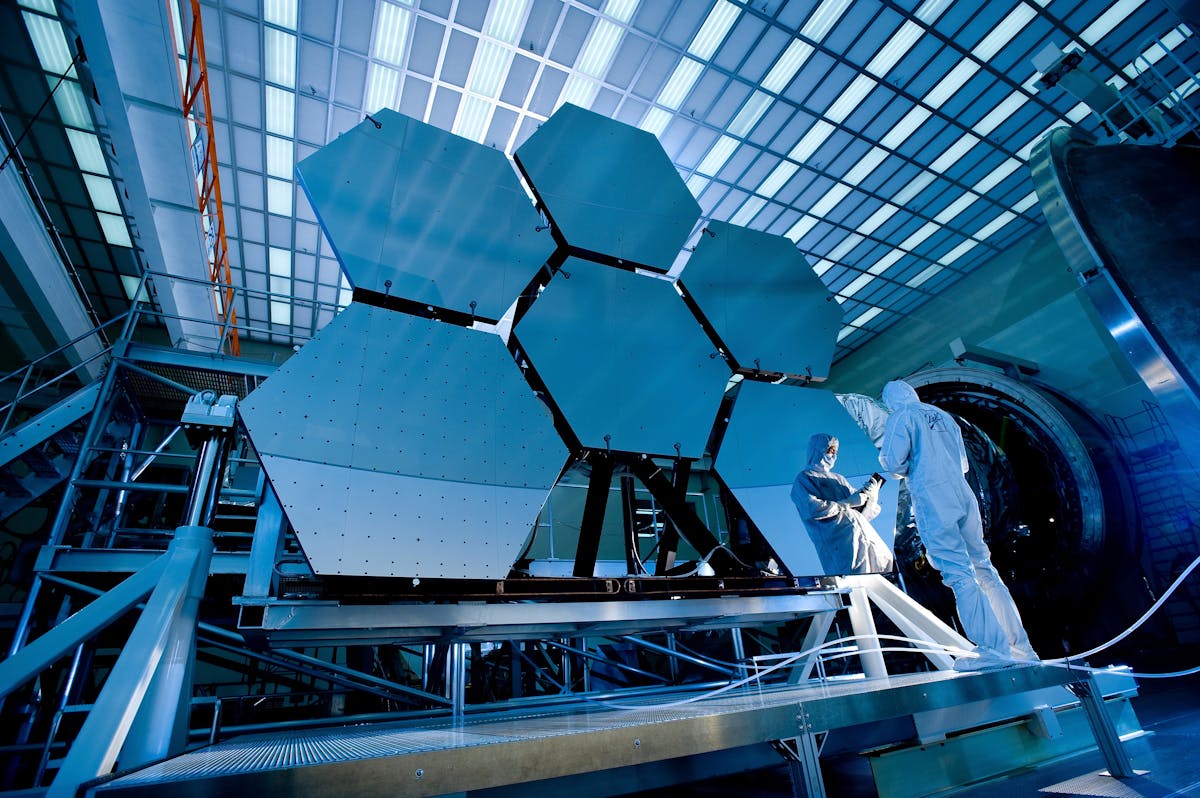
Visualizing the Race for Lossless Power


Tools for Learning and Working with Superconductivity
For students, engineers, and enthusiasts wanting to dig deeper into superconductivity and quantum materials, several resources and tools can help.
Authoritative Texts and References
- Introduction to Superconductivity by Charles Kittel / Charles Tinkham — A classic, rigorous introduction to the physics of superconductors.
- Superconductivity: An Introduction — More applied perspective including materials and devices.
Online Lectures and Courses
- MIT OpenCourseWare: Theory of Solids — Graduate-level solid-state physics with relevance to superconductivity.
- YouTube lecture series on superconductivity and quantum materials — Multiple universities and research institutes post full courses online.
Simulation and Data Tools
- Materials Project for exploring known compounds and their computed properties.
- AFLOW and related databases for high-throughput materials data.
- Open-source DFT codes such as Quantum ESPRESSO for calculating electronic structures related to superconductivity.
Conclusion: Where We Stand and What to Watch Next
As of early 2026, the consensus of the superconductivity community is clear: no convincingly demonstrated, reproducible, room-temperature superconductor at ambient pressure exists yet. Many spectacular claims have not survived independent scrutiny. Yet the field is far from stagnant. Verified hydride superconductors push Tc to unprecedented values under extreme pressures, while ongoing work in cuprates, iron-based materials, and moiré systems enriches our understanding of unconventional pairing mechanisms.
For those tracking the “hunt for lossless power transmission,” some concrete indicators of a truly transformative breakthrough would be:
- Multiple independent replications of the same material and behavior.
- Transparent, publicly accessible raw data and analysis workflows.
- Demonstrations of bulk samples or wires, not just micron-scale specimens.
- Operating conditions close to real-world environments (near-ambient pressure, manageable cooling requirements).
Until then, skepticism and curiosity should coexist. The most valuable outcome of the current era may not be a single miracle material, but a more robust, transparent, and data-rich culture in condensed-matter physics and materials science.
The road to room-temperature superconductivity is less a straight sprint and more a complex climb, where each carefully verified step matters as much as the summit.
Additional Insights: How Non-Experts Can Evaluate Future Claims
Given the media hype around “room-temperature superconductors,” it is helpful for non-specialists to have a quick checklist for evaluating new announcements.
Questions to Ask When You See a New Claim
- Peer review and venue: Is the work a preprint, or has it passed peer review in a reputable journal?
- Independent replication: Have other labs reproduced the effect, or is it a single-group result?
- Multiple measurements: Does the paper show zero resistance, Meissner effect, and thermodynamic signatures like specific-heat jumps?
- Data transparency: Are raw data and code available? Are analysis choices clearly justified?
- Operating conditions: What temperature and pressure are required? How feasible are they for real devices?
Reliable science communication—from reputable outlets and recognized experts—will usually highlight these points. Sensational coverage that ignores them warrants caution.
References / Sources
Selected reputable sources for further reading:
- Nature News on superconductivity advances and controversies: https://www.nature.com/subjects/superconductors
- Science Magazine coverage of retracted superconductivity claims: https://www.science.org/content/article/high-profile-superconductivity-papers-retracted
- Review on hydride superconductors: https://www.nature.com/articles/s41586-020-1955-5
- Twisted bilayer graphene and flat-band superconductivity: https://www.nature.com/articles/nature26160
- Materials Project database: https://materialsproject.org
- General introduction to superconductivity (HyperPhysics): http://hyperphysics.phy-astr.gsu.edu/hbase/Solids/supcon.html
