
This Simple Coffee-and-Tea Habit Could Help You Live Longer, According to New Research

If you’re reading this with a cup of coffee in one hand and a glass of water nearby, you might be doing more for your health than you realize. New research covered by Vogue suggests that how you combine everyday drinks—especially coffee, tea, and water—may be linked with living longer. The story isn’t about one “miracle” drink, but about patterns over time.
In this guide, we’ll unpack what the latest science actually says, what a smart “longevity drink routine” can look like, and how to tailor it to your body, your sleep, and your medical conditions—without falling for hype or overpromising claims.
Can What You Drink Really Help You Live Longer?
Researchers have been following hundreds of thousands of people for years to understand how beverages affect health and life expectancy. Large observational studies (including cohorts in the UK, Europe, the US, and Asia) consistently find that:
- Coffee drinkers tend to have a slightly lower risk of early death, especially from heart disease and some neurological conditions.
- Tea—particularly green and black tea—has been associated with better cardiovascular health and lower mortality risk.
- Plain water is fundamental for kidney function, blood pressure regulation, and overall metabolic health.
The Vogue-featured research highlights that it may not be about choosing only coffee or tea, but how you combine them across the day, always on the foundation of enough water and an overall healthy lifestyle.
“In large population studies, moderate coffee and tea intake consistently show benefits, but they rarely act alone. The pattern of diet, sleep, activity, and smoking status matters just as much as what’s in your cup.”
— Cardiologist reviewing beverage and longevity research, 2024
What the Coffee-and-Tea Longevity Research Actually Suggests
While specific details vary between studies, a recurring pattern emerges by 2024–2025 research: people who drink a mix of coffee and tea—often 1–3 cups of each per day—tend to live slightly longer than those who drink none, especially when:
- They don’t smoke (or have quit).
- They’re physically active.
- Their overall diet is rich in plants and low in ultra-processed foods.
- They don’t massively overload on sugar or cream in their drinks.
This doesn’t prove that these drinks cause a longer life—observational studies can’t do that. But they do suggest a promising association that lines up with what we know about:
- Polyphenols and antioxidants in coffee and tea that may reduce inflammation and oxidative stress.
- Caffeine’s effects on alertness, mood, and possibly metabolic health for many people.
- Hydration from water that supports blood pressure, kidney, and heart health.
A Longevity-Friendly Daily Drink Routine (Backed by Evidence)
Below is a sample routine inspired by study patterns and expert recommendations. It’s a starting point—not a prescription—and assumes you tolerate caffeine, don’t have major heart rhythm issues, and aren’t pregnant or breastfeeding.
- Start the morning with water (250–500 ml).
Rehydrate before you reach for caffeine. This supports blood pressure, alertness, and digestion. - Enjoy 1–2 cups of coffee in the morning.
Aim for:- Mostly black or with a splash of milk.
- Minimal added sugar (ideally <1–2 teaspoons per cup, or use unsweetened alternatives).
- A caffeine limit of about 200–300 mg total in the morning for most adults.
- Hydrate between cups.
Add another glass of water or lightly flavored unsweetened water between caffeinated drinks. - Switch to tea late morning or early afternoon.
1–3 cups of:- Green or black tea for a moderate caffeine boost plus polyphenols, or
- Herbal tea (e.g., rooibos, peppermint, chamomile) if you’re sensitive to caffeine.
- Set a caffeine curfew.
Most sleep experts recommend stopping caffeine 6–8 hours before bedtime to protect sleep quality. - Make water your default throughout the day.
Aim for pale-yellow urine as a simple hydration check, adjusting for heat, exercise, and body size.
Why This Combo Might Support Longevity
Researchers propose several biological reasons that a coffee–tea–water pattern may be linked with living longer:
- Antioxidant and anti-inflammatory effects
Coffee and tea are rich in polyphenols (like chlorogenic acids and catechins) that may reduce chronic low-grade inflammation—a key factor in heart disease, diabetes, and some cancers. - Better metabolic health
Some studies associate moderate coffee intake with lower risk of type 2 diabetes and improved insulin sensitivity, though results vary by individual and preparation. - Heart and vessel support
Tea, particularly green and black, has been tied to better endothelial function (how well blood vessels relax and contract) and lower risk of some cardiovascular events. - Brain health
Long-term coffee and tea consumption has been associated with a reduced risk of Parkinson’s disease and possibly slower cognitive decline in some populations. - Hydration and kidney health
Adequate water supports kidney function, blood volume, and regulation of blood pressure, all critical for healthy aging.
It’s important to remember that these are plausible mechanisms supported by emerging science—not guaranteed outcomes. Your body’s response can differ based on genetics, gut microbiome, and medication use.
From Jittery to Balanced: A Real-Life Coffee and Tea Reset
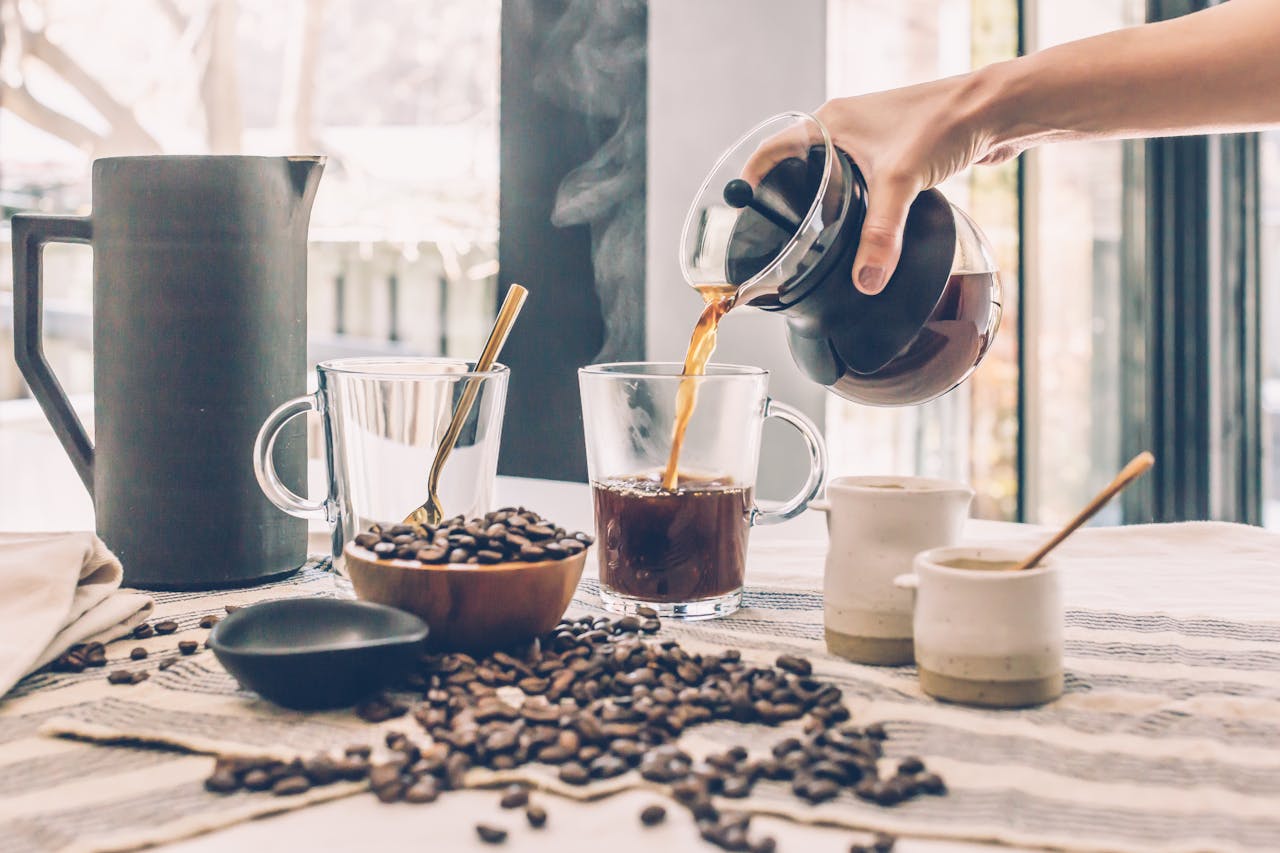
A client I’ll call Maria, 42, came to a nutrition clinic exhausted and anxious. She drank:
- 4–5 large coffees per day,
- Very little water, and
- Sugary energy drinks in the afternoon.
She struggled with heart palpitations, poor sleep, and afternoon crashes. Her goal wasn’t perfection; it was to feel human again—and to support long-term heart health (her father had a heart attack in his 50s).
Over three months, her clinician guided her through:
- Replacing one coffee with a large glass of water upon waking.
- Swapping her mid-afternoon coffee for green tea or herbal tea.
- Dropping energy drinks entirely and using sparkling water with citrus instead.
- Setting a hard cut-off for all caffeine at 2:00 p.m.
She still enjoyed 2 moderate coffees in the morning, but her total caffeine intake dropped. Within weeks, her sleep improved, palpitations reduced, and afternoon energy stabilized. While we can’t say this change alone extended her life, it almost certainly improved her quality of life and may support better long-term health markers.
Common Obstacles (and How to Work Around Them)
Shifting long-standing drink habits can feel surprisingly emotional and inconvenient. Here are some frequent roadblocks and practical ways through them:
- “I get headaches if I cut back on coffee.”
Try tapering slowly: reduce by half a cup every few days and replace each reduction with water or tea. Caffeine-withdrawal headaches usually ease within a week. - “I hate plain water.”
Infuse with lemon, lime, cucumber, or berries; try sparkling water; or drink unsweetened herbal teas. The goal is low-sugar hydration, not perfection. - “Coffee upsets my stomach.”
Test:- Switching to a darker roast or cold brew (often less acidic).
- Drinking with food.
- Trying tea or half-caf instead of full-strength coffee.
- “Tea doesn’t give me enough kick.”
Keep a moderate morning coffee, then use tea for gentle sustained energy, combined with movement (a brisk 5–10 minute walk) for an extra boost without more caffeine. - “I rely on sugary coffee drinks for comfort.”
Gradually reduce syrups and sugar; add spices like cinnamon or vanilla; or shift to smaller sizes. Pair the ritual with something else soothing (a walk, music, or a quick stretch) so comfort isn’t only about sugar.
Your 7-Day Plan to Reset Your Daily Drinks
Here’s a gentle, realistic one-week experiment you can adapt:
- Day 1–2: Track, don’t change.
Write down everything you drink (type, size, time). Awareness comes first. - Day 3: Add water.
Without changing your other drinks yet, add:- One glass of water first thing in the morning, and
- One glass between each caffeinated drink.
- Day 4–5: Swap one drink.
Replace your latest-in-the-day caffeinated drink with a decaf or herbal tea. - Day 6: Refine your coffee.
If you use sugar-heavy drinks, reduce sugar by 25–50% or downsize one drink. If you’re already low-sugar, check that your total caffeine is ≤400 mg (or your doctor’s advised limit). - Day 7: Reflect and personalize.
Ask:- How is my energy across the day?
- Is my sleep any better?
- What changes feel sustainable for the next month?

What Leading Health Organizations Say
Major health authorities don’t endorse coffee or tea as “longevity cures,” but many acknowledge their potential benefits when used wisely:
- American Heart Association notes that moderate coffee intake is generally safe for most people and may be associated with lower risk of heart failure and stroke in some studies, while cautioning those with specific heart conditions about caffeine.
- World Health Organization removed coffee from its list of possible carcinogens and reports that coffee consumption is associated with a reduced risk of liver and endometrial cancers in some research.
- Dietary Guidelines in several countries now recognize coffee and tea—without excessive sugar or cream—as acceptable parts of a healthy dietary pattern for many adults.
For deeper reading, look for large cohort studies published in journals like The New England Journal of Medicine, JAMA, and Circulation that explore coffee, tea, and mortality risk. Rely on peer-reviewed research and recognized public-health organizations rather than sensational headlines alone.
Healthy Coffee, Tea, and Water Swaps You Can Try Today
If you’re ready for a few simple tweaks, consider these evidence-aligned swaps:
- Swap one sugary latte for a smaller size with half the syrup, or a cappuccino with cinnamon.
- Trade afternoon soda or energy drinks for iced green tea or sparkling water with lime.
- Use unsweetened plant milk or low-fat dairy instead of heavy cream, if tolerated.
- Explore herbal teas in the evening: chamomile, rooibos, ginger, or peppermint for a caffeine-free wind-down.
- Keep a refillable water bottle visible at your desk or in your bag as a nudge to sip regularly.

Bringing It All Together: Your Cup, Your Choice
The emerging science—including the research highlighted by Vogue—suggests that a balanced combination of coffee, tea, and plenty of water may be one piece of the longevity puzzle. But it’s just that: one piece. Sleep, stress, food quality, movement, genetics, and social connection all play powerful roles too.
Instead of chasing a “magic drink,” focus on building a calm, enjoyable routine:
- Use coffee and tea as tools, not crutches.
- Anchor your day with consistent hydration.
- Respect your body’s response to caffeine and adjust accordingly.
Your next step: For the coming week, track what you drink, add one extra glass of water per day, and pick one caffeinated drink to swap for a lower-sugar or earlier-in-the-day option. Notice how you feel, then refine from there.
Small, sustainable shifts today can quietly support a healthier, more energetic tomorrow—one sip at a time.
