
How Very Low Earth Orbit Satellites Are Quietly Redefining Space – And Why It Matters Here on Earth
The next frontier in space is closer than you think
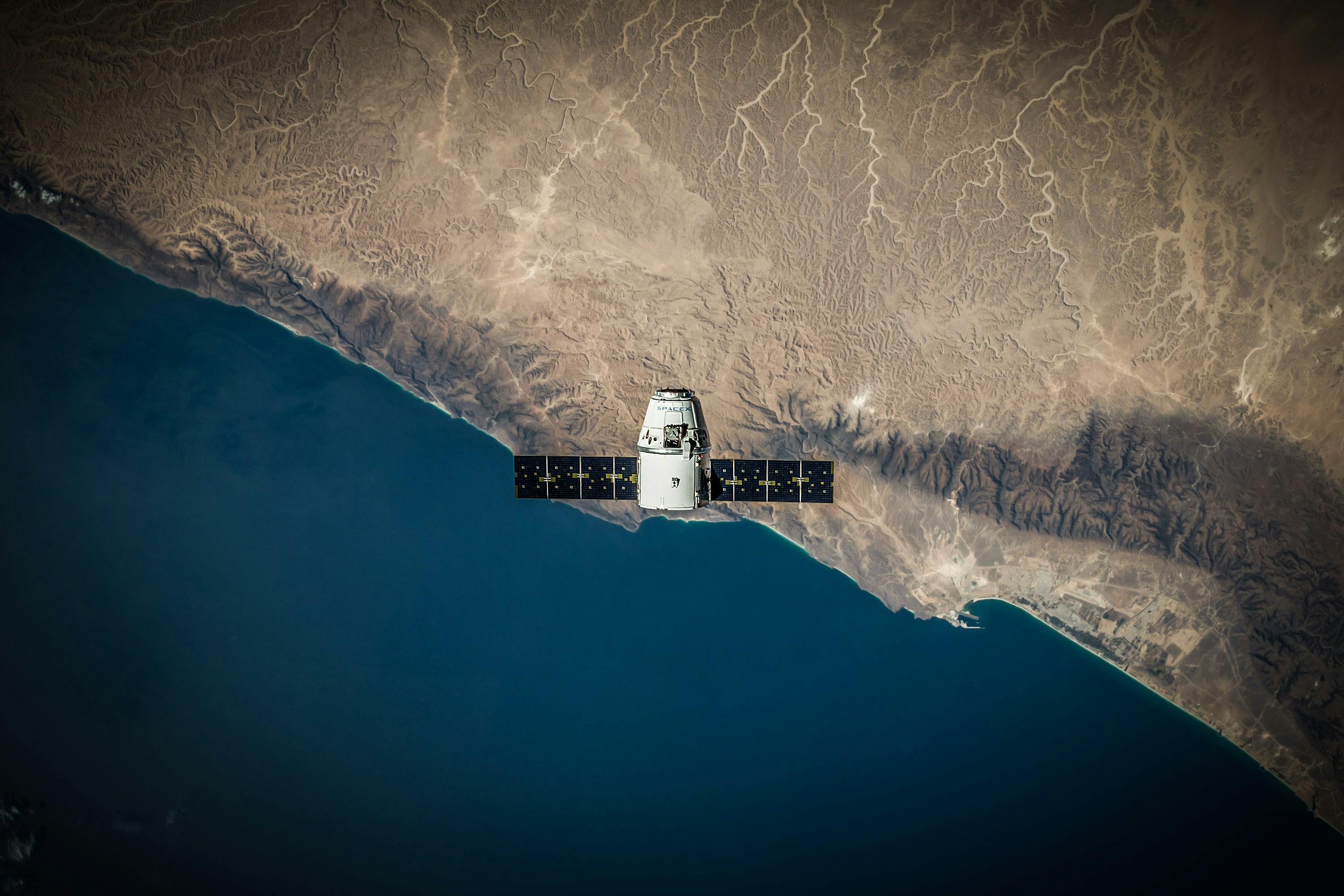
When most people imagine satellites, they picture distant machines quietly circling high above Earth. In reality, the next big leap in space technology is happening much closer to home—just a few hundred kilometers above our heads. This new neighborhood is called very low Earth orbit (VLEO), and it’s where a growing number of satellites are starting to fly.
As thousands of satellites pour into low Earth orbit (LEO), the region is getting crowded. Operators, regulators, and researchers are asking a hard question: how do we keep growing space services—like global internet, Earth observation, and climate monitoring—without turning orbit into a hazardous traffic jam? VLEO is emerging as one promising, though technically demanding, answer.

What is very low Earth orbit (VLEO)?
Space agencies and researchers typically define very low Earth orbit as altitudes between roughly 160 km and 450 km above Earth’s surface—lower than the bulk of conventional LEO satellites, which often fly between 500 km and 1,200 km.
Flying this low is a bit like “skimming the edge” of the atmosphere. The air is whisper-thin, but not zero. That tiny amount of air leads to:
- Atmospheric drag that constantly slows satellites down.
- Higher fuel demands to maintain orbit for years at a time.
- Natural de-orbiting if propulsion is lost—an environmental upside.
“VLEO sits in a sweet spot where satellites are close enough for high‑quality data and low-latency links, but low enough that defunct spacecraft don’t linger for decades. It forces better engineering, but rewards us with better performance and sustainability.”
— Hypothetical synthesis of current space sustainability research
Around the world, agencies like ESA, NASA, and a growing ecosystem of startups are testing VLEO satellites, materials, and propulsion systems designed specifically for this demanding environment.
Why low Earth orbit is getting crowded
Low Earth orbit used to be the domain of a few national space programs and large commercial operators. Over the past decade, three trends dramatically changed that:
- Cheaper launches: Reusable rockets and rideshare missions have slashed the cost of placing a kilogram into orbit.
- Smaller satellites: CubeSats and microsatellites made it possible for universities, startups, and even high schools to build and fly hardware.
- Mega-constellations: Thousands of satellites working together can provide global broadband, navigation augmentation, and near-continuous Earth imagery.
The result is a rapidly densifying shell of hardware in LEO. While collision-avoidance tools and international guidelines exist, they’re under mounting pressure. Every new satellite adds to the complexity of space traffic management.
Very low Earth orbit doesn’t magically “solve” crowding, but it offers a way to:
- Move some services to a different altitude band.
- Leverage faster natural de-orbiting to limit long-term debris.
- Test new operations concepts like shorter-lived, more agile constellations.
Why fly lower? The key benefits of VLEO satellites
Flying closer to Earth offers some powerful technical and commercial advantages—if you can handle the engineering challenges.
1. Sharper, more responsive views of Earth
Every kilometer you move closer to the ground improves the potential resolution of cameras and sensors. In VLEO, even relatively small telescopes can capture highly detailed imagery of cities, forests, and oceans.
- Better disaster monitoring (floods, fires, storms).
- More precise agricultural insights (crop health, water stress).
- Improved infrastructure monitoring (roads, pipelines, power lines).
2. Lower latency communications
In communications, distance equals delay. Because VLEO satellites are closer, signal travel times are shorter. That can mean:
- Lower-latency broadband for remote regions.
- Faster links for financial trading routes or real-time cloud gaming.
- Improved connectivity for aircraft and ships.
3. More sustainable orbits
One of VLEO’s biggest strengths is environmental: objects don’t stay there forever. Atmospheric drag gradually pulls satellites down, typically within a few years of losing propulsion, rather than decades or centuries.
This doesn’t remove the need for responsible behavior—satellites still share space with others—but it reduces the chance of “forever junk” that can threaten future missions.
The hard part: challenges of operating in very low Earth orbit
VLEO isn’t a free upgrade. It’s a trade-off: better performance and sustainability in exchange for tougher engineering and operations.
1. Constant battle against atmospheric drag
Even at 300–400 km, satellites feel a measurable “headwind.” Over months and years, this drag:
- Slows satellites, causing them to lose altitude.
- Demands frequent orbit-raising burns.
- Increases fuel and propulsion system requirements.
Emerging technologies, such as electric propulsion and air-breathing ion engines, are being tested to “sip” the thin atmosphere for propellant, potentially extending lifetimes without carrying huge fuel tanks.
2. Harsh thermal and material environment
VLEO satellites cycle rapidly between sunlight and shadow, experiencing wide temperature swings. At the same time, atomic oxygen in the upper atmosphere can erode unprotected materials, especially polymers and coatings.
This pushes designers to adopt:
- Specialized protective coatings and surface treatments.
- Compact, robust thermal control systems.
- Careful selection of materials that can withstand erosion and cycling.
3. Operational complexity and cost
Flying lower generally means:
- More ground stations or relay satellites to maintain contact.
- More frequent maneuver planning and monitoring.
- Potentially shorter design lifetimes, especially for first-generation missions.
Case study: A European technology demonstration in VLEO found that robust autonomous navigation and frequent small maneuvers were essential to stay on track. While this raised mission complexity, it also accelerated innovation in onboard guidance and control software.
How VLEO satellites could change life on Earth
Much of the impact of VLEO will be “quiet”—you may never know a service you use is powered from a few hundred kilometers overhead. Here are some of the most promising application areas researchers and companies are exploring as of 2026:
1. Climate and environmental monitoring
Lower orbits allow hyperspectral and radar instruments to:
- Measure greenhouse gas emissions from individual facilities more precisely.
- Track deforestation, wetland loss, and urban heat islands in finer detail.
- Observe rapidly changing events like wildfires and hurricanes more often.
2. Smarter cities, farms, and infrastructure
Combined with AI analytics, VLEO imagery and sensor data can:
- Help cities plan transport, energy, and green space more effectively.
- Support precision agriculture—optimizing irrigation and fertilizer use.
- Monitor roads, bridges, and rail lines for early signs of wear.

3. Next-generation connectivity
Some future communication constellations may use hybrid architectures, mixing higher-altitude satellites with VLEO layers to balance:
- High throughput and low latency where needed.
- Resilience against outages or single‑system failures.
- Regional specialization for dense urban or industrial hubs.
VLEO vs. traditional LEO: a practical comparison
To understand what’s truly new here, it helps to compare a conventional low Earth orbit mission to a hypothetical VLEO mission designed for similar goals.
- Altitude: ~650 km
- Lifetime: 7–10 years
- De-orbit time after failure: 25+ years without active disposal
- Revisit rate: maybe daily or every few days for a given location
- System size: fewer, larger satellites
- Altitude: 300–400 km
- Lifetime: perhaps 3–5 years (current technology), by design
- De-orbit time after failure: typically a few years or less
- Revisit rate: potentially multiple times per day using a constellation
- System size: more, smaller satellites with agile tasking
The “after” picture involves a more dynamic, constantly refreshing network—closer to how we already think about terrestrial infrastructure like cell towers or data centers. It’s less about a single flagship satellite, more about a living system that can evolve quickly.
What’s next: research, regulation, and responsible growth
As of early 2026, VLEO is moving from experimental to early operational. Space agencies are:
- Funding technology demonstrators for VLEO propulsion, materials, and sensors.
- Refining space debris and disposal guidelines to account for lower orbits.
- Exploring commercial partnerships to turn testbeds into sustainable services.
Regulators and international organizations, including the UN Office for Outer Space Affairs and national licensing bodies, are under pressure to:
- Set clear rules for collision avoidance and data sharing.
- Encourage “design for demise” and short de-orbit timelines.
- Balance commercial opportunity with long-term orbital health.
Key takeaways and how to think about VLEO today
Very low Earth orbit can sound abstract, but its implications are concrete. Within the next decade, the services you use—from disaster alerts on your phone to the maps that guide your commute—may increasingly depend on satellites skimming close above our planet.
- VLEO brings space “closer” to everyday life with sharper data and faster links.
- It offers a more naturally self-cleaning orbital environment, if designed responsibly.
- It demands better engineering and smarter policy, not just more satellites.
None of this is guaranteed. The way industry, governments, and researchers choose to build out VLEO over the next few years will determine whether it becomes a model for sustainable growth in space—or just another congested layer.
A thoughtful path forward means asking not only, “What can we launch?” but “How do we ensure that every satellite launched leaves orbit—and the space environment—better than it found it?”

If you’re curious about where this is heading, consider following updates from agencies like NASA, ESA, and trusted science outlets such as The Conversation and Space.com. The next chapter of space isn’t just deep space exploration—it’s how we manage the thin, fragile shell of orbits just above our world.
