
From LK‑99 Hype to Real Breakthroughs: The Race for Room‑Temperature Superconductors
Superconductivity—a quantum state with exactly zero electrical resistance and perfect diamagnetism (Meissner effect)—sits at the crossroads of physics, chemistry, and engineering. Since mid‑2023, public fascination with supposed room‑temperature superconductors, especially the copper‑doped lead apatite dubbed LK‑99, has exploded. While no credible room‑temperature, ambient‑pressure superconductor has been confirmed as of early 2026, the scientific race has intensified and the way that race is communicated to the world has changed just as dramatically.
Mission Overview: Why Room‑Temperature Superconductors Matter
The long‑term goal is straightforward to state and extremely hard to achieve: a stable, inexpensive material that superconducts at or near room temperature (≈293 K) and at ordinary atmospheric pressure. Such a breakthrough would:
- Eliminate transmission losses in power grids, enabling ultra‑efficient, compact cables and transformers.
- Revolutionize transportation through low‑maintenance maglev trains, ultra‑efficient motors, and potentially new aerospace concepts.
- Transform medical imaging (MRI), fusion devices, and particle accelerators via cheaper, more robust magnets.
- Open new paradigms for quantum computing architectures and cryogen‑free quantum devices.
Even “near‑room” superconductors that work slightly below 0 °C or require only modest pressures could be disruptive if they can be manufactured at scale. This is why every bold claim—from cuprates in the 1980s to hydride superconductors and LK‑99 more recently—gets intense scrutiny.
The LK‑99 Episode: A Viral Stress Test for Modern Science
In July 2023, a pair of preprints by Lee, Kim, and co‑authors claimed that a modified lead apatite, Cu‑doped Pb10(PO4)6O, exhibited superconductivity above room temperature and at ambient pressure. The material was quickly coined “LK‑99” online.
Within days, YouTube channels, X/Twitter threads, TikTok videos, and Discord servers were filled with live‑streamed replication attempts. Some labs reported hints of diamagnetism or partial levitation; others saw only mundane behavior explained by impurities and structural defects.
“The LK‑99 story is less about a new superconductor and more about a new era of open, chaotic, and highly visible materials discovery.”
— Paraphrasing commentary in Nature on the LK‑99 saga (2023)
By late 2023, thorough experimental and theoretical work showed that LK‑99 was not a true superconductor. Studies indicated conventional insulating or poorly conducting behavior, with any apparent levitation explained by ferromagnetic or paramagnetic phases rather than the Meissner effect.
Yet the impact was real. LK‑99 accelerated public education about:
- The difference between preprints and peer‑reviewed papers.
- The necessity of independent replication and rigorous measurements (e.g., four‑probe resistivity, heat capacity, magnetic susceptibility).
- How easily video‑friendly effects can be misinterpreted as exotic physics.
Superconductivity 101: From BCS to Unconventional Pairing
Superconductivity is defined by two key properties:
- Zero DC resistance: Electrical current flows indefinitely without energy loss.
- Meissner effect: Magnetic fields are expelled from the bulk of the material when it enters the superconducting state.
In conventional low‑temperature superconductors, Bardeen–Cooper–Schrieffer (BCS) theory provides a remarkably accurate description. Electrons experience an effective attraction mediated by lattice vibrations (phonons), forming Cooper pairs that condense into a macroscopic quantum state.
Conventional vs. High‑Temperature Superconductors
Superconductors are often classified into:
- Conventional (BCS) superconductors: Usually simple metals or alloys, with transition temperatures (Tc) up to ≈30 K under ambient pressure.
- Unconventional superconductors: Cuprates, iron‑based pnictides, some heavy‑fermion and organic systems, where pairing is likely mediated by electronic correlations or spin fluctuations, not just phonons.
High‑Tc cuprates discovered in the late 1980s shattered previous limits, with Tc values above 130 K under pressure. Yet they still require liquid nitrogen cooling, and the microscopic pairing mechanism—possibly involving d‑wave symmetry and strong electron correlations—remains one of condensed‑matter physics’ grand challenges.
Near‑Room Superconductivity in Hydrides: High Pressure, High Promise
The most credible reports of “near‑room” superconductivity to date come from hydrogen‑rich materials—hydrides—under extreme pressures. By squeezing hydrogen into dense metallic states, theory and experiment suggest very strong electron–phonon coupling and thus high Tc.
Key Milestones in Hydride Superconductors
- H3S (sulfur hydride): Superconductivity around 203 K at ≈155 GPa (≈1.5 million atmospheres) reported in 2015.
- LaH10 (lanthanum decahydride): Tc ≈250–260 K at ≈170 GPa reported in 2018–2019.
- Carbonaceous sulfur hydride: A headline‑grabbing claim of ≈287 K superconductivity at ≈267 GPa in 2020, later heavily questioned and followed by a retraction in Nature in 2022.
Importantly, these pressures are far beyond practical engineering conditions. A material that needs diamond‑anvil cells to stay superconducting will not power city‑scale transmission lines.
“Hydrides have shown that phonon‑mediated superconductivity can approach room temperature, but the challenge now is to bring those critical temperatures down in pressure space, not just up in temperature.”
— Summary of community perspective following hydride breakthroughs
Current research therefore aims to:
- Design hydride‑like systems that retain high Tc at far lower pressures.
- Understand whether alternative light‑element frameworks (e.g., borides, carbides, nitrides) could mimic hydride behavior.
AI‑Driven Materials Discovery: From Databases to Generative Design
The search space for new superconductors is astronomically large: varying elements, stoichiometries, crystal structures, and doping patterns yields more candidates than any lab could synthesize in centuries. This is where machine learning (ML) and AI now play a central role.

Key AI Techniques in Superconductor Research
- High‑throughput DFT screening: Density functional theory is automated across large chemical and structural spaces to estimate electronic structures, phonon spectra, and Tc proxies.
- Supervised learning models: Algorithms are trained on known superconductors (and non‑superconductors) to predict Tc from crystal descriptors, composition, or electronic features.
- Generative models: Variational autoencoders, generative adversarial networks (GANs), and transformer‑based models propose novel structures optimizing for target properties like high Tc and thermodynamic stability.
- Active learning loops: Experimental results feed back to refine models, steering synthesis toward the most informative and promising candidates.
Public‑facing databases such as the Materials Project and the SuperCon database have become staples of this ecosystem, enabling both professional researchers and serious hobbyists to explore candidate materials.
However, AI predictions must be treated as hypotheses, not proofs. Many highly ranked candidates turn out to be difficult to synthesize, metastable, or non‑superconducting upon closer investigation.
Technology Today: Impact Without True Room‑Temperature Superconductors
Even though no ambient‑pressure, room‑temperature superconductor exists yet, present‑day superconductors already underpin multi‑billion‑dollar technologies.
Current High‑Tc Workhorses
- REBCO tapes (REBa2Cu3O7‑δ): Rare‑earth barium copper oxide tapes are used in high‑field magnets for fusion (e.g., SPARC), MRI upgrades, and compact accelerators.
- BSCCO (Bi‑based cuprates): Used in some power cables and fault current limiters.
- Nb‑Ti and Nb3Sn: Conventional superconductors that remain the backbone of MRI scanners and many particle accelerator magnets.
Real‑World Applications Enabled So Far
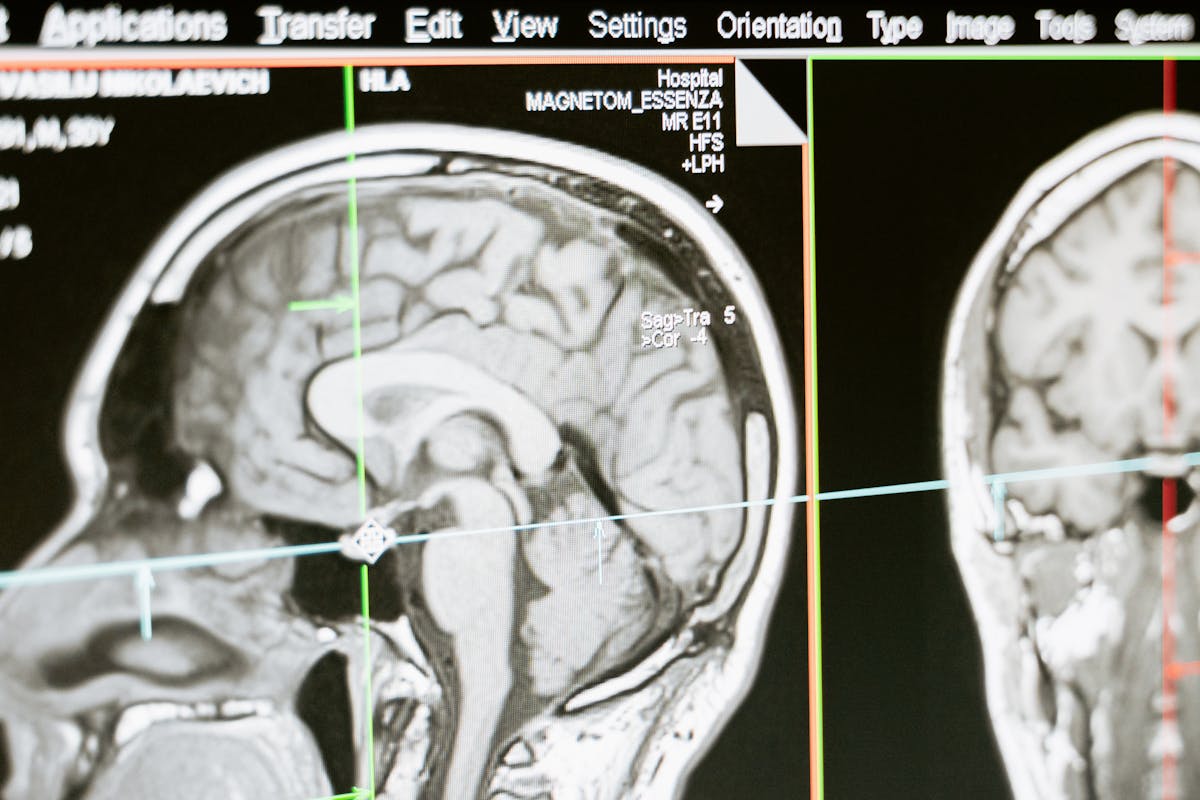
- Medicine: High‑field MRI and experimental ultra‑high‑field scanners for better resolution.
- High‑energy physics: LHC‑style colliders, synchrotron light sources, and neutron facilities.
- Power infrastructure: Demonstration‑scale superconducting cables, SMES (superconducting magnetic energy storage), and high‑capacity fault current limiters.
- Fusion: Compact tokamak designs leveraging high‑field REBCO magnets to shrink device size.
For technically inclined readers and students, hands‑on exposure to cryogenics and magnetism can be invaluable. For example, a benchtop superconductivity kit or compact electromagnet setup can demystify many of the underlying principles. Products such as the Thames & Kosmos superconductivity and magnetism experiment kits provide accessible, structured experiments for advanced high‑school and undergraduate learners.
Scientific Significance: What a True Room‑Temperature Superconductor Would Mean
Beyond engineering, a confirmed room‑temperature (or near‑room) superconductor at ambient pressure would rewrite parts of condensed‑matter theory.
Key Theoretical Questions
- Is phonon‑mediated BCS‑like pairing sufficient to reach such high Tc, or is a fundamentally new pairing mechanism required?
- Can strong electronic correlations and unconventional pairing symmetries be harnessed while maintaining structural and chemical stability?
- How do competing orders—charge density waves, spin density waves, nematicity—interplay with superconductivity at such high temperatures?
Answering these questions would deepen our understanding of emergent phenomena in quantum materials, which is central not just for superconductivity but also for topological phases, quantum spin liquids, and correlated insulators.
“The first unambiguous room‑temperature, ambient‑pressure superconductor will almost certainly come with a surprise in the mechanism—and that’s what makes this chase scientifically irresistible.”
— Summary of views often expressed by condensed‑matter theorists on X/Twitter
Milestones on the Road to Room‑Temperature Superconductivity
The field’s history is punctuated by abrupt jumps in Tc and by shifts in theoretical understanding.
Historical Highlights
- 1911: Heike Kamerlingh Onnes discovers superconductivity in mercury at 4.2 K.
- 1957: BCS theory unifies understanding of conventional superconductors.
- 1986: Bednorz and Müller discover high‑Tc cuprates, sparking the “superconductivity revolution.”
- 2008: Iron‑based superconductors observed, revealing a second major family of unconventional superconductors.
- 2015–2019: Hydride superconductors (H3S, LaH10) push Tc near or above 250 K under extreme pressures.
- 2020–2022: Controversial claims of near‑room‑temperature hydrides; retractions emphasize the importance of robust data analysis.
- 2023: LK‑99 becomes the first viral “superconductor meme,” highlighting both the power and pitfalls of rapid online dissemination.
Each milestone refines our intuition for what is physically possible and where the next big leap might come from.
Challenges: Between Viral Hype and Hard Measurements
The LK‑99 saga underscored just how challenging it is to reliably demonstrate superconductivity—especially when social media expectations run ahead of lab reality.
Experimental Challenges
- Sample quality and phase purity: Tiny impurities or secondary phases can mimic or obscure superconducting signatures.
- Measurement artifacts: Spurious contact resistance drops, miscalibrated thermometers, or magnetization artifacts can all produce false positives.
- Reproducibility: A credible claim demands that multiple independent groups reproduce Tc, critical current density, and full Meissner effect under well‑defined conditions.
Social and Communication Challenges
- Preprints vs. peer review: arXiv and related platforms accelerate dissemination but also elevate unvetted claims to global visibility.
- Visual bias: Videos of partial levitation or noisy resistivity dips can go viral long before proper analysis is completed.
- Public misunderstanding: Non‑experts often conflate “evidence consistent with” superconductivity with “definitive proof,” creating cycles of hope and disappointment.
Several scientists have advocated for best‑practice checklists when evaluating sensational claims. A typical “credibility checklist” might include:
- Is there clear zero‑resistance behavior with four‑probe measurements across multiple samples?
- Has a full Meissner effect been demonstrated and quantified?
- Are critical fields (Hc1, Hc2) and critical currents measured consistently?
- Have at least two independent groups reproduced the effect?
- Is the structural characterization (XRD, TEM, spectroscopy) comprehensive and consistent?
The LK‑99 Legacy: Lessons for Open, Networked Science
While LK‑99 itself has faded from serious superconductivity research, its legacy persists in how the community thinks about open science and rapid collaboration.
Positive outcomes include:
- Faster replication: Dozens of labs mobilized quickly, publishing open analyses, code, and raw data.
- Educational impact: Explainer threads, videos, and blog posts from experts produced an unprecedented amount of accessible superconductivity education.
- Better literacy about preprints: Journalists, investors, and hobbyists are now more aware that preprints are preliminary.
On the cautionary side, LK‑99 showed:
- How quickly misinterpreted data can fuel speculative investment and hype cycles.
- The risks of over‑claiming in press releases or on social media before replication.
- The importance of clear communication from reputable institutions to counter misinformation.
Looking Ahead: Where Might the Breakthrough Come From?
Several promising research directions could, in principle, deliver near‑room superconductivity with practical operating conditions.
Emerging Frontiers
- Engineered heterostructures: Interfaces between oxides, 2D materials, or topological systems where superconductivity emerges from interfacial effects.
- Twistronics and moiré materials: Graphene and related 2D stacks, where twist angle controls correlation strength and superconductivity.
- Light‑element frameworks: Boron‑ and carbon‑rich networks that imitate hydride phonon spectra but at lower pressures.
- Non‑equilibrium phases: Ultrafast laser pulses or pressure‑temperature cycling to stabilize superconducting phases that are metastable at ambient conditions.
Video lectures and conference talks—such as those regularly posted by the Kavli Institute for Theoretical Physics on YouTube and major condensed‑matter conferences—provide a window into cutting‑edge developments for those who want to follow along in near real time.
Conclusion: Beyond the Hype, the Physics Marches On
As of early 2026, the verdict remains unchanged: no material has met the stringent criteria for a reproducible, room‑temperature, ambient‑pressure superconductor. LK‑99 did not overturn physics, but it did expose physics to a far larger audience and forced the community to refine how it communicates uncertainty, evidence, and progress.
The true breakthrough—if and when it arrives—will likely emerge from a convergence of careful theory, AI‑guided materials discovery, meticulous experiments, and globally coordinated replication. It will arrive not as a 30‑second viral clip, but as a body of converging evidence that withstands the most skeptical scrutiny.
Until then, incremental advances in high‑Tc materials, hydrides, and quantum materials are already reshaping energy, medicine, and computation. The story of room‑temperature superconductivity is not just about one magic material; it is about an evolving understanding of quantum matter in all its complexity.
Further Reading, Tools, and Practical Resources
For readers who want to go deeper into the technical and practical aspects of superconductivity and materials discovery:
- Textbook‑level introductions: “Superconductivity” by J. Robert Schrieffer and “Introduction to Superconductivity” by Michael Tinkham .
- Open databases: Materials Project, SuperCon database, and OQMD for high‑throughput materials data.
- Professional commentary: Follow leading condensed‑matter physicists and materials scientists on platforms like LinkedIn and X/Twitter, where many post real‑time commentary on new superconductivity claims and preprints.
- Hands‑on learning: Advanced hobbyists can explore precision measurement and low‑temperature techniques using high‑quality multimeters, cryogenic‑compatible wiring, and lab‑grade magnets; many of these are widely available from scientific suppliers and curated on platforms like Amazon and Digi‑Key.
References / Sources
Selected reputable sources for deeper study:
- “The physics of superconductors” – Reviews of Modern Physics
- Nature collection on high‑temperature superconductivity
- Nature news feature on the LK‑99 episode
- Drozdov et al., “Conventional superconductivity at 203 K at high pressures in sulfur hydride”
- Somayazulu et al., “Evidence for superconductivity above 260 K in lanthanum superhydride”
- Nature editorial on retraction of room‑temperature hydride claims
- arXiv.org – Superconductivity (cond‑mat.supr‑con) preprint server
Note: The state of research in superconductivity is fast‑moving. Readers are encouraged to check the latest literature and preprints for developments beyond the time of writing.
