
40 Must-Read Books of 2026: From Colson Whitehead to Viral Tradwife Thrillers
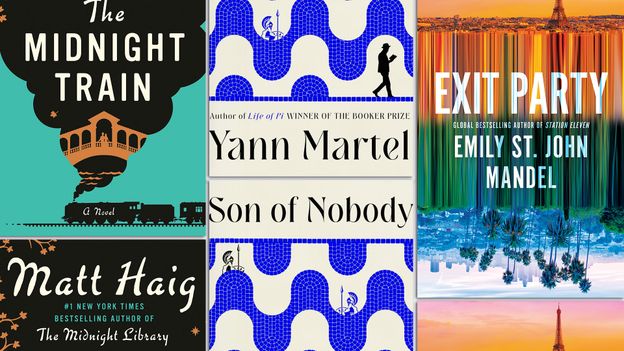
2026 is quietly shaping up to be one of those years readers talk about for a decade: new novels from literary heavyweights like Colson Whitehead, George Saunders and Maggie O’Farrell, audacious debuts that already have Hollywood circling, and non-fiction that aims straight at the fault lines of social media, identity and power. The BBC’s roundup of the 40 most exciting books to look forward to in 2026 is less a polite list and more a cultural weather report—one where tradwives, time-bending storytellers and haunted histories all jostle for attention.
The BBC’s 2026 Book List: Why This Preview Matters
The BBC’s annual “most exciting books” preview has quietly become one of the more influential reading lists in global publishing. It sits at the intersection of mainstream literary taste and festival-circuit buzz: serious enough to sway prize chatter, accessible enough to send casual readers to their local bookshop.
Their 2026 selection of 40 titles spans literary fiction, commercial page-turners, genre-bending experiments and big-idea non-fiction. Crucially, it doesn’t just highlight what’s “good”—it reveals what the industry thinks the conversation will be about this year: social media identities, domestic performance, political memory and the slippery boundary between public myth and private self.
Big-Name Authors Headlining 2026: Whitehead, Saunders, O’Farrell
Any year that features new work from Colson Whitehead, George Saunders and Maggie O’Farrell is going to draw attention, and the BBC wisely foregrounds this trio. Each sits at a different corner of contemporary literary culture: Whitehead as genre-fluid chronicler of American history, Saunders as the king of uncanny short fiction, O’Farrell as the emotionally intricate historical novelist who turned Hamnet into a global phenomenon.
- Colson Whitehead – Expect another work that plays with genre while interrogating race, capitalism or institutional power. His recent novels have gone from heist capers to alt-history corrections of the American story; whatever lands in 2026 will be treated as a major event.
- George Saunders – Whether it’s a new collection or a longer-form experiment, Saunders tends to capture the anxiety and absurdity of late capitalism with startling compassion. His presence on the list suggests 2026 will have at least one book that feels spiritually adjacent to Lincoln in the Bardo or Tenth of December.
- Maggie O’Farrell – Post-Hamnet, O’Farrell is on that rare plane where historical fiction becomes outright pop culture. A new release from her in 2026 will inevitably be framed as “the next big book-club obsession,” and the BBC is clearly anticipating that wave early.
“From big-name authors Colson Whitehead, George Saunders and Maggie O'Farrell to debuts and non-fiction, these are the titles you'll want to add to your reading pile this year.”
Caro Claire Burke’s Yesteryear: Tradwives, Instagram, and Anne Hathaway
One of the most attention-grabbing entries on the BBC list is Caro Claire Burke’s Yesteryear, a social-media-focused novel already in development as a film starring Anne Hathaway. She’s set to play Natalie, a polished “tradwife” influencer whose vintage domestic aesthetic masks a far more complicated reality.
The tradwife phenomenon—women who adopt hyper-traditional gender roles and aestheticized domesticity for social media—is inherently cinematic. It sits right at the uneasy intersection of nostalgia, performative femininity and online monetization. Converting that into fiction, and then almost immediately into film, signals just how central this subculture has become to the way we talk about gender and the internet.
“Social media comes under the spotlight in Caro Claire Burke's Yesteryear which is already being turned into a film starring Anne Hathaway. She'll play Natalie, a successful tradwife influencer…” — BBC Culture preview
In other words, Yesteryear is being positioned as both a novel and a cultural diagnosis. The BBC highlighting it alongside veteran authors suggests that 2026’s most talked-about reading experiences won’t necessarily be the most “literary” in a narrow sense, but the ones that most sharply capture how we curate reality online.

Key Themes in the 2026 BBC Book Preview: Social Media, Memory, and Performance
Even from the BBC’s brief overview, some clear thematic patterns emerge. These 40 books—spanning fiction and non-fiction—appear to be circling a few shared concerns:
- Social Media as a Narrative Engine
With Yesteryear front and center, the list underscores how online life is no longer a quirky subplot—it’s the main story. Expect novels that treat platforms and algorithms as settings in their own right, not just backdrops. - History Reimagined
Authors like O’Farrell and Whitehead have built careers on revisiting the past with fresh eyes. Coupled with newer historical and speculative titles, the BBC list suggests that 2026 publishing is still fascinated by how we rewrite collective memory. - Domestic Spaces as Battlegrounds
From tradwife aesthetics to family sagas, the home keeps returning as the site where politics, gender roles and class anxieties play out. The BBC selection leans into that, favoring novels that make the kitchen table feel as charged as a parliamentary debate. - Hybrid Storytelling
Many 2026 releases blur boundaries—between memoir and reportage, realism and the surreal, literary and genre. That hybridity reflects a readership comfortable moving between TikTok micro-essays, prestige TV and experimental fiction.
Strengths of the BBC 2026 List: Range, Relevance, and Readability
As a snapshot of what matters in 2026’s book landscape, the BBC roundup has several clear strengths.
- Genre breadth: The mix of literary heavy-hitters, commercial fiction and idea-driven non-fiction makes the list usable for almost any reader, not just festival regulars or prize watchers.
- Cultural immediacy: By spotlighting social-media narratives like Yesteryear, the BBC acknowledges that “serious” reading in 2026 can’t ignore the platforms defining public life.
- Debuts alongside icons: Pairing new voices with established names has a signaling effect: readers picking up Whitehead or Saunders may be nudged to take a chance on quieter, riskier books.
- Adaptation awareness: Highlighting works already optioned for film or TV, like Burke’s novel, reflects how many people now find books through screen culture rather than the other way around.
Potential Blind Spots: Hype Cycles, Diversity, and Risk
Like any curated preview, the BBC list isn’t neutral—it reflects particular tastes, markets and limitations.
- Hype bias: Books already optioned for film (like Yesteryear) or written by internationally famous authors are more likely to be featured, which can edge out smaller presses and experimental work.
- Global imbalance: While the BBC tends to include some international voices, English-language and Anglophone-market titles inevitably dominate, shaping what gets considered “essential.”
- Marketing echo chamber: Previews this early often rely heavily on publisher pitches and buzz among agents. That can favor safe bets over formally daring or politically uncomfortable books.
None of this makes the list useless; it just means readers should treat it as one lens among many. Pair it with indie-bookseller recommendations and prize longlists if you want a fuller sense of what 2026 has to offer.
How to Use the BBC 2026 Book List: A Reader’s Strategy
If 40 titles feel overwhelming, think of the BBC preview less as homework and more as a curated menu. You don’t have to order everything to understand the vibe of the restaurant.
- Pick your “anchor” book: Choose one marquee title—Whitehead, Saunders, O’Farrell—to orient yourself within the year’s biggest conversations.
- Add one culture-of-now title: Something like Yesteryear that grapples directly with contemporary life—social media, politics, or identity performance.
- Seek one wildcard: Scan the debuts and lesser-known authors for a book outside your usual comfort zone—translated fiction, experimental narrative, or niche non-fiction.
- Track adaptations: If you’re screen-obsessed, follow the books already in development for film or streaming; reading them early can feel like getting a director’s-cut version of the story.
Further Reading and Official Sources
For more detailed information about the 40 books highlighted by the BBC, along with publication dates and author interviews, check the following resources:
2026: A Year of Page-Turners with Cultural Teeth
Taken together, the BBC’s 40 most exciting books of 2026 sketch an intriguing portrait of where reading is headed: established voices stretching their own formulas, rising authors interrogating the performance of self online, and a publishing ecosystem that now assumes any breakout book might also be a streaming hit.
Whether you’re here for the next Colson Whitehead, the sharpest George Saunders stories, Maggie O’Farrell’s historical heartbreak, or the unsettling glow of a tradwife influencer’s ring light in Yesteryear, 2026 offers plenty to discuss long after you’ve turned the last page. The real challenge, as always, isn’t finding something worth reading—it’s making enough time to read it before the next wave hits.
Review Metadata
The following structured data summarizes this overview of the BBC’s “40 most exciting books to look forward to in 2026” for search and discovery purposes.
