
Jessie Buckley Says She Was ‘Brutalised’ on TV Talent Show: How Reality Casting Shaped a Serious Star
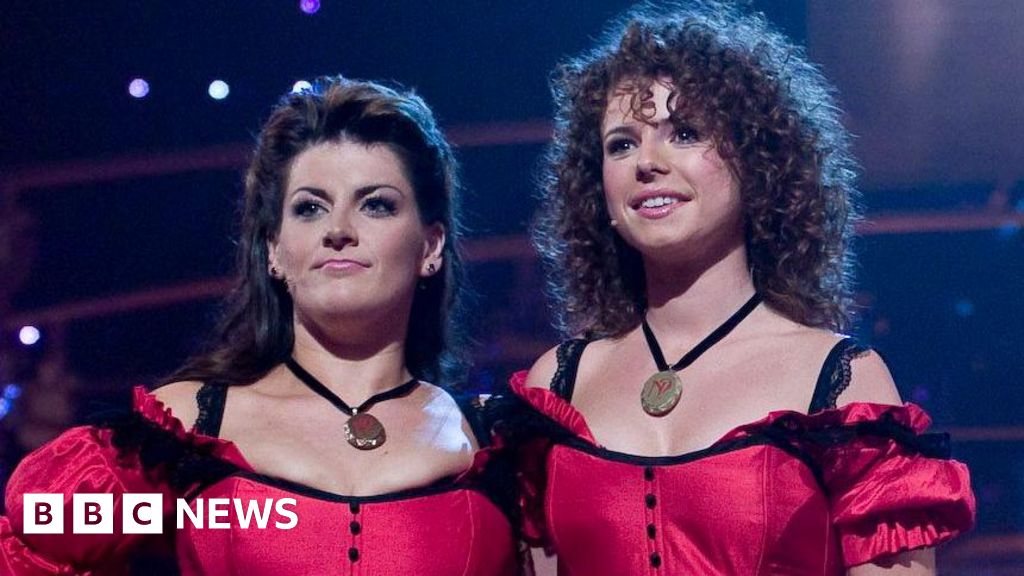
Jessie Buckley is having one of those “full-circle” years: the Irish actor, now leading the film adaptation of Hamnet, is being celebrated as one of the most adventurous screen and stage performers of her generation. Yet in a new interview, she’s turned back to the very beginning of her public career – BBC One’s 2008 talent show I’d Do Anything – and described feeling “brutalised” by the experience that first put her in front of millions.
Her comments land in a very different media moment from the late‑2000s reality boom that created shows like I’d Do Anything, How Do You Solve a Problem Like Maria? and The X Factor. With well‑documented concerns about contestant welfare now on the record, Buckley’s reflection isn’t just a personal revelation; it’s another data point in the evolving story of how TV talent shows treat the artists they produce.
From Prime-Time Talent Show to Acclaimed Screen Actor
When I’d Do Anything aired on BBC One in 2008, it was positioned as glossy family entertainment with a clear prize: the role of Nancy in a West End revival of Oliver!. The format will be familiar to anyone who remembers Saturday-night voting marathons: hopefuls belting out show tunes, backstage packages about their nerves, and a panel of judges – including composer Andrew Lloyd Webber – shaping the narrative.
Buckley, then a teenager from Killarney, quickly became a fan favourite. Week after week, she sang her way through musical-theatre standards and pop-adjacent ballads, with the producers leaning into a storyline that cast her as a technically gifted “natural” with something to prove. She ultimately finished as the runner‑up to Jodie Prenger, who went on to win the role of Nancy.
In hindsight, that near‑miss looks less like a setback and more like a pivot point. Freed from the constraints of being a televised Nancy, Buckley went on to train at the Royal Academy of Dramatic Art, build a stage career with the National Theatre and the West End, and then move into screen roles that were stranger, darker, and more complex than anything a Saturday-night talent show could reasonably accommodate.
Her later work in Beast, Wild Rose, Chernobyl, I’m Thinking of Ending Things, and The Lost Daughter proved that whatever narrative the BBC had crafted around her in 2008, it barely hinted at the actor she would become.
“Brutalised” by the Process: What Buckley Says Now
In her recent comments, given while promoting Hamnet, Buckley describes her experience on I’d Do Anything in notably stark terms. The word she reaches for is “brutalised” – a striking choice, especially given how often alumni of such shows feel pressure to be diplomatic about the projects that launched them.
“I was absolutely grateful for the doors it opened, but the way it was done, the way we were treated, it felt brutalising. You’re so young, and you’re exposed to that level of scrutiny and judgement on live TV every week.”
— Jessie Buckley, reflecting on I’d Do Anything (reported via BBC Entertainment)
That sense of being simultaneously “grateful” and harmed is a recurring theme in how performers talk about the era of big, personality‑driven casting shows. The structure of the programme – weekly eliminations, selective editing, judge critiques dialled up for drama – wasn’t unique to I’d Do Anything, but Buckley’s account suggests that, from the inside, the emotional cost could be steep.
It’s worth noting that at 18, she was also navigating sudden fame: front‑page TV coverage, message-board debates, and a viewing public invited to vote on whether she deserved to stay. For a teenager whose goal was, fundamentally, to act and sing on stage, that level of unfiltered visibility could feel less like an opportunity and more like being thrown into the deep end.
Reality Talent Shows and the Culture of “Brutal” Entertainment
Buckley’s remarks arrive in a cultural landscape that has already begun reassessing the 2000s reality boom. British and US series alike have faced scrutiny over mental-health support, manipulation of footage, and the long‑term impact of turning ordinary or emerging performers into prime‑time storylines.
Shows like The X Factor, Pop Idol, and Big Brother have inspired documentaries and investigative pieces exploring contestant care. The BBC’s own I’d Do Anything and its stable of musical‑theatre casting shows were marketed as more “wholesome” – heavy on West End glamour and “family viewing” – but they shared similar DNA: judges with scripted‑sounding soundbites, close-up reaction shots, and the sense that performers were characters in an unfolding drama rather than working artists in a professional audition.
Against this backdrop, Buckley’s word “brutalised” captures not physical harm, but a more diffuse sense of being emotionally battered by a system built for spectacle. It’s telling that she frames the experience as something to be recovered from, even as it functioned as a professional springboard.

From Contestant to Storyteller: How the Experience Shaped Her Work
One irony of Buckley’s journey is that the very intensity she describes seems to echo in her later roles. Whether playing a troubled country singer in Wild Rose or a woman unravelling in I’m Thinking of Ending Things, she gravitates towards characters who exist under some kind of pressure cooker – social, psychological, or both.
Artists often alchemise difficult experiences into their work, and while it would be simplistic to draw a straight line from I’d Do Anything to every role she’s taken, Buckley herself has suggested that surviving that era forced her to sharpen her sense of self. Having been packaged as a TV “type”, she appears determined to resist being reduced to a brand or a single mode of performance.
“You learn quickly that you have to protect the parts of yourself that matter. If you don’t, the industry will decide who you are for you.”
— Jessie Buckley, on navigating fame and career choices (paraphrased from recent press interviews)
That self‑protection has manifested in an uncommonly adventurous CV: horror‑adjacent arthouse pieces like Men, prestige limited series, period dramas, and now the literary prestige of Hamnet. Few reality‑show runners‑up from 2008 are being mentioned in the same breath as Maggie Gyllenhaal and Maggie O’Farrell; Buckley is.
Why This Story Resurfaces Now: The Shadow of Hamnet
Buckley is currently front and centre in the film adaptation of Hamnet, based on Maggie O’Farrell’s bestselling novel that reimagines the life and grief of Shakespeare’s family. It’s the kind of role – emotionally intricate, historically rooted, steeped in literary prestige – that tends to land on the desks of actors already considered “serious”.
That’s partly why revisiting her reality‑TV roots is so striking. The distance between the confected drama of a phone‑in voting show and a meditative period film about loss and art underscores just how far she has travelled professionally. It also quietly challenges the lingering industry snobbery about performers who emerge from talent shows, as if they were less legitimate than those who arrive via drama school alone.

Her willingness to speak candidly about the cost of her early break also dovetails with a broader shift in celebrity culture. Stars are increasingly expected to address the mechanisms that built their fame – whether that’s Disney Channel contracts, talent‑show formats, or algorithmic virality on TikTok – rather than maintaining the old‑school mystique that everything arose organically from pure talent and destiny.
The Double-Edged Sword of TV Talent Exposure
Buckley’s story is a neat case study in the contradictions of reality‑TV discovery. On the one hand, I’d Do Anything undeniably accelerated her visibility; plenty of equally talented drama‑school graduates never get a BBC primetime showcase. On the other hand, the emotional toll she describes is a reminder that the path came with added hazards.
- Strength: Massive exposure and industry access at a young age.
- Strength: Real‑time performance experience in front of cameras and live audiences.
- Weakness: Intense public scrutiny and judgement before an artist’s identity is fully formed.
- Weakness: Editorial shaping that can lock performers into simplistic narratives.
- Weakness: Limited control over how footage is presented or reused.

Buckley’s trajectory doesn’t erase those flaws; instead, it highlights how much extra work it can take to reclaim authorship over one’s career after being introduced to the world as “content”. Her success is not proof that the system works, but that she was resourceful and resilient enough to work around its limitations.
What Jessie Buckley’s Story Says About the Future of Talent Shows
More than fifteen years on from I’d Do Anything, Jessie Buckley’s description of feeling “brutalised” doesn’t play like a settled score with an old employer. It reads as a timely reminder that the “harmless fun” of weekend talent TV always had a serious human cost attached – one that only becomes fully legible when contestants grow older, more established, and more willing to speak plainly.
As streaming platforms shift the focus away from live voting shows and towards longer‑form talent incubators, the industry has a chance to apply the lessons embedded in stories like Buckley’s: build structures that protect young artists, treat them as collaborators rather than raw material, and recognise that the best advertisement for any show is not just its ratings, but the long‑term wellbeing and careers of the people it launches.
In the meantime, Buckley’s own career – now encompassing Oscar attention, acclaimed TV dramas, and literary adaptations like Hamnet – stands as a quiet rebuke to anyone who still writes off reality‑show contestants as disposable. She may have come out of the process feeling “brutalised”, but she has also, unmistakably, rewritten the script.

Further Information and Sources
For more details on Jessie Buckley’s comments and current projects, see:
- BBC Entertainment coverage of Jessie Buckley’s remarks on I’d Do Anything (Steven McIntosh, entertainment reporter).
- Jessie Buckley on IMDb – full filmography and award history.
- Hamnet on IMDb – credits and release information for the film adaptation.
