
Why Michael Vaughan Says England Must Hold Their Nerve After Ashes Defeat
Michael Vaughan believes England must resist the urge to make sweeping changes to their Test squad after an expected Ashes defeat in Australia, arguing that a clear succession plan rather than a dramatic rebuild is vital as senior stars like Ben Stokes and Joe Root edge towards the twilight of their careers.
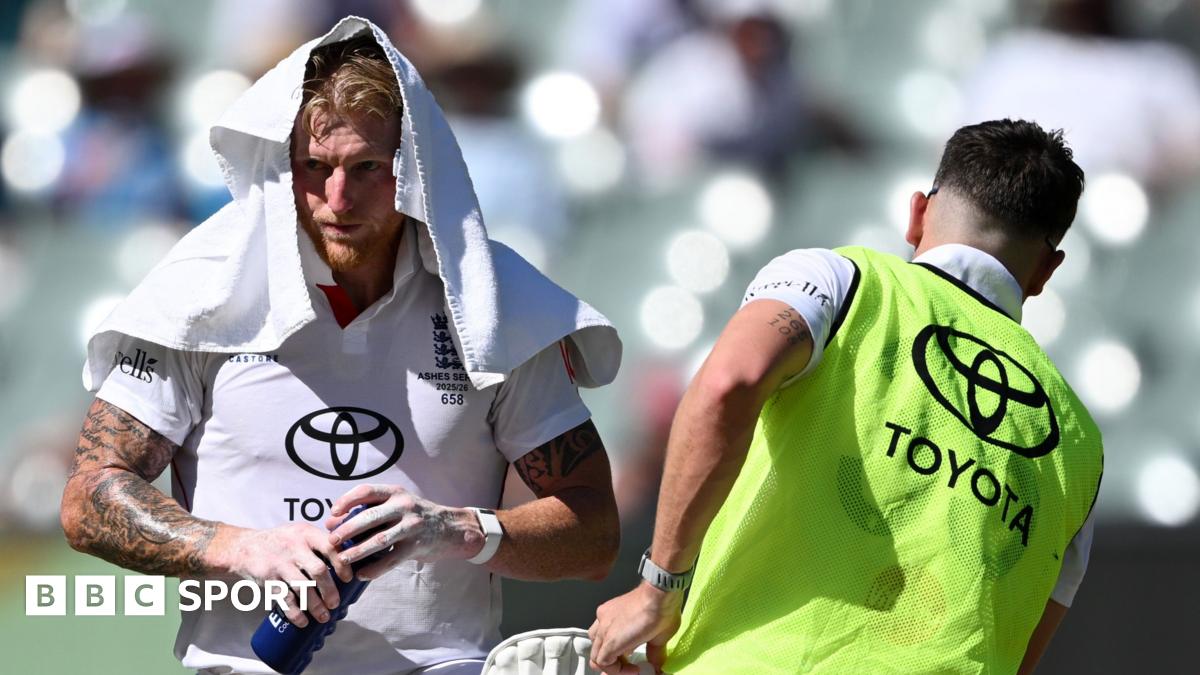
Vaughan urges calm as England stare at Ashes defeat
As England inch towards another likely Ashes series defeat in Australia, the predictable post-mortem has already begun. But former captain Michael Vaughan has added a note of restraint to the debate, insisting that England should not rip up their Test blueprint or jettison an entire generation of players in response to one brutal tour.
Instead, Vaughan argues that the focus must be on evolution, not revolution: identifying the next leaders, managing the workload of veterans like Ben Stokes and Joe Root, and building a squad that can be competitive both at home and in the uniquely punishing conditions of an Australian Ashes series.
Ashes context: Why this tour feels like a crossroads
The Ashes remain the pinnacle of Test cricket rivalry. England’s struggles in Australia are nothing new—since the 1986–87 tour they have won only one Ashes series away (2010–11) while losing heavily on multiple trips. This latest campaign follows a familiar script: hostile pace, unforgiving pitches, and long spells where Australia’s batting grinds England’s attack down.
What makes this series feel different is the timing. England’s “Bazball” revolution under Brendon McCullum and Ben Stokes has re-energised Test cricket, but Australia’s attack—backed by home conditions—has consistently asked questions that England’s ultra-positive method cannot always answer. With the core of the side edging into their mid-30s, the conversation has shifted from tactics to long-term planning.
Vaughan’s comments land squarely in this moment: England know this series is probably gone, but the decisions they make in the aftermath will shape not only the next Ashes at home, but also the 2029–30 tour back in Australia.
Michael Vaughan’s verdict: Evolution over revolution
Vaughan, who captained England to Ashes glory in 2005, has seen enough post-series overreactions to be wary of another reset. His core message is that England’s talent pool is not the problem; rather, it is how that talent is prepared and phased in over time.
England don’t need a bonfire of caps. They need a clear succession plan. You don’t fix an Ashes defeat by throwing away half your team—you fix it by getting the right players ready for the next one.
For Vaughan, the danger is that emotional reaction overrides strategic thinking. Wholesale changes can create instability, robbing younger players of senior guidance and diluting the hard-earned experience required to survive long, attritional series in Test cricket.
- Retain a solid core of proven Test performers.
- Introduce new faces gradually, not en masse after a defeat.
- Prioritise continuity in key roles like opener, wicketkeeper, and frontline spinner.
- Use overseas tours to blood future Ashes prospects in similar conditions.
Stokes and Root: Legends nearing the end of the Ashes road?
Of England’s current touring party, Ben Stokes and Joe Root sit at the centre of the long-term debate. Vaughan acknowledges that while their immediate value is unquestioned, the reality of age and workload cannot be ignored.
| Player | Age now | Age in 2029–30 | Likelihood on tour* |
|---|---|---|---|
| Ben Stokes | 34 | 40 | Highly unlikely |
| Joe Root | 35 | Almost 39 | Outside chance |
| Veteran seamers (e.g. Anderson/Broad era) | Late 30s–40s | Retired | Effectively zero |
*Likelihood is an informed projection based on typical Test career lengths and current roles.
Vaughan suggests that Stokes, in particular, is unlikely to make the next Australian tour in 2029–30 given his physical load and all-format commitments. Root, almost 39 by then, could feasibly still be around, but even that would be a stretch in modern cricketing terms.

- Maximise what Stokes and Root can offer over the next 2–3 years.
- Identify a new leadership group before they step away.
- Give their likely successors meaningful game time in demanding series.
Numbers that tell the story: England in recent Ashes series
The temptation to clear the decks usually comes from cold, unforgiving numbers. England have been outplayed in key metrics that matter in Australia: runs from the top order, bowling strike rate on flat pitches, and results over the last decade.
| Series | Venue | Result | England wins | Australia wins |
|---|---|---|---|---|
| 2013–14 | Australia | Australia 5–0 | 0 | 5 |
| 2017–18 | Australia | Australia 4–0 | 0 | 4 |
| 2021–22 | Australia | Australia 4–0 | 0 | 4 |
| Current tour* | Australia | Australia leading | TBC | TBC |
*Current series not yet completed; figures indicative of trend rather than final outcome.
In that time, England have rarely looked like the more complete side in Australian conditions. Yet Vaughan contends that results alone should not dictate a clear-out. Instead, he argues for addressing structural issues—preparation, domestic pathways, and role clarity—rather than simply picking 10 new faces and hoping for a miracle.

Building England’s next Ashes core: Who takes over?
If Stokes and Root are unlikely to be centre stage in 2029–30, England must cultivate the next wave of leaders now. Vaughan’s resistance to wholesale changes does not mean standing still; it means promoting the right players with a plan, not out of panic.
- Top-order resilience: England need openers and a No.3 who can absorb 150-ball spells against high pace.
- Fast-bowling depth: A stable of 85–90mph quicks who can stay fit across five Tests in Australian conditions.
- Spin with control: A front-line spinner capable of holding an end in long heat-soaked sessions.
- Future captains: Candidates who can tactically adapt beyond pure aggression or conservatism.

From Vaughan’s perspective, the worst outcome would be to throw a group of untested players into an Australian Ashes cauldron without the support of established figures. The balance he advocates is a tapering: letting veterans share the stage with their successors for long enough that the baton change feels natural, not forced.
Other perspectives: Rebuild now or double down?
Vaughan’s call for moderation is not universally shared. Within England’s fan base and commentary circles, views range from aggressive overhaul to complete faith in the current regime.
- The “rebuild now” camp:
This group argues that England should take the pain immediately: move on from any players unlikely to feature in 2029–30, hand the reins to a younger core, and live with short-term setbacks to reap long-term stability. For them, clinging to the old guard delays the inevitable.
- The “trust Bazball” group:
Others insist the positive, attacking style has already revived Test cricket in England and simply needs refinement abroad. They see this tour as part of the learning curve, not evidence that the entire strategy is flawed.
- Vaughan’s middle path:
Blend the best of both approaches: keep the attacking mindset and experienced spine, but be ruthless and systematic about refreshing the squad in specific roles over the next few seasons.
You don’t win in Australia by pressing a reset button. You win by building a squad over years that knows exactly how it wants to play, and who is doing what, when the pressure is at its peak.
Human side of the Ashes: Legacy, pride and the next generation
Beyond tactics and selection spreadsheets, there is a human layer to this conversation. For players like Stokes and Root, each Ashes tour is another chance to add to a legacy built over more than a decade. For younger squad members, sharing a dressing room with such figures is an education that no county season can replicate.
Inside that England camp are players who grew up watching the 2005 and 2010–11 triumphs, dreaming of their own Ashes moments. Vaughan’s plea not to detonate the squad recognises that development is not linear: some will grow from this experience and return stronger, others will fall away, but all gain an understanding of what the very highest level demands.

For supporters, the emotional sting of another likely Ashes loss is real. But the same supporters will be first in line to celebrate if this period of pain eventually produces a hardened, streetwise side capable of reclaiming the urn in Australia. Vaughan’s message is essentially a call for patience: stay the course, but sharpen the plan.
Looking ahead: What England must do before 2029–30
Whether or not this Ashes ends in a heavy defeat, England’s timeline to the 2029–30 tour has already started. The choices they make over the next few years—about coaching continuity, player workloads, and succession planning—will determine if they arrive in Australia with another patchwork squad or a battle-tested unit built with this challenge in mind.
- Map out a realistic leadership transition from Stokes and Root.
- Ring-fence key quicks for red-ball development in Australian-style conditions.
- Give promising batters extended runs, even through failures, against top attacks.
- Use home Ashes and major Test series as stepping stones, not endpoints.
Vaughan’s central argument cuts through the noise: Ashes defeats hurt, but panic fixes nothing. The challenge now is whether England’s decision-makers can combine the urgency of this moment with the patience required to construct a side capable of finally winning again in Australia.
As this series winds down and attention turns to the next Test cycle, one question will loom over every selection meeting and every winter training camp: are England making changes to be seen to act, or are they building, piece by piece, the team that can walk out in Australia in 2029–30 and genuinely believe the urn is theirs for the taking?
For fixtures, statistics and official updates, visit the England and Wales Cricket Board and the ESPNcricinfo Ashes hub.
