
Why the 2019 Kennedy Center Honors Under Trump Were More About Tributes Than Politics
The Trump-era Kennedy Center Honors could easily have been remembered as another flashpoint in America’s culture wars. Instead, on the night the three living members of KISS traded face paint and spandex for tuxedos, the ceremony leaned into something surprisingly old‑fashioned: tributes first, politics a distant second. In a Washington that rarely takes a night off, the Honors tried to prove that celebrating artists still matters on its own terms.
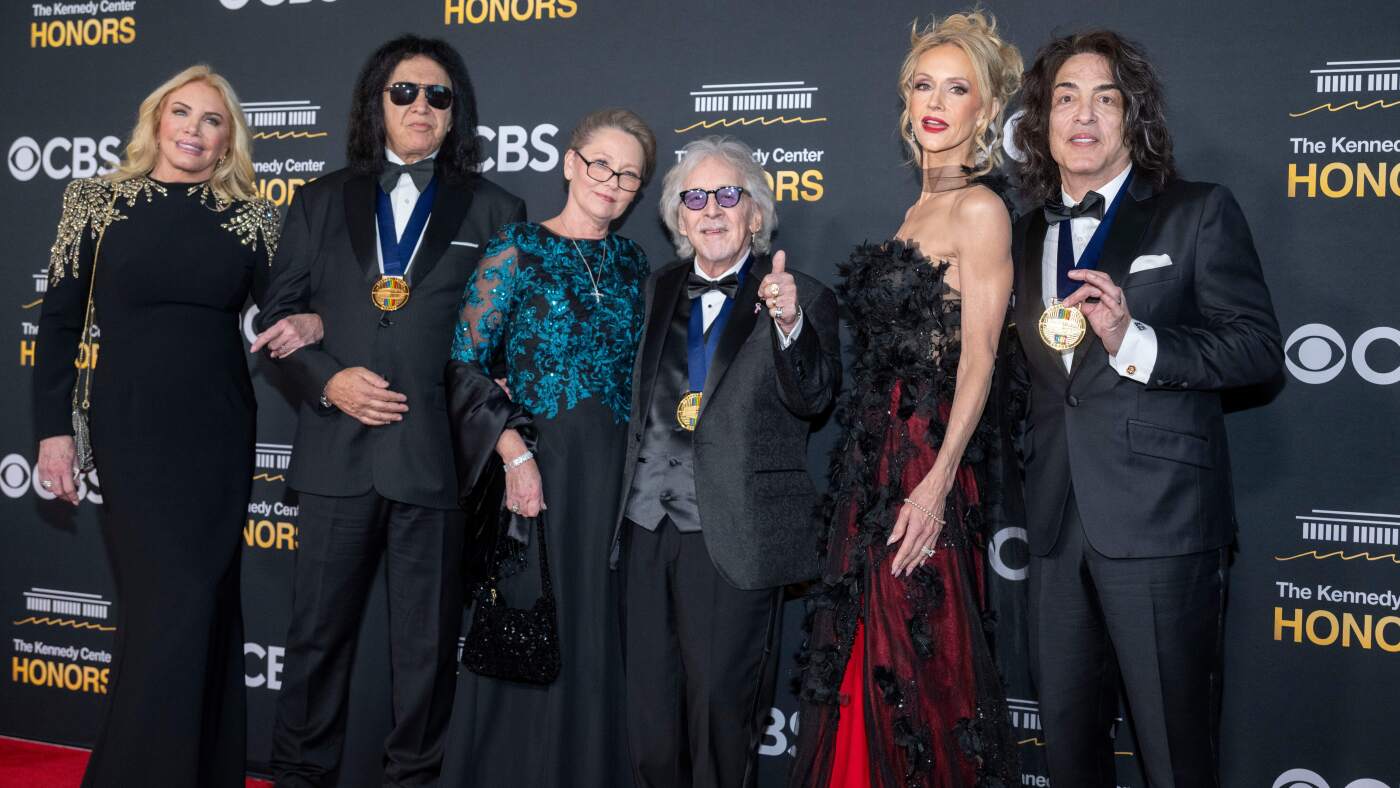
A Night When the Kennedy Center Honors Outshone the Politics Around Them
NPR’s coverage of the event spotlighted a familiar Washington contradiction: a president who said he was “closely involved” with selecting honorees, a polarized political climate outside the building, and yet a ceremony that mostly refused to turn into a cable‑news talking point. The result was an Honors telecast that felt like it was quietly wrestling with a question: can you still have a mainstream, bipartisan celebration of American culture in an era defined by backlash and boycotts?
What the Kennedy Center Honors Represent in U.S. Culture
For decades, the Kennedy Center Honors have been one of television’s most carefully managed visions of American culture. Airing on CBS and dripping with prestige, the show traditionally offers:
- A bipartisan political audience (members of both parties, former presidents, Cabinet officials).
- A cross‑section of honorees from film, TV, theater, classical music, and popular music.
- Highly produced tribute performances by younger or contemporary stars.
- A narrative of artistic achievement as a unifying national value.
In the pre‑social media era, the Honors functioned like a soft‑power version of the State of the Union: Washington and Hollywood in the same room, signaling cultural consensus. Post‑2016, that consensus fractured. Several prominent artists declined to attend or publicly criticized the Trump White House in years prior, and at one point the administration stepped away from the event altogether to avoid a boycott‑tainted photo‑op.
“The Honors have always been about what unites us artistically, not what divides us politically.” — longtime Kennedy Center observer, quoted in NPR coverage
That tension makes the Trump‑hosted ceremony NPR covered especially interesting. With the president back in the presidential box and artists like KISS in the spotlight, the Honors found themselves playing defense for the idea of a big‑tent American culture.
Trump as Host: Optics, Influence, and a Carefully De‑Politicized Stage
NPR notes that President Trump emphasized how “closely involved” he was in picking the honorees, and that he became the first sitting president in his term to actually host the ceremony after prior years of distance. In pure optics terms, it was a reset: the administration wanted images of Trump in a cultural leadership role, not just a political one.
Yet, inside the hall, the production seemed to go out of its way to mute any sense of controversy. Speeches focused on:
- Career retrospectives instead of topical political commentary.
- Artistic influence and legacy over social media‑ready soundbites.
- Emotional, often nostalgic performances that drew on shared cultural memories.
“The show is about the honorees, not the headlines,” one producer has said in various interviews over the years, a philosophy that felt especially pointed this time around.
The subtext, though, was impossible to ignore. Simply by being there, Trump was attempting to fold himself back into an institutional tradition that had, for a time, tried to keep him at arm’s length. The producers’ decision to steer away from overt politics reads less like cowardice and more like a strategic attempt to protect the Honors’ brand as one of the last “big tent” TV events.
KISS in Tuxedos: When Arena Rock Meets Establishment Prestige
NPR’s detail about the “three living members of the rock band KISS” walking the Kennedy Center red carpet in tuxedos, sans makeup, is more than a cute visual. It’s a metaphor for the entire night: once‑rebellious pop culture now fully absorbed into the establishment.
Once branded as theatrical provocateurs—too loud, too garish, too commercial—KISS have long since crossed the line into classic‑rock respectability. Their presence at the Honors signals a few things about how the institution sees itself:
- Canon expansion: The official “American arts canon” now fully includes stadium rock and pop spectacle.
- Generational shift: The baby‑boomer soundtrack is no longer the insurgent soundtrack; it’s the heritage soundtrack.
- Merch and mythology: KISS have always blurred the line between art and branding, something modern pop culture now takes for granted.
Seeing Gene Simmons and company in black‑tie rather than black eyeliner also underlines how the Honors have become a late‑career victory lap for artists who once represented “edge.” Punk and hip‑hop have already taken that path; KISS at the Kennedy Center is another marker of that long‑running normalization.
Tributes Over Tension: How the Honors Managed the Mood
NPR’s reporting emphasizes that tributes, not politics, “played center stage.” That choice reflects both the Kennedy Center’s brand strategy and network television’s current dilemma: how do you keep a prime‑time special relevant when the culture is more fragmented—and more partisan—than ever?
Instead of fiery speeches, the show leaned into:
- Carefully curated medleys of an honoree’s greatest hits.
- Surprise appearances by protégés and admirers.
- Archival footage that framed each career as part of a “story of America.”
In an era where award shows often get measured by the virality of a monologue, the Kennedy Center Honors doubled down on sincerity. That can feel a little safe—even saccharine—but there’s a quiet radicalism in refusing to turn every stage into a referendum on whoever occupies the White House.
As one critic put it after a recent ceremony, “The Honors are less an awards show than a televised love letter to the idea of American artistry as common ground.”
Of course, “common ground” is itself a political stance in 2019 and beyond. But by keeping the explicit commentary to a minimum, the producers invited viewers to have the argument at home instead of in the telecast.
The Culture War Backdrop: Boycotts, Backlash, and Who Shows Up
The Trump‑era Honors can’t be separated from the broader story of cultural institutions navigating political pressure. In the years surrounding this particular ceremony, we saw:
- Artists publicly declining invitations to the White House or administration‑adjacent events.
- Viewers on both left and right pressuring award shows to either “speak up” or “stick to entertainment.”
- Debates over federal funding for the arts, including the Kennedy Center itself.
Within that context, the decision by marquee names like the KISS members to attend—and to do so with an air of affable professionalism—signals how many artists still view the Honors as a prize worth collecting, despite the political minefield. The institution offers something social media can’t: formal, archival recognition, preserved on national television and in the cultural record.
At the same time, the Honors are now part of the annual think‑piece cycle. Every new class of honorees prompts questions about representation, genre bias, and the politics of who is declared “American cultural royalty.” That scrutiny won’t fade, no matter who sits in the Oval Office.
Strengths and Weaknesses of the Trump‑Era Kennedy Center Honors
Judged as a piece of television and cultural ritual, the Trump‑hosted Honors NPR describes have a clear set of strengths and weaknesses.
What Worked
- Focus on the honorees: By minimizing political commentary onstage, the show let performances and career stories breathe.
- Strong red‑carpet narrative: Visuals like KISS in tuxedos created instantly readable cultural symbolism.
- Cross‑generational appeal: Pairing legacy artists with younger performers helped bridge age gaps in the audience.
What Fell Short
- Emotional risk: In striving to stay above the fray, the show sometimes felt cautious, even airbrushed.
- Cultural blind spots: As with many Honors line‑ups, questions linger about genre diversity and how quickly the institution recognizes newer forms like hip‑hop, Latin pop, and streaming‑born artists.
- Political dissonance: For viewers deeply invested in the ongoing debates around the Trump presidency, the “politics‑lite” tone could feel like avoidance rather than unity.
On balance, though, the ceremony did what it was designed to do: burnish the mystique of the Honors as an institution that can, at least for a few tightly edited hours, pretend that everyone is there for the same reason—love of the arts.
How the Honors Compare to Other Award Shows in the Streaming Age
Put next to the Oscars, Grammys, or Emmys, the Kennedy Center Honors occupy a slightly different lane. There are no acceptance speeches, no winners and losers, and very little suspense. It’s pure coronation—part documentary, part concert film, part state banquet.
That’s both a liability and a selling point. In the streaming era:
- Clippability: Tribute performances can live on YouTube as standalone mini‑concerts, pulling in younger viewers who don’t watch the live broadcast.
- Evergreen content: A well‑produced segment on a legacy artist ages better than a topical monologue tied to a specific news cycle.
- Brand safety: Advertisers often prefer shows where the risk of real‑time controversy is lower, which the Honors generally provide.
NPR’s coverage taps into this shift, treating the Honors less like a red‑carpet gossip item and more like a barometer of where the cultural establishment is, and where it’s trying to go next.
Where to Watch and Read More About the Kennedy Center Honors
For viewers who want to go beyond the headlines and relive the performances:
- Official Kennedy Center website – includes information on honorees, history, and archival content.
- CBS – traditionally hosts the U.S. broadcast and often offers highlights and full episodes online.
- NPR – offers in‑depth reporting, interviews with honorees, and coverage of the ceremony’s cultural and political context.
- For specific artists, many tribute segments are available on official YouTube channels and streaming platforms, often under titles like “Kennedy Center Honors tribute to <Artist Name>.”
Conclusion: A Ceremony Trying to Stay Bigger Than the Moment
The Trump‑hosted Kennedy Center Honors that NPR describes may not go down as the most daring or unpredictable ceremony in the show’s history. But as a cultural artifact, it’s revealing. With KISS in tuxedos, a president eager to be seen as patron rather than pugilist, and producers determined to keep the spotlight on tributes, the Honors quietly staged a defense of the idea that art can still provide a shared language.
Whether that ideal still holds in a fragmented, hyper‑politicized media landscape is an open question. But if the standing ovations and carefully curated performances are any indication, there’s still a sizable audience—both in Washington and at home—that wants at least one night a year where culture takes precedence over confrontation.
