
Was Liverpool’s Inter Milan ‘soft’ penalty VAR-worthy in the Premier League?
Would Liverpool’s ‘Soft’ Inter Milan Penalty Be Given in the Premier League?
Liverpool’s late Champions League winner at Inter Milan came from a much-debated “soft” penalty – the kind of decision that divides fanbases and fills phone-ins. The key question for Premier League supporters is simple: with today’s Video Assistant Referee (VAR) standards in England, would that spot-kick have stood in the Premier League, or would it have been waved away as minimal contact?
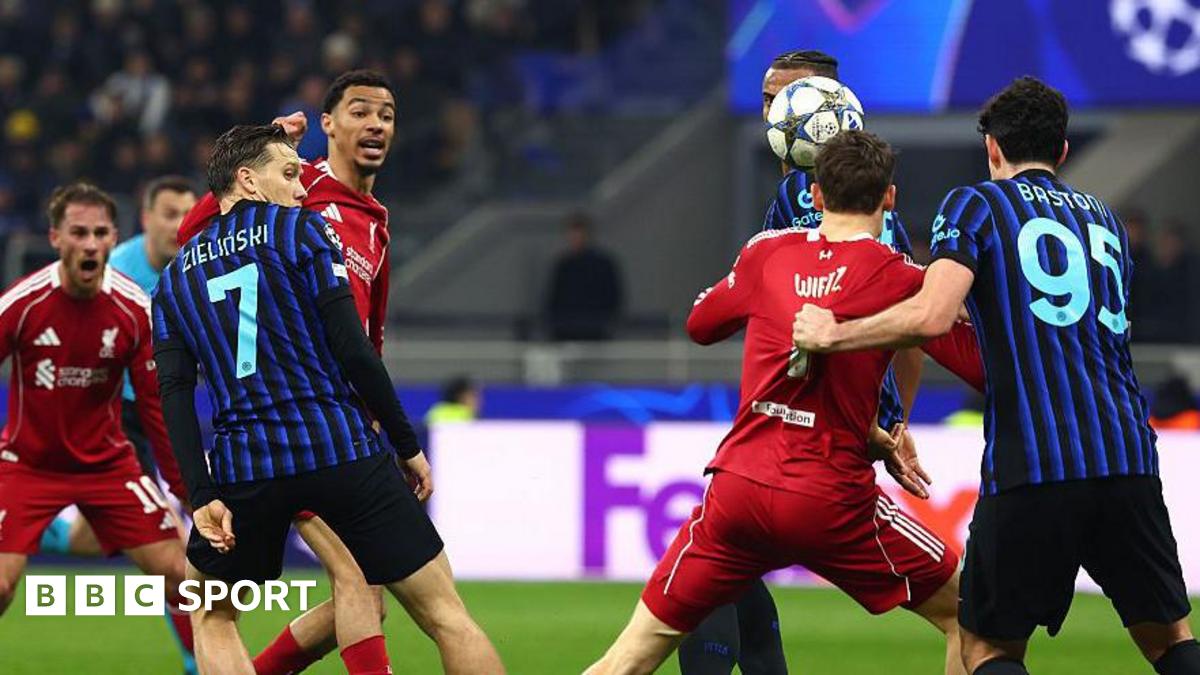
As football issues correspondents like Dale Johnson have noted, VAR’s influence has reshaped how contact in the area is judged. When the technology first arrived in the Premier League, soft penalties became a weekly storyline. Since then, both UEFA and the Premier League have tried to recalibrate what constitutes a “clear and obvious” foul.
To understand whether Liverpool would get the same decision in England, we need to unpack how VAR evolved, why standards changed, and how Champions League refereeing philosophy can differ from the Premier League’s current approach.
From Penalty Flood to Correction: How VAR Changed the Premier League
When VAR was first introduced in the Premier League, referees were encouraged to treat virtually any significant contact in the penalty area as potentially punishable. This “low bar” saw a spike in soft penalties – especially for pulling, slight nudges, or delayed falls after minimal contact.
Liverpool fans remember one example clearly: an away match at Brighton where a penalty was given after a slight tug in the box. The letter of the law was applied, but many felt the spirit of the game was lost.
“When VAR was first used in the Premier League, lots of soft penalties were awarded.”
That era triggered a recalibration. The Premier League and PGMOL (Professional Game Match Officials Limited) raised the threshold for what should be penalised, prioritising clear fouls, sustained holds, or obvious trips over incidental contact.
Champions League vs Premier League: Two VAR Cultures
UEFA’s Champions League framework and the Premier League’s current guidance are not identical. Both use VAR, but the emphasis and tolerance for “soft” contact differ slightly.
In the Champions League, referees sometimes lean more heavily on any detectable contact combined with visible consequences (for example, a clear change of direction by the attacker or defender). In England, officials have been told to avoid “re-refereeing” minor tangles that happen at full speed.
| Aspect | Champions League (UEFA) | Premier League (England) |
|---|---|---|
| Threshold for contact | Contact plus impact on play often enough for a penalty | Must be clear, consequential, and not purely incidental |
| VAR intervention standard | Will support on-field call unless clearly wrong | Narrower “clear and obvious” bar; more reluctant to overturn |
| Soft penalties | Still seen occasionally when contact is evident on replay | Reduced compared to early VAR era; many are now waved away |
That difference in philosophy is why a penalty that looks “soft but technically correct” in Europe might draw a very different response in the Premier League today.
Analysing the Liverpool Penalty at Inter: Was It Really “Soft”?
Without replays here, we focus on the key elements typically involved in this sort of decision:
- Initial contact: Was there a clear trip, clip, or push?
- Ball-playing intent: Did the defender attempt to play the ball and miss, or simply impede the attacker?
- Attacker’s reaction: Was the fall exaggerated relative to the contact?
- Referee’s angle: Did the on-field referee have a clear, unobstructed view?
Dale Johnson’s description of the call as “soft” suggests contact existed but was borderline in terms of force. In the Champions League, once the referee points to the spot and replays confirm there was some contact, VAR is unlikely to overturn unless the footage clearly shows no foul at all.
“VAR is not there to re-referee grey-area incidents; it’s there to stop howlers.”
That philosophy underpins why Liverpool’s penalty at Inter stood: a marginal but defensible decision, supported by the existence of contact on replay.
Would the Same Foul Be a Penalty in the Premier League?
Under early Premier League VAR guidelines, the answer would almost certainly be yes. Minimal contact plus a fall was often enough, especially if the shirt tug or trip was obvious on slow-motion replay.
Under current Premier League standards, the answer is more nuanced and leans towards no for many similar incidents:
- Referees are encouraged to favour on-field decisions unless there is a clear error.
- VAR is told to avoid over-analysing “trifling” contact.
- Penalty area decisions should reflect the level of physicality allowed elsewhere on the pitch.

If the Liverpool-Inter contact was truly minimal and the defender’s challenge only slightly impeded the attacker, many Premier League referees today might play on, and VAR would not step in. So while the decision is possible in England, it is less likely now than it was in the early VAR seasons.
Penalty and VAR Trends: Why “Soft” Calls Are Under Pressure
Public frustration with over-technical rulings has pushed leagues to re-balance the game. While exact, season-by-season penalty counts vary, the pattern has been clear:
| Season | VAR Phase | Trend in Soft Penalties |
|---|---|---|
| Pre-VAR (e.g., 2016–2019) | No VAR | Standard physicality; fewer forensic reviews |
| Early VAR (2019–2021) | Full introduction | Spike in soft penalties due to slow-motion scrutiny |
| Recent seasons | Adjusted guidance | Noticeable reduction; higher bar for awarding spot-kicks |

Analysts across outlets like the Premier League and UEFA sites have highlighted how directives now stress consistency and minimal interference – a direct reaction to fan and club pushback against overly soft penalties.
Different Perspectives: Fair Reward or Harsh on Defenders?
VAR and soft penalties sit at the crossroads of fairness and frustration. The Liverpool incident at Inter is a perfect test case for the broader argument.
- Attackers’ view: Any contact that stops a shot or dribble unfairly should be punished.
- Defenders’ view: Football is a contact sport; minor brushes shouldn’t decide games.
- Referees’ view: The laws are clear, but the bar for “careless, reckless, or using excessive force” requires judgement.
- Fans’ view: Generally want consistency, speed, and decisions that feel like football rather than courtroom debate.
“If you slow anything down to 0.25 speed, it looks worse. The art now is to judge whether that contact truly stopped a scoring chance or was just part of the game.”
Liverpool’s penalty in Milan fell into that grey zone: technically a foul for some, “never a pen” for others. That ambiguity is exactly why VAR philosophies, not just replays, matter so much.
Human Side of VAR: Pressure, Psychology, and Penalty Box Instincts
For Liverpool’s players, the moment in Milan was typical Champions League drama: late in the game, tight margins, and every touch magnified. For defenders, knowing that VAR can rewind every collision changes how they move in the area.
Coaches drill their back lines constantly:
- Keep hands away from shoulders.
- Avoid dangling legs in the box.
- Stay on your feet when possible.
- Time sliding tackles with precision.

When a soft penalty is given – especially in a competition as high-profile as the Champions League – it reinforces that defenders are one mistimed touch away from disaster, while attackers are encouraged to be smart about where and how they invite contact.
So, Would Liverpool Get That Penalty in Today’s Premier League?
Balancing the trends, philosophies, and current guidance, the informed verdict is:
- Could it be given in the Premier League? Yes – if the referee sees the contact as clearly impeding the attacker.
- Would it be given as often as in early VAR years? No – the bar has moved higher.
- Would VAR overturn a soft on-field penalty now? Only if replays show the contact was trivial or non-existent.
The Liverpool–Inter penalty is less about one club’s luck and more about where football currently draws the line between fair contact and foul play. As the Premier League and UEFA continue to tweak VAR protocols, supporters may see fewer soft penalties – but also more debates about where that invisible line truly lies.
Looking ahead, the key questions are: Will domestic leagues and European competitions move toward a single unified standard? And can VAR ever fully satisfy fans who see the same clip and arrive at completely different conclusions about what’s “soft” and what’s simply a foul?
For now, Liverpool’s spot-kick in Milan stands as a case study in the VAR era: technically justified for some, deeply debatable for others, and exactly the kind of moment that will keep the penalty-box arguments rolling all season long.
