
U.S. Skating Tragedy: How a Deadly Midair Collision Shook American Sports
The U.S. government has acknowledged that errors by an air traffic controller and an Army Black Hawk helicopter pilot contributed to the Jan. 29 collision with a commercial airliner that killed 67 people, including a group of young figure skaters. The admission, revealed Wednesday, doesn’t just clarify what happened in the sky—it pierces the heart of the figure skating community and raises urgent questions about how a generation of promising athletes was lost in a disaster that should have been preventable.
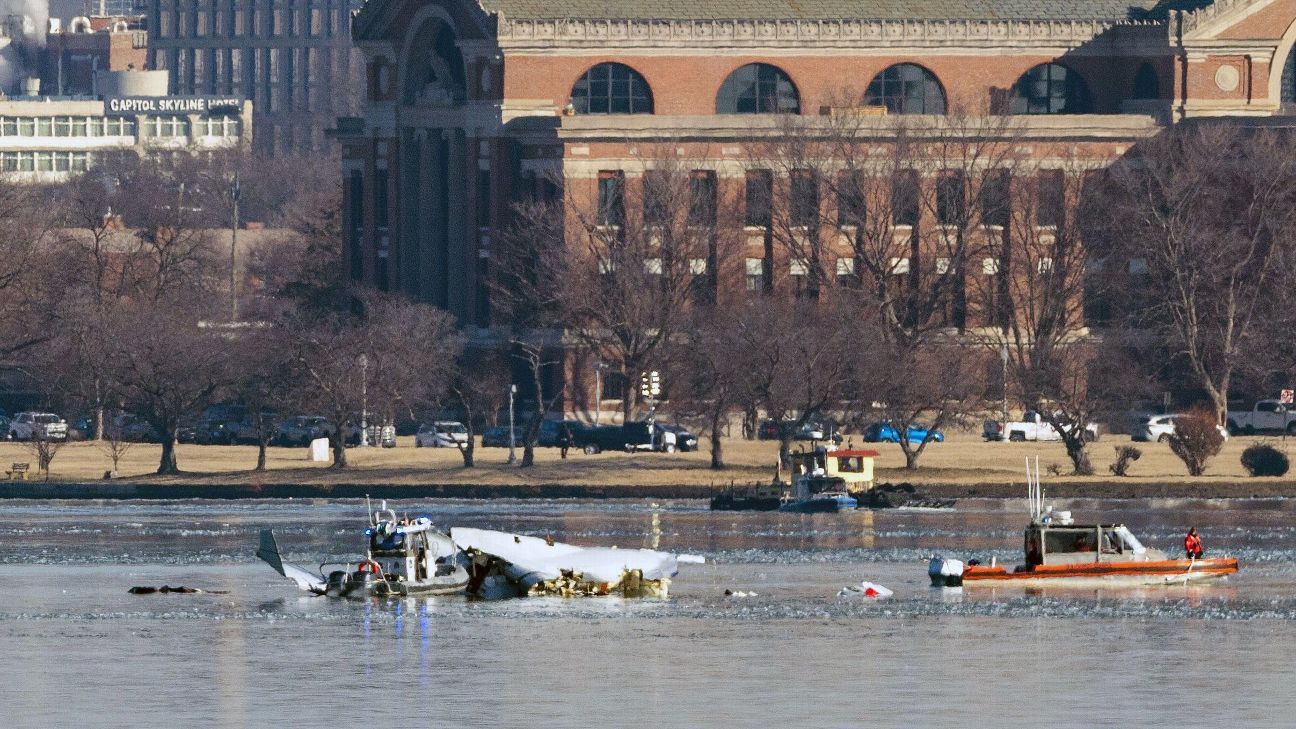
Government Admits Errors in Deadly Airliner–Black Hawk Collision
In documents and statements made public Wednesday, federal officials acknowledged that both an air traffic controller and the pilot of the Army Black Hawk helicopter played a role in setting up the fatal chain of events on Jan. 29. The collision with the commercial airliner led to a catastrophic crash that killed all 67 people on board, among them a contingent of young figure skaters traveling to a major competition.
While the full National Transportation Safety Board (NTSB) report has yet to be released, this admission marks a significant turning point. Rather than framing the tragedy as an unforeseeable accident, the U.S. government has effectively conceded that critical human errors and procedural breakdowns were factors in the disaster.
“Our preliminary findings indicate that actions taken in the control tower and in the cockpit of the Black Hawk did not sufficiently mitigate the risk of conflict with civilian air traffic,” a government official familiar with the investigation said. “We recognize that these errors contributed to the collision.”
That candid language will almost certainly influence legal claims from families, spark policy changes in both military and civilian aviation, and ensure that the sports world continues to press for answers as it mourns an irreplaceable loss of talent.
Figure Skating Community Reeling from an Irreplaceable Loss
For U.S. figure skating, the crash is more than a national tragedy; it is a direct hit to the sport’s future pipeline. Dozens of passengers were involved in the sport—as athletes, coaches, choreographers, or support personnel—traveling to a high-profile event that was intended to showcase the next wave of American talent.

The echoes of past tragedies are impossible to ignore. Older fans immediately recall the 1961 crash that killed the entire U.S. figure skating team en route to the World Championships in Prague, an event that reshaped the sport for a generation. Once again, American skating faces the emotional and competitive challenge of rebuilding after a sudden, devastating loss.
- Promising junior champions who were seen as future Olympians.
- Elite choreographers helping redefine modern skating programs.
- Coaching staffs that served as anchors for regional and national training hubs.
“We didn’t just lose skaters,” one national coach said. “We lost entire stories that were still being written—careers that were about to peak, kids who had just realized they were good enough to dream about the Olympics.”
From Accident to Accountability: What This Admission Changes
Legally and structurally, the government’s acknowledgment of fault is pivotal. It opens the door for civil litigation by families and estates, and it piles pressure on both aviation regulators and the Department of Defense to close the gaps that allowed a civilian airliner and a Black Hawk helicopter to cross paths so catastrophically.
While detailed transcripts and radar reconstructions have not yet been released publicly, investigators are scrutinizing:
- The quality and clarity of instructions issued by the air traffic controller.
- The Black Hawk pilot’s adherence to airspace coordination protocols.
- Communication protocols between military and civilian traffic control.
- Real-time conflict-alert systems that may have failed to trigger or were ignored.
Historically, midair collisions in mixed-use airspace have driven major reforms. This case is likely to result in refined procedures for:
- Coordinating military training flights near commercial corridors.
- Upgrading controller training on joint-operations airspace.
- Mandating redundant separation safeguards whenever military aircraft operate near civilian routes.
How Rare Are Disasters Like This? A Look at the Numbers
Midair collisions between civilian airliners and military aircraft are rare, but their impact is outsized—especially when they intersect with major sports delegations. Even in an era when commercial aviation is statistically safer than ever, a single error cascade can wipe out a generation of athletes.
| Year | Sport / Team | Lives Lost | Key Impact |
|---|---|---|---|
| 1961 | U.S. Figure Skating Team | 73 | Entire world team lost; long rebuilding period. |
| 1970 | Marshall University Football | 75 | Program decimated; became symbol of resilience. |
| 2016 | Chapecoense (Brazilian Football) | 71 | Club lost most of first team and staff. |
| 2025 | U.S. Figure Skating Delegation | 67 | Multiple rising stars and coaches killed in midair collision. |
For figure skating specifically, the 2025 crash stands alongside 1961 as one of the sport’s darkest days in the United States. It affects not only the depth of future national teams but also the fabric of local rinks, where many of these athletes first laced up their skates.
Behind the Numbers: Families, Rinks, and Dreams Left Behind
Every seating chart and passenger manifest represents a web of families, teammates, and communities. Across the country, local rinks held vigils—candles flickering against the boards, pairs skates and worn practice jackets placed at center ice in silent tribute.
Teammates have described an abrupt silence in locker rooms once filled with music, jokes, and the nervous energy that accompanies competition. For younger skaters, the tragedy introduces a harsh reality into a world that, until now, may have been defined mostly by jumps, spins, and score sheets.
“We keep reminding our kids that the best way to honor their friends is to keep skating,” one club director said. “But some are still afraid to fly, and some are just trying to process why this happened at all.”
- Clubs organizing scholarship funds in the names of lost skaters.
- Choreographers reworking programs as tributes, featuring music or motifs meaningful to those who died.
- National federations planning permanent memorials at training centers.
Rethinking Team Travel: Can Athlete Safety Be Improved?
The crash also spotlights the logistical side of elite sports: constant travel, tight competition schedules, and the frequent use of commercial flights to move national delegations. Governing bodies in skating and beyond now face a hard question—if you can’t change the fact that athletes must travel, how much more can you do to protect them?

Sports federations and athlete unions are already discussing a range of potential responses:
- Enhanced risk assessments when booking team travel routes.
- Closer coordination with airlines and aviation authorities for large delegations.
- Emergency preparedness briefings tailored specifically to sports teams.
Some experts caution against overreacting, noting that, statistically, commercial air travel remains far safer than ground transportation. Yet the psychological weight of losing an entire cohort of athletes at once is leading many programs to revisit long-standing travel norms.
Debate Over Blame and Reform: Controllers, Pilots, or the System?
The government’s admission that both an air traffic controller and the Army helicopter pilot contributed to the crash naturally raises the issue of individual versus systemic responsibility. Within aviation circles, opinions are divided.
Some argue that the focus will unfairly land on front-line personnel:
“You can’t just blame one controller and one pilot,” a retired airline captain noted. “They operate inside structures that either give them good tools and clear procedures—or don’t. If the system sets them up to fail, the system has to be fixed.”
Others counter that accountability must include individual decisions, especially in high-stakes airspace where minor deviations can lead to catastrophic outcomes. For families of the skaters and other victims, the distinction between systemic and personal error is less important than a clear commitment to preventing another tragedy.
- Families’ Perspective: Seeking transparency, apologies, and meaningful policy change.
- Aviation Community: Emphasizing both human factors and technological safeguards.
- Sports Organizations: Demanding a seat at the table when travel-related safety standards are shaped.
Visualizing the Competitive Gap Left Behind
While statistics can never capture the full human cost, they help illustrate how the crash may reshape U.S. figure skating’s competitive landscape in the years ahead. Several of the skaters on board were projected to contend for national podiums and, eventually, Olympic berths.
| Discipline | Athletes Lost (Est.) | Projected National-Level Contenders | Short-Term Competitive Effect |
|---|---|---|---|
| Singles (Men/Women) | 10–12 | 4–5 | Reduced depth at Nationals; fewer emerging quad-capable skaters. |
| Pairs | 4–6 (2–3 teams) | 2 teams | Significant hit to already thin pairs field. |
| Ice Dance | 4–6 (2–3 teams) | 1–2 teams | Loss of promising junior teams poised for senior breakthrough. |
These gaps will gradually be filled by younger skaters moving up and by intensified talent identification at the grassroots level. But for at least one Olympic cycle, U.S. programs may find themselves battling not just international rivals, but the hole left by this tragedy.
Tributes on the Ice: How Skating Will Remember 2025
From local showcases to the national championships, tributes are already being planned for the skaters and staff who lost their lives. Expect to see moments of silence before key events, commemorative patches on team jackets, and exhibition programs dedicated to the victims.

At the same time, athletes must navigate the difficult balance between grief and competition. Many current national-team skaters trained with or against those who died. Their 2025–26 seasons will be played out under the emotional weight of both loss and responsibility.
“Every time we step onto the ice this season, they’ll be with us,” one senior-level skater said. “We’re not skating just for ourselves anymore.”
Where Does Figure Skating—and Aviation Safety—Go from Here?
The U.S. government’s admission is a start, but it is not an endpoint. Final investigative reports, potential lawsuits, and proposed reforms will shape how history remembers the Jan. 29 collision and how other sports approach the realities of constant travel.

For fans and athletes, several key questions now loom:
- Will aviation authorities and the military deliver concrete, transparent changes to prevent similar collisions?
- How will U.S. Figure Skating and the broader international community support affected families and clubs over the long term?
- Can the sport use this moment to invest deeper in safety, mental health, and travel planning for athletes at every level?
The scoreboard is brutally final—67 lives lost, countless futures altered—but the story of how the skating community responds is still being written. As the investigation continues and reforms take shape, the most enduring tribute may come not from a memorial or a moment of silence, but from safer skies and rinks full of kids who feel secure enough to dream big again.
