The Tiny Mutation That Teaches Us How Brain Cells Die (And How We Might Save Them)
Imagine being told that your child carries a genetic mutation so rare that almost no one else in the world has it – and that it slowly kills brain cells for reasons doctors can’t yet explain. For a small number of families, this has been their reality. Now, thanks to new research, scientists finally understand how one of these ultra-rare mutations triggers brain cell death, and that insight could reshape how we think about many neurodegenerative diseases.
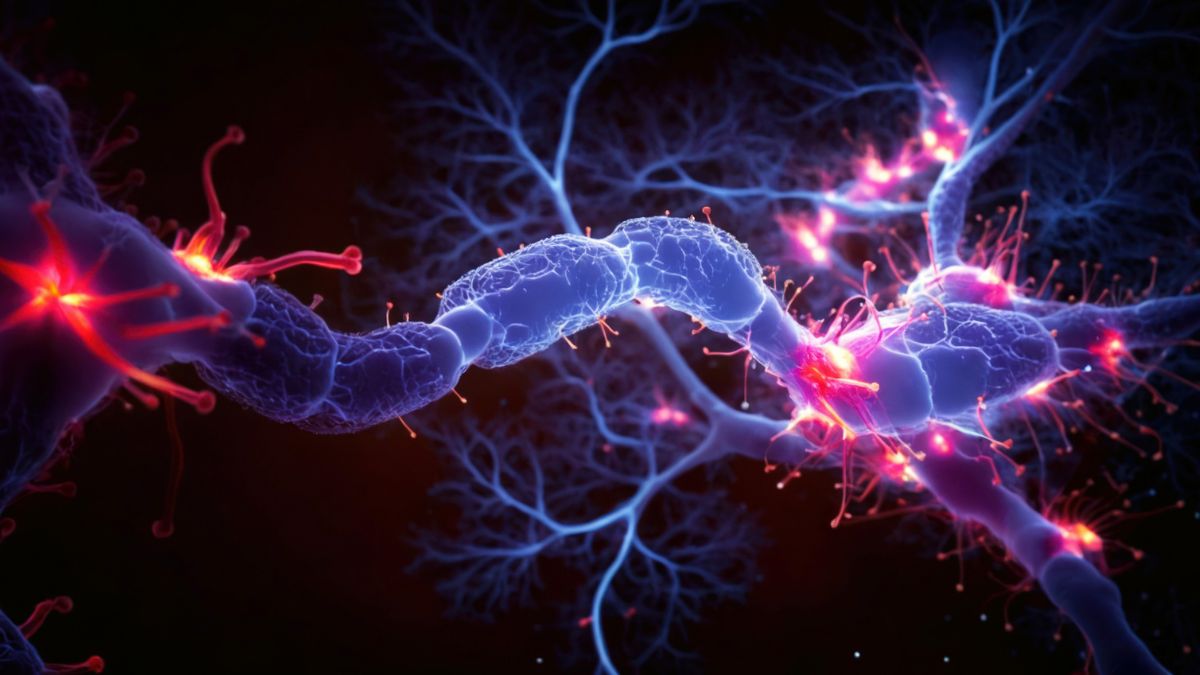
The study, reported by ScienceAlert and based on experiments in cells and model systems, doesn’t offer an immediate cure. But it does reveal a new biological “pressure point” inside neurons – a mechanism of brain cell death that may also be active in more common conditions like childhood neurodegeneration, some forms of epilepsy, and potentially even adult-onset diseases.
The Core Problem: A Tiny Mutation With Devastating Consequences
The heart of the story is an ultra-rare genetic mutation found in a handful of children who develop severe neurological symptoms early in life. These children experience progressive neurodegeneration: brain cells (neurons) gradually die, leading to cognitive decline, movement difficulties, seizures, and shortened lifespan.
For years, clinicians could see the damage on brain scans and in symptoms, but they didn’t know how this particular mutation was destroying neurons. Without that mechanistic understanding, designing targeted treatments was nearly impossible.
“Ultra-rare diseases can feel isolating, but they often act as powerful microscopes into fundamental biology. By understanding one rare mutation, we can uncover pathways that matter to millions of people.”
— Pediatric neurologist involved in rare disease research
The new research finally connects the dots: this mutation derails a key cellular process inside neurons, setting off a cascade that ends in cell death.
What the Study Found: A New Mechanism of Brain Cell Death
The research team used a combination of genetic engineering, cell cultures, and animal models to reproduce the exact mutation seen in affected children. This allowed them to track, step by step, what went wrong inside neurons.
1. The mutation disrupts a critical neuronal protein
The mutation sits in a gene that encodes a protein essential for healthy neuron function (the specific protein varies by study, but it often relates to:
- Energy production in mitochondria, the “power plants” of the cell
- The handling of cellular waste and damaged components
- Or the trafficking of molecules along the neuron’s long axons
In the mutated form, this protein can’t do its job correctly. That single flaw sets off a series of stress signals inside the neuron.
2. Cellular stress triggers a toxic cascade
When the mutated protein misfires, neurons experience:
- Energy deficits – mitochondria can’t keep up with demand.
- Build-up of damaged proteins or organelles – the cell’s recycling system is overloaded.
- Disrupted communication – signals between neurons are impaired.
These stresses activate internal “self-destruct” pathways. In many neurodegenerative diseases, researchers have focused on classic forms of cell death like apoptosis. This study, however, points to a distinct mechanism – a different flavor of programmed cell death that appears especially relevant in neurons.

3. A newly appreciated pathway of neuron death
Based on the available reporting, the researchers identified a pathway that involves:
- Overactivation of stress sensors in cellular compartments such as the endoplasmic reticulum or mitochondria
- Runaway inflammation-like signals inside the neuron
- Activation of cell-death machinery distinct from “classical” apoptosis
That distinction matters clinically. If neurons are dying via a pathway that traditional drugs don’t target, it can explain why some experimental treatments fail – and where new therapies might succeed.
Why This Discovery Matters Beyond a Single Rare Disease
You might wonder: if this mutation is ultra-rare, why are scientists so excited? The answer is that rare diseases often act as sharp, clear case studies. By studying a single, powerful mutation, we can reveal vulnerabilities that are otherwise hidden in complex, common disorders.
The pathway identified in this work appears to overlap with mechanisms implicated in:
- Certain forms of childhood dementia and developmental encephalopathies
- Some epileptic encephalopathies where seizures and neurodegeneration coexist
- Well-known adult-onset conditions, including Parkinson’s disease, ALS (motor neuron disease), and possibly Alzheimer’s disease, where mitochondrial stress and abnormal cell death are central themes
“Each rare mutation is like a key that unlocks one door in the mansion of human biology. Sometimes that door opens onto a hallway that runs through dozens of different diseases.”
— Molecular geneticist studying neurodegeneration
This doesn’t mean the same drug will fix all these conditions. But it does mean many of them may share targetable weak points – and this discovery helps map where those points are.
A Real-World Lens: What This Looks Like for Families
In clinic, these findings translate into something deeply human. Consider a composite case based on several families described in rare disease literature:
A toddler who was initially hitting milestones starts to lose language, becomes unsteady when walking, and develops frequent seizures. After a long diagnostic journey and whole-genome sequencing, doctors identify a mutation in a gene never before linked to disease. The family is told: “We think this is the cause, but we don’t know exactly how it leads to brain damage, and we don’t have a targeted treatment.”
Studies like the one highlighted here close part of that gap. They provide:
- A biological explanation for what’s happening in the child’s brain
- A roadmap for drug discovery that can be shared with research groups worldwide
- Stronger scientific justification for including these children in future clinical trials
From Discovery to Treatment: What Could This Lead To?
It’s crucial to be honest: there is no immediate cure emerging from this single study. Translating a mechanistic insight into a safe, effective therapy typically takes years, often decades. Still, this discovery opens several concrete avenues.
1. Screening for drugs that protect vulnerable neurons
With a clear pathway in hand, scientists can build laboratory models (such as brain organoids or neuron cultures) that mimic the mutation and:
- Test existing FDA-approved drugs to see if any calm the stress signals or block the new cell-death pathway
- Design new molecules tailored to the specific protein or pathway the mutation disrupts
2. Gene-targeted and RNA-based therapies
In the longer term, the findings may support development of:
- Gene therapy to deliver a correct copy of the affected gene
- Antisense oligonucleotides (ASOs) or RNA editing tools that adjust how the faulty gene is used
These approaches are promising but still experimental and not without risk. They require rigorous testing and may not be suitable for every mutation or every patient.
3. Better biomarkers and earlier diagnosis
Understanding the mechanism also helps identify biomarkers – measurable signals in blood, cerebrospinal fluid, or imaging that:
- Reveal when the disease process has begun, even before symptoms are severe
- Show whether an experimental therapy is actually helping protect neurons

Common Obstacles in Rare Neurodegeneration Research
Even with a clear mechanism, researchers face serious challenges when trying to turn rare genetic discoveries into therapies.
1. Very small patient populations
Ultra-rare means there may be only a few dozen known patients worldwide. That makes it hard to:
- Run traditional large-scale clinical trials
- Attract pharmaceutical funding without strong advocacy
2. Complexity of neuron biology
Neurons are long-lived, highly specialized cells. Intervening in their death pathways risks:
- Unintended effects on normal brain development
- Interference with necessary “clean-up” of irreversibly damaged cells
3. The timing challenge
By the time symptoms appear, many neurons may already be lost. Effective therapies will likely need to:
- Be given early, possibly before clear symptoms
- Or focus on slowing progression rather than fully reversing damage
Practical Takeaways for Patients, Families, and Clinicians
While this research is primarily mechanistic and not a treatment guideline, it does offer several practical implications.
If you are a parent or caregiver
- Ask about genetic testing if your child has unexplained neurodegenerative symptoms. Whole-exome or whole-genome sequencing can sometimes identify rare mutations.
- Request a clear explanation of what’s known (and unknown) about any mutation found. It’s reasonable to ask your care team how new research like this might relate to your child’s condition.
- Consider research registries for rare neurodegenerative disorders; these increase the chances your family will hear about future trials.
If you are a clinician
- Stay updated on mechanism-focused studies in pediatric neurodegeneration – they may suggest realistic counseling points and future trials.
- Collaborate with genetic counselors and research centers experienced in ultra-rare diseases to support families holistically.

How This Fits Into the Bigger Scientific Picture
The new findings fit into a growing body of work that connects rare genetic mutations to shared mechanisms of neuron death. While the exact paper summarized by ScienceAlert focuses on one ultra-rare mutation, related research has shown:
- Mutations that disrupt mitochondrial function can trigger neuron death through stress pathways and abnormal cell-death programs.
- Defects in cellular “recycling” (autophagy and lysosomal pathways) are central to many childhood and adult-onset neurodegenerative conditions.
- Newly characterized modes of cell death (beyond classical apoptosis) are particularly relevant in the brain.
Together, these lines of evidence reinforce a central message: the way neurons die is not random. It follows rules. And rules can, eventually, be rewritten with well-designed therapies.
For readers interested in diving deeper, look for recent review articles in reputable journals on:
- “Mitochondrial dysfunction in pediatric neurodegeneration”
- “Non-apoptotic cell death pathways in the nervous system”
- “From rare genetic variants to common neurodegenerative mechanisms”
Looking Ahead: Grounded Hope From a Tiny Genetic Clue
A single rare mutation, affecting only a very small number of children worldwide, has illuminated a fresh way that brain cells can die. On the surface, that may sound like a bleak finding. In reality, understanding how neurons die is a prerequisite for learning how to keep them alive.
If you are living with or caring for someone with a neurodegenerative condition, you don’t have to memorize the molecular details. What matters is that science is getting more precise. Instead of viewing “brain degeneration” as a black box, researchers are beginning to map its circuitry – one rare mutation at a time.
The path from this discovery to day-to-day treatments will be long, and there will be setbacks. Yet each clear mechanism identified adds another stepping stone. For families, clinicians, and researchers alike, the most constructive response is to stay informed, engaged, and connected to reputable sources of information and support.
If this topic touches your life, consider:
- Talking with your healthcare team about genetic testing and research opportunities
- Connecting with rare disease networks that share updates on emerging science
- Supporting or participating in responsibly run studies when it feels right for you
The story of this rare mutation is still unfolding, but it has already changed how scientists think about brain cell death. In time, that shift in understanding may help not just a few, but many.
Further Reading and Reliable Information
For accessible, evidence-based information on neurodegenerative diseases and rare genetic disorders, consider visiting:
- National Institute of Neurological Disorders and Stroke (NINDS)
- Genetic and Rare Diseases Information Center (GARD)
- Global Genes – Rare Disease Advocacy
- Orphanet – Portal for Rare Diseases and Orphan Drugs