
Sabalenka vs Kyrgios: Inside Tennis’s New Battle of the Sexes Showdown
Aryna Sabalenka and Nick Kyrgios are preparing for a high‑profile Battle of the Sexes‑style exhibition that has already done what exhibitions are designed to do: spark conversation, draw attention, and drag tennis into the wider cultural debate. Supporters see a chance to showcase the women’s world number one against one of the sport’s most mercurial shot‑makers, while critics argue the event’s framing—and Kyrgios’ off‑court history—risk sending the wrong message about women’s sport and respect within tennis.
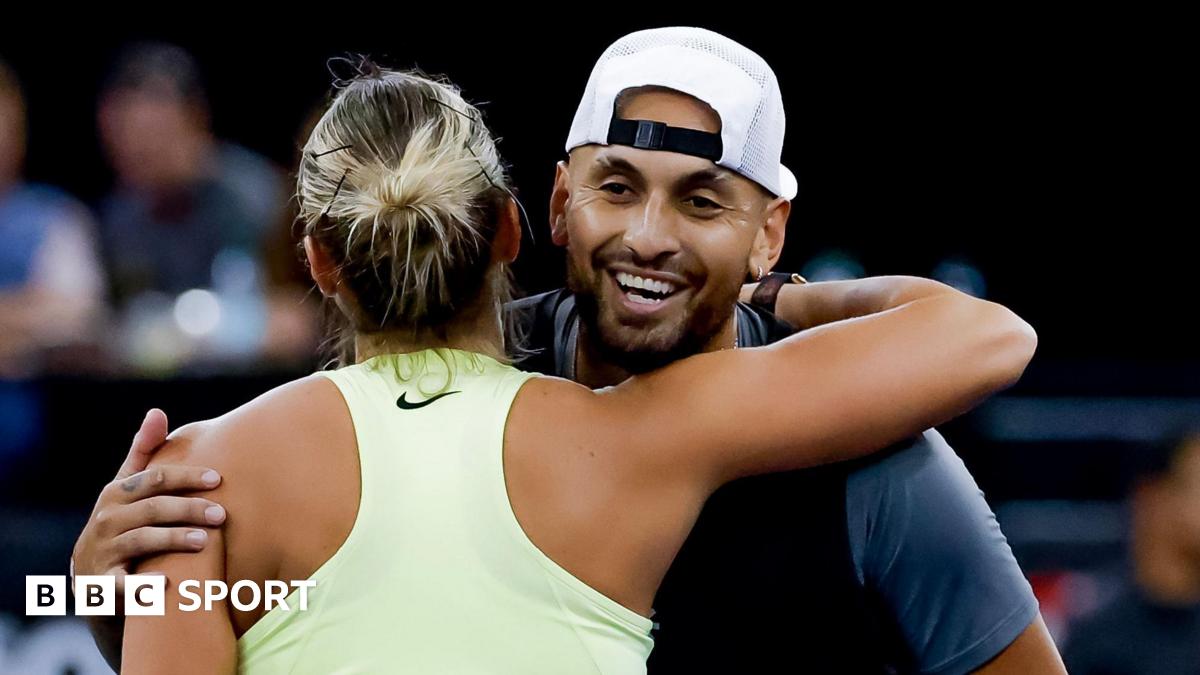
A Modern Spin on a Historic Tennis Flashpoint
This Sabalenka–Kyrgios showdown consciously echoes the iconic 1973 “Battle of the Sexes” between Billie Jean King and Bobby Riggs, a match that transcended sport and became a landmark moment for gender equality. Fifty‑plus years on, tennis occupies a very different space: women’s players earn equal prize money at the biggest events and drive enormous global interest, yet debates over respect, representation, and commercial value remain.
Against that backdrop, this exhibition is less about proving whether a leading woman can beat a man, and more about how the sport presents itself to new fans in an era of social media, streaming, and short attention spans.
Event Context: Entertainment First, But Stakes for the Sport
Organisers have marketed the Sabalenka vs Kyrgios clash as a fun, entertainment‑driven event rather than a serious referendum on gender in tennis. Sabalenka emphasised the showcase element and dismissed the idea that the match could harm women’s tennis.
“It’s an exhibition. We’re doing it to entertain, to make more people love tennis. I don’t see how that can be damaging to women’s sport.”
— Aryna Sabalenka
Kyrgios, who has been sidelined frequently by injuries over the last two seasons, framed the match as a way to reconnect with fans and put his shot‑making back in the spotlight.
“People tune in because they know something unpredictable might happen. That’s good for tennis. It’s supposed to be fun.”
— Nick Kyrgios
Still, when the words “Battle of the Sexes” are attached to any tennis event, symbolism is unavoidable. The way this match is framed, discussed, and broadcast will shape how casual viewers interpret the gap—or lack of it—between the men’s and women’s games.

The Kyrgios Question: Is He the Right Face for This Event?
The most pointed criticism of the event is not that it pits a man against a woman, but that Nick Kyrgios is the chosen male protagonist. Kyrgios admitted in 2022 to assaulting an ex‑girlfriend in a 2021 incident, receiving a non‑conviction order but facing intense scrutiny. Over his career he has also made comments and gestures that have been widely criticised as disrespectful toward opponents and women more broadly.
Those concerns have led some fans, commentators, and advocates to question whether putting him opposite the reigning Australian Open champion sends a mixed message about what behaviour tennis chooses to spotlight.
- Critics’ view: Elevating Kyrgios in a gender‑themed event risks trivialising serious issues and undermines efforts to promote respect in sport.
- Supporters’ view: Kyrgios’ star power, shot‑making, and ability to draw non‑tennis fans outweigh the drawbacks in an exhibition with no ranking stakes.
- Middle ground: The event can still succeed if broadcasters and organisers responsibly acknowledge context and keep the focus on Sabalenka’s status as a leading figure in women’s tennis.
The WTA and ATP have not positioned this as an official referendum on gender equality, which gives organisers some leeway. But in 2025, the bar for who front‑lines marquee mixed‑gender events is higher than it was a decade ago.
Aryna Sabalenka: Power, Poise, and a Platform for Women’s Tennis
On court, Aryna Sabalenka is one of the defining players of this era. Her heavy serve‑plus‑forehand combination and increasingly stable mentality have kept her deep in the second week of majors, while her aggressive style translates perfectly to highlight reels.
In recent seasons she has also grown into a more vocal presence on tour, speaking about mental resilience, expectations, and the demands of being a top‑ranked player.
“I know little girls are watching us. That’s why it’s important to show them that women’s tennis is strong, exciting, and worth watching on its own.”
— Aryna Sabalenka
| Category | Stat |
|---|---|
| Grand Slam singles titles | Multiple (including back‑to‑back Australian Open crowns) |
| Peak WTA ranking | World No. 1 |
| Career titles (all levels) | 20+ singles and doubles combined |
| Playing identity | High‑power baseline game, top‑tier serve, improved mental toughness |
For Sabalenka, the exhibition is a chance to amplify her brand beyond traditional tennis audiences. If she dominates rallies and leans into the moment, she can underscore how far the women’s game has come since Billie Jean King carried the burden of proof alone.

Nick Kyrgios: Box Office Talent with a Complicated Legacy
Nick Kyrgios remains one of tennis’s most polarising figures. At his peak, his ability to flatten serves above 220 km/h, improvise with drop shots and tweeners, and take down the sport’s giants made him must‑see viewing. His 2022 Wimbledon final run proved that his ceiling is not just high, it’s elite.
Yet injuries, withdrawals, fines, and behavioural controversies have repeatedly stalled his momentum. The exhibition surfaces that contrast: he may be the most reliable ticket‑seller outside the very top of the men’s game, but he is also a lightning rod.
| Aspect | Details |
|---|---|
| Best Slam result | Wimbledon finalist (2022) |
| Signature weapons | Explosive first serve, creative shot‑making, big‑match mentality |
| Controversies | On‑court outbursts, code violations, and a 2021 assault case involving an ex‑girlfriend |
| Public perception | Split between fans who see him as authentic and entertaining, and those who feel his behaviour crosses key lines |
In a pure tennis sense, Kyrgios is the archetype of a dangerous exhibition opponent: unpredictable, relaxed, and capable of switching from trick‑shot mode to laser‑focused serving in a heartbeat. That volatility will shape the match narrative on the night, for better or worse.

Will This Battle of the Sexes Help or Hurt Women’s Tennis?
Sabalenka has firmly rejected the idea that this match is “damaging” to women’s sport, stressing its exhibition status. The impact, though, depends on context: how broadcasters frame the contest, the tone of social media coverage, and whether the messaging reinforces or undermines the value of the women’s game on its own terms.
- Potential benefits
- Draws casual fans who recognise Kyrgios and discover Sabalenka.
- Spotlights the physicality and speed of top women’s tennis to a new audience.
- Creates mixed‑gender storytelling opportunities for media and sponsors.
- Potential risks
- Reinforces outdated “men vs women” narratives if framed purely as a power contest.
- Associates a marquee women’s star with a male counterpart whose behaviour has been widely criticised.
- Overshadows more meaningful mixed events like the United Cup or Olympic mixed doubles.
From an equality perspective, women’s tennis does not need to “prove” itself against men. It already stands as one of the most commercially successful and competitive women’s sports on the planet. The healthiest framing for this event is as a showcase of different styles and personalities, not a verdict on gender.

Numbers Game: How Might the Match Actually Look?
Cross‑gender exhibitions are notoriously tricky to predict because rules, court speed, and intensity levels often shift from game to game. Still, a basic statistical and tactical snapshot offers clues to how Sabalenka and Kyrgios might match up.
| Area | Sabalenka | Kyrgios |
|---|---|---|
| Serve | Top‑tier on WTA; high ace count, aggressive 2nd serve | One of ATP’s biggest serves when healthy |
| Baseline power | Heavy groundstrokes, especially off the forehand | Explosive but often mixing tempo and variety |
| Consistency | Improved rally tolerance and decision‑making | Streaky; can flip from untouchable to erratic quickly |
| X‑factor | Champion mentality, competitive intensity every point | Crowd interaction, trick shots, ability to raise level in big moments |
If Kyrgios serves near his peak, breaking him becomes difficult for any opponent, regardless of gender. But exhibitions often feature relaxed body language and risk‑heavy tennis. That’s where Sabalenka’s week‑in, week‑out competitiveness could level the playing field and produce genuine scoreboard tension.

Human Stories: Pressure, Perception, and Second Chances
Beyond tactics, this Battle of the Sexes carries real human weight. For Sabalenka, it is another test of performing under a bright Australian spotlight, where expectations for the reigning Melbourne champion are enormous. Every roar, every winner, and every misstep becomes part of her evolving public image as a leader of the WTA.
For Kyrgios, the exhibition folds into a broader narrative about injury comebacks, public redemption, and where fans choose to draw their lines. Some will welcome his return to centre stage; others will view it as premature or misjudged. That tension will hum beneath every rally, whether the broadcast fully acknowledges it or not.
Those intersecting stories are precisely why this match is drawing attention far beyond the usual pre‑season exhibitions. It is not just about how they hit the ball, but what each of them represents to different slices of the tennis audience.
What This Means for Tennis Going Forward
In isolation, the Sabalenka vs Kyrgios Battle of the Sexes is one night of entertainment. It will not decide the future of women’s tennis, nor single‑handedly reshape Kyrgios’ legacy. But it does sit at the crossroads of several important conversations: how tennis markets itself, which personalities it elevates, and how gender narratives are framed for a new generation of fans.
If organisers and broadcasters treat the event as a celebration of two elite skill‑sets rather than a gender contest, and if Sabalenka’s voice and status are given equal weight in the build‑up and coverage, the exhibition can serve as an engaging gateway for new fans without undermining women’s sport.
As the first serve approaches, the real questions linger beyond the scoreline:
- Will future high‑profile mixed events feature a wider range of personalities and cleaner reputations?
- Can tennis continue to innovate with formats and storytelling while staying true to its equality credentials?
- And when the dust settles, will new fans remember this as a stunt—or a spark that drew them deeper into both the ATP and WTA tours?
However the night plays out, it will add another chapter to tennis’s long, complex relationship with gender, spectacle, and star power—a relationship that continues to evolve with every new generation of champions and challengers.
For more context on professional tennis tours and mixed events, visit the official sites of the WTA, ATP Tour, and ITF.
