
Paramount’s Massive 1888 Studios Breaks Ground in Bayonne: Can “Hollywood East” Change the Game?
Updated: December 18, 2025
Groundbreaking ceremony for 1888 Studios, a major new Paramount film and TV production campus, signals New Jersey’s “Hollywood East” ambitions on the Bayonne waterfront.
By Entertainment Desk
On a windy stretch of Bayonne waterfront, Paramount and New Jersey officials have broken ground on 1888 Studios, a sprawling film and TV production campus that aims to turn the Garden State into a true “Hollywood East.” Backed by aggressive tax incentives and a surge of streaming-era demand, the project is a high-profile bet that major studio production no longer has to orbit only Los Angeles or Atlanta—and that the Hudson River skyline can co-star with Hollywood’s famous hills.
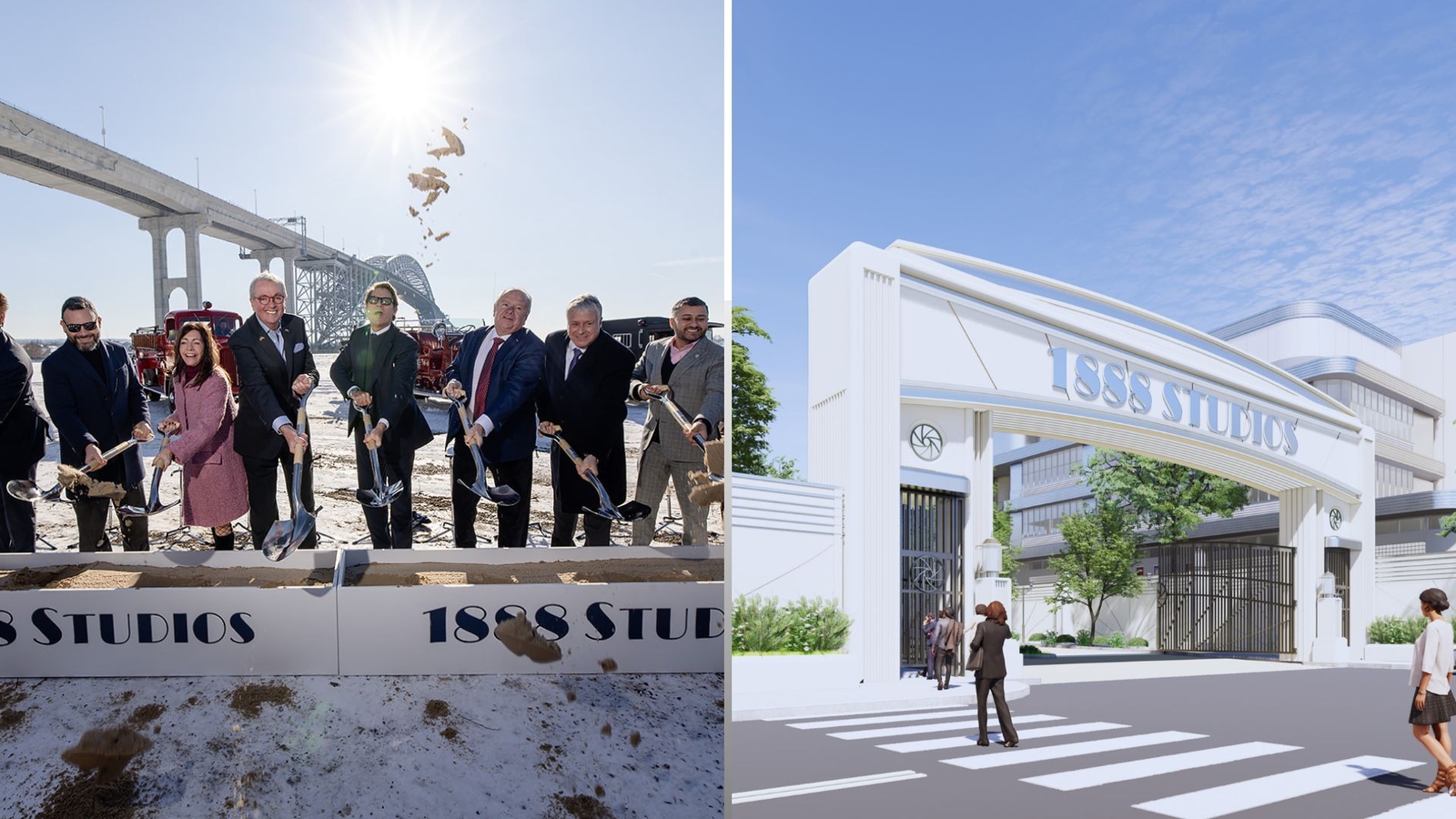
The ceremony doesn’t just mark another ribbon-cutting; it’s a signal flare in a larger arms race among states wooing studio dollars. For New Jersey, long in the shadow of New York’s sound stages and office towers, 1888 Studios is a statement of intent: the state doesn’t just want location shoots—it wants full-fledged studio infrastructure, recurring series, and year-round production jobs.
What Exactly Is 1888 Studios? Inside Paramount’s Bayonne Production Campus
1888 Studios—named for the year widely credited as the birth of commercial motion pictures—is planned as a state-of-the-art film and TV production campus on a former industrial site along the Bayonne waterfront. While final specs can evolve, the vision is clear: multiple sound stages, expansive backlot space, production offices, post-production facilities, and support infrastructure that can handle everything from prestige streaming dramas to tentpole franchise shoots.
Positioned just across the water from Lower Manhattan and a short distance from Newark Liberty International Airport, the campus plugs directly into the New York–New Jersey media ecosystem but offers more space and, crucially, more favorable economics than Manhattan real estate can provide.
- Purpose-built sound stages designed for modern digital and LED volume production
- On-site facilities for costumes, props, set construction, and visual effects support
- Office and flex space for writers’ rooms, production companies, and short-term tenants
- Waterfront backdrops and easy access to urban, suburban, and industrial locations

From Industrial Waterfront to “Hollywood East”: Why New Jersey Is All-In on Film Incentives
1888 Studios doesn’t exist in a vacuum. It’s part of New Jersey’s broader push to brand itself as “Hollywood East,” a response to the way tax incentives have reshaped the production map over the past two decades. Georgia’s aggressive credits turned Atlanta into Marvel’s unofficial backlot; New Mexico did the same for Breaking Bad–era Albuquerque; Toronto and Vancouver rode Canadian incentives into “Hollywood North” status.
New Jersey, which once hosted early film pioneers like Thomas Edison’s Black Maria studio, has been ramping up its own incentive game, offering competitive tax credits, bonuses for hiring local workers, and perks for building permanent infrastructure like 1888 Studios. The message to the industry is unambiguous: bring your shows, your movies, your crews—and stay a while.
“Hollywood may have started in New Jersey, and we are determined to make it a home for Hollywood once again.”
— New Jersey official at the 1888 Studios groundbreaking (as reported by local media)
That rhetoric is more than civic pride; it’s an attempt to reframe the state’s identity from commuter corridor to creative hub. Large-scale projects like 1888 Studios become anchor tenants in that narrative—physical proof that the industry is willing to park serious capital on Jersey soil.
Jobs, Housing, and Culture: What 1888 Studios Could Mean for Bayonne and Beyond
For Bayonne, a city more often associated with shipping terminals than red carpets, 1888 Studios is being framed as a transformative economic engine. Construction alone brings a wave of union jobs, while long-term operations promise recurring work for crew, vendors, and the kind of small businesses that quietly keep sets running—caterers, carpenters, drivers, costume cleaners, and tech support.
- Direct employment: Production crews, office staff, maintenance, and security
- Indirect spending: Local restaurants, hotels, transportation, and retail
- Workforce pipelines: Partnerships with local colleges and trade schools
- Secondary development: Housing, shops, and services tailored to creative workers
There’s also the softer power: the way film and TV visibility can shift a city’s reputation. A few hit series with “Shot at 1888 Studios” in the credits, and Bayonne could enter the casual pop-culture vocabulary the way Vancouver or Atlanta now do when fans dissect filming locations online.

Can 1888 Studios Compete with Atlanta, Toronto, and New York’s Existing Sound Stages?
The obvious question: in an era when Atlanta, Toronto, New York City, and London already dominate film and TV production, does the industry really need another major campus? From an economic perspective, the answer increasingly looks like “yes”—but with caveats.
The streaming boom, even after its recent belt-tightening, still demands a relentless volume of content. Studios like Paramount want options: places with strong crews, predictable costs, and flexible infrastructure. New Jersey’s pitch is that 1888 Studios can combine the depth of New York’s talent pool with the scale and pricing more often associated with Southern or Canadian hubs.
“Production is now a global chessboard. If you give studios tax certainty, physical space, and access to talent, they will come. New Jersey is finally putting all three on the table.”
— Entertainment industry analyst quoted in regional coverage of the 1888 Studios deal
Still, competition is fierce. Georgia and Canada have built entire ecosystems around consistent incentives, and New York’s sound stages—from Steiner Studios in Brooklyn to Kaufman Astoria in Queens—are entrenched players. For 1888 Studios, the differentiators will likely be:
- Modern build: No retrofitting required—facilities designed for today’s production tech.
- Tax predictability: Whether New Jersey can keep its incentives stable over time.
- Ease of use: How seamlessly productions can move between location shooting and on-lot work.
- Talent pipeline: Partnerships that train and retain local crew instead of importing everyone from New York or Los Angeles.

The Other Side of the Marquee: Concerns About Costs, Community, and Sustainability
Any time a state dangles major tax incentives in front of a giant entertainment company, critics have questions. With 1888 Studios, skeptics are focused on three big ones: how much public value the project delivers, how it reshapes local neighborhoods, and whether “Hollywood East” is built for the long term or just this phase of the content cycle.
- Public investment vs. private gain: Tax credits mean foregone revenue. Supporters argue the jobs and knock-on economic activity more than offset the cost; opponents warn that studios can pick up and leave when incentives dry up.
- Gentrification ripple effects: A booming creative district can be great for cafés and coworking spaces—but tough on renters and long-time residents if housing costs spike.
- Environmental questions: Converting industrial land on the waterfront is an opportunity for cleanup and better land use, but it raises worries about traffic, emissions, and resilience to rising sea levels.
None of these challenges are unique to Bayonne; they’ve surfaced around nearly every large studio expansion from California to the U.K. The difference will be how transparent New Jersey is about the project’s costs and how actively it manages the studio’s impact on the surrounding community, beyond the glossy renderings and photo ops.
Follow the Credits: How 1888 Studios Fits into the East Coast Production Boom
In the last decade, audiences have unknowingly watched the rise of alternative production hubs in the backgrounds of their favorite shows. Marvel’s New York–set scenes quietly shot on Atlanta backlots; sci-fi epics used Toronto’s stages; gritty crime dramas leaned on New York’s outer boroughs.
1888 Studios joins a growing cluster of East Coast facilities:
- Steiner Studios (Brooklyn): Hosted productions like The Marvelous Mrs. Maisel and Joker.
- Kaufman Astoria Studios (Queens): Historic home to series from Sesame Street to modern streaming comedies.
- Netflix and Lionsgate campuses (New Jersey and New York region): Part of the same incentive-driven wave that 1888 Studios is riding.
The cluster effect matters. For creatives, the ideal is a region where you can move from show to show without uprooting your life. If 1888 Studios succeeds, it will be because it plugs into that regional network—drawing on New York’s actors, writers, and directors while helping train the next generation of below-the-line talent in New Jersey.

For more background on the groundbreaking event and official statements, see the original coverage on ABC7 New York and Paramount’s corporate news page, as well as project listings on IMDb as productions begin to book space.
Will “Hollywood East” Stick the Landing?
The groundbreaking of 1888 Studios is the easy part—the cameras love gold shovels and hard hats. The harder work comes next: turning renderings into functioning stages, promising jobs into lasting careers, and political talking points into long-term policy that keeps New Jersey competitive even when the streaming gold rush cools.
If Paramount and New Jersey get it right, Bayonne could evolve from an overlooked port city into a permanent entry in the end credits of countless shows and films. If they stumble—on incentives, infrastructure, or community trust—1888 Studios risks joining the list of studio projects that felt like the future on paper but never quite lived up to the trailer.
For now, though, the clink of ceremonial shovels on Bayonne’s waterfront marks a clear shift: the battle for where screen stories are made is no longer just between Hollywood and “somewhere else.” New Jersey wants to be that somewhere—and 1888 Studios is its biggest, boldest proof of concept yet.
