
Messi’s India Mayhem: Statue Tribute, GOAT Tour Chaos, and What It Means for Football Fans
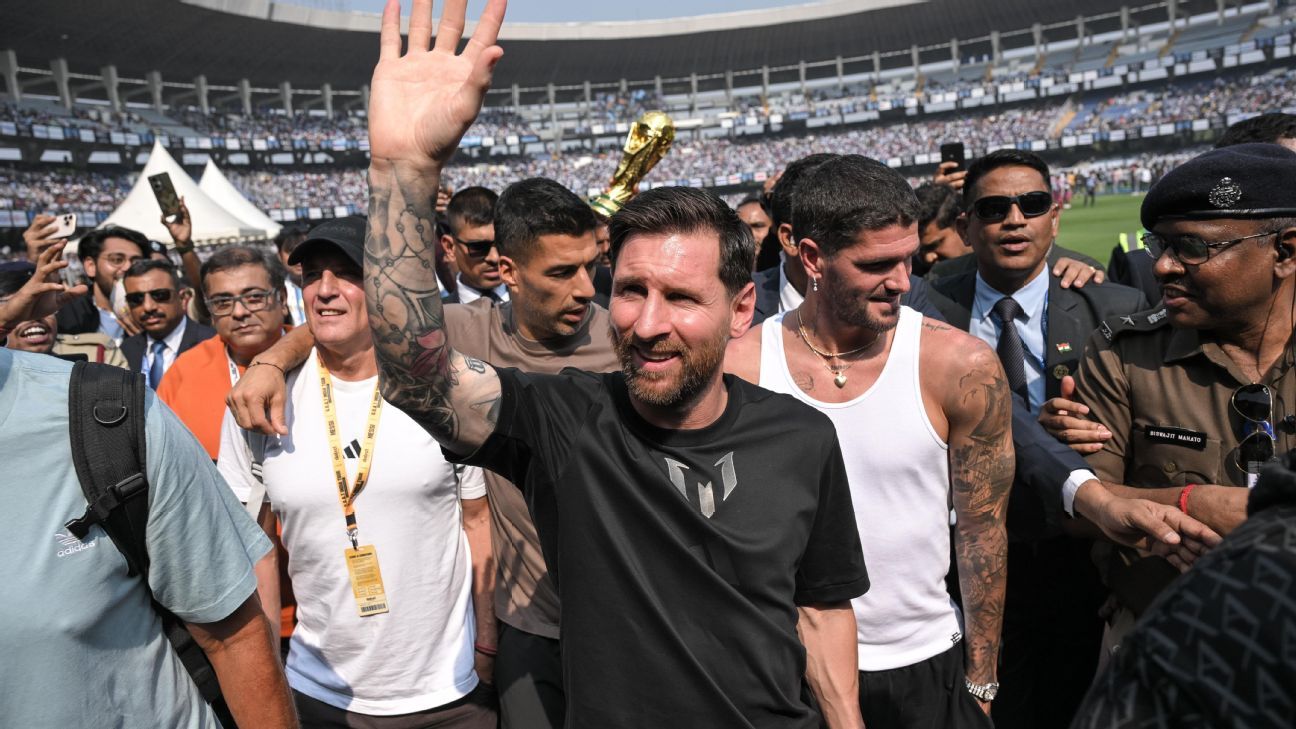
Lionel Messi’s much-hyped “GOAT Tour” arrival in India, marked by the unveiling of a new statue in his honour, was overshadowed by ugly scenes in the stands. Ripped-up seats flew through the air, fans spilled onto the pitch, and the celebration that was supposed to showcase India’s passion for football ended up shining a harsh spotlight on security lapses and event mismanagement.
A celebration turned flashpoint
The event, billed as a landmark moment in India’s football story and a tribute to one of the game’s greatest players, quickly spiralled into chaos once parts of the crowd realised Messi’s involvement would be short and tightly controlled. The combination of feverish anticipation, limited access to the star, and packed stands proved combustible.
What was meant to be a carefully choreographed Messi statue unveiling and exhibition appearance instead became a live case study in crowd psychology, the power of expectation, and the growing pains of a football market desperate to prove it belongs on the world stage.
Why Messi’s India stop mattered so much
The “GOAT Tour” is more than a series of exhibition appearances; it’s a travelling celebration of Lionel Messi’s career, designed to connect him with fan bases that rarely see him live. For India, a nation of more than a billion people where European club football commands huge TV audiences, Messi’s presence carried symbolic weight.
- Messi is the most-followed active footballer among Indian fans on major social platforms.
- Television ratings for Argentina matches in recent World Cups have rivalled those of the Indian national cricket team’s bilateral series.
- Multiple Indian cities claim to be “Messi strongholds”, particularly in football-mad states like Kerala and West Bengal.
The statue unveiling was pitched as a thank-you to that fandom: a permanent tribute to the player who has become an icon far beyond Argentina, Barcelona, or Inter Miami. In theory, it was a marketer’s dream – global superstar, booming football market, and wall-to-wall media coverage.
What went wrong: timeline of the unrest
While full official reports are still emerging, early accounts and broadcast footage outline a clear pattern: disappointment turned into disruption. Fans, expecting a longer on-field appearance or more direct interaction with Messi, reacted when it became clear that access would be limited and tightly scripted.
- Pre-event build-up: Hours of queues, packed stands, and a festival atmosphere raised expectations that Messi would play a significant role on the pitch.
- Statue unveiling: The unveiling itself ran smoothly, with Messi visible but heavily guarded, offering only brief waves to the crowd.
- Short on-field segment: As Messi’s time on the pitch stayed brief, sections of the crowd grew visibly restless.
- Unrest begins: Isolated groups began ripping out plastic seats and throwing them; stewards struggled to contain the first wave of disorder.
- Pitch invasions: Small clusters of fans broke through perimeter barriers and sprinted toward the playing surface.
- Security clampdown: Security personnel and police formed cordons, escorting Messi and players away from the immediate danger zone.
“The passion here is incredible, but safety has to come first. Nobody wants to see an event like this end that way,” said one event security consultant speaking to local television after the match.

By the numbers: crowd, security, and disruption
Exact official figures for the Messi event are still being compiled, but based on typical international exhibition matches and preliminary local reporting, a picture of scale emerges.
| Metric | Estimate / Detail |
|---|---|
| Stadium capacity used | Approx. 85–95% of seated capacity |
| Security & stewards on duty | Several hundred personnel, including private staff and police |
| Reported pitch invaders | Dozens across multiple incidents |
| Damaged seats | Several blocks affected, with ripped or dislodged seating |
| Injury reports | Minor injuries reported; major incidents avoided thanks to rapid intervention |
In global terms, this was far from the worst crowd incident football has seen, but the visuals of seats being thrown and fans surging towards the pitch cut sharply against the image the event organisers and local authorities wanted to project.

Messi’s perspective: adored, but increasingly protected
For Lionel Messi, this incident fits into a broader trend of increasingly intense fan behaviour wherever he travels. From spontaneous pitch invasions looking for selfies to crowds camping outside team hotels, the pressure on his security detail has never been higher.
“Everywhere we go now, it feels like a final,” a member of Argentina’s backroom staff remarked earlier in the GOAT Tour. “People don’t just want to see Messi; they want to touch that moment, to take something from it.”
That intensity demands layers of protection:
- Tighter inner security rings around the player and team benches.
- Restricted autograph zones and controlled meet-and-greets.
- Clear communication that exhibition events are not full competitive matches.
It’s a delicate balance. Fans paying premium prices want proximity and authenticity; Messi’s camp and local organisers must prioritise safety. When expectations are poorly managed, frustration fills the gap.
What this means for Indian football’s global ambitions
India has made no secret of its desire to host major football events and attract marquee friendlies, pre-season tours, and global icons like Messi. From hosting the FIFA U-17 World Cup to renewed investment in the Indian Super League (ISL), the message has been consistent: India wants a bigger slice of the football calendar.
Incidents like this do not slam that door shut, but they do raise red flags for:
- Governing bodies: FIFA and continental confederations need robust guarantees on safety and match operations.
- Clubs and national teams: Elite sides consider fan safety, insurance, and risk of disruption when planning tours.
- Sponsors and broadcasters: Brands want big atmospheres, not viral clips of chaos.
The upside? If authorities and organisers respond decisively—by upgrading infrastructure, improving steward training, and enforcing strict spectator codes—this episode could become a turning point rather than a permanent stain.
For context on India’s broader football development and international hosting ambitions, see official resources from All India Football Federation (AIFF), as well as global governance guidelines from FIFA.
Multiple perspectives: passion, blame, and responsibility
As with most football flashpoints, reactions have been split. Some point the finger at a minority of unruly fans; others argue that poor planning and mixed messaging set the stage for trouble.
- From organisers’ side: There is frustration that a small subset of spectators undermined an event months in the making and embarrassed the host city on a global stage.
- From fans’ side: Many feel short-changed, believing pre-event promotion suggested a more substantial Messi appearance or a competitive match setting.
- From neutral analysts: The consensus leans towards a combination of inadequate communication, over-selling the spectacle, and underestimating crowd behaviour models.
“You can’t invite football’s biggest icon, lean into the hype for weeks, and then be surprised when fans react badly to a brief cameo. That’s not excusing the behaviour—but expectations were clearly mismanaged,” a regional football analyst told a local sports network.
The key lesson: you cannot separate crowd control from communication strategy. Ticket buyers need clarity on what they are paying for—especially when a star like Lionel Messi is the headline attraction.
The human side: dreams, disappointment, and devotion
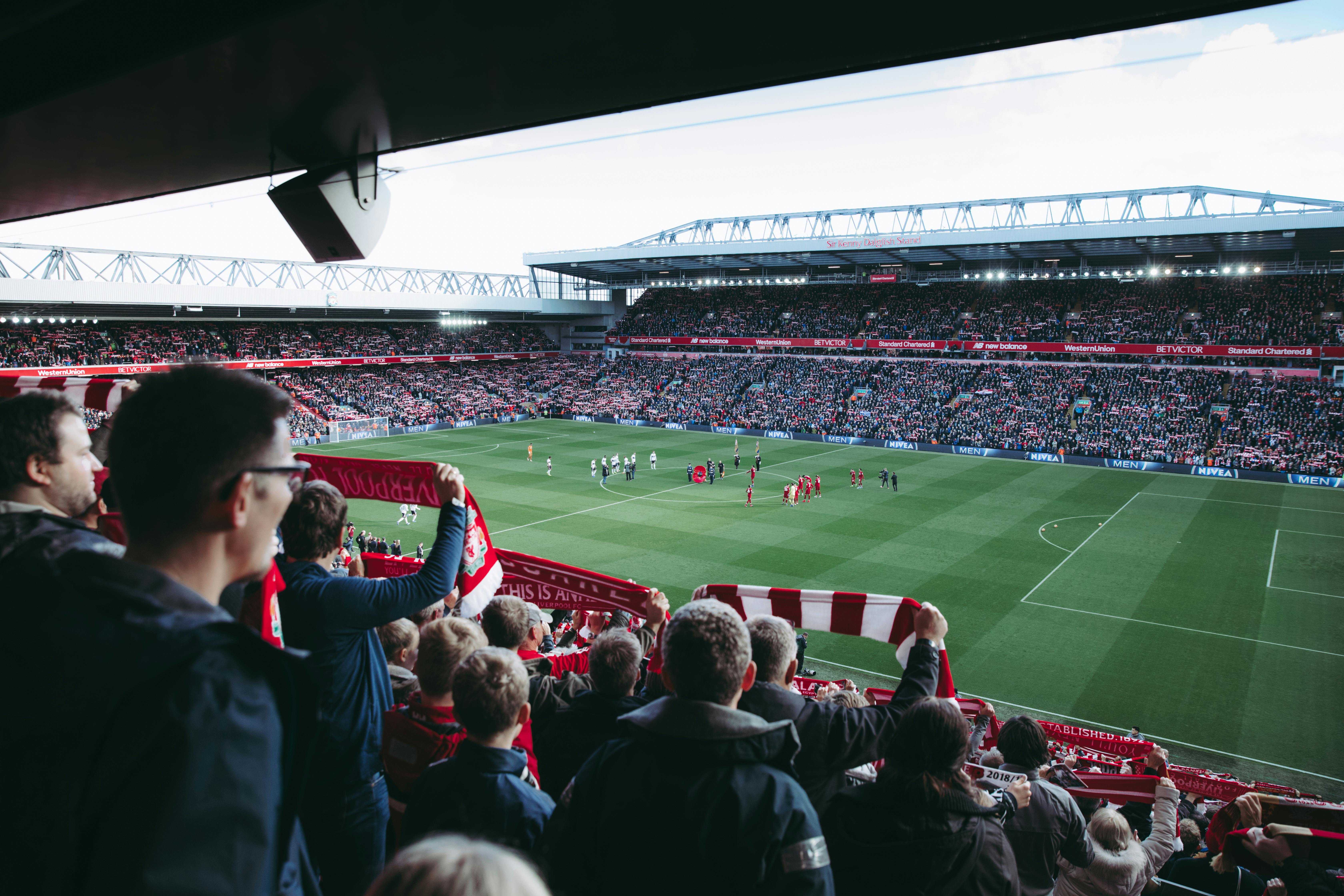
Behind every ripped-up seat, there was a story—most of them not of anger, but of deep, sometimes overwhelming devotion. For many in the stadium, this was a once-in-a-lifetime chance to see their footballing idol with their own eyes.
You could see it in the Messi jerseys spanning generations—from the classic Barcelona stripes to Argentina’s World Cup-winning kit. Parents lifted children onto their shoulders, hoping to give them a glimpse they would tell their own kids about someday.
That emotional charge is what makes Messi’s global pull so powerful—and why organisers must treat these events almost like World Cup fixtures, not casual friendlies. The stakes are higher, even if there are no points on the line.

Where does the GOAT Tour—and India—go from here?
Messi’s GOAT Tour will roll on to its next destination, but the India stop will be remembered as a cautionary tale as much as a celebration. Statues and ceremonies are easy; delivering a safe, satisfying live experience at this scale is the real test.
For India, the path forward is clear, even if it is demanding:
- Strengthen stadium infrastructure and seating to reduce the ease of vandalism.
- Invest in professional steward training and modern crowd-management techniques.
- Overhaul event communication, clearly outlining what fans can expect from star appearances.
- Work closely with global football bodies to adopt best practices from major European and South American venues.
The bigger question lingers over every major touring event: how do you harness the energy of global superstar worship without letting it boil over? Messi’s statue will stand as a permanent reminder of his impact on Indian football fandom. Whether it also marks a turning point in how the country stages such high-profile events depends on what happens next.
As the GOAT Tour continues and other icons eye India as a destination, organisers, authorities, and fans alike will have to answer a simple but crucial question: can passion and order coexist when football’s brightest star walks into the stadium?
For more detailed match and player statistics related to Lionel Messi’s career and international appearances, readers can explore ESPN’s Lionel Messi player page and official competition data via UEFA and CONMEBOL.
