
Messi 2026: Will the World Champion Chase One More World Cup Dream?
Lionel Messi has kept the door to the 2026 World Cup only half-open, telling ESPN that he still has the desire to play for Argentina in North America but refusing to give a definitive yes, leaving fans, analysts, and even his teammates guessing as the countdown to the tournament accelerates.
Messi’s 2026 World Cup Question: One More Dance, Or Final Goodbye?
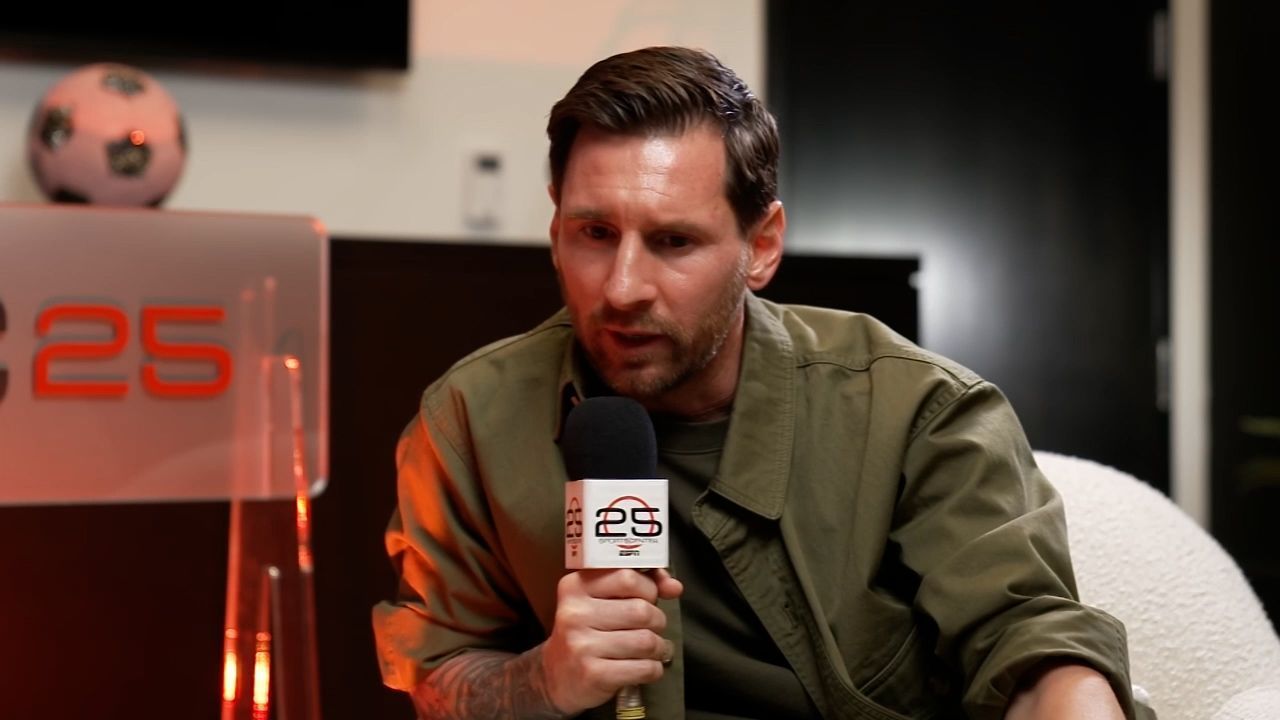
In a wide-ranging interview with ESPN, Lionel Messi addressed the question gripping world football: will the 38-year-old legend suit up for Argentina at the 2026 FIFA World Cup in the United States, Mexico, and Canada? His answer was measured rather than emphatic—full of possibility, but also realism about age, form, and the physical demands of the modern game.
The backdrop is impossible to ignore: Messi delivered Argentina’s third World Cup in Qatar 2022 with a career-defining run, then added a Copa América and Finalissima to his résumé, all while transitioning to Inter Miami in Major League Soccer. Now, with 2026 looming and expectations mounting, his future on the game’s biggest stage has become one of international football’s defining storylines.
“At Worst, I’ll Be Watching”: What Messi Actually Said
Messi didn’t close the door. But he didn’t walk through it either. Instead, he acknowledged both his desire and his doubts, leaving a carefully balanced message for Argentina fans.
“I still have the desire to be there, to compete with the national team. But I also know how demanding a World Cup is. At worst, I’ll be watching, supporting Argentina like any other fan.”
That phrase — “at worst, I’ll be watching” — is the hinge on which the entire debate swings. It confirms two crucial realities:
- Messi does not yet feel ready to announce his international retirement.
- He is preparing fans for the possibility that Qatar 2022 might have been his last World Cup as a player.
The tone was reflective rather than dramatic. Messi emphasized that the decision will depend on how he feels physically and mentally closer to the tournament, and how his form holds up across club and international fixtures over the next year and a half.
Context: From Qatar Glory to the 2026 North American Challenge
To understand the weight of Messi’s hesitation, you have to revisit Qatar 2022. At 35, he logged massive minutes, scored key goals, and carried Argentina through extra time and penalties in one of the most intense World Cups of the modern era.
Since then, the arc of his career has bent toward longevity and balance. His move to Inter Miami in MLS signaled a shift from the week-in, week-out intensity of UEFA Champions League football to a schedule that, while still demanding, allows for more load management and recovery.

The 2026 tournament poses new variables:
- Expanded format: 48 teams, more matches, more travel across three host nations.
- Age factor: Messi will be 39 during the knockout stages, older than most outfield players in World Cup history.
- Travel & recovery: Cross-continent flights, varying climates, and high-intensity games in quick succession.
For a player who has always prioritized contributing at an elite level, not merely appearing, those are non-trivial concerns.
Messi by the Numbers: Is His Level Still World Cup-Ready?
Even in his late 30s, Messi’s statistical output for club and country remains elite. While precise season-by-season numbers will continue to evolve, the broader trends suggest he is still a high-impact creator and finisher rather than a fading icon.
Below is a simplified snapshot (approximate performance indicators) of Messi’s recent club form and World Cup history to frame the 2026 question:
| Season / Tournament | Team | Games Played* | Goals* | Assists* | Notes |
|---|---|---|---|---|---|
| 2022 World Cup | Argentina | 7 | 7 | 3 | Golden Ball winner, World Champion |
| 2023–24 (club, all comps) | Inter Miami | 30+ | 20+ | 15+ | High usage, managed minutes, dominant chance creation |
| Argentina (post-2022) | National Team | Double digits | Multiple | Multiple | Remains primary creative hub and leader |
*Approximate figures used for illustrative analysis; consult official statistics via sources like FBref, Sofascore, or WhoScored for updated numbers.
The key takeaway: Messi’s game has evolved. He runs less, but he thinks faster. His value lies in vision, timing, and decision-making—qualities that age more gracefully than raw acceleration. This keeps the 2026 dream firmly in play, provided his body holds up.
How Scaloni Could Use a 39-Year-Old Messi
If Lionel Scaloni and his staff get a fit Messi in 2026, the question is not whether he starts, but how his role is adapted to amplify his strengths and protect his legs.

Potential tactical adaptations include:
- Central creator role: A free No. 10 position behind a mobile front line, reducing defensive tracking.
- 60–70 minute specialist: Start matches, control tempo, then be subbed early to manage cumulative fatigue.
- Impact substitute: In specific high-intensity fixtures, enter in the final half-hour against tired defenses.
- Set-piece and leadership hub: Even with reduced minutes, his threat on free-kicks and his influence in the dressing room remain invaluable.
Argentina’s emerging core — led by players like Julián Álvarez, Enzo Fernández, and other younger talents — gives Scaloni the flexibility to surround Messi with legs, pressing, and coverage. That makes a late-career World Cup cameo far more feasible than it might have been in earlier cycles.
Voices Around Messi: Teammates, Coaches, and Analysts Weigh In
Unsurprisingly, most around the Argentina camp and the broader football world hope Messi extends his World Cup story.
“As long as Messi feels he can help us, the national team’s doors are open. He changed our history — we will never close the door on him.”
That sentiment, widely echoed by many in and around the squad, highlights how deeply Messi’s presence is woven into Argentina’s identity.
Neutral analysts tend to split into two broad camps:
- Cautious realists: Emphasize the risk of holding onto a legend too long, citing the physical toll and the need to fully empower the next generation.
- Legacy maximizers: Argue that as long as Messi is a net positive on the pitch and in the dressing room, his presence in 2026 only strengthens Argentina’s chances.
Messi himself, though, is clearly determined not to become a ceremonial figure. He has repeatedly stated he will only continue at the highest level if he feels he can contribute meaningfully.
The Human Side: Family, Lifestyle, and the Weight of Expectation
Beyond tactics and statistics, this decision is also personal. Messi is now a father of three, settled in Miami, and living a life that balances competitive football with family stability and global stardom.
The emotional weight of Qatar 2022 also matters. It was not just a trophy; it was the culmination of a nation’s decades-long obsession with giving its greatest player the one title he lacked. Replicating that emotional high in 2026 is almost impossible.
That creates a dilemma:
- Walk away on the ultimate high, a World Cup and Golden Ball in hand.
- Or return for one last chapter, risking a less perfect ending but potentially adding another legendary twist.
Messi’s careful wording in the ESPN interview suggests he is acutely aware of that balance — and determined not to let nostalgia, or external pressure, dictate his choice.
So, Will Messi Play the 2026 World Cup? A Reasoned Probability
No one — not even Messi — can give a definitive answer right now. But based on his ESPN comments, current form, and Argentina’s competitive calendar, we can sketch an informed estimate.
Framing his chances in simple terms:
- Health and injuries: The single biggest variable. Any major injury could tip the scale toward retirement.
- Form and motivation: As long as he remains impactful for Inter Miami and Argentina, the competitive fire is unlikely to fade.
- National team dynamics: A strong, balanced squad that does not depend on him to do everything makes a limited, targeted role realistic.
Reading his own words — “I still have the desire to be there” — alongside the caveat that “at worst, I’ll be watching,” the most logical interpretation is:
If Messi arrives at 2026 healthy, in reasonable form, and still enjoying the game, he is more likely to play than not — but on his terms, with a carefully managed role and no guarantees of playing every minute.
What It Means for Fans and for Argentina’s Future
For Argentina supporters, the uncertainty is bittersweet. On one hand, it keeps the dream alive that the greatest player in their history might wear the shirt on the World Cup stage one last time. On the other, it is a reminder that the Messi era is in its final chapters, whether 2026 happens or not.

For the national team project, the picture is clearer. Lionel Scaloni and his staff must plan for two parallel realities:
- A tactical framework that functions at elite level without Messi.
- An adaptable, flexible structure that can reincorporate him efficiently if he decides to play.
That dual-track planning is already underway through World Cup qualifying and major tournaments like Copa América, where Argentina are fine-tuning their post-Qatar identity.
Looking Ahead: One More World Cup Chapter, Or the Perfect Ending?
Lionel Messi’s ESPN interview didn’t end the debate. It sharpened it. We now know he hasn’t closed the book on the World Cup, but he also refuses to promise an appearance he might not be able to honor at the level he demands of himself.
Over the next 18–24 months, his decision will likely be shaped by:
- How his body responds to another cycle of club and international football.
- Whether Argentina’s evolving squad needs — or simply welcomes — his presence.
- His own appetite for the grind of one last global tournament.
For now, the only certainty is that a world of fans will be watching, waiting, and hoping. Whether he steps onto the pitch in 2026 or watches from home, Messi’s legacy as a World Cup icon is secure. The question is not whether he needs one more tournament.
The question is: does Lionel Messi want one more World Cup memory badly enough to push his body through one last, brutal month on football’s biggest stage?
And until he answers that himself, “At worst, I’ll be watching” ensures that the Messi–2026 storyline will remain one of the defining narratives in the build-up to North America’s World Cup.
For official updates on fixtures, qualification, and tournament details, follow the FIFA World Cup 2026 page and Argentine Football Association.
Metadata
Content Type: Analysis and opinion on Lionel Messi’s potential participation in the 2026 FIFA World Cup, combining statistical context, tactical insight, and human-interest angles.
