
Kenny Dillingham’s Big Bet: Inside Arizona State’s Bold New $7.5M Football Era
Arizona State has locked in head football coach Kenny Dillingham to a new five-year contract that will average nearly $7.5 million annually, a structure designed as much for roster building as for coach compensation. At just 34, Dillingham now sits in the financial neighborhood of established Power 5 head coaches, and Arizona State is signaling one thing clearly: it believes he’s the architect to lead a full-scale Sun Devils football resurgence.
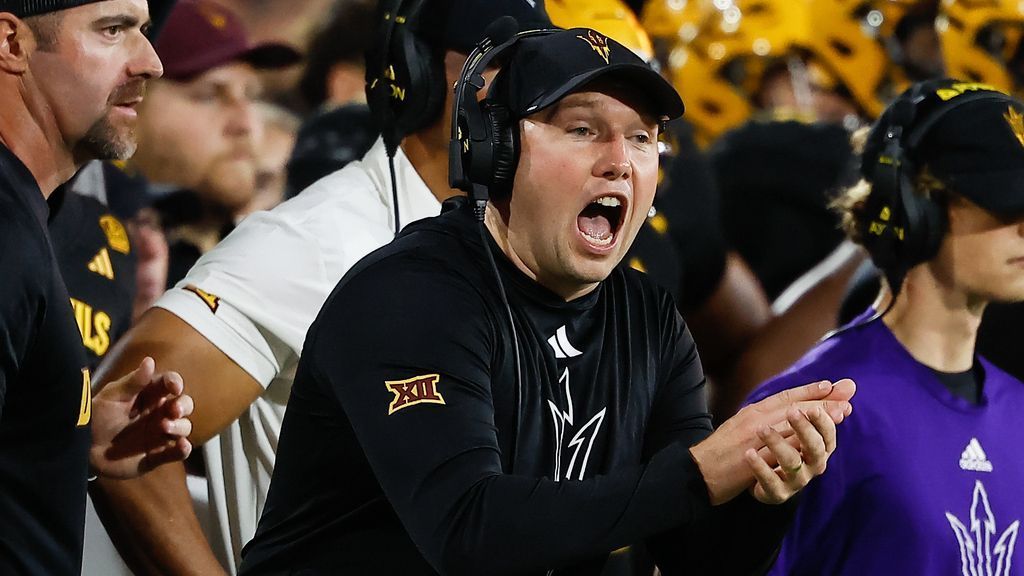
A New-Generation Coach With a Big-Time Contract
According to ESPN sources, Dillingham’s new five-year deal averages nearly $7.5 million per season. More importantly, the agreement was crafted with an eye toward maximizing Arizona State’s football budget—think staff salaries, recruiting infrastructure, and the increasingly crucial world of NIL support—rather than simply topping coaching salary charts.
It’s a modern contract for a modern coach: aggressive, resource-focused, and tailored to the realities of contemporary college football, where roster retention and development matter as much as scheme.
Context: Why Arizona State Is Going All-In on Kenny Dillingham
Dillingham arrived in Tempe as one of the youngest head coaches in the FBS, bringing with him offensive stops at Memphis, Auburn, Florida State, and Oregon. What he inherited at Arizona State was no small challenge: NCAA-related turbulence, roster attrition, and the looming pressure of conference realignment.
In that environment, Year 1 and Year 2 were never going to be judged purely on wins and losses. Instead, ASU’s leadership focused on:
- Rebuilding roster depth through high school recruiting and the transfer portal
- Installing an offensive identity built on tempo, spacing, and quarterback development
- Stabilizing the program’s culture after a turbulent stretch
- Positioning the Sun Devils for their new league environment and media landscape
The new contract confirms what insiders have sensed: Arizona State sees early signs that Dillingham is hitting those benchmarks and wants to eliminate any doubt about its long-term commitment.
Inside the Numbers: Dillingham’s 5-Year, $7.5M-Average Deal
Exact year-by-year breakdowns can fluctuate with incentives, escalators, and retention bonuses, but sources framed Dillingham’s deal around an average of nearly $7.5 million per year. That places him solidly in the middle-upper tier of Power 5 head coaches—especially notable given his age and relative head-coaching experience.
| Contract Element | Estimated Detail |
|---|---|
| Average Annual Value | ~$7.5 million per season |
| Term Length | 5 years |
| Incentives | Performance-based (bowls, rankings, academics, rivalry wins) |
| Program Resources | Emphasis on staff pay, recruiting support, and infrastructure |
The key phrase around the deal: it “prioritized resources for the program.” In practice, that often means the head coach is willing to structure guarantees and escalators in ways that free up budget for:
- Competitive salaries for coordinators and position coaches
- Expanded recruiting and player development staff
- Enhanced scouting, analytics, and sports science operations
- Support tied to NIL strategy and roster retention
In today’s college football ecosystem, that kind of flexibility can matter as much as raw dollar figures.
Why “Resources First” Might Be ASU’s Winning Strategy
Arizona State isn’t just trying to keep up in the coaching salary race; it’s trying to build a sustainable competitive engine. By aligning Dillingham’s deal with broader resource allocation, the Sun Devils are betting on depth over flash.
Think of it this way: a $7.5M coach without a strong staff, NIL presence, and recruiting network is a sports car with no fuel. ASU is attempting to pay for both the car and the gas.
- Staff Continuity: Retaining successful coordinators—especially on defense—has become a major differentiator in college football.
- Portal Strategy: With fluid rosters, having personnel dedicated to evaluating portal fits is crucial.
- NIL Alignment: While universities cannot directly administer NIL, having operational alignment with collectives and support networks keeps rosters intact.
- Player Development: Investment in strength, conditioning, nutrition, and sports psychology often shows up in November, not in April headlines.
“You don’t just pay a coach anymore. You pay for a program. If the head coach is willing to structure his deal around that idea, it’s a massive competitive advantage.”
— Anonymous Power 5 athletic administrator, speaking broadly about modern contracts

On-Field Progress: How Has Arizona State Performed Under Dillingham?
The box scores under Dillingham tell only part of the story. Wins and losses have come amid significant roster churn and a challenging schedule, but the Sun Devils have shown glimpses of the offensive creativity and toughness that defined Dillingham’s previous stops.
| Category | Trend / Impact |
|---|---|
| Offensive Identity | Increased tempo, creative formations, focus on QB play |
| Recruiting & Portal | Aggressive use of transfer portal to patch depth holes |
| Competitiveness | More competitive in stretches against favored opponents |
| Culture & Buy-In | Visible sideline energy, player support, and fan engagement |
Early in a rebuild, analytics tend to highlight underlying growth before the record flips. Offensive efficiency metrics, red-zone execution, and third-down conversion rates are often the first categories to show a coach’s imprint, especially one with Dillingham’s offensive pedigree.

How Dillingham’s Deal Stacks Up Against Other Power 5 Coaches
With an average near $7.5 million, Dillingham joins a cluster of Power 5 coaches who are compensated as foundational program builders rather than stopgap solutions. While he may not yet sit at the very top of the national pay scale, the message within the Pac-12/Big 12 landscape is clear: Arizona State wants to operate like a big brand.
| Coach / Program | Approx. Annual Salary | Tier |
|---|---|---|
| Elite National Champions | $9M–$12M+ | Top Tier |
| Established Power 5 Contenders | $7M–$9M | Upper Tier |
| Rebuilding Programs With High Upside | $4M–$7.5M | Growth Tier |
Dillingham’s presence in that $7M-plus neighborhood underscores how aggressively Arizona State views its potential ceiling in the expanded playoff era. It also adds pressure: compensation at that level inevitably raises external expectations for bowl appearances, rivalry wins, and national relevance.
Different Perspectives: Smart Gamble or Risky Overreach?
Any major college football contract triggers debate, and Dillingham’s new deal is no exception. Around Tempe and across the sport, reactions tend to fall into two broad camps.
The Optimistic View
- Dillingham is a rising star with high-end offensive acumen.
- Locking him in now avoids a more expensive extension if the program pops in the next 1–2 seasons.
- A clear commitment from the university helps in recruiting and staff retention.
- His age allows for a long runway to build something sustainable.
“Players want to know their coach is going to be there. Deals like this are as much a recruiting tool as they are a financial statement.”
— Former Power 5 assistant coach, on long-term contracts
The Skeptical View
- The win–loss record is still a work in progress, and long-term guarantees add financial risk.
- Big contracts don’t automatically translate to on-field success or fan patience.
- Buyout obligations can limit flexibility if a rebuild stalls.
The reality likely lies somewhere in the middle: this is a calculated bet on trajectory, not a reward for finished work. Arizona State is wagering that locking in a modern, offense-first head coach with strong recruiting chops will pay off competitively and financially.
The Human Side: A Hometown Coach Carrying the Program’s Hopes
Dillingham’s story adds a layer of resonance to this contract. He’s not just another coach passing through Tempe—he’s a Phoenix native who grew up around the program and understands the emotional pulse of Arizona State football.
That connection matters to players, alumni, and donors. A coach who sees ASU as a destination rather than a launch pad brings a different tone to every recruiting visit and every booster meeting. It doesn’t guarantee success, but it deepens the buy-in.
- Local Ties: Easier to build relationships with high school coaches in the region.
- Long-Term Vision: More likely to think in five- and ten-year windows, not just contract cycles.
- Fan Connection: Authentic understanding of what wins, traditions, and rivalries mean in Tempe.

What Comes Next: Benchmarks for the Dillingham Era
With the ink drying on this five-year commitment, the focus turns quickly to the field. Over the next few seasons, several benchmarks will define whether this investment is paying off.
- Bowl Eligibility: Consistent trips to the postseason as the baseline standard.
- Rivalry Results: Competitive—and ultimately winning—records in key rivalry games.
- Recruiting Elevation: Climbing into higher recruiting tiers regionally and nationally.
- Offensive Identity: A clear, explosive style that quarterbacks and playmakers want to play in.
- Stability: Reduced coaching churn and a reputation as a development-friendly destination.
Arizona State has put real money and real belief behind Kenny Dillingham. The next phase is about translating that belief into results that resonate from the locker room to the student section to the College Football Playoff committee room.
As the Sun Devils charge into this new era, one question will loom over every Saturday night in Tempe: can Dillingham turn this bold contract into the kind of sustained, identity-defining success that Arizona State has long chased?
For schedules, stats, and official updates on Arizona State football, visit the Arizona State Sun Devils official site and track national context via the NCAA football hub.
