
Justin Baldoni, Blake Lively & the ‘Female Gaze’: Why One Awkward Deposition Is Everywhere Right Now
A newly disclosed deposition from Justin Baldoni, tied to the film It Ends With Us, has gone viral after revealing an awkward exchange with Blake Lively and repeated questions about the “female gaze.” This piece unpacks what the female gaze actually means, why the legal dust-up matters, and how the controversy fits into Hollywood’s broader conversation about power, intimacy, and gender on set.
Why a Legal Transcript Is All Over Film Twitter
When a court document reads more like a media-studies seminar than a legal proceeding, the internet is going to notice. That’s exactly what happened when details from an October deposition involving actor–director Justin Baldoni surfaced, including a strange moment in which he reportedly told his It Ends With Us co‑star Blake Lively that he was circumcised, and multiple attempts to define the “female gaze” under oath.
The deposition, reported by outlets including Vulture, landed at the intersection of celebrity gossip, fandom discourse, and genuinely complicated questions about how we talk about gender, desire, and authorship in 2020s Hollywood.
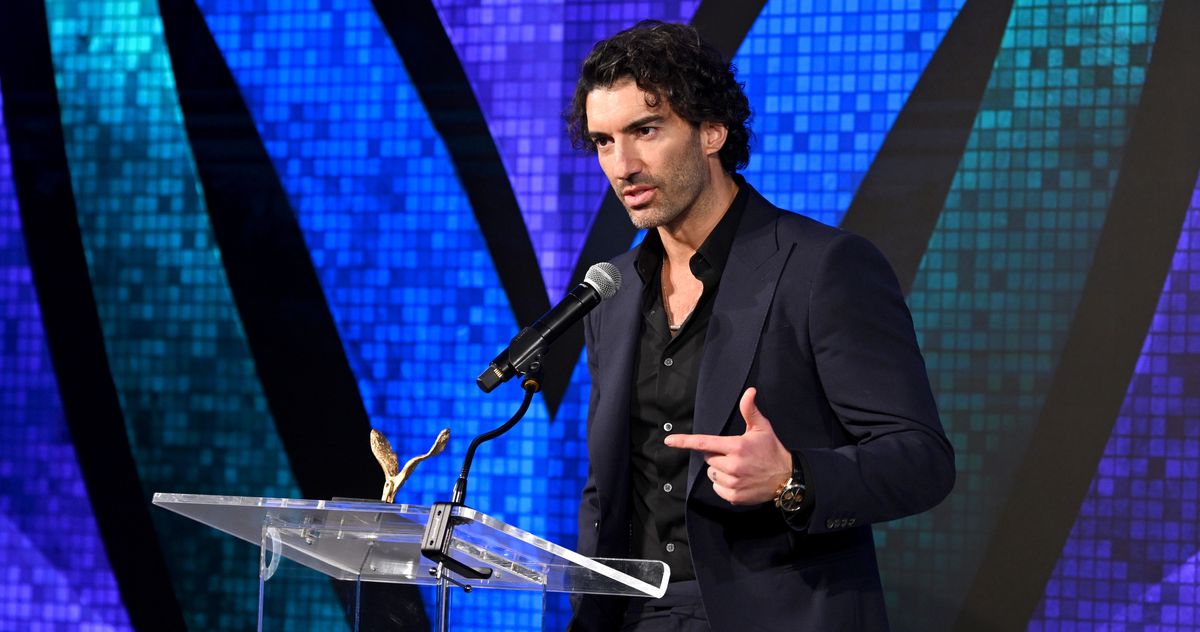
The Context: It Ends With Us, Fandom, and the Deposition
Baldoni is the producer, director, and one of the stars of the 2024 film adaptation of Colleen Hoover’s hit novel It Ends With Us, a romance–drama with a massive TikTok‑fueled fanbase. The movie arrived already under a microscope: Hoover’s work has sparked debate over its handling of domestic abuse and trauma, and the “BookTok to Hollywood pipeline” is now a full‑blown industry stream.
In that environment, Baldoni’s branding as a sensitive, emotionally intelligent “male ally”—amplified by his TED talks and his nonfiction book Man Enough—became part of the marketing story. So when a legal transcript appears to undercut that image, the backlash feels bigger than a single awkward comment.

So, What Is the “Female Gaze” Actually?
The deposition reportedly required Baldoni to define the “female gaze” several times—an excruciatingly literal version of a term that usually lives in think‑pieces and film syllabi rather than legal filings.
At its simplest, the “female gaze” is often described as a way of filming and telling stories that:
- Centers women’s interior lives rather than just their bodies
- Depicts desire and intimacy through emotional subjectivity, not just visual consumption
- Questions or subverts the traditional “male gaze” that treats women as objects for heterosexual male pleasure
The phrase responds directly to film theorist Laura Mulvey’s influential 1975 essay “Visual Pleasure and Narrative Cinema,” which argued that mainstream cinema tends to align viewers with a straight male point of view: women become something to look at, men are the ones who look.
“The female gaze is not just about putting more women behind the camera, but about shifting what and who the camera cares about.”
Importantly, the female gaze isn’t owned by women alone, and not all women automatically embody it. It’s more about perspective, power, and intention than the director’s gender. Men can work within a “female gaze” framework; women can absolutely replicate a traditional male gaze if they’re serving the same structures.

Who “Possesses” the Female Gaze?
One of the trickiest parts of the deposition coverage is the framing of who “has” the female gaze. From an academic standpoint, that’s the wrong question. The gaze is not a permanent badge you wear; it’s a way of constructing images and narratives.
Still, Hollywood loves a logline. Publicity campaigns sometimes present certain male directors as uniquely attuned to women’s inner lives—as if they’ve unlocked an achievement in emotional literacy. That branding can be helpful for selling a romance‑drama, but it can also backfire when behavior off‑screen feels at odds with the image.
When fandoms discuss whether Baldoni “has” the female gaze, they’re really asking whether his directing and on‑set behavior support women’s perspectives and boundaries, or whether “allyship” is more of a marketing pitch than a practice.

The Awkward Baldoni–Lively Detail: Why It Blew Up
The specific anecdote about Baldoni telling Blake Lively that he is circumcised has circulated widely largely because it sounds, on its face, both too intimate and oddly irrelevant to a professional setting. It also sits squarely in that uncanny valley where self‑conscious “wokeness” can start to feel like performance.
In the context of the deposition, this detail became one of several moments used to question Baldoni’s professional judgment and his credentials as a male ally. Online, it morphed into something else: a meme‑ready symbol of oversharing, blurred boundaries, and the hazards of trying to embody a brand of enlightened masculinity 24/7.
When your alleged “feminist king” behavior ends up being dissected in a deposition transcript, the dissonance is hard to ignore.
While the internet loves a pile‑on, it’s also worth noting that court documents are, by design, adversarial spaces. Individual quotes can be stripped of nuance or weaponized, even when they genuinely raise concerns. The ethical question is less about one cringey overshare and more about whether cast and crew felt fully comfortable and respected on set.

Male Ally Branding vs. On‑Set Reality
Baldoni’s image as a thoughtful, emotionally open man didn’t come out of nowhere; it’s been carefully cultivated through books, talks, and social media. That work has resonated with many men who are uncomfortable with traditional macho scripts.
But the deposition highlights a broader tension: when allyship becomes part of a personal brand, any perceived contradiction can feel like a betrayal, not just a misstep. Audiences and collaborators start asking:
- Is this language about “the female gaze” and “safe sets” being backed up by structures and accountability?
- Are intimacy coordinators and consent practices treated as essential, or as optional optics?
- When boundaries are crossed—or even grazed—how quickly are concerns heard and resolved?
Those questions apply far beyond one film or one director. They’re now part of the informal checklist audiences bring to any romance or drama that leans on a progressive reputation.
The Conversation’s Strengths and Weaknesses
The public reaction to the Baldoni deposition has had real value: it’s pushed discussions about gaze, consent, and power into mainstream entertainment spaces that usually stop at “was the chemistry good?”
At the same time, there are clear pitfalls:
- Over‑personalization: Fixating on one man’s awkward comments can obscure systemic issues like how sets are run, who gets to direct major adaptations, and how fandoms are courted or ignored.
- Memefication of serious topics: Turning deposition soundbites into jokes risks flattening what might be legitimate concerns from cast or crew into pure spectacle.
- Concept drift: The “female gaze” is a nuanced theoretical idea; plugged into stan‑culture discourse, it sometimes gets reduced to “does this shot feel like it was made for women?”
The healthiest outcome would be a shift from “Is Justin Baldoni secretly cringe?” to “How can productions build environments where conversations about desire, intimacy, and boundaries don’t have to be litigated after the fact?”
Where This Fits in 2020s Hollywood Culture
The Baldoni discourse lands in a decade where:
- BookTok and stan communities can make or break adaptations before they even shoot
- Audiences expect behind‑the‑scenes conduct to line up with on‑screen messaging
- Streaming wars have intensified pressure to sell stories as “urgent,” “representation‑driven,” and “for the fans”
In that context, language about the “female gaze” becomes both a creative framework and a selling point. When the two don’t match, the backlash can be swift—and, as we’re seeing, preserved in legal records.

Looking Ahead: Beyond the Transcript
The viral life of this deposition says less about one uncomfortable anecdote than about where film culture is headed. Viewers no longer separate “the work” from how it’s made; a romance pitched as emotionally intelligent and woman‑centered will be judged accordingly, from casting to camera angles to call‑sheet dynamics.
As for the female gaze, the most useful way to answer “who possesses it?” may be to flip the question: which projects consistently center women’s agency, pleasure, and subjectivity—and which creators, regardless of gender, are willing to be accountable when they fall short? The next wave of Hollywood storytellers will be the ones who can answer that without needing a deposition transcript to clarify it.
