
Iran’s 2026 World Cup Draw Standoff: Visa Dispute Puts FIFA and the USA Under the Spotlight
Iran plan to boycott the 2026 World Cup draw in the United States after only a small part of their intended delegation received visas, igniting a fresh diplomatic flashpoint that is spilling directly onto FIFA’s biggest stage outside the tournament itself. The dispute raises complex questions about fairness, host-nation obligations, and how politics continues to collide with the global game just months before qualifying campaigns truly intensify.
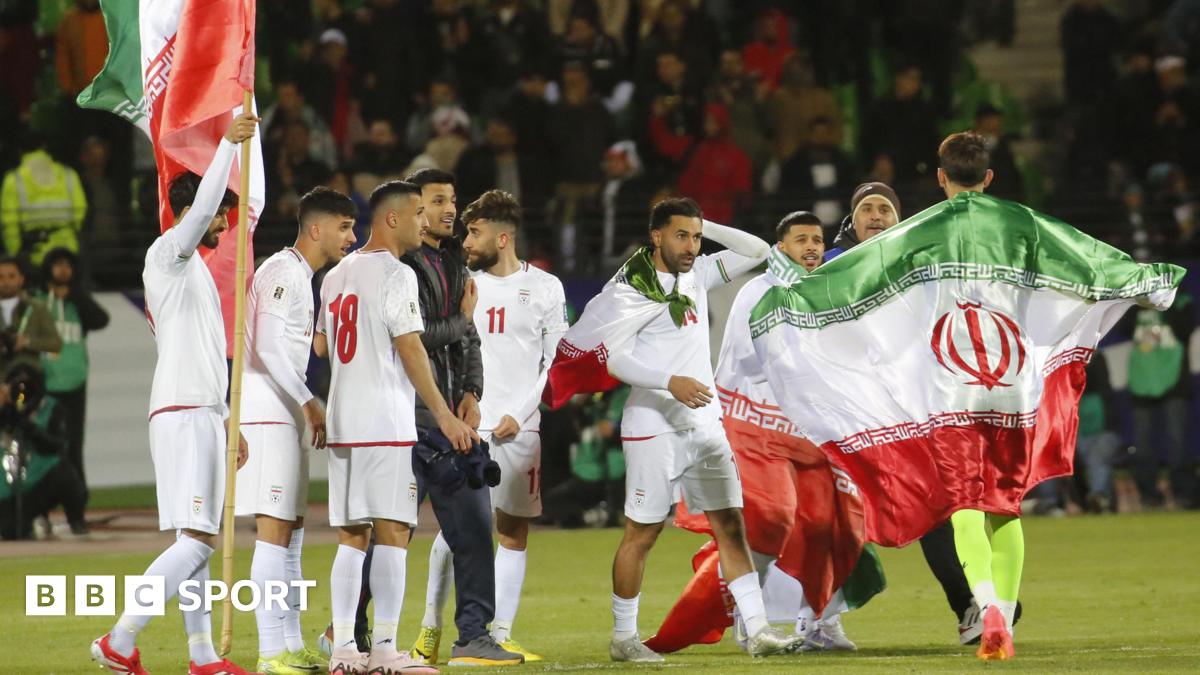
Iran, Visas, and the 2026 World Cup Draw: Football Meets Geopolitics Again
With the 2026 FIFA World Cup draw set to take place in the United States, Iran’s announcement that it will boycott the ceremony over what it calls “limited” visas for its delegation has turned a procedural event into a global headline. According to reports from Iranian media, including the Tehran Times, the U.S. issued only a handful of visas for a delegation Iran expected to be far larger, prompting officials to declare they would not attend the draw in person.
For FIFA, the United States–Mexico–Canada World Cup was meant to be a showcase for the expanded 48-team format and the sport’s booming footprint in North America. Instead, the World Cup draw is now at the center of a dispute involving national policy, diplomatic tension, and the core question of whether every qualified nation can participate fully in football’s flagship event, regardless of politics.
Why Iran Says It Is Boycotting the 2026 World Cup Draw
Iranian officials state that only four visas were granted for their World Cup draw delegation, far fewer than they requested. In the modern World Cup era, these delegations typically include:
- Senior football federation executives
- Coaching and technical staff
- Team operations and logistics coordinators
- Media and communications officers
- Occasionally – political dignitaries or federation patrons
Iran’s football authorities argue that restricting their presence undermines both competitive preparation and symbolic representation at a major FIFA event. Their stance is that attending with a drastically reduced delegation would legitimize what they consider an unfair limitation, so the decision has been framed domestically as a matter of “dignity” and “principle.”
“We cannot accept conditions that treat our federation differently from others. Participation must be on equal terms for all member associations,” an Iranian football official was quoted as saying in local media.
U.S. authorities, bound by national immigration and security laws, have not publicly detailed specific cases, but historically, visa issuance for delegations from sanctioned or politically sensitive states often involves lengthy vetting and, in some cases, rejections or limitations.
Host Nation Obligations vs. Sovereign Visa Rules
Every World Cup host signs agreements with FIFA guaranteeing the entry and safe passage of teams, officials, referees, and accredited media. However, those guarantees must still operate within domestic law and security frameworks. This tension is at the heart of the current standoff.
On paper, the obligations look straightforward:
| Stakeholder | Obligation / Interest |
|---|---|
| FIFA | Ensure all qualified nations can fully participate in official events under equal conditions. |
| Host Nations (USA, Mexico, Canada) | Facilitate entry of teams and officials while complying with domestic immigration and security laws. |
| Participating Federations (e.g., Iran) | Send delegations capable of handling sporting, logistical, and media duties at major events. |
In reality, host nations maintain final say over visas, and FIFA typically avoids direct confrontation with sovereign states, instead advocating behind closed doors. That dynamic often leaves affected federations feeling that their concerns are underrepresented once political sensitivities enter the conversation.
A Familiar Pattern: When Politics Cross the Touchline
Iran is no stranger to politically charged football moments. Over the last few decades, its national team has often found itself at the center of global headlines:
- 1998 World Cup: Iran vs. USA – A historic group-stage meeting dubbed the “most politically charged match in World Cup history.”
- 2010s–2020s Sanctions Era – Difficulties securing sponsorships, equipment, and friendly matches due to international sanctions.
- 2022 World Cup in Qatar – Intense off-field scrutiny surrounding domestic protests, with players and fans under a global spotlight.
This latest episode is part of a broader trend in which international tournaments have become stages for geopolitical friction. From boycotts and bans in Olympic history to recent debates over hosting rights in countries with complex political landscapes, sport’s ideal of neutrality often runs headlong into the realities of international relations.

How a Boycott Could Affect the 2026 World Cup Draw Itself
From a purely sporting perspective, Iran’s physical absence from the draw would not stop FIFA from placing the team in a group. The draw mechanics are designed to function regardless of who is in the room. But there are practical and symbolic implications.
Practical Considerations
- Real-time logistics: Delegates often work immediately with FIFA on travel, training base camps, and fixture adjustments.
- Media obligations: Coaches and captains usually give instant reaction, shaping global perception of their chances.
- Technical planning: Staff gather detailed information on venues, climate, travel times, and kickoff slots.
If Iran’s boycott holds, much of this early-stage coordination will happen remotely, potentially slowing the decision-making that other federations handle on-site. While not a decisive disadvantage in pure football terms, it adds friction to preparation – and in elite international football, margins matter.
Symbolic and Political Signals
A visibly empty Iranian seat at such a high-profile event would send a strong political message, especially if Iran frames absence as a protest not just against the U.S. visa decision but also against what it perceives as insufficient FIFA intervention.
“The draw is as much about ceremony and diplomacy as it is about football. When a country chooses not to show up, that choice echoes far beyond the pots and ping-pong balls,” one international football analyst noted on a global sports broadcast.
Iran’s On-Field Outlook for 2026 Amid Off-Field Turbulence
Away from the politics, Iran remain one of Asia’s most consistently competitive national teams. In recent qualification cycles, they have regularly finished near the top of AFC groups and pushed established European and South American sides in tournament play.
| Tournament | Stage Reached | Notable Result |
|---|---|---|
| 2014 Brazil | Group Stage | Narrow 1–0 loss to Argentina after 90 minutes of disciplined defending. |
| 2018 Russia | Group Stage (4 pts, just behind Spain & Portugal) | Drew 1–1 with Portugal, nearly advancing from a stacked group. |
| 2022 Qatar | Group Stage | Impressive 2–0 win over Wales in a politically charged group. |
On the pitch, Iran’s formula blends disciplined defensive structure with sharp counterattacking play, leveraging technically gifted forwards and physically strong central defenders. The question isn’t whether Iran can compete; it’s whether repeated off-field turbulence eventually seeps into performance.
How Different Stakeholders View the Boycott Threat
The potential boycott has sparked debate well beyond Tehran. From international fans to governance experts, views differ on who bears the most responsibility and what should happen next.
From Iran’s Perspective
- They see the limited visas as a sign of unequal treatment compared with other federations.
- Publicly, the boycott stance taps into national pride and sovereignty narratives.
- Domestically, it can be framed as standing up for national football on the world stage.
From the Host Nation’s Perspective
- Visa decisions are presented as security and law-driven, not event-specific discrimination.
- Officials must balance global event commitments with domestic political and legal constraints.
From FIFA’s Perspective
FIFA is under pressure to demonstrate that it can protect the interests of all 211 member associations, even when geopolitics complicate the picture.
“FIFA must ensure that qualification for its competitions is not just about results on the pitch, but about guaranteed access to all major events linked to those competitions,” a governance specialist at a European sports law institute commented.
The longer the impasse continues, the louder calls may become for clearer, enforceable language in future hosting contracts about guaranteed entry for all federations to all official events.
The Human Angle: Players, Staff, and Fans Caught in the Middle
While headlines focus on federations and governments, players and staff live the consequences most directly. A World Cup draw is more than a formality for them – it’s the moment their next four years of work suddenly take on a clear shape.
For Iranian players, many of whom earn a living in European or Asian leagues, the dream is disarmingly simple: stand on the world stage, test themselves against the best, and represent their people with pride. Political arguments over visas are far removed from the daily ritual of training pitches, gym sessions, and match analysis – yet they can shape everything from travel plans to media perception.
Fans, too, are left in a familiar position: emotionally investing in a team while watching broader forces shape the conditions under which that team competes. The risk is always that sporting narratives – tactical battles, breakout stars, dramatic late goals – get drowned out by off-field noise.
By the Numbers: Iran’s World Cup Profile Heading Toward 2026
To understand why Iran are such a significant presence in Asian football – and why their absence from any official event attracts attention – it helps to look at key performance indicators over recent cycles.
| Metric | Value / Trend |
|---|---|
| Average AFC qualifying position (last 3 cycles) | Top 2 in final qualifying groups |
| Goals conceded per game in AFC qualifying | Among the lowest in the confederation |
| World Cup qualifications since 1998 | 6+ appearances, a model of Asian consistency |
In sporting terms, Iran are exactly the kind of nation the expanded 2026 format is built to showcase: consistently competitive, tactically intriguing, and backed by a passionate fan base at home and in the diaspora.
What Happens Next – and What It Means for 2026
In the short term, attention will focus on three key questions:
- Will Iran and the U.S. find a late compromise on visas? Quiet diplomacy could yet expand the delegation and defuse the boycott threat.
- How far will FIFA go to mediate? Stronger public pressure could signal a shift in how the organization approaches host-nation obligations.
- Could this set a precedent? Future hosts may face clearer, stricter requirements about ensuring practical access for all competing nations.
For now, the football world sits in a familiar position: waiting to see whether off-field negotiations can clear the way for on-field stories to take center stage. Iran’s players and supporters will be hoping that by the time the World Cup kicks off across the United States, Mexico, and Canada, visa rows and boycotts are distant memories rather than defining features of their 2026 journey.
One thing is certain: in a tournament that already promises record crowds, cross-border logistics, and the most expansive field in history, the balance between sport and politics will be under as much scrutiny as any tactical system or star forward. The draw may last only a couple of hours, but the decisions made around it will echo through the entire 2026 World Cup narrative.

For schedules, official statements, and further updates, fans can follow FIFA’s official website and the U.S. Soccer Federation, as well as Iran’s domestic coverage via the Tehran Times and other reputable sports news outlets.
