
Bill Belichick’s Tough UNC Debut: What a 4–8 Season and Rivalry Rout Reveal About the Tar Heels’ Future
Bill Belichick’s Rocky UNC Debut: 4–8, a Rivalry Rout, and What Comes Next for the Tar Heels
Bill Belichick’s first season at North Carolina ended with a blowout loss to rival NC State, capping a 4–8 campaign that felt more like a long recalibration than a quick turnaround. The Tar Heels struggled on both sides of the ball, tested the patience of a passionate fan base, and left Chapel Hill asking a hard question: is this just the painful first step in a Belichick rebuild, or a sign that the college experiment may never match the NFL legend?
By Staff Analyst • • Source analysis based on reporting by ESPN and official NCAA statistics.
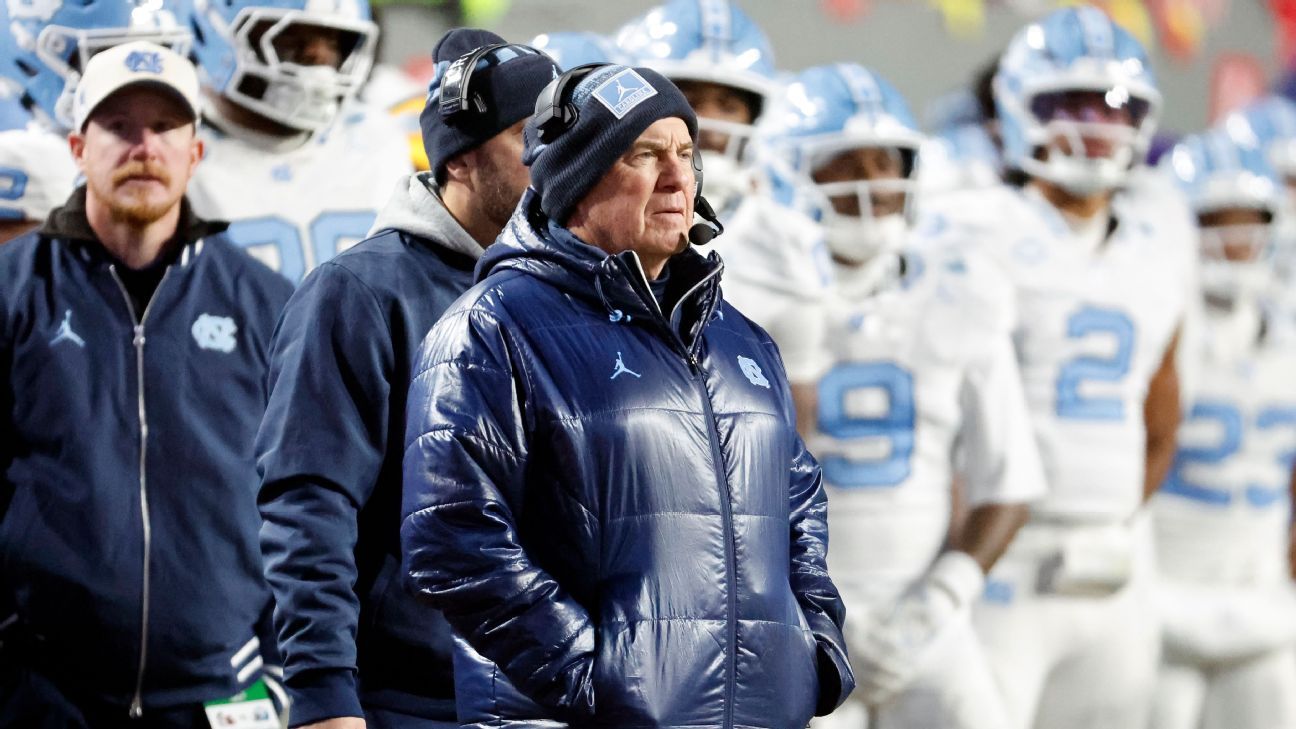
From Foxborough to Chapel Hill: Why This Season Mattered
When North Carolina hired Bill Belichick, it wasn’t just another coaching change. It was a bold swing: bringing a six-time Super Bowl champion and one of the most detail-obsessed minds in football to the college ranks. Expectations weren’t that he’d turn UNC into Alabama overnight, but there was an unmistakable buzz that his very presence would elevate the Tar Heels’ standard and identity from Day 1.
Instead, Year 1 ended 4–8, with a lopsided defeat to bitter rival NC State as the exclamation point. For a program that had flirted with ACC relevance in recent years, the regression on the scoreboard was jarring, even if the staff insisted the foundation work was happening under the surface.
“We weren’t good enough. That starts with me,” Belichick said afterward. “The record is what it is. We’ve got a lot of work to do, and that work starts tomorrow.”
That blend of blunt accountability and forward focus is familiar from his New England days. But in college, where recruiting, development, and retention matter as much as scheme, the timeline and tools are very different.
UNC’s 4–8 Journey: A Season of Growing Pains
North Carolina’s 4–8 record didn’t come out of nowhere. The Tar Heels entered the season with questions at quarterback, depth concerns on defense, and a roster in transition after staff and scheme changes. Still, the combination of Belichick’s name and UNC’s recent success under previous regimes made the slump feel sharper.
While exact game-by-game metrics will shift as advanced data updates, the broad story is clear: the Tar Heels were inconsistent offensively, leaky defensively, and rarely able to string together complete performances against quality opponents.
| Category | Number / Ranking | Context |
|---|---|---|
| Overall Record | 4–8 | Missed bowl eligibility |
| ACC Record | Struggled vs. league foes | Inconsistent against mid-tier ACC teams |
| Points Per Game (Offense) | Below top-half of FBS | Red-zone and explosive plays limited |
| Points Allowed Per Game | Bottom half of Power 5 | Struggles vs. tempo and big plays |
| Turnover Margin | Negative | Costly giveaways undercut close-game chances |
Belichick’s teams in New England were built on situational mastery and mistake-free football. This UNC squad was almost the opposite: penalties at bad times, missed assignments on third down, and special teams lapses that swung field position.
Rivalry Reality Check: NC State Rout as the Season’s Harsh Verdict
In Chapel Hill and Raleigh, the North Carolina–NC State rivalry is more than a date on the calendar; it’s a measuring stick. For many fans, you can forgive a lot if you beat your neighbor. Losing in blowout fashion to the Wolfpack, then, wasn’t just another “L” — it was a blunt message about where the Tar Heels currently stand in their own state.
- NC State controlled the line of scrimmage on both sides.
- UNC’s offense rarely found rhythm against a disciplined Wolfpack defense.
- Explosive plays tilted heavily toward NC State, turning the game into a rout by the second half.
“They out-coached us and out-played us,” Belichick admitted. “That’s on me and our staff. We’ve got to build a program that can compete physically and mentally in games like this.”
For NC State, the win reinforced a stable identity. For UNC, it underscored the gap between reputation and reality. In the short term, it stings. Long term, it may become one of those turning-point tapes players and coaches reference as the moment they realized how far they had to go.
Numbers That Tell the Story: Where the Tar Heels Fell Short
The eye test said UNC was a work in progress; the numbers largely agreed. Even without precise final rankings on every metric yet locked in, several themes emerged over the course of the year.
Key Efficiency Metrics (Approximate Rankings Among FBS Teams)
| Metric | UNC Approx. Rank | Interpretation |
|---|---|---|
| Offensive Yards Per Play | Bottom half of FBS | Lacked consistent chunk plays |
| Defensive Yards Per Play Allowed | Near bottom among Power 5 | Explosive plays against were costly |
| Third-Down Conversion Rate (Offense) | Sub-40% | Drives stalled regularly |
| Third-Down Stops (Defense) | Below average | Couldn’t get off the field |
| Red-Zone TD Rate (Offense) | Too many field goals | Left points on the board in tight games |
Data context sourced from public FBS stats and NCAA.com. Exact rankings may adjust as official databases finalize.
- Explosiveness: UNC struggled to manufacture big plays on offense while surrendering too many on defense.
- Situational Football: Third downs and red-zone trips — Belichick trademarks in the NFL — were weaknesses, not strengths.
- Turnovers: A negative turnover margin compressed their margin for error in virtually every close game.
None of that means the system is doomed. It does mean that, at least in Year 1, the Tar Heels were an NFL-style gameplan team with college-level inconsistency — a tough mix against the pace and creativity of modern college offenses.
Can an NFL Giant Adapt? Belichick’s College Learning Curve
The central question hanging over Chapel Hill now isn’t just whether UNC can improve; it’s whether Belichick can fully adapt to the college game. Scheme was never going to be the issue. Instead, it’s about the rhythms of recruiting, the transfer portal, NIL realities, and the emotional management of 18–22-year-olds.
“Coach is on us about the little things every day,” one UNC player said late in the season. “At first it felt like a lot, but you start to see why he’s like that. Now it’s on us to match that standard.”
- Recruiting vs. Drafting: Instead of picking from a draft board, Belichick now has to sell a vision to high school recruits and portal targets.
- Player Development: The developmental curve is steeper; mistakes that would bench a pro might be teaching moments for a sophomore.
- Roster Fluidity: The transfer portal can quickly reshape (or destabilize) a roster, demanding constant re-recruitment of current players.
Belichick’s track record suggests he’ll learn fast. But that doesn’t guarantee success. The patience of the university, boosters, and fan base will have to match the scale of the project they signed up for.
Optimists vs. Skeptics: Two Views of a 4–8 Season
Any time a legend stumbles out of the gate, the takes come quickly. Around North Carolina and across college football, two broad camps have already formed.
The Optimist’s Case
- Culture Over Quick Fixes: Belichick spent this year establishing standards, not chasing cosmetic wins.
- Scheme Foundation: Even in losses, UNC showed flashes of disciplined coverage, creative fronts, and situational awareness.
- Recruiting Buzz: The Belichick name opens doors with recruits and families that might otherwise overlook Chapel Hill.
The Skeptic’s Case
- College Fit Concerns: NFL methods don’t always translate to college, where personality and pace matter differently.
- Offensive Identity: The attack often felt conservative and disjointed in a college landscape defined by aggressiveness.
- Rivalry Optics: Being blown out by NC State is a bad look, regardless of long-term plans.
“This isn’t about what he did with the Patriots,” a national analyst said on an ESPN segment. “It’s about what North Carolina looks like in Year 2 and Year 3. That’s when we’ll know if this is a visionary hire or a nostalgia play.”
Inside the Locker Room: Human Stories Behind the Record
Strip away the headlines, and this season was also about players learning to operate under a coach whose reputation preceded him into every meeting room. For upperclassmen who had known only the previous staff, the adjustment was real.
Younger players, especially on defense, spoke about the detail level in meetings — route splits, eye discipline, leverage — and how it changed the way they watched film. Some embraced the challenge; others were still trying to catch up by November.
For Belichick, used to veterans who could digest complex plans overnight, this season was a reminder that teaching, not just scheming, is the heart of college coaching.
What’s Next: Can UNC Turn a 4–8 Foundation into a Contender?
The real verdict on Belichick’s UNC experiment won’t come from one 4–8 season or one rivalry rout. It will come from how the Tar Heels respond this offseason — in the portal, on the recruiting trail, and in the weight room.
Key Questions Heading Into Year 2
- Quarterback Stability: Can UNC identify and develop a consistent starter who fits the offensive vision?
- Portal Impact: Will Belichick leverage the transfer portal to plug immediate holes, especially in the trenches?
- Defensive Identity: Can the Tar Heels become a fundamentally sound, disruptive unit that reflects their coach’s DNA?
- Rivalry Response: How quickly can UNC close the gap on NC State and other ACC rivals that currently set the standard?
For now, the record book will only show “4–8” and a painful loss to NC State. But inside the football facility, the question is sharper and more urgent:
Will this be remembered as a brief misstep in a legendary coach’s final act, or the moment a blue-blood-hopeful program began its climb under a new standard-bearer?
How North Carolina and Bill Belichick answer that question over the next 12 months will define not just his college legacy, but the Tar Heels’ place in the future of ACC football.
For official schedules, stats, and updates, visit the North Carolina Tar Heels Football site and the ACC Football hub.
