
Intermittent Fasting 3.0: How Time‑Restricted Eating and Circadian Rhythm Supercharge Metabolic Health
Intermittent fasting has grown up. In 2024–2025, the trend is less about pushing longer and longer fasts and more about embracing a kinder, smarter rhythm: earlier eating windows, steady energy, and deeply satisfying, nutrient‑dense meals. Instead of white‑knuckling through OMAD or ultra‑long fasts, “Intermittent Fasting 3.0” leans into time‑restricted eating, circadian rhythm, and metabolic flexibility—so you can feel fueled, not deprived.
Think of this as upgrading from a crash‑diet mindset to a long‑term way of living and eating that respects your body’s clock. You still enjoy beautiful, flavorful food—just within a consistent daytime window that lets your metabolism, hormones, and sleep work in your favor.

Below, you will find an accessible, science‑aligned guide to Intermittent Fasting 3.0, plus a complete, circadian‑friendly sample day of eating with satisfying recipes, cooking tips, and flexible options for different lifestyles.
Quick Overview: Intermittent Fasting 3.0 Day Plan
Style: Early time‑restricted eating (example window: 8:00 a.m. – 4:00 p.m.)
Best for: General health, improved energy, better sleep, easier adherence
Difficulty: Moderate (easier than OMAD or 20:4; highly adaptable)
Focus foods: Vegetables, fruits, legumes, whole grains, lean proteins, healthy fats
Not ideal for: Pregnancy, history of eating disorders, certain medical conditions, or very high training loads without medical guidance
What Is “Intermittent Fasting 3.0”?
Earlier versions of intermittent fasting glorified extremes: 20:4 windows, OMAD (one meal a day), and multi‑day fasts. The newest wave, often called “IF 3.0”, has shifted toward:
- Time‑restricted eating (TRE): Eating all meals within a consistent daily window (such as 10:00 a.m. – 6:00 p.m. or 8:00 a.m. – 4:00 p.m.).
- Circadian alignment: Front‑loading calories and stopping food intake well before bedtime to match your internal clock.
- Metabolic flexibility: Training your body to switch smoothly between burning carbohydrates and fats, instead of living in a constant “sugar rollercoaster.”
On YouTube, TikTok, and health podcasts throughout 2024–2025, you’ll hear phrases like “early time‑restricted feeding,” “16:8 but earlier,” and “circadian fasting.” The spotlight has moved from “how long can you not eat?” to “how can you eat and live in a way that supports hormones, sleep, and sustainable health?”
The more nuanced message: it’s less about starving yourself, more about when and what you eat—consistently.
Why Earlier Eating Windows Matter (Circadian Rhythm 101)
Our metabolism runs on a 24‑hour rhythm. We’re biologically wired to digest and process food better during daylight and to rest and repair at night. Late‑night meals can nudge blood sugar, insulin, and triglycerides in the wrong direction—even if total calories stay the same.
In 2024–2025, a growing body of research and expert commentary suggests that:
- Eating earlier (e.g., 8:00 a.m. – 4:00 p.m. or 10:00 a.m. – 6:00 p.m.) supports better blood sugar and metabolic markers than late‑night eating.
- Consistency—keeping a similar window daily—may be more important than chasing ever‑longer fasts.
- Sleep and hormones often improve when digestion is mostly done a few hours before bed.
Many people notice steadier energy, fewer evening cravings, and better mornings simply by shifting calories earlier—even when they keep their total intake similar.
Metabolic Flexibility: The Missing Piece
Metabolic flexibility is your body’s ability to glide between fuel sources—burning carbohydrates when they’re available, and comfortably tapping into fat stores between meals or during sleep. With flexible metabolism, you feel:
- Less “hangry” between meals
- More stable energy across the day
- Better workout performance and recovery
The latest IF content emphasizes that this flexibility doesn’t come from extreme restriction. It’s built through:
- Whole‑food carbohydrates like fruit, root vegetables, legumes, and whole grains
- Adequate protein to preserve lean muscle (especially during weight loss)
- Healthy fats—olive oil, nuts, seeds, avocado, and fatty fish—to support hormones and satiety
- Resistance training to signal your body to hang on to muscle and improve insulin sensitivity

When you combine this style of eating with a consistent, earlier eating window, you’re practicing the essence of Intermittent Fasting 3.0.
Who Is Intermittent Fasting 3.0 For—and Who Should Be Careful?
Dietitians and physicians who appear on social media and podcasts are refreshingly clear: fasting is not for everyone. The more ethical, science‑driven voices emphasize:
- Focus on stable energy and sustainable habits, not rapid scale changes.
- Ensure adequate micronutrients and total calories within your eating window.
- Monitor menstrual health, sleep quality, and mood as key feedback signals.
IF and TRE may be inappropriate or require close medical guidance for people who:
- Have a history of eating disorders or disordered eating
- Are pregnant, trying to conceive, or breastfeeding
- Have certain metabolic or endocrine conditions
- Have very high training loads (e.g., endurance athletes) without individualized planning
Popular Time‑Restricted Eating Patterns in 2024–2025
Influencers and health professionals are increasingly recommending gentler fasting ratios that more people can maintain:
- 12:12 – 12 hours eating, 12 hours fasting. A great starting point: for example, 7:00 a.m. – 7:00 p.m.
- 14:10 – 14 hours fasting, 10 hours eating. Popular for general health, easier adherence, and good sleep support.
- 16:8 (earlier) – 16 hours fasting, 8 hours eating, typically finishing by late afternoon or early evening.
Many creators now share “Why I switched from OMAD to 14:10” or “How I made 16:8 earlier and improved my workouts,” reflecting a wider move away from extremes due to fatigue, social stress, and poor gym performance.

A Circadian‑Friendly Sample Day of Eating (Intermittent Fasting 3.0)
To bring all this science to life, here is a practical, food‑loving sample day you can adapt. Imagine you choose an 8:00 a.m. – 4:00 p.m. eating window with a gentle 16:8 rhythm. You’ll enjoy:
- 8:00 a.m. – Protein‑rich breakfast bowl
- 12:00 p.m. – Mediterranean grain bowl lunch
- 3:30 p.m. – Light plant‑forward plate or snack
We will frame this as a “recipe‑style” guide so you can plug and play ingredients you love, while staying true to the principles of metabolic flexibility and circadian alignment.
Ingredients & Equipment for Your IF 3.0 Day
Core Ingredients (1 Person, 1 Day)
For the Breakfast Power Bowl (8:00 a.m.)
- 2 large eggs, boiled, poached, or scrambled or 1 extra 1/2 cup Greek or dairy‑free yogurt for a vegetarian option
- 1/2 cup (120 ml) plain Greek yogurt or unsweetened dairy‑free yogurt
- 1/2 cup cooked whole grains (oats, quinoa, or buckwheat)
- 1 small banana or 1 cup mixed berries (fresh or frozen)
- 2 tablespoons mixed nuts or seeds (almonds, walnuts, pumpkin or sunflower seeds)
- 1 teaspoon honey or maple syrup (optional, for a gentle touch of sweetness)
- Pinch of cinnamon or cardamom (optional, aromatic boost)
For the Mediterranean Grain Bowl Lunch (12:00 p.m.)
- 1 cup cooked whole grains (quinoa, farro, bulgur, or brown rice)
- 1 cup cooked lentils or chickpeas (canned, rinsed, and drained are fine)
- 1 1/2 cups mixed vegetables:
- Cherry tomatoes, cucumber, bell peppers, or roasted veggies
- Large handful of leafy greens (spinach, arugula, mixed salad greens)
- 90–120 g (3–4 oz) grilled chicken breast, tofu, or salmon
- 2 tablespoons extra‑virgin olive oil
- 1 tablespoon lemon juice or mild vinegar
- 1 small avocado, sliced
- Sea salt and freshly ground black pepper, to taste
- Fresh herbs (parsley, basil, cilantro, or mint) for brightness
For the Light Afternoon Plate (around 3:30 p.m.)
- 1 cup crunchy vegetable sticks (carrot, cucumber, celery, bell pepper)
- 1/3 cup hummus or bean dip or 60 g (2 oz) cheese or extra tofu
- The remaining half of your avocado, or 10–12 nuts
Equipment & Tools
- Medium saucepan or small pot (for grains and eggs)
- Non‑stick skillet or pan (for eggs, tofu, or chicken)
- Sharp knife and cutting board
- Mixing bowl and salad tongs or large spoon
- Meal‑prep containers or bowls for serving
- Measuring cups and spoons (to get a feel for portions)

Step‑by‑Step: Building Your Intermittent Fasting 3.0 Day
1. Set Your Circadian‑Friendly Eating Window
- Look at your daily routine and choose a window that allows you to stop eating at least 3 hours before bedtime. Example: if lights out is 9:30 p.m., aim to finish food by 6:00 p.m. or earlier.
- For this guide, we will use 8:00 a.m. – 4:00 p.m. as an example. Adjust by 1–2 hours either way to suit your schedule.
- Commit to keeping this window consistent for at least a week before judging how it feels.
2. Cook Your Whole Grains and Protein in Advance
- Cook grains: Rinse 1–2 cups of your chosen grain (quinoa, brown rice, farro). Cook according to package directions. Cool, then store in an airtight container in the fridge for up to 4 days.
- Prepare legumes: If using canned lentils or chickpeas, drain and rinse well. Pat dry and store in a container. If cooking from dry, cook a larger batch and freeze portions.
- Cook protein: Season chicken, tofu, or salmon with salt, pepper, and a drizzle of olive oil. Grill, bake, or pan‑sear until cooked through, then cool and refrigerate.
3. Assemble the Breakfast Power Bowl (around 8:00 a.m.)
- In a bowl, add 1/2 cup yogurt and 1/2 cup cooked whole grains. Stir to combine; the grains give your bowl a satisfying chew.
- Top with your chosen fruit and 2 tablespoons nuts or seeds.
- Add a drizzle of honey or maple syrup if you enjoy a hint of sweetness, and finish with a sprinkle of cinnamon.
- Serve with 2 eggs (boiled, poached, or scrambled) on the side or chopped over the bowl for a protein boost.

4. Build the Mediterranean Grain Bowl Lunch (around 12:00 p.m.)
- Add 1 cup cooked whole grains to a large bowl as your base.
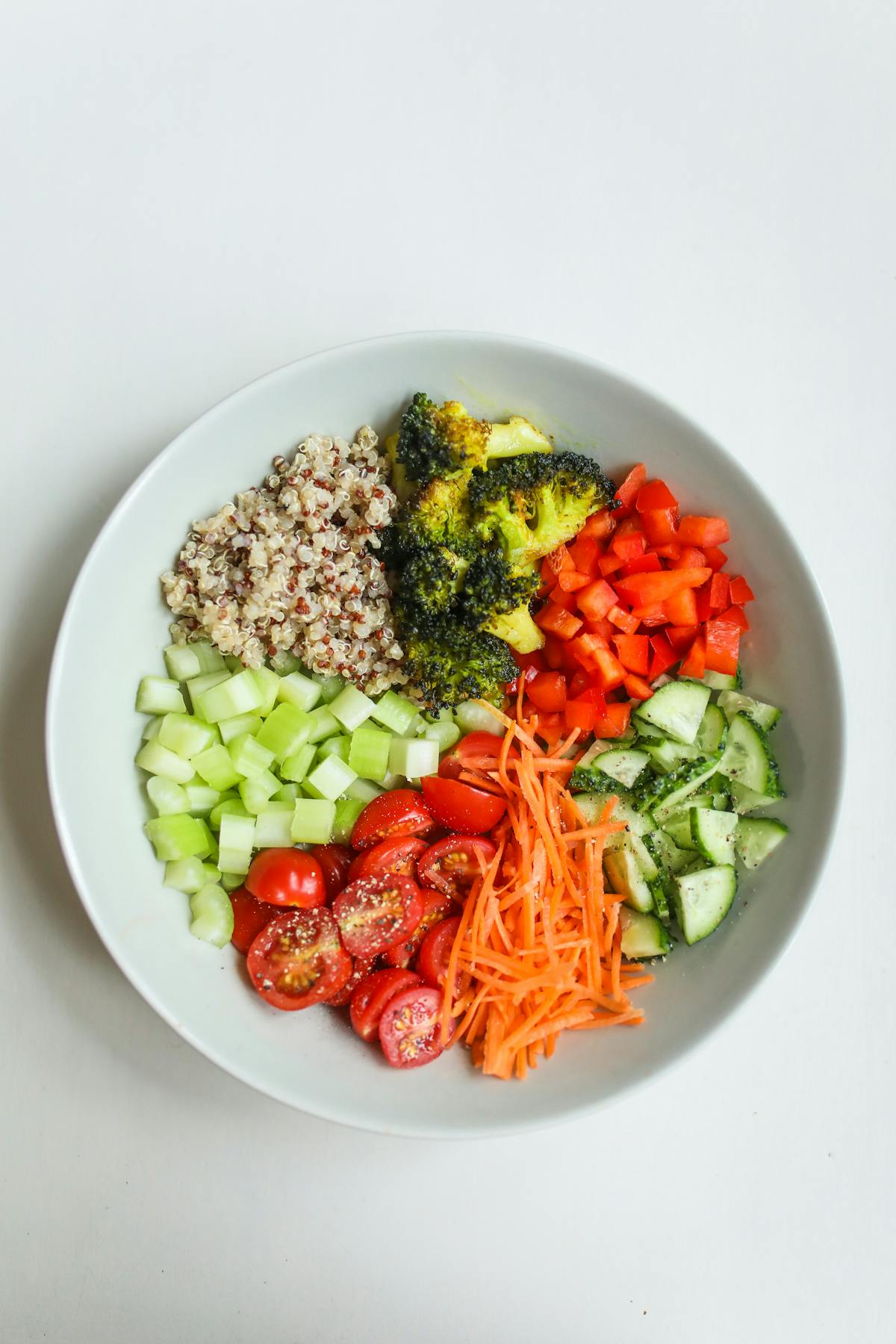
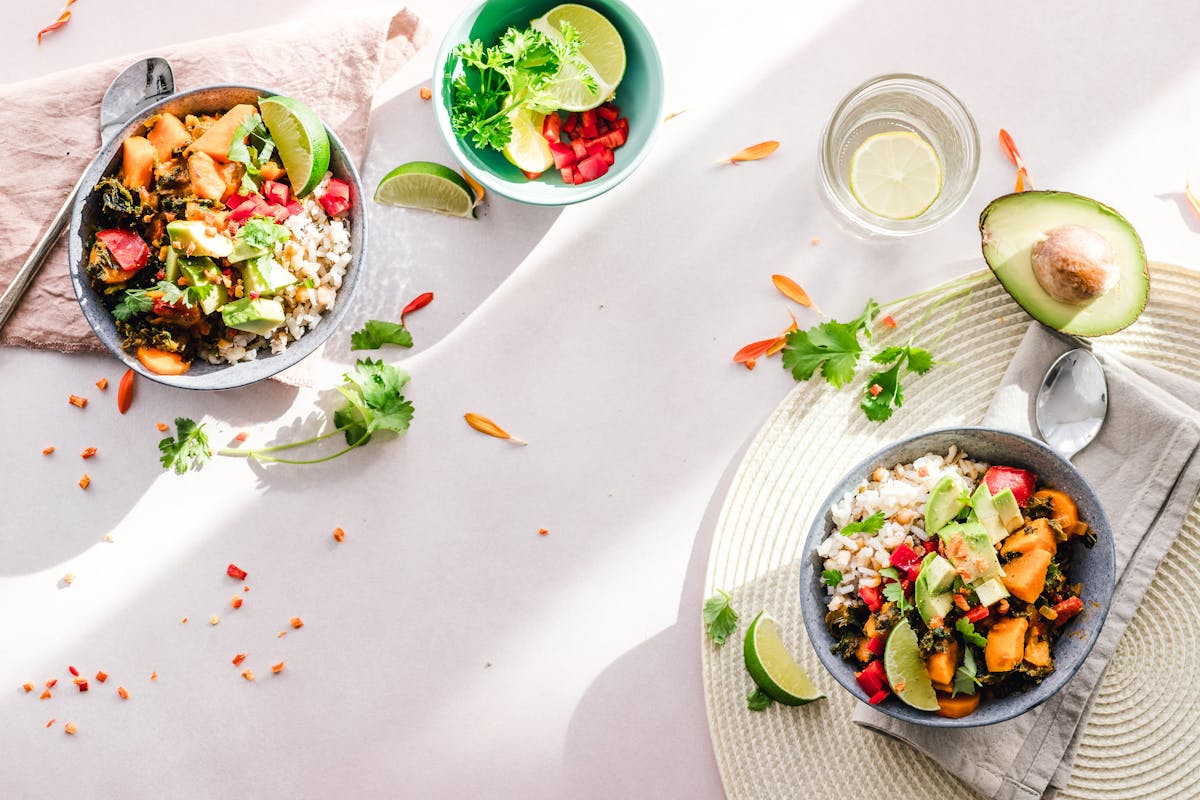
- Top with 1 cup lentils or chickpeas and 1 1/2 cups mixed vegetables. Aim for a rainbow—greens, reds, oranges, and purples.
- Add your protein (90–120 g grilled chicken, tofu, or salmon) and sliced avocado.
- Drizzle with olive oil and lemon juice, then season with salt, pepper, and fresh herbs. Toss gently to coat.
- Taste and adjust seasoning. You want a bright, savory balance with enough olive oil to feel satisfying but not heavy.
5. Prepare the Light Afternoon Plate (around 3:30 p.m.)
- Arrange crunchy vegetable sticks on a plate for texture and freshness.
- Add hummus or your chosen protein (cheese, tofu) for a gentle, satisfying snack that won’t feel too heavy.
- Include the remaining avocado or a small handful of nuts for satiety‑supporting fats to bridge your fast comfortably into the evening and night.

Hydration, Beverages & Supporting Habits
Your fasting window is not a time to punish yourself with thirst. In fact, staying well‑hydrated often makes fasting feel remarkably easy.
- Plain water: Aim to sip steadily throughout the day.
- Herbal tea: Naturally calorie‑free options such as peppermint, rooibos, or chamomile are gentle and soothing.
- Black coffee or tea: Generally considered compatible with fasting for most people when consumed without sugar or cream, but watch for jitters or sleep disruption.
Many creators now highlight complementary habits that pair beautifully with IF 3.0:
- Resistance training 2–4 times per week to support muscle and metabolic health
- Walking after meals to aid digestion and blood sugar control
- Sleep hygiene—dimming lights, screens off before bed, and a consistent bedtime
Substitutions, Dietary Adaptations & Inclusivity
Intermittent Fasting 3.0 is meant to be inclusive—you can tailor the framework to your culture, preferences, and dietary needs.
For Vegetarians & Vegans
- Swap eggs and chicken for tofu, tempeh, edamame, or seitan.
- Use dairy‑free yogurt (soy, coconut, almond) with added seeds or plant protein.
- Lean into lentils, chickpeas, and beans for hearty protein and fiber.
For Gluten‑Free Eaters
- Choose quinoa, brown rice, buckwheat, or certified gluten‑free oats in place of wheat‑based grains.
- Check labels on hummus, sauces, and seasonings for hidden gluten.
For Lower‑Carb or Blood Sugar–Sensitive Patterns
- Increase non‑starchy vegetables and protein, slightly reduce grains or fruit portions.
- Favor berries over very sweet fruits.
- Use extra olive oil, avocado, and nuts to maintain satiety.
Storage, Meal Prep & Reheating Tips
A bit of smart prep makes sticking to an earlier window friction‑free, especially if you work or train during the day.
- Cook once, eat several times: Prepare grains, beans, and proteins in larger batches on one or two days per week.
- Fridge storage: Most cooked grains and proteins keep for 3–4 days in airtight containers.
- Freezer friendly: Extra cooked grains and beans freeze well in flat freezer bags or containers; defrost overnight in the fridge.
- Reheating: Gently reheat bowls on the stovetop with a splash of water or broth, or in the microwave in short bursts, stirring to avoid hot spots.
- Freshen leftovers: Add a handful of fresh greens, herbs, a squeeze of lemon, or a drizzle of olive oil to bring reheated meals back to life.
Serving Suggestions & Complementary Dishes
To keep your IF 3.0 pattern joyful, rotate different flavor profiles while keeping the structure similar:
- Mediterranean morning: Eggs with tomatoes, olives, cucumber, and feta; whole‑grain toast or leftover grains.
- Asian‑inspired lunch: Brown rice or quinoa with tofu, steamed greens, kimchi, and sesame oil.
- Latin‑inspired bowl: Beans, corn, tomatoes, avocado, grilled fish or chicken, cilantro, and lime.
You can also pair your day with:
- Simple soups (vegetable, lentil, miso) during your eating window for warmth and extra veggies.
- Small side salads with olive oil and vinegar to add crunch and color.
Bringing It All Together
Intermittent Fasting 3.0 is less about heroic willpower and more about rhythm: a daily pattern that respects your body’s clock, keeps your plate colorful and abundant, and makes space for both metabolic health and the joy of eating.
If you experiment with an earlier eating window, give yourself time to adjust, and treat each day as data rather than a test of discipline. Notice your sleep, mood, workouts, and cravings. Tweak your window, your meals, and your activity until they harmonize with your real life.
With a bit of planning—and plenty of delicious, whole‑food meals—you can let time‑restricted eating support you quietly in the background while you enjoy vibrant, satisfying food at every meal.
