
Uncovering the Real Story Behind “Dhurandhar” and Major Mohit Sharma
The 2025 Hindi film Dhurandhar, released nationwide in late 2025, has reignited public interest in the life and covert operations of Ashoka Chakra awardee Major Mohit Sharma, an officer of the Indian Army’s elite 1 Para (Special Forces) unit who was killed in action in Jammu and Kashmir in 2009. Marketed as a high‑intensity war thriller inspired by “true heroes,” the movie prompts a central question: how much of what audiences see on screen is rooted in documented reality, and how much is dramatized or entirely fictionalized for cinematic effect?
This article examines available public records, official citations, and credible reporting on Major Mohit Sharma, alongside interviews and publicity material related to Dhurandhar, to assess whether the film is based on real events, where it aligns with known history, and where it departs into speculation or creative storytelling.
Background: The Film and the Real Officer
As of December 2025, Dhurandhar is widely reported in Indian entertainment media as a Hindi‑language action drama that follows a Special Forces officer undertaking high‑risk undercover missions against militant networks. Promotional materials and interviews with the film’s cast and crew describe the protagonist as being “inspired by real heroes of the Indian Army,” with repeated public references to Major Mohit Sharma and his covert persona “Iftikhar Bhatt.” However, the film is not formally presented as a biopic, and its promotional copy generally uses phrases such as “inspired by true events” rather than “based on the true story of Major Mohit Sharma.”
Major Mohit Sharma (1978–2009) served with 1 Para (Special Forces) and was posthumously awarded the Ashoka Chakra, India’s highest peacetime gallantry award, on 26 January 2010. According to his official Ashoka Chakra citation and multiple public tributes by the Indian Army, he conducted several high‑risk counter‑insurgency operations in Jammu and Kashmir, including a covert infiltration of militant networks, before being killed in action during a gunfight in the Hafruda forests of Kupwara district on 21 March 2009.
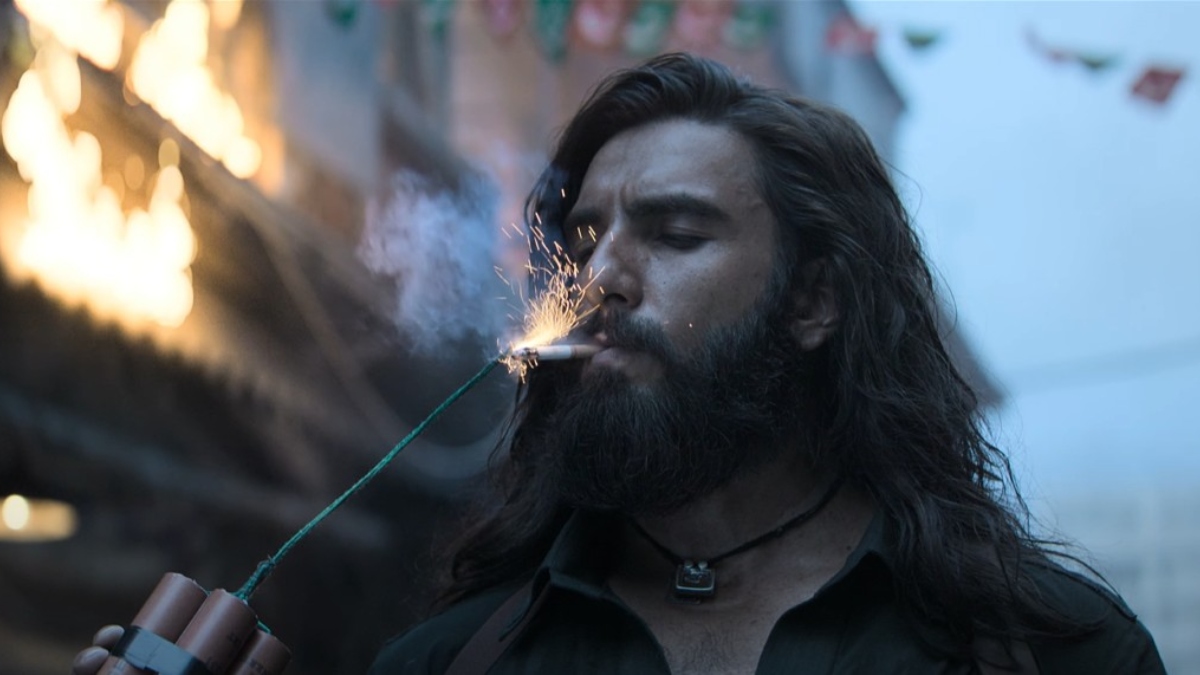
The juxtaposition of these two narratives—a fictional officer on screen and a decorated real‑life soldier—has prompted viewers and commentators to ask how literally the film treats the historical record.
Who Was Major Mohit Sharma? Verified Public Record
Much of what is known publicly about Major Mohit Sharma comes from official Indian government and Indian Army sources released after his death, as well as subsequent journalistic profiles and books on India’s Special Forces. Core facts about his life and service are broadly consistent across these sources.
- Service and unit: Commissioned into the Indian Army, he volunteered for the Parachute Regiment and was part of 1 Para (Special Forces), one of India’s best‑known Special Forces battalions.
- Operational theatre: He served multiple tenures in counter‑insurgency operations in Jammu and Kashmir.
- Covert work: Official and semi‑official accounts describe him infiltrating militant ranks under a false identity, commonly reported as “Iftikhar Bhatt,” to gather intelligence and disrupt planned attacks.
- Final operation: On 21 March 2009, during an encounter with militants in the Hafruda forests in Kupwara district, Jammu and Kashmir, he led his team under heavy fire, reportedly rescuing trapped comrades and eliminating several militants before being mortally wounded.
- Awards: He was posthumously awarded the Ashoka Chakra for “most conspicuous bravery, indomitable courage and supreme sacrifice,” after earlier distinctions including the Sena Medal (Gallantry).
The Office of the President of India’s official Ashoka Chakra citation, along with archived press releases from the Ministry of Defence, constitute the most authoritative public record of these events. These are supplemented by commemorative coverage in Indian newspapers, interviews with family members, and occasional mentions in books on Indian Special Forces operations. Together, they delineate a factual baseline against which Dhurandhar can be examined.

Is “Dhurandhar” Officially Based on His Life?
Publicly available information as of December 2025 indicates that Dhurandhar is not officially designated as an authorized biopic of Major Mohit Sharma. Instead, it appears to follow a pattern familiar in Indian cinema, where filmmakers draw on well‑known incidents or public heroes while presenting the work as a fictionalized narrative inspired by real events.
Entertainment media coverage and promotional interviews, including those carried by mainstream outlets and film magazines, frequently describe the central character as being “inspired by” Sharma’s undercover exploits and his final operation in Jammu and Kashmir. However, there are no widely reported statements from the Indian Army, the Ministry of Defence, or the President’s Secretariat explicitly endorsing Dhurandhar as a factual retelling of Sharma’s life, nor are there publicly accessible notices of any formal collaboration agreements.
In interviews, members of the production team have been quoted as saying they conducted research using “open‑source material, articles and citations” and “conversations with veterans,” while emphasizing that classified details of Special Forces operations were neither accessible nor sought. They position the narrative as a tribute to Special Forces ethos rather than a documentary recreation of any single officer’s service history.
This approach, according to film analysts and military historians interviewed in Indian press coverage, allows the film to dramatize events more freely while sidestepping strict factual obligations expected of an official biographical film on a decorated soldier.
Where the Film Aligns with the Known Story
Despite disclaimers of fictionalization, several key elements of Dhurandhar appear to closely echo publicly known aspects of Major Mohit Sharma’s life and operations, as reconstructed from open sources.
1. Special Forces Identity and Theatre of Operations
The film’s protagonist is portrayed as a Para (SF) officer operating largely in Jammu and Kashmir, leading small teams in high‑risk counter‑insurgency missions in forested and mountainous terrain. This mirrors the documented deployment of 1 Para (Special Forces) and lines up with the geographical and operational context described in Sharma’s Ashoka Chakra citation.
2. Undercover Infiltration of Militant Networks
One of the most widely discussed real‑life aspects of Sharma’s service is his reported adoption of an assumed identity to infiltrate militant ranks in Jammu and Kashmir. Multiple journalistic accounts and veteran recollections describe him operating covertly under a non‑Hindu name to gain the trust of militants and gather intelligence, though details vary and much remains classified or unconfirmed.
Dhurandhar similarly depicts its central character embedding himself within insurgent networks, using a false identity and maintaining a double life. While the film appears to compress timelines and heighten dramatic stakes, the underlying concept of a Special Forces officer infiltrating hostile organizations is clearly drawn from real‑world narratives associated with Sharma.
3. A Final Operation in Forested Terrain Leading to Martyrdom
The climax of Dhurandhar reportedly involves a large‑scale encounter in dense forest, during which the officer leads from the front, protects his men, neutralizes multiple militants, and sustains fatal injuries. This sequence parallels the core storyline in the Ashoka Chakra citation, which describes Sharma advancing under heavy fire in the Hafruda forests, organizing his team, rescuing wounded comrades, and ultimately succumbing to his wounds after eliminating several militants.
While cinematic details—dialogue, visual scale, and exact choreography—are clearly dramatized, the broad outline of a forest encounter culminating in the officer’s death aligns with the official narrative of Sharma’s last operation.
What Appears Dramatized or Exaggerated
Even where Dhurandhar is rooted in recognizable milestones from Sharma’s service, cinematic choices appear to amplify, condense, or embellish events to fit a mainstream thriller framework. Analysts caution that these elements should not be read as historical fact unless independently corroborated.
1. Timeline Compression and Narrative Continuity
The film reportedly presents the undercover arc, multiple operations, and the final encounter as a tightly connected sequence, sometimes implying that the same militants or networks are involved throughout. In reality, Special Forces officers serve multiple postings over several years, and counter‑insurgency operations are typically episodic, involving different cells and circumstances. Public records provide only snapshots, not a continuous narrative.
Film scholars note that such compression is standard in biographical or “inspired by” films, designed to maintain narrative momentum rather than depict operational tempo with documentary accuracy.
2. Personal Life and Characterization
Dhurandhar devotes significant screen time to the protagonist’s relationships, inner turmoil, and moral dilemmas, including scenes of intense confrontation with superiors or civilian authorities. Publicly available information on Major Mohit Sharma’s personal life is limited, with most accounts focusing on his professional conduct, courage, and leadership under fire, as recorded in official citations and respectful media profiles.
There is little verifiable evidence for dramatic interpersonal conflicts or detailed psychological portraits presented in the film. Such elements are widely interpreted by critics as narrative inventions intended to humanize the character and raise emotional stakes rather than as reconstructions from documented testimony.
3. Scale of Operations and Tactical Depiction
Action sequences in Dhurandhar feature large‑scale firefights, extended hand‑to‑hand combat, and visually elaborate set‑pieces. Actual Special Forces operations, according to open‑source military analyses and accounts by retired personnel, are typically characterized by small teams, stealth, brevity, and an emphasis on minimizing collateral damage. While intense firefights do occur, their portrayal on screen is shaped by cinematic convention—slow‑motion shots, prolonged exchanges of fire, and stylized choreography.
Without access to detailed, declassified after‑action reports for the operations associated with Sharma, it is not possible to verify tactical specifics. Observers therefore treat most combat choreography in the film as dramatized, even where broad outcomes are consistent with the official record.
Elements Likely to Be Purely Fictional
Beyond dramatization of known events, Dhurandhar includes plot elements that have no direct counterparts in the public record of Major Mohit Sharma’s life and operations. These should be treated as fictional unless independently substantiated.
- High‑level political conspiracies: The film reportedly hints at or directly portrays senior political or bureaucratic figures as obstructing or exploiting operations for personal or electoral gain. There is no publicly available evidence tying Sharma’s missions to such conspiracies. Experts caution that this is a recurring trope in political–action cinema rather than a documented aspect of his service.
- Specific named militants and organizations: Some antagonists in the movie are composite characters or renamed versions of real groups. Given the absence of detailed official disclosures about the exact organizations and individuals involved in Sharma’s undercover work, these portrayals should be understood as fictional or heavily altered stand‑ins.
- Detailed conversations and undercover episodes: Scenes showing word‑for‑word dialogues between the undercover officer and militants, elaborate initiation rituals, or internal politics of militant camps cannot be cross‑checked against verifiable sources. They are, at best, imaginative reconstructions informed by general reportage on militancy, not by declassified transcripts or recordings.
- Resolution of macro‑level security threats: Storylines where a single operation by the protagonist is shown as decisively ending a major insurgent threat across a region simplify a complex conflict. Long‑running militancy in Jammu and Kashmir involves multiple actors and years of incremental security work; no single operation can be said, in open sources, to have “ended” it.
Film critics and security analysts interviewed in Indian media underscore that such narrative devices reflect commercial storytelling imperatives and audience expectations, not a precise operational history of any individual officer.
Sources, Verification, and What Remains Unknown
Evaluation of Dhurandhar against the real story of Major Mohit Sharma is constrained by the nature of available information. Many operational details of Special Forces missions remain classified for security reasons, and even families of officers often receive only limited official briefings.
Key Verifiable Sources
- Ashoka Chakra citation and official releases: The President of India’s office and the Ministry of Defence have published citations outlining Sharma’s bravery, particularly in his final operation. These documents, accessible via official government portals and archived press releases, form the most authoritative factual backbone of his story.
- Indian Army and regimental tributes: The Indian Army’s official website and regimental commemorations from the Parachute Regiment and 1 Para (SF) occasionally share brief profiles and remembrance notes, confirming his unit, decorations, and broad description of his service.
- Media reports and interviews with family: Established Indian newspapers and news channels have carried anniversary pieces, interviews with Sharma’s family members, and commentary from retired officers. These add personal context but still avoid operational specifics, typically out of both respect and security concerns.
- Books and long‑form journalism: A small number of books and long‑form articles on Indian Special Forces reference Sharma and other officers by name, using interviews with veterans and open‑source research. Even these accounts are careful to omit or anonymize sensitive operational particulars.
Areas Where Information Is Limited or Unavailable
Several aspects of Sharma’s story, heavily featured in Dhurandhar, cannot be independently verified with public data:
- The precise methods, duration, and internal dynamics of his undercover infiltration.
- Names and internal structures of the specific militant cells he penetrated.
- Exact tactical sequences and minute‑by‑minute events of the firefights shown in the film.
- Personal conversations with superiors, peers, and family as depicted on screen.
In the absence of declassified records or corroborated testimonies, any detailed portrayal of these areas—whether in Dhurandhar or elsewhere—remains speculative or fictional, even if loosely inspired by generic patterns of Special Forces operations.
Official institutions have generally refrained from publicly fact‑checking films about security forces, instead reiterating broad tributes to fallen soldiers while avoiding comment on specific plotlines. This leaves audiences to navigate the boundary between homage and history without formal guidance.
Competing Perspectives: Tribute, Interpretation, and Accuracy
Reactions to Dhurandhar among commentators, veterans, and viewers reflect differing priorities: some emphasize emotional resonance and tribute, while others focus on fidelity to the historical record and operational realities.
A. Supportive Views: A Cinematic Salute
Supporters of the film, including segments of the general audience and some retired personnel quoted in the media, view Dhurandhar as a valuable effort to highlight the risks and sacrifices of Indian Special Forces. From this perspective, even if plot details are fictionalized, the film is seen as drawing public attention to the existence of covert operations and the personal cost borne by officers and their families.
“You cannot show an actual operation in a commercial film, but you can convey the spirit of what these officers do,” one retired officer told an Indian news outlet, speaking generally about such movies rather than endorsing any specific title.
Advocates argue that films like Dhurandhar can inspire respect for the armed forces, encourage public interest in national security, and ensure that stories of bravery are not forgotten—even if rendered in stylized form.
B. Critical Views: Risks of Myth‑Making
Critics, including some defence analysts and journalists, warn that blending fact and fiction around sensitive subjects such as counter‑insurgency can blur public understanding of real events. They argue that unsourced or exaggerated depictions of intelligence work, militant networks, and political interference risk creating myths that may overshadow documented history and the more complex reality of conflict zones.
There is also concern that dramatized portrayals of undercover operations may inadvertently trivialize operational security or encourage speculative narratives about ongoing or past missions, which the armed forces and the government are often unwilling or unable to confirm or deny.
C. Audience Perspective: Emotional Truth vs. Historical Truth
For many viewers, the key question is less about literal accuracy and more about whether the film conveys an “emotional truth” about courage, sacrifice, and the burden of service. This perspective treats Dhurandhar as an interpretive work that draws on the broad outlines of Major Mohit Sharma’s story and others like him, without claiming to be a definitive historical record.
Nonetheless, historians and fact‑checkers caution that emotional impact should not replace careful distinction between what is documented, what is inferred, and what is invented, especially when real individuals and conflicts are involved.
Conclusion: A Film at the Intersection of Tribute and Fiction
Taken together, publicly available evidence suggests that Dhurandhar is best understood as a fictional war–thriller that borrows key motifs and milestones from the real story of Major Mohit Sharma and other Indian Special Forces officers, rather than as a strict biographical account. Its broad narrative arc—Para (SF) service in Jammu and Kashmir, covert infiltration of militant networks, and a final act of conspicuous bravery in forested terrain—clearly echoes verified elements of Sharma’s life as outlined in official citations and tributes.
At the same time, many dramatic details—intricate conspiracies, lengthy interpersonal confrontations, specific undercover episodes, and stylized combat sequences—cannot be confirmed by open sources and appear tailored to cinematic expectations. With core operational information remaining classified and official institutions refraining from endorsing specific storylines, audiences are left to navigate the boundary between homage and history on their own.
For those seeking to understand the “true story” behind Dhurandhar, the most reliable guide remains the public record: the Ashoka Chakra citation, official military acknowledgments, and carefully reported journalism. These documents offer a concise, evidence‑based portrait of an officer whose real‑life courage and sacrifice form the solemn foundation on which the film’s more expansive fiction is built.
