
How ‘Weird Weather’ Feeds Climate Anxiety: What Crypto Investors Should Learn About Local Risk Signals
Online conversations about “weird weather” and local climate extremes are exploding, blending real-time eyewitness reports with debates about climate change, infrastructure resilience, and mental health; this article explains how these social data signals intersect with on-chain activity, insurance protocols, and risk pricing in crypto and Web3.
Executive Summary: Why Local Climate Extremes Matter to Crypto & Web3
Spikes in social media posts about heatwaves, flash floods, wildfire smoke, and “unseasonal” storms are no longer just a climate story—they are becoming a measurable data layer that can influence crypto markets, DeFi insurance, and infrastructure financing.
As of December 2025, climate-linked narratives increasingly show up in:
- On-chain insurance protocols (e.g., parametric flood and crop insurance.
- Tokenized climate-risk assets and catastrophe bonds.
- ESG-focused investment screens that include climate resilience.
- Social sentiment models that map “weird weather” chatter to risk-off behavior in local markets.
This article unpacks the rise of “weird weather” conversations, links them to climate risk, then shows how crypto investors, builders, and risk managers can turn these noisy social signals into structured, on-chain intelligence—without falling into hype or pseudo-science.
The Rise of “Weird Weather” as a Real-Time Climate Data Layer
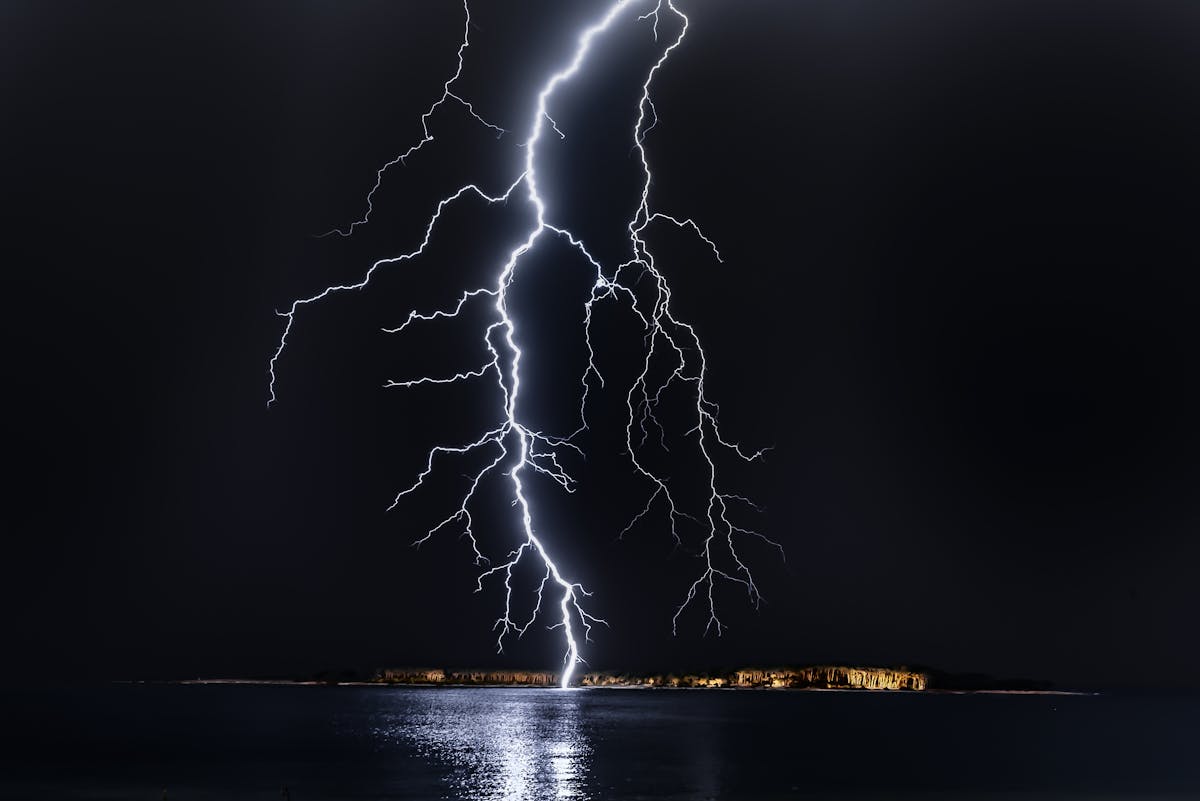
Across X (Twitter), TikTok, Reddit, and search engines, people are documenting local extremes: heat domes over cities, “atmospheric river” storms on coasts, bomb cyclones, late-season frosts, and multi-week smoke events from wildfires. These spikes in online activity now function as crowd-sourced early-warning signals.
From a data perspective, these conversations have several defining characteristics:
- High temporal resolution: Posts appear minutes after an event starts, often beating official alerts.
- Granular geolocation: Neighborhood-level videos and images show which streets flood or which valleys fill with smoke.
- Embedded sentiment: Fear, anger, disbelief, and policy demands are expressed in the same feed as raw observations.
“Every increment of global warming will intensify multiple and concurrent hazards.” — IPCC Sixth Assessment Report
Crypto and Web3 builders are beginning to treat these feeds as a noisy but valuable input to climate-risk oracles, especially when combined with satellite data, sensor networks, and traditional meteorological services.
Key Drivers Behind Spikes in “Weird Weather” Conversations
The surge in online talk about strange local weather is driven by five reinforcing forces. Understanding them helps investors distinguish signal from noise when integrating climate narratives into crypto strategies.
1. More Frequent and Intense Local Extremes
Datasets from agencies like NOAA, Copernicus, and national meteorological offices show an uptrend in record-breaking temperatures, multi-day heatwaves, and clustered extreme rain events. When a heat dome settles over a region or a rare atmospheric river hits a typically dry area, search queries for those terms spike sharply.
2. User-Generated Weather Reporting as a Parallel Network
Social media now acts like a decentralized weather radar:
- Drivers post live video of flooded underpasses.
- Residents share photos of hail damage to roofs and crops.
- Urban dwellers post AQI screenshots when wildfire smoke turns skies orange.
For Web3, this looks very similar to a decentralized oracle problem: many noisy, partially-trustworthy inputs that collectively describe reality faster than centralized feeds.
3. Climate Framing, Skepticism, and Attribution Debates
Rapid climate attribution science can now estimate how much more likely or intense a given event was because of anthropogenic warming. But public discourse is split:
- Some users directly blame climate change for every anomaly.
- Others argue that “weather is always variable,” pointing to historic records.
- Comment threads often devolve into debates over long-term trends versus single events.
4. Infrastructure, Resilience, and Local Governance
Viral posts increasingly focus on how systems fail during extremes:
- Transit rails buckling in heat.
- Storm drains overflowing during short, intense rain bursts.
- Power grids strained by heavy AC demand or downed lines.
This is where on-chain financing tools—like tokenized municipal bonds, climate adaptation DAOs, and DeFi-based resilience funds—can begin to connect digital capital with physical infrastructure gaps.
5. Climate Anxiety and Mental Health
Terms like “climate anxiety,” “eco-grief,” and “disaster fatigue” appear more frequently during extreme events. Therapists, educators, and activists use viral weather moments to discuss coping and community-building.
For crypto communities, this has an underappreciated implication: investor behavior may be shaped not only by macro data but by lived experience of repeated local crises, influencing risk appetite and time horizons.
From Posts to Protocols: Turning “Weird Weather” Chatter into Structured Data
To be useful for DeFi, insurance, or risk modeling, social conversations must be transformed from raw posts into structured signals. This is an ideal domain for crypto-native oracles and data DAOs.

Core Components of a “Weird Weather” Data Pipeline
- Ingestion: Collect posts via APIs, focusing on climate-related keywords and hashtags, plus geotagged content.
- Filtering: Use NLP models to classify content as eyewitness report, opinion, or misinformation.
- Normalization: Map posts to coordinates, time windows, and standardized event categories (heatwave, flood, storm, smoke).
- Cross-validation: Correlate with official weather data, satellite imagery, and IoT sensors.
- On-chain publication: Push aggregated statistics to oracles feeding DeFi protocols or climate-risk dashboards.
A simplified comparison of potential data sources for climate-aware crypto products is shown below.
| Data Source | Strengths | Weaknesses | Crypto Use Case |
|---|---|---|---|
| Official weather APIs (NOAA, ECMWF, etc.) | High data quality, historical depth | Slower updates, coarse granularity | Parametric insurance triggers |
| Satellite imagery | Wide coverage, independent verification | Requires heavy processing, latency | Crop yield and wildfire indices |
| IoT sensors & weather stations | Local accuracy, continuous streams | Hardware costs, maintenance | Hyper-local micro-insurance |
| Social media “weird weather” posts | Real-time, rich sentiment, hyper-local | Noisy, potential misinformation | Early warning, sentiment overlays |
Data DAOs can specialize in sourcing and curating these datasets, tokenizing access, and monetizing analytics feeds for insurers, asset managers, and municipal issuers.
DeFi Insurance, Parametric Payouts, and Local Climate Signals
Decentralized insurance is one of the clearest bridges between “weird weather” conversations and on-chain capital. Instead of relying on slow, subjective claims processes, parametric policies pay out automatically when objective conditions are met.
How Parametric Climate Insurance Works
A typical parametric design looks like this:
- A policyholder buys cover for “rainfall above X mm in 24 hours within 5 km of my farm.”
- The terms are codified in a smart contract on a blockchain (e.g., Ethereum or a layer-2 rollup).
- An oracle continuously feeds rainfall data to the contract.
- If the threshold is breached, the contract releases funds to the policyholder automatically.
Social chatter about flooded roads, damaged crops, or washed-out infrastructure provides ground truth context: it can flag where official measurements may be missing or misaligned with lived impact.

Example: Climate-Linked Coverage Metrics
As of late 2025, on-chain insurance protocols collectively secure billions of dollars in value across multiple chains, with a growing subset experimenting with climate and weather risks. While exact figures vary by source (e.g., DeFiLlama), the conceptual breakdown looks like this:
| Coverage Type | Approx. Share of On-Chain Cover | Typical Oracle Inputs |
|---|---|---|
| Smart contract risk | Largest share | On-chain event logs, audits |
| Exchange & custodian risk | Significant share | Uptime metrics, incident reports |
| Climate & weather risk (emerging) | Small but growing | Weather APIs, satellite, sensors, social data |
Crypto investors allocating to insurance protocols should track how these platforms integrate climate data and whether they can reliably translate social “weird weather” signals into better underwriting, not just marketing narratives.
Climate Sentiment, Local Shocks, and Crypto Market Behavior
“Weird weather” doesn’t just impact physical assets; it can shape local and global risk sentiment. For traders, understanding how climate narratives interact with crypto flows is increasingly important.
Pathways from Local Events to Market Signals
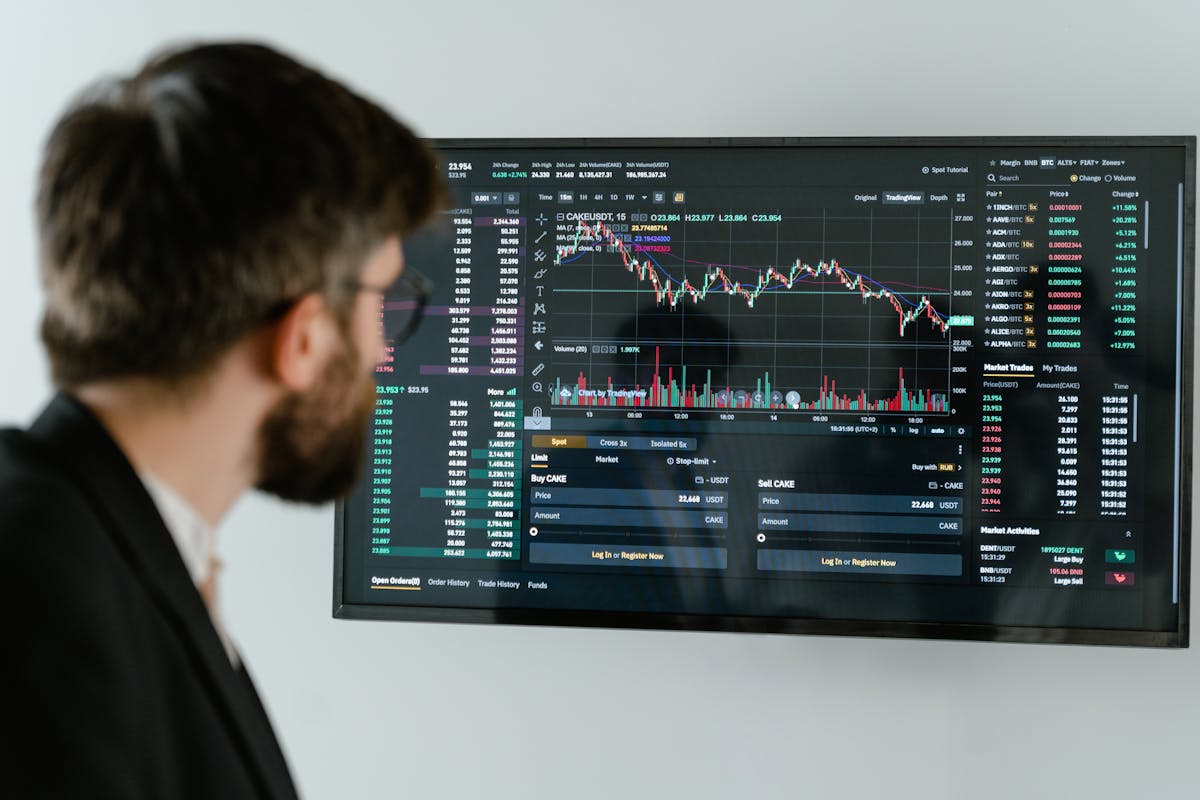
While the relationship is complex and indirect, several plausible pathways link climate extremes to crypto market behavior:
- Energy and mining costs: Heatwaves strain power grids and can impact Bitcoin mining operations in certain regions, altering hash rate distribution and miner profitability.
- Risk-off shifts: When local disasters hit, households and small businesses may reduce speculative activity, impacting local fiat inflows to exchanges.
- Policy expectations: Extreme events can revive debates around carbon pricing, fossil fuel subsidies, and regulation of energy-intensive activities, including mining.
Using “Weird Weather” in Quantitative Models (Without Overfitting)
Sophisticated trading desks and analytics firms may:
- Monitor regional spikes in climate-related search and social data.
- Overlay this with exchange inflow/outflow metrics (e.g., from Glassnode or CryptoQuant).
- Run regressions to see if local extremes plausibly correlate with short-term volume, volatility, or liquidity changes.
Any such framework should be treated cautiously, with robust out-of-sample testing and clear acknowledgment that climate and crypto are both noisy systems; correlation is not causation.
Actionable Frameworks for Crypto Investors and Builders
To use “weird weather” conversations constructively, crypto professionals need disciplined frameworks rather than ad hoc reactions to viral posts.
1. For DeFi and Insurance Protocol Builders
- Design oracle stacks with redundancy: Combine official weather feeds, satellite data, and curated social signals to avoid single points of failure.
- Use governance to tune thresholds: Let token holders or risk committees update parametric triggers as climate baselines shift.
- Reward high-quality reporting: Consider token incentives for verified local reporters or sensor operators, with slashing for fraud.
- Stress-test liquidity: Simulate clusters of climate events and model whether liquidity pools can withstand correlated payouts.
2. For Traders and Portfolio Managers
- Integrate climate risk into macro dashboards: Track major climate anomalies and policy shifts alongside inflation, rates, and FX.
- Segment exposure: Distinguish between protocols directly exposed to climate (e.g., parametric insurers) and those with mostly indirect exposure.
- Avoid narrative chasing: Treat viral “weird weather” events as prompts to review risk, not as trading signals on their own.
- Model physical and transition risk: Consider how both physical events and climate policy responses could affect mining, infrastructure, and regulation-sensitive tokens.
3. For Web3 Communities and DAOs
- Use climate extremes as opportunities for mutual aid experiments (e.g., emergency micro-grants, rapid response funds).
- Document how your DAO’s operations or tokenized assets are affected by local events to build institutional memory.
- Collaborate with scientists and civic groups to ensure data integrity when integrating climate signals on-chain.
Risk, Limitations, and Ethical Considerations
While integrating “weird weather” conversations into crypto systems is promising, it carries serious risks and ethical challenges.
1. Data Integrity and Manipulation Risk
If payouts or trading signals depend on social data, coordinated actors could attempt to manipulate conversations. Robust anti-Sybil defenses, cross-validation with trusted data, and conservative trigger design are non-negotiable.
2. Over-Reliance on Short-Term Anomalies
Individual extremes are poor proxies for long-term climate trends. Protocols should be grounded in multi-decade data and peer-reviewed models, not just the latest viral video.
3. Privacy and Consent
Mining social content for financial purposes raises consent and privacy questions. Builders should:
- Anonymize data where possible.
- Respect platform terms of service.
- Be transparent about how public posts feed into financial products.
4. Equity and Access
Communities with less digital access may be underrepresented in “weird weather” data, even though they can be disproportionately affected by climate extremes. Crypto systems built on such data must account for this bias to avoid reinforcing inequalities.
Forward-Looking Outlook and Practical Next Steps
As climate extremes intensify and digital documentation becomes ubiquitous, “weird weather” conversations will remain a persistent feature of our information landscape. For crypto and Web3, the question is not whether to engage with this data—but how.
Practical Steps You Can Take Now
- Audit your exposure:
Map out which protocols or assets in your portfolio are sensitive to climate risk (mining-heavy, infrastructure-tied, insurance-related).
- Upgrade your data stack:
Incorporate reputable climate datasets and sentiment feeds into your analytics; avoid relying solely on anecdotal posts.
- Engage with climate-tech builders:
Follow climate-oracle projects, ReFi (regenerative finance) protocols, and on-chain insurance innovators via their official docs and governance forums.
- Advocate for standards:
Push for open standards around climate data oracles, disclosure, and stress-testing in the DAOs and ecosystems where you participate.
Investors and builders who can rigorously parse local climate extremes, distinguish structural trends from transient noise, and embed that understanding in smart contracts and risk models will be better positioned as climate volatility and digital finance increasingly intersect.
For deeper reading on climate science, attribution, and impacts, consult resources like the IPCC, NOAA NCEI, and climate data aggregators. For crypto-specific analysis, platforms such as Messari, The Block, and DeFiLlama provide ongoing market intelligence.
