
How the Minecraft Movie Turned Cinemas Into Playgrounds in 2025
The Minecraft Movie didn’t just dominate the 2025 US box office; it turned screenings into something closer to a live event than a traditional trip to the multiplex. Children in blocky costumes, parents bracing for sugar highs, and the now‑infamous “chicken‑jockey” chaos created a kind of colourful anarchy that many cinemas haven’t seen since peak superhero mania. More than any prestige release, this blockbuster based on Mojang’s brick‑building phenomenon quietly became 2025’s most important film because of what it revealed about the future of cinema itself.
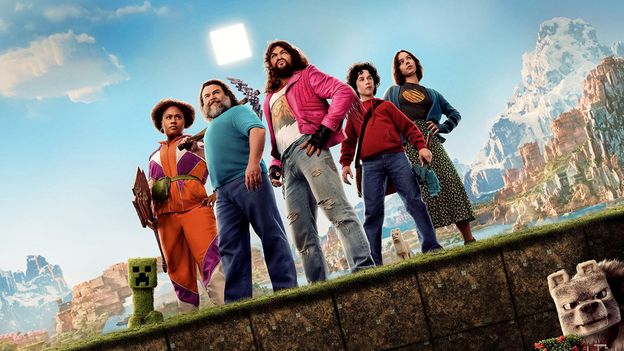
Why a family game adaptation became 2025’s defining cinema event
When critics talk about the “most important” film of a year, they usually mean an awards‑season juggernaut like Oppenheimer or an auteur statement piece. Yet in 2025, the movie that said the most about where theatrical filmgoing is headed was this unapologetically commercial video game adaptation. Its success wasn’t just financial; it was sociological. The Minecraft Movie made cinemas loud again, social again, and – crucially – kid‑first again.
From sandbox game to cinematic sandbox
Minecraft has been one of the most influential video games on the planet for over a decade: a digital LEGO set, a survival sim, and a creative platform rolled into one. Its low‑fi voxel graphics and open‑ended design helped shape a generation’s idea of what “play” looks like – collaborative, expressive, and endlessly remixable.
Translating that into a feature film was always going to be a cultural Rorschach test. Do you try to impose a tight plot on something that thrives on freedom, or lean into the chaos? 2025’s Minecraft Movie landed somewhere in the middle: recognisable characters in a blocky world, but with enough visual gags and kinetic action to feel like a cinematic extension of kids’ own in‑game adventures.
In that sense, the film isn’t just an adaptation; it’s a reflection of how contemporary franchises work. Minecraft isn’t a single story – it’s a shared language. The movie taps into that, encouraging audiences to show up already “fluent” in the universe.
Box office dominance and the new kids’ blockbuster economy
The film’s position at the top of the US box office in 2025 isn’t just another data point in the age of IP. It underscores a shift that’s been brewing since the pandemic: family‑driven titles – especially those tied to gaming and animation‑adjacent worlds – have become some of the safest theatrical bets.
- Built‑in fanbase: Minecraft’s multi‑platform reach (PC, console, mobile) meant the potential audience spanned age groups and demographics.
- Event economics: For cinemas, each family ticket often becomes a cluster of seats plus snacks, making kid‑centric blockbusters box‑office multipliers.
- Merchandising synergy: Toys, books, clothing, and tie‑in content helped keep the film in the cultural bloodstream.
Where a dense historical epic like Oppenheimer speaks primarily to adults, Minecraft functions as a multi‑generational outing: nostalgic parents who recognise the game, kids who live in it, and even teens who grew up watching Minecraft streamers on Twitch and YouTube.

In a year where analysts worried about “superhero fatigue” and IP burnout, Minecraft suggested that audiences weren’t tired of franchises – they were tired of repetition. Give them a fresh texture, a different tone, and a legitimate reason to bring the whole family, and they’ll still show up.
“Chicken-jockey” chaos: when cinema feels like a birthday party
One of the BBC’s most vivid descriptions of the Minecraft Movie’s release was its “chicken‑jockey” chaos – a reference to a notorious in‑game enemy (a baby zombie riding a chicken) and a surprisingly accurate metaphor for the screenings themselves. These weren’t hushed auditoriums; they were more like semi‑supervised playdates with a movie as the backdrop.
“You don’t go to a Minecraft screening expecting reverent silence – you go expecting noise, laughter, and kids half‑acting out the movie in the aisles.”
For some adults, that was a nightmare. For exhibitors, it was gold. The screenings functioned as experiential events:
- Kids showed up in Minecraft‑inspired outfits and accessories.
- Some cinemas organised building competitions or lobby activities.
- Social media feeds filled with short clips of audiences reacting to big set‑pieces.

The key point isn’t that this behaviour was new – kids have been rowdy at matinees for decades – but that studios and cinemas leaned into it rather than resisting. In doing so, they hinted at a future where not every screening aims for the solemnity of awards season fare. Sometimes, the noise is the point.
What the Minecraft Movie says about the future of cinema
Beyond the memes and merch, the film is significant because it crystallises three overlapping industry trends: gamification, eventisation, and community‑first storytelling.
- Gamification of storytelling: Audiences who grew up with interactive worlds don’t just accept linear narratives; they expect them to reference the logic of games. Minecraft’s blocky physics, crafting systems, and in‑jokes give the film a design language that feels familiar to players.
- Event cinema as survival strategy: Theatrical releases can’t compete with streaming on convenience, so they’re betting on experience. Minecraft screenings, with their cosplay, community feel, and social‑media‑ready moments, turn a simple outing into a mini‑festival.
- Fandom as co‑author: Minecraft’s story has always been written by its players. The movie nods to that by feeling less like a definitive canon and more like one possible adventure. Fans respond when they feel a film leaves space for their own imaginations.
In this light, the Minecraft Movie isn’t just one more IP play; it’s a test case for how Hollywood can collaborate with gaming culture instead of just strip‑mining it for names and logos.
Strengths, weaknesses, and the art of the crowd-pleaser
None of this means the Minecraft Movie is beyond criticism. As a piece of storytelling, it operates squarely in crowd‑pleasing mode, sometimes at the expense of depth. The plot largely serves as a delivery system for action beats, visual jokes, and Easter eggs.
- Strengths: A playful tone, accessible humour, and a visual style that translates the game’s aesthetic without feeling cheap.
- Performance energy: Voice and live‑action casting (where applicable) lean into broad, cartoonish archetypes that land especially well with younger viewers.
- Weaknesses: The emotional stakes can feel manufactured, and viewers outside the fandom may find some of the references insular.
“It’s not trying to be Oppenheimer. It’s trying to be the best possible version of a Saturday‑afternoon Minecraft adventure – and mostly, it succeeds.”

From a critical standpoint, it’s more important than it is profound. But importance, in cinema history, often has as much to do with who shows up and how they behave as it does with what’s actually on screen.
Minecraft, Oppenheimer, and two visions of “important” cinema
The contrast with a film like Oppenheimer is instructive. Christopher Nolan’s epic was hailed in 2023 as proof that serious, adult‑oriented dramas could still thrive theatrically. The Minecraft Movie, by sheer force of box office and cultural saturation, makes a complementary argument: that kid‑centric, game‑inflected spectacles might be the backbone of the business.
If Oppenheimer represents the past and present of prestige cinema – formal rigor, complex themes, awards‑season campaigns – Minecraft points toward a future where:
- “Important” means structurally important: the films that keep multiplexes alive.
- Cross‑media franchises (games, shows, movies) blur into one continuous cultural ecosystem.
- Audience participation, from TikTok reactions to lobby events, becomes part of the value proposition.

Neither vision cancels the other out; they’re two ends of a spectrum. What 2025 clarifies is that, in industry terms, a noisy Minecraft matinee might be just as “important” as a hushed 70mm screening – they simply serve different cultural needs.
Watch the trailer and explore more
To get a sense of how the film translates Minecraft’s blocky, DIY aesthetic into blockbuster language, the official trailer is essential viewing.
You can typically find the trailer on the official Warner Bros. Pictures YouTube channel or via the film’s listing on major platforms like IMDb and studio websites. These official sources also provide cast details, production notes, and parental guidance information.
For parents and educators, looking up trusted review aggregators and family‑oriented guides alongside the trailer can help frame whether the film’s tone and intensity match the age group you’re taking to the cinema.
Conclusion: a noisy blueprint for what comes next
The Minecraft Movie will probably never be shorthand for cinematic greatness in the way something like Oppenheimer is. But when future historians look back at how filmgoing survived its streaming‑age identity crisis, this blocky, boisterous adventure will matter. It showed that if you embrace game culture, empower kids as core audiences, and treat cinemas as playgrounds as much as temples, the big screen still has a future.
In other words, 2025’s most important film may not be the one that changed how we think – it might be the one that changed how we show up, together, in the dark.
