
How a Medieval Volcano May Have Sparked the Black Death—and Changed Europe Forever
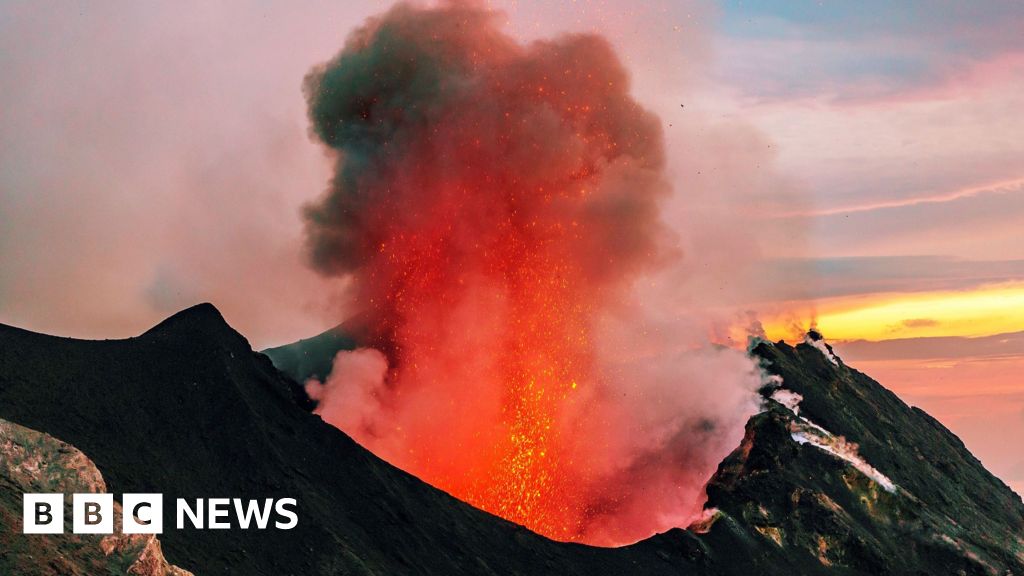
Imagine a massive volcanic eruption on the far side of the world quietly setting off a chain of events that, a few years later, would devastate Europe with one of the deadliest pandemics in history. New research reported by the BBC suggests that an eruption around 1345 might have helped trigger the Black Death, the plague that killed tens of millions and fundamentally reshaped medieval society.
This idea doesn’t replace what we know about the plague bacterium itself, but it adds an important piece to the puzzle: how climate shocks and environmental change can influence disease outbreaks on a global scale.
A New Clue in the Mystery of the Black Death
Historians and scientists have long asked a deceptively simple question: why did the Black Death explode across Eurasia when it did? We know that the disease was caused by the bacterium Yersinia pestis, spread mainly by fleas on rats and through human-to-human transmission in some forms. But that alone doesn’t explain the timing, scale, and speed of the pandemic.
The emerging hypothesis highlighted in the BBC report is that a major volcanic eruption in the mid-1340s may have:
- Injected vast amounts of particles into the atmosphere
- Temporarily cooled parts of the Northern Hemisphere
- Disrupted rainfall and agricultural production
- Stressed ecosystems and animal populations that harbored plague
In other words, the volcano might not have “caused” the Black Death on its own, but it may have pushed an already fragile system over the edge.
What Do We Know About the 1345 Volcanic Eruption?
The eruption in question is thought to have occurred around 1345, likely in the tropics, though its exact location is still under debate. Researchers draw on several lines of evidence:
- Ice cores: Cylinders of ice drilled from Greenland and Antarctic ice sheets contain layers of volcanic ash and sulfur that can be dated very precisely. Around 1345, these records show a strong volcanic signal.
- Tree rings: Trees in parts of Europe and Asia show signs of sudden cooling and shorter growing seasons in the years following the eruption, often visible as narrower rings.
- Historical accounts: Medieval chronicles sometimes describe “strange weather,” failed harvests, and atmospheric phenomena that could be linked to volcanic aerosols.
“What we’re seeing is a convergence of evidence from climate archives and historical records that points to a major disruption right before the Black Death spread across Europe.”
The proposed sequence is that the eruption triggered a short-lived “volcanic winter,” bringing cooler temperatures, shifting rainfall, and widespread crop failures—conditions that can magnify the risk and impact of infectious disease.
From Volcano to Village: How a Climate Shock Can Fuel a Plague
To understand how a distant volcano could be linked to plague in European towns, it helps to think in terms of a chain reaction rather than a single cause.
Step 1: Atmospheric Disruption
Powerful eruptions blast sulfur dioxide and ash into the stratosphere. These particles reflect some sunlight back into space, cooling the surface. This can:
- Lower temperatures over land
- Shift wind and rainfall patterns
- Shorten or destabilize growing seasons
Step 2: Ecological and Agricultural Stress
Cooler, wetter, or more erratic weather can damage harvests. Historical and paleoclimate evidence from the 1340s suggests:
- Repeated crop failures in parts of Eurasia
- Malnutrition and weakened immunity in human populations
- Stress on rodent populations that naturally carry plague
Step 3: Spillover and Spread
When wild rodent populations are disrupted—by climate swings, habitat loss, or food scarcity—fleas may seek new hosts, including commensal rats living near humans. Combined with:
- Expanding trade routes across Asia and Europe
- Crowded, unsanitary medieval cities
- Limited medical knowledge and public health measures
…the stage was set for Yersinia pestis to move quickly along trade networks, ports, and roads, eventually erupting into the catastrophic outbreak we now call the Black Death.
What the Science Says—and What It Doesn’t
It’s important to be clear: scientists are not claiming that the volcano alone “caused” the Black Death. Rather, they see it as a powerful contributing factor in a complex web of causes.
Supporting Evidence
- Climate proxies: Ice cores and tree rings independently point to a major mid-14th-century eruption followed by regional cooling.
- Historical records: Chronicles describing strange weather, famines, and social unrest align loosely with the proposed timeline.
- Disease ecology: Modern studies show that plague dynamics in rodents are sensitive to shifts in temperature and rainfall.
Remaining Uncertainties
- The exact volcano and its location have not been definitively identified.
- The strength and duration of climate impacts vary across different datasets.
- Linking a global climate event to local outbreak dynamics involves assumptions and modeling.
“We’re looking at a highly plausible scenario that connects climate disruption to epidemic risk, but it’s still a hypothesis built on multiple strands of evidence, not a closed case.”
This balanced view matters. Overstating the certainty would be misleading, but ignoring these signals would mean missing an opportunity to understand how environmental shocks can amplify health crises.
How the Black Death Transformed Medieval Europe
Regardless of what triggered it, the Black Death reshaped European society in ways that still echo today. Alongside its enormous human toll, it:
- Disrupted feudal labor systems as workers became scarce and more valuable
- Shifted economic power toward surviving peasants and urban workers
- Encouraged some regions to reform public health and sanitation practices
- Influenced art, religion, and attitudes toward mortality for generations
Why This Matters Today: Climate, Pandemics, and Preparedness
Stories about medieval plagues and distant volcanoes may feel remote, but the underlying lesson is timely: big environmental shocks can interact with social vulnerabilities to create health crises.
Key Takeaways for Our Time
- Health isn’t isolated from the environment: Climate change, deforestation, and habitat disruption all influence how diseases emerge and spread.
- Social systems shape outcomes: Just as medieval trade routes and crowded cities made Europe vulnerable, today’s globalized world can accelerate outbreaks—or help control them.
- Preparedness requires cross-disciplinary thinking: Epidemiologists, climate scientists, historians, and policy experts each hold part of the picture.
The proposed link between a 14th-century volcano and the Black Death doesn’t give us easy answers, but it does deepen our understanding of how intertwined Earth’s systems—and our own histories—really are.
Common Questions About the Volcanic Black Death Hypothesis
Did the volcano directly cause the Black Death?
No. The direct cause of the Black Death was infection with Yersinia pestis. The volcanic eruption is best seen as a potential catalyst that altered climate and ecological conditions in ways that made a large outbreak more likely or more severe.
How confident are scientists about this link?
The link is plausible and supported by multiple types of data, but it remains a hypothesis. Researchers are still working to refine the timing, locate the exact volcano, and model the climate–disease connections more precisely.
Does this change how we view the Black Death?
It doesn’t overturn existing knowledge, but it broadens the frame. Instead of seeing the Black Death solely as a medical or social phenomenon, it encourages us to view it as part of a larger climate and environmental story.
Looking Back to Look Forward
The emerging story of a 14th-century volcanic eruption and the Black Death is a reminder that history is rarely shaped by a single event. Instead, it’s the meeting point of natural forces, human choices, and sometimes, sheer bad luck.
By tracing how a distant geological upheaval may have helped unleash Europe’s deadliest pandemic, researchers are not just solving an academic puzzle—they are offering insights that can help us navigate our own era of climate disruption and emerging diseases with clearer eyes and better preparation.
As our climate continues to change, paying attention to the deep links between environment and health isn’t optional. It’s part of how we build a more resilient future.
