
Forget Melatonin: NASA-Inspired Jet Lag Reset That Helps You Adapt Faster
Traveling across time zones can be exhausting, but new NASA-inspired research is revealing practical ways to reset your internal clock faster without relying on melatonin. By combining light exposure, smart sleep timing, and a few science-backed habits before, during, and after your flight, you can reduce jet lag and feel more present, productive, and energized on your trip.
If you’ve ever landed in a new city feeling wired at midnight and half-asleep at noon, you’re not alone. Jet lag is a biological mismatch between your internal body clock and the local time. While many people reach for melatonin as a quick fix, growing evidence suggests that timing your light exposure and sleep—an approach refined through NASA and military research—may be a more powerful and predictable way to adapt.
In this guide, we’ll unpack how these NASA-inspired strategies work, how you can apply them on your next trip, and what to realistically expect—without hype, and without miracle claims.

The Real Problem: Jet Lag Is Your Body Clock, Not Just “Feeling Tired”
Jet lag (circadian desynchrony) happens when your internal 24-hour clock, anchored in a brain region called the suprachiasmatic nucleus (SCN), is out of sync with local time. This clock regulates:
- Sleep–wake timing
- Core body temperature
- Hormones like cortisol and melatonin
- Digestion, appetite, and even mood
When you cross time zones rapidly—say, Boston to Berlin or Delhi to London—your clock is still “running” on departure time. Your body wants sleep, food, and activity on the old schedule, even while the world around you operates on a different one.
“Jet lag isn’t just fatigue—it’s a full-body misalignment between your internal clock and the external world.”—Sleep and circadian researchers, summarized in reviews from the National Library of Medicine.
Typical symptoms include:
- Insomnia at the destination (can’t fall asleep or stay asleep)
- Daytime sleepiness and “brain fog”
- Digestive upset: constipation, nausea, or reduced appetite
- Irritability, lower mood, and reduced focus
- Reduced physical performance and reaction time
Why “Just Take Melatonin” Isn’t the Whole Answer
Melatonin supplements are widely used for jet lag, and some studies show they can help when properly timed. But they’re not a magic reset button—and they can be mistimed or overused.
Key limitations of melatonin:
- Timing is critical. Taken at the wrong local time, melatonin can actually delay your clock instead of advancing it.
- Dosage confusion. Many commercial products (3–10 mg) are likely higher than what’s needed for a circadian signal. Research often supports lower doses (0.5–1 mg), though ideal dosing varies.
- Not suitable for everyone. Melatonin can interact with certain medications (e.g., blood thinners, immune suppressants) and may not be appropriate in pregnancy without medical advice.
- Doesn’t fix behavior. If your light exposure, sleep schedule, and activity patterns still shout the “old” time zone, melatonin alone can’t fully realign your system.
“Melatonin is a timing signal, not a sedative hammer. It works best when integrated with light and behavior, not used in isolation.”—Paraphrased from circadian specialists in Sleep journal guidance.
This is where NASA-inspired protocols offer a more comprehensive, behavior-first approach that often works as well as, or better than, supplements alone.
The NASA-Inspired Insight: Your Body Clock Runs on Light, Not Pills
Astronauts, military pilots, and mission-critical teams often face extreme schedule shifts and non-standard “days” (like those on the International Space Station). To keep them alert and safe, NASA-backed researchers focus on one central lever: the timing and intensity of light.

Research from NASA and academic partners has shown that:
- Bright light exposure can shift the body clock by about 1–2 hours per day when optimally timed.
- Blue-enriched light (like morning daylight) is especially effective at sending a “daytime” signal.
- Darkness and light avoidance (sunglasses, dim environments, blue-light filters) are just as important as light itself.
These insights led to sophisticated algorithms that can tell astronauts when to seek or avoid light to shift their clocks efficiently. The same principles can be adapted for travelers, simplified into practical steps you can actually follow.
“Light is the primary time cue (zeitgeber) for the human circadian system. Properly timed light exposure can rapidly shift internal rhythms.”—Summary of findings from NASA-supported circadian research published in NASA’s Human Health and Performance resources.
How the Light-Based Jet Lag Reset Works (Without Complex Math)
Behind the scenes, scientists use something called a phase response curve (PRC)—a map of how your internal clock responds to light at different times of day. You don’t need to calculate anything, but the logic is:
- Light before your body’s natural mid-sleep tends to delay your clock (push your sleep later).
- Light after your natural mid-sleep tends to advance your clock (make you sleepy earlier).
For most of us, “mid-sleep” falls roughly in the middle of our typical sleep window. For example, if you sleep 23:00–07:00, your mid-sleep is around 03:00.
To shift your clock:
- Traveling east (e.g., New York → London, Delhi → Tokyo): You need to advance your clock. That usually means:
- Seeking morning light at your destination
- Avoiding late-night bright light before bed
- Traveling west (e.g., Paris → Toronto, Singapore → Dubai): You need to delay your clock. That usually means:
- Seeking late-afternoon / evening light
- Avoiding early-morning bright light initially
Step 1: Pre-Flight Adjustments (Start 2–3 Days Before You Fly)
Easing your clock before you board can dramatically soften the shock on arrival. Even 1–2 hours of adjustment helps.
A. Shift Your Sleep Window Gradually
Aim to move your sleep and wake times by 30–60 minutes per night toward your destination’s schedule.
- Flying east: Go to bed and wake up earlier each day.
- Flying west: Go to bed and wake up later each day.
For a 6-hour eastward shift, you may not fully adjust beforehand, but shaving off 1–3 hours can reduce how “brutal” the first day feels.
B. Time Your Light Exposure at Home
Use daylight or a bright light device (if recommended for you) to start steering your clock:
- For eastbound trips:
- Get bright light soon after waking (20–30 minutes outdoors or in bright light).
- Dim lights and screens in the 2 hours before your (earlier) bedtime.
- For westbound trips:
- Increase evening light exposure (go for a walk before dusk or stay in a well-lit environment).
- Avoid very early bright light if possible; keep mornings a bit dimmer.
C. Align Your Meals and Caffeine
Your digestive system has its own clocks. Start nudging them too:
- Shift meals by 30–60 minutes daily toward destination meal times.
- Avoid very heavy late-night meals as you adjust bedtime.
- Move your last caffeine earlier—ideally at least 8 hours before planned sleep.
Step 2: In-Flight: Treat the Cabin as “Destination Time”
Once you’re on the plane, start living as if you’re already in the new time zone. This is a simple but powerful mindset shift grounded in circadian science.
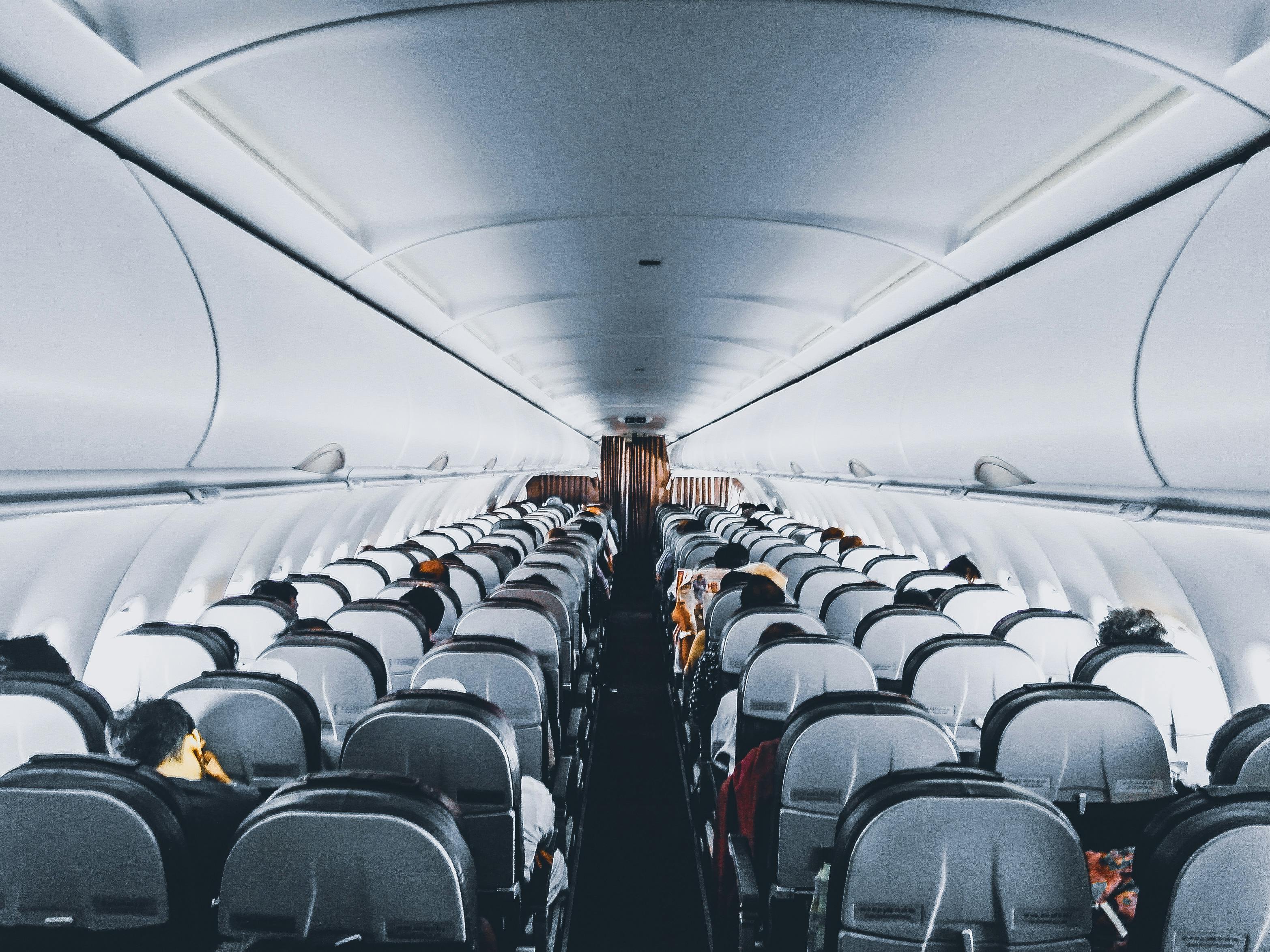
A. Shift Your Watch and Mindset
- As soon as you board, set your watch and phone to the destination time.
- Ask yourself: “Is it night or day where I’m going right now?” Act accordingly.
B. Sleep and Stay Awake Strategically
You don’t need to sleep the whole flight—just pick windows that make sense with your new schedule.
- If it’s night at your destination, use eye masks, earplugs, or noise-cancelling headphones and try to sleep.
- If it’s daytime at your destination, prioritize staying awake, moving around, and hydrating.
C. Manage Hydration, Alcohol, and Caffeine
- Drink water regularly; cabin air is dry and dehydration worsens fatigue.
- Limit or avoid alcohol; it fragments sleep and can worsen grogginess.
- Use caffeine strategically—only when it would be morning or early afternoon at your destination, not “middle of the night” there.
Step 3: On Arrival: Use Light Like a Precision Tool
The first 48–72 hours after landing are crucial. This is where NASA-like protocols really shine: you’ll use light exposure (and avoidance) to nudge your clock in the right direction.
A. For Eastbound Travel (You Need to Fall Asleep Earlier)
Example: Boston → Berlin, New York → London, Mumbai → Singapore.
- Prioritize Morning Light:
Within 1–2 hours of local wake time, get 20–45 minutes outside or in very bright light. This helps advance your clock. - Avoid Late Night Brightness:
For the first 2–3 nights, keep evenings dim. Reduce overhead lights and screen brightness, or use blue-light-reducing modes. - Cap Your First-Day Nap:
If you must nap, keep it to 20–30 minutes and avoid napping after mid-afternoon local time. - Eat on Local Schedule:
Have breakfast, lunch, and dinner close to local times, even if your appetite is off. Favor lighter, easily digestible meals at first.
B. For Westbound Travel (You Need to Stay Awake Later)
Example: Berlin → Boston, Tokyo → Delhi, London → Toronto.
- Seek Late-Afternoon and Evening Light:
Spend time outdoors or in bright environments from mid-afternoon to early evening to help delay your clock. - Avoid Very Early Morning Light (Initially):
If you wake up too early (e.g., 03:00–04:00), keep lights low and avoid screens until closer to a reasonable wake time. - Push Bedtime Gradually:
On the first night, try to stay up at least until 21:00–22:00 local time, even if you’re sleepy. - Timed Caffeine:
Use small amounts of caffeine in the late morning or early afternoon if needed, but avoid it within 7–8 hours of your intended local bedtime.
A Real-World Example: Cutting Jet Lag in Half on a 6-Hour Eastbound Flight
Consider a frequent business traveler flying from New York to London (5-hour time difference) for a 3-day meeting. In the past, they arrived exhausted, waking at 02:00 and hitting a wall by mid-afternoon.
Using a simplified NASA-inspired protocol, they tried this:
- Three days pre-trip: shifted bedtime and wake time earlier by ~45 minutes each night.
- Increased morning light exposure at home; dimmed lights after 21:00.
- On the overnight flight: slept during the “second half” of the flight when it matched London’s early morning hours.
- On arrival: took a 20-minute nap around 14:00, got at least 30 minutes of outdoor light each London morning, and avoided screens after 21:30.
Outcome? They still felt off the first day—but reported functional energy for meetings and more normal sleep by night two, rather than still battling severe jet lag on day three. That’s not a miracle cure, but it’s a meaningful improvement rooted in realistic biology.

Common Obstacles—and How to Work Around Them
Even with a great plan, real life can get in the way. Here’s how to stay flexible without giving up the benefits.
1. “My Work Schedule Is Rigid”
If meetings or events dictate your schedule, focus on what you can control:
- Get at least one solid dose of light at the right time each day (morning for eastbound, late afternoon/evening for westbound).
- Anchor a consistent sleep window, even if slightly shorter than ideal, instead of wildly varying bedtimes.
2. “I Can’t Sleep on Planes”
- Still mimic destination time by staying awake during destination “daytime.”
- Use the first night at your destination as your main adjustment window—prioritize an early, consistent bedtime and morning light.
- Short daytime naps (20–30 minutes) are okay if they keep you functional.
3. “I’m Traveling with Kids”
Children’s clocks can be more sensitive, but the same principles apply:
- Shift bedtimes by 15–30 minutes in the days before travel.
- Use morning outdoor time after eastbound flights; late afternoon outdoor play after westbound flights.
- Protect at least one core sleep window, even if it starts a bit earlier or later than ideal on day one.
What the Science Says: Evidence Behind Light-Based Jet Lag Strategies
A growing body of peer-reviewed research supports light and carefully timed behavior as central tools for jet lag management:
- Light timing for circadian shifts: Studies in journals like Proceedings of the National Academy of Sciences show how strategically timed light can shift human circadian rhythms by several hours.
- Jet lag guidelines: The Sleep Foundation and Cleveland Clinic highlight light exposure, gradual schedule shifts, and limited melatonin as core strategies.
- NASA & spaceflight research: NASA-supported work on the ISS and in shift-work simulations has led to tailored light environments and schedules to maintain alertness and circadian alignment in astronauts.
Evidence to date suggests that structured sleep–wake scheduling, appropriately timed light exposure, and, when suitable, low-dose melatonin can meaningfully reduce jet lag severity for many travelers—especially when used together.
Still, individual responses vary. Genetics, age, underlying health, and how rigorously you follow the plan all affect results. Think of this not as a guarantee, but as stacking the odds in your favor using the best current evidence.
Your Quick-Reference Jet Lag Reset Plan
Here’s a condensed checklist you can screenshot or save before your next trip.
2–3 Days Before Travel
- Shift sleep by 30–60 minutes per day toward destination time.
- Time light exposure: morning for eastbound, evening for westbound.
- Gradually shift meal times; move last caffeine earlier.
During the Flight
- Set your devices to destination time.
- Sleep when it’s “night” at your destination; stay awake when it’s “day.”
- Hydrate regularly; go easy on alcohol and late “destination night” caffeine.
First 48–72 Hours After Landing
- Get bright outdoor light at the right times (morning for eastbound, late afternoon/evening for westbound).
- Keep nights relatively dark; limit screens close to bedtime.
- Use short naps only if needed, and avoid them late in the day.
- Eat on local schedule, focusing on lighter, balanced meals at first.
Moving Beyond Melatonin: Build Your Own NASA-Inspired Jet Lag Playbook
Jet lag may never disappear entirely, especially on long-haul, multi-time-zone trips. But by borrowing principles from NASA and circadian science—light timing, gradual schedule shifts, and smart in-flight habits—you can turn a miserable ordeal into something far more manageable.
You don’t need perfection. Even if you:
- Shift sleep by an hour or two before departure,
- Act on destination time in the air, and
- Get strategic light and darkness the first couple of days,
…you’re already doing more than many frequent flyers—and you’re likely to feel the difference.
Next trip, instead of only packing melatonin, consider packing a plan:
- Pick your destination’s time zone and count the hours of difference.
- Choose eastbound or westbound strategies from this guide.
- Commit to 3–5 days of light, sleep, and meal adjustments.
Your future self—alert in that morning meeting or fully awake for that first sunset—will thank you.

