
Farewell to a Visionary: How Bahram Beyzai Shaped the Soul of Iranian Cinema
Bahram Beyzai, one of the defining figures of Iranian cinema and theatre, has died in the United States at the age of 87. His passing comes at a moment of renewed global recognition, with a BBC Archive–restored copy of his landmark film Bashu, the Little Stranger winning an award at this year’s Venice Film Festival. It’s a bittersweet symmetry: international celebration of his work arriving just as the artist himself exits the stage.
Beyzai was more than a director; he was a cultural institution—screenwriter, playwright, scholar of Persian drama, and mentor to generations of Iranian artists. To understand why the tributes flooding in from Tehran to Los Angeles feel so personal, you have to look at how his films and plays have threaded through both Iran’s turbulent modern history and the evolution of world cinema.
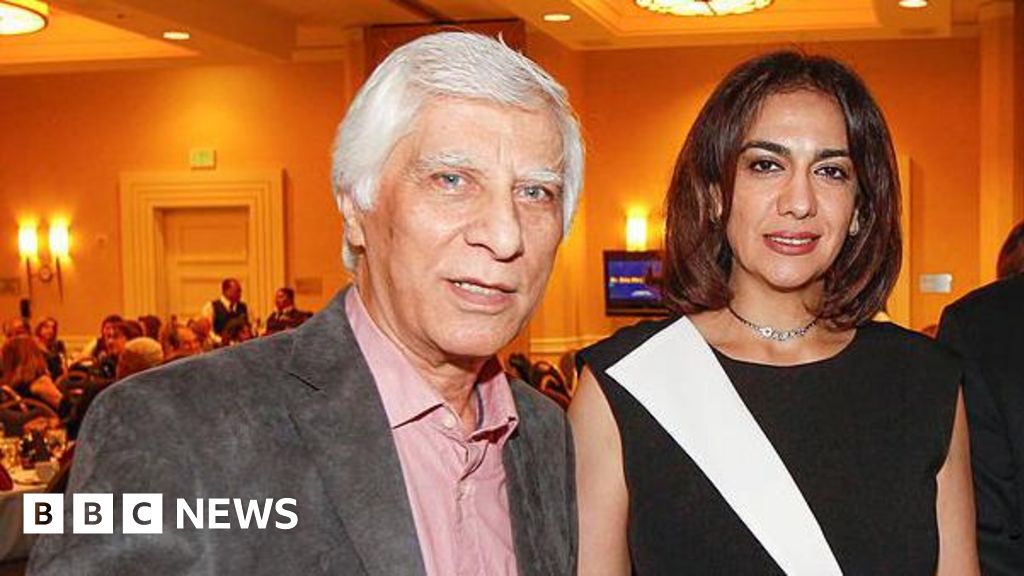
Bahram Beyzai in Context: A Giant of Iranian New Wave Cinema
To place Beyzai properly, you have to zoom out to the Iranian New Wave of the 1960s and 70s—a movement that brought a poetic, allegorical, and politically charged sensibility to the screen. Alongside figures like Abbas Kiarostami, Dariush Mehrjui, and Sohrab Shahid Saless, Beyzai helped define a cinema that could be both fiercely local and strikingly universal.
Unlike some of his contemporaries, though, Beyzai arrived at film with a deep grounding in theatre and classical literature. He was famously obsessed with Persian mythology, ritual performance, and pre-Islamic history, mining these sources to build modern stories that felt timeless and unnervingly current.
“Beyzai’s films are like dreamt histories—deeply Iranian, yet legible to anyone who has ever felt like a stranger in their own land.”
— A commonly cited summation in Iranian film criticism
“Bashu, the Little Stranger”: A Restored Classic Crowned in Venice
The renewed spotlight on Beyzai this year revolves around Bashu, the Little Stranger, his 1986 masterpiece about a young boy from Iran’s war-torn south who finds refuge in the lush northern countryside. The BBC Archive’s restored copy receiving an award at the Venice Film Festival underscores how relevant the film still feels—decades after the Iran–Iraq War, and in an era when displacement, migration, and cultural friction dominate headlines.
Shot with a lyrical realism, the film weaves together themes of ethnicity, language, and trauma. Bashu, dark-skinned and Arabic-speaking, is suddenly dropped into a largely Persian-speaking, rural community. The story could have been didactic, but Beyzai stages it as a delicate human drama, full of humor, suspicion, tenderness, and the slow work of mutual recognition.
The Venice recognition matters not just as a nostalgic nod to a classic, but as a reminder of how far ahead of his time Beyzai was. In the current conversation about representation and intersectionality, Bashu feels startlingly contemporary: a film that addresses race, regional inequality, and gender (through the fierce, resilient mother figure) without ever resorting to slogans.
Myth, Theatre, and Power: The Signature Themes of Beyzai’s Work
Beyzai’s films and plays are instantly recognizable—not because they repeat themselves, but because they share an almost theatrical intensity and a fascination with performance itself. Characters in his work are often caught between roles imposed by society and identities they’re struggling to articulate.
- Myth and Folklore: Beyzai raided ancient epics, folk tales, and religious narratives, not as nostalgia but as raw material to critique contemporary power structures.
- Women at the Center: Many of his key works foreground complex, morally ambiguous women who resist victimhood without being simplified into symbols.
- History as Echo: Rather than literal historical dramas, he preferred stories where the past echoes through the present, suggesting cycles of oppression and resistance.
- The Stage Within the Frame: Even in his films, you often feel the ghost of the stage—formal compositions, ritual-like blocking, and characters who seem aware of how they’re being watched.
“I do not recreate the past to escape the present. I summon it to ask why we have repeated the same mistakes.”
— Bahram Beyzai, in a widely cited interview about his historical dramas
Beyond the Camera: A Titan of Iranian Theatre and Scholarship
In Iran, Beyzai was at least as revered for his theatre as for his films. He wrote a series of plays that reimagined Persian history and folklore, but he also produced rigorous scholarly work on the roots of Persian theatre, tracing connections to ritual, religious ceremonies, and oral storytelling.
This dual identity—as both practitioner and theorist—gave his work a density that could be both rewarding and challenging. His plays are not the sort of scripts that directors casually cut apart; they’re meticulously structured, linguistically rich, and steeped in symbolism. That has made him a touchstone in academic circles, particularly among those studying Middle Eastern theatre and performance.
Censorship, Exile, and the Politics of Being an Artist
Beyzai’s relationship with Iranian authorities—both before and after the 1979 revolution—was complicated. His films often pushed against official narratives, and several faced censorship, delayed releases, or muted promotion. Over time, and particularly in the 2000s, his position in Iran became increasingly precarious, leading him to spend more time abroad, notably in the United States, where he continued to write, teach, and stage work.
That semi-exile gave his later career a bittersweet cast: beloved at home, but frequently working far from the audiences who first embraced him. It also turned him into a symbolic figure for a generation of Iranian artists negotiating life between Tehran, diaspora communities, and the global festival circuit.
“For many of us, Beyzai represented the path not taken—what Iranian cinema might have looked like if its greatest talents had been free to work without constraint.”
— Comment from an Iranian critic in the wake of his death
Legacy and Influence: How Bahram Beyzai Changed Iranian Cinema Forever
Within Iranian cinema, Beyzai’s influence is almost infrastructural. Directors and screenwriters may not imitate his visual style directly, but they work in a landscape he helped invent—where allegory, myth, and personal psychology can occupy the same frame, and where women and children are often the moral and emotional center of the story.
Internationally, his reputation has been slower to catch up, overshadowed at times by the festival-friendly minimalism of Kiarostami or the socially urgent realism of Jafar Panahi and Asghar Farhadi. The Venice accolade for the restored Bashu is a corrective: a reminder that Beyzai belongs in any conversation about the great auteurs of late 20th-century world cinema.
- He broadened the thematic range of Iranian film, legitimizing historical and mythic narratives as vehicles for modern critique.
- He strengthened the bridge between theatre and cinema, showing how stagecraft and film grammar can feed each other.
- He left behind a generation of students, collaborators, and admirers who carry his techniques and obsessions into new media.

A Balanced View: Strengths, Challenges, and How to Approach His Work
As revered as Beyzai is, his work isn’t always easy viewing. The density of symbolism, the deliberate pacing, and the theatrical dialogue can feel demanding, particularly if you’re coming from slick, fast-cut contemporary cinema. Some younger critics argue that a few of his works risk entombing women and historical figures in symbolism, even as they try to liberate them.
Yet those same qualities are core to his power. Beyzai assumes his audience can handle complexity—that they’ll meet the film or play halfway, filling in cultural and historical blanks. Approached with patience and curiosity, his best work is richly rewarding, unfolding in layers on rewatch or reread.
- Best entry point for newcomers: Bashu, the Little Stranger, thanks to its emotional clarity and restored visuals.
- For theatre lovers: Seek out filmed or staged versions of Death of Yazdgerd.
- For scholars: His theoretical writings on Persian theatre are essential, though more niche.

After Beyzai: Memory, Restoration, and the Future of Iranian Cinema
Bahram Beyzai’s death closes a chapter, but the timing of the Venice award for the restored Bashu, the Little Stranger suggests a different narrative: one in which his work moves into a new life, widely accessible, properly restored, and freshly contextualized for audiences who may not remember the political and cultural conditions he was writing against.
The real test of a filmmaker’s legacy isn’t just how often they’re cited, but whether their work continues to provoke, console, and inspire. On that front, Beyzai’s future looks secure. In Iran, his films and plays will remain a reference point for artists navigating censorship, tradition, and global visibility. Abroad, restorations and retrospectives will slowly bring his name into more mainstream film conversations.
If there’s a fitting way to honor him now, it’s probably this: seek out the work, watch it with the care it demands, and let its questions about identity, power, and belonging echo beyond the closing credits. Beyzai may be gone, but the worlds he built on screen and stage are very much alive—and still asking what it means to be a stranger, and a storyteller, in a changing world.
