Cozy Minimalism: How to Make Your Home Calm, Comfy, and Completely Clutter-Smart
Cozy minimalism is the design world’s equivalent of “I want my life together, but I also want snacks and naps.” It’s the warm, lived‑in cousin of minimalism that says: yes, we love clean lines and clear surfaces, but we also own blankets, coffee mugs, and that one ugly‑but‑essential power strip.
Instead of cold, gallery-like rooms or visually overwhelming “I own every cushion on the internet” spaces, cozy minimalism finds the sweet spot: calm, visually clean, but soft, personal, and actually comfortable. Think fewer things, better chosen, with textures and colors that make you want to exhale instead of panic-organize.
Today we’re diving into how this trend is showing up in real homes—especially living rooms and bedrooms—and how you can get the look with smart, budget‑friendly DIYs. Expect limewash walls, linen bedding, sneaky storage, and a healthy dose of “put that back where it lives” energy.
What Exactly Is Cozy Minimalism (and Why Is It Everywhere)?
Cozy minimalism is trending hard because people are done with two extremes:
- Cold minimalism: white boxes, echoey rooms, and nowhere to put your phone charger.
- Maximalism overload: every surface decorated, every corner busy, and your brain screaming for a visual nap.
Cozy minimalism is the peace treaty. You still get:
- Clean lines
- Open surfaces
- A tight color palette
But you add:
- Soft textiles and layered textures
- Warm neutrals and earth tones
- A few personal, meaningful pieces instead of 47 knickknacks
Search interest for phrases like “cozy minimalist living room” and “limewash wall DIY” has climbed across Google, TikTok, and YouTube, because this style works in studio apartments, family homes, and everything in between. It’s also intentionally low-stress: fewer things to clean, easier to reset, and easier on your nervous system.
Cozy minimalism isn’t about having less for the sake of it. It’s about having only what makes daily life better—and then making it beautiful.
Living Room: Calm, Comfy, and Not a Storage Unit
Your living room is usually where cozy minimalism begins, because it’s also where abandoned mail, rogue chargers, and six remotes come to party. The goal: fewer, larger, more intentional pieces in a warm, earthy palette.
1. Start with a Warm, Grounding Color Palette
Trade stark white for warm neutrals: think warm white, greige, taupe, mushroom, or soft clay. These shades instantly soften modern lines without veering into beige sadness.
- Paint walls a warm off‑white or pale greige.
- Let your sofa or rug be a slightly deeper neutral.
- Add subtle contrast with deeper earth tones like camel, chocolate, or olive in smaller accents.
2. Choose Fewer, Chunkier Pieces
Cozy minimalism is anti-clutter, but also anti-tiny‑trinket army. Instead of lots of small decor items, go for:
- A low-profile sofa with plush cushions
- One or two large art pieces instead of a busy gallery wall
- A single large floor lamp rather than several small lamps
Think of it as decorating in bold sentences instead of run‑on paragraphs.
3. Layer Cozy Textures (Strategically)
Minimal doesn’t mean you’re only allowed to own one lonely throw blanket. It just means what you do bring in has a job:
- A chunky knit throw in a warm neutral over the sofa arm
- Two or three cushions in different textures (linen, boucle, woven cotton), but all within the same palette
- A natural fiber rug (jute, wool, or a soft flatweave) to ground the room
The trick: repeat materials. If you have a jute rug, echo that with woven baskets. If your coffee table is light oak, mirror it with floating shelves or a picture frame.
4. Limewash & Roman Clay: Texture Without Chaos
If your walls are giving “rental white void,” DIY limewash and Roman clay finishes are exploding across social media for a reason. They add soft, cloudy texture without loud patterns or colors.
The vibe: a Mediterranean vacation home where someone also owns a label maker.
- Pick a warm neutral shade (mushroom, oatmeal, putty).
- Test a small area first—texture shows more than flat paint.
- Pair it with very simple art (a large framed print, a tonal abstract, or a black‑and‑white photograph).
5. Edit Your Surfaces Like a Stylist
Cozy minimalism isn’t “no decor,” it’s “no random decor.” Surfaces should feel curated, not crowded. On your coffee table or console, try the rule of three:
- Something tall (a vase or lamp)
- Something flat (a tray or stack of 1–2 books)
- Something organic (a candle, small bowl, or a single branch in water)
Then stop. Back away. You did it.
Bedroom: The Clutter‑Light, Sleep‑Heavy Sanctuary
The bedroom is where cozy minimalism overlaps most with wellness content: clearer surfaces, calmer colors, better sleep, fewer 2 a.m. existential crises about your laundry pile.
1. Make the Bed the Main Character
Skip ornate headboards and 12‑pillow pyramids. Instead, go for:
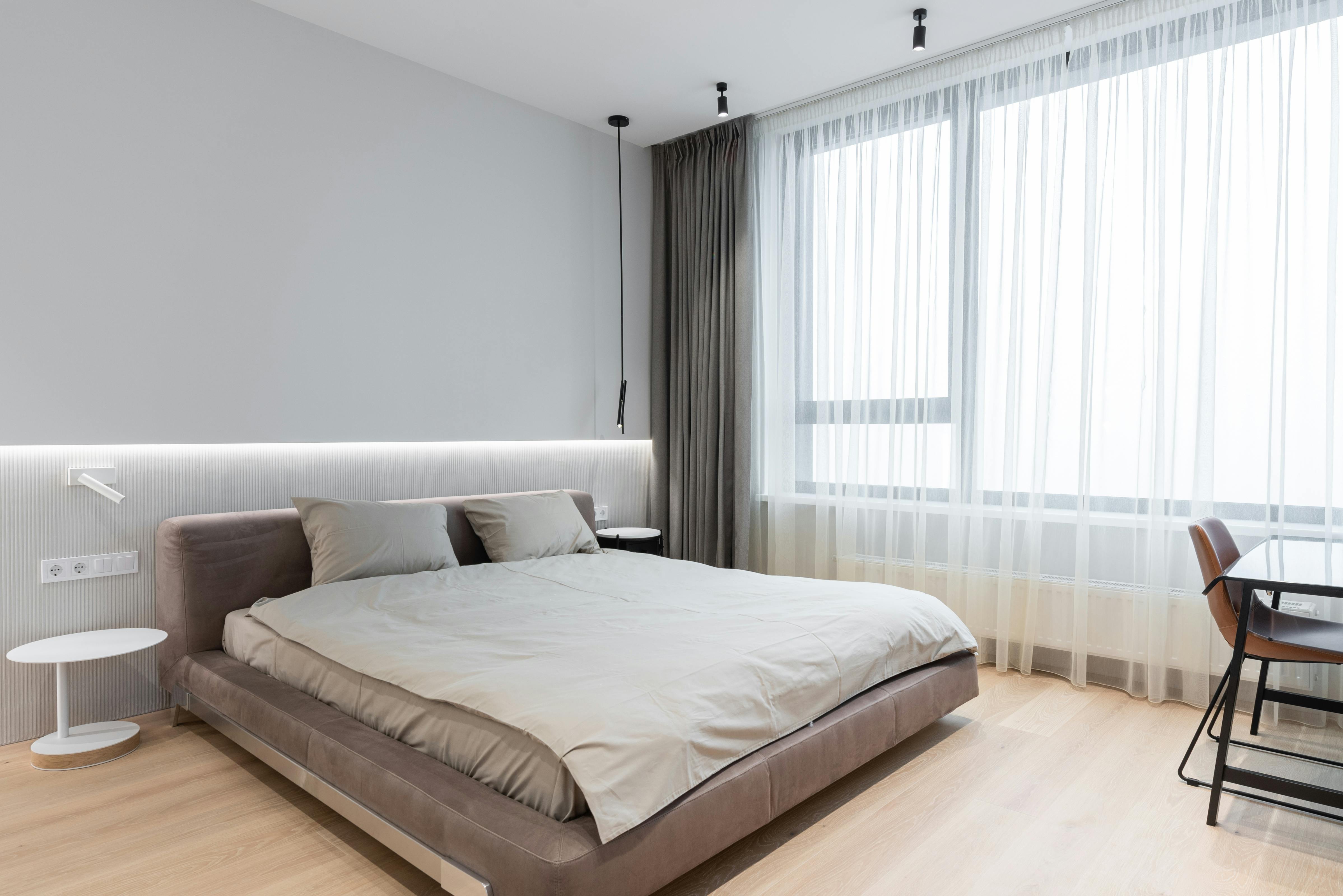
- A simple platform bed with clean lines
- Neutral linen or cotton bedding—think stone, sand, or warm white
- Two to three textured pillows max, plus a throw at the foot of the bed
The look is “hotel, but you’re allowed to have feelings here.”
2. Keep Nightstands Almost Empty
Cozy minimalist nightstands are basically tiny altars to sleep and sanity:
- One ceramic or linen‑shade lamp
- A small tray for phone, glasses, or jewelry
- One book or candle
Everything else either lives in a drawer or doesn’t live there at all. Your 14 half‑used hand creams are being reassigned.
3. Add Softness Underfoot & Out of Sight Storage
Cozy minimalism doesn’t mean you can’t own things; it means your things don’t have to audition on open shelves.
- A jute or wool rug to warm up wood or tile floors
- Woven baskets for spare linens or seasonal clothes
- Under‑bed storage in simple fabric bins or low rolling drawers
If it doesn’t spark joy, it can at least spark organization.
DIY Cozy Minimalism: Champagne Vibes on a Cold‑Brew Budget
Cozy minimalism looks fancy in photos, but a huge chunk of the trend is built on very doable DIYs and renter‑friendly hacks. TikTok and YouTube are full of “Sunday home reset” videos where people declutter, restyle, and add one or two small upgrades that change the whole vibe.
1. Simple Wood Floating Shelves
Floating shelves are the introverts of storage: quietly efficient, never in the way. Use them sparingly, not as a trophy case for every object you own.
- Choose warm wood tones to balance white or greige walls.
- Style with 1–3 items per shelf: a stack of books, a small vase, maybe one framed photo.
- Leave negative space; empty shelf area is a design choice, not a failure.
2. Thrifted Furniture Glow‑Ups
Instead of buying new everything, cozy minimalism loves a good makeover montage. Look for solid wood pieces with good bones and questionable finishes.
- Sand and re‑stain in a lighter, natural tone, or
- Paint in warm neutrals like mushroom, stone, or camel.
- Swap hardware for simple knobs or pulls in matte black, brass, or wood.
The goal is to make your piece quietly handsome, not shouty.
3. Budget‑Friendly Neutral Wall Art
You don’t need a gallery wall to prove you like art. You can DIY oversized, minimalist pieces with:
- Canvas drop cloths stretched or framed
- Plaster or joint compound troweled on for texture
- Neutral paint in a few tones for soft, abstract shapes
Hang one large, calm piece above the sofa or bed and let it breathe.
4. Renter‑Friendly Walls & Lighting
If your lease is stricter than your high school math teacher, focus on reversible upgrades:
- Peel‑and‑stick wall panels in subtle textures
- Removable wallpaper with soft, barely‑there patterns
- Plug‑in wall sconces to free up nightstand or side table space
Bonus: better layered lighting makes even a tiny rental feel intentional and cozy, not like you’re living under a hospital ceiling light.
Why Your Brain Loves Cozy Minimalism
Beyond looking good on Instagram, cozy minimalism taps into the wellness movement. Influencers aren’t just styling shelves; they’re filming “reset routines” that mix cleaning, decluttering, and styling as a form of self‑care.
A few reasons your nervous system is on board:
- Fewer visual distractions make it easier to relax and focus.
- Calm color schemes feel softer on the eyes and the mind.
- Clear surfaces make daily resets faster and less overwhelming.
No, painting your walls greige won’t fix your entire life. But creating a home that feels supportive—where everything has a place and the overall mood is calm—can absolutely make your daily routines feel less chaotic and more intentional.
How to Start: A 7‑Step Cozy Minimalist Reset
If you’re staring at your current living room thinking, “I own too much stuff and also nothing matches,” here’s a simple, repeatable reset you can do in an afternoon—or a very satisfying Sunday.
- Clear one zone at a time. Coffee table, TV console, nightstands. Remove everything, wipe them down, and only put back what you truly use or love.
- Pick your palette. Choose 3–4 colors for the room: two main neutrals, one accent neutral, and maybe one soft accent color (like sage or terracotta).
- Audit your textiles. Keep the throws, cushions, and rugs that fit your palette and textures. Donate or relocate the rest.
- Edit decor ruthlessly. Keep a few larger, grounding pieces—a big vase, a sculptural bowl, a couple of books. Let go of small, fussy items that read as clutter.
- Add one cozy upgrade. A new lamp, a nicer throw, a limewash accent wall, or a fresh duvet cover will make everything else feel more intentional.
- Hide the chaos cleverly. Baskets for blankets, lidded boxes for remotes and chargers, a tray on the entry console for keys and mail.
- Build a reset ritual. Once a week, spend 10–15 minutes returning everything to its “home.” Cozy minimalism works because it’s maintainable, not perfect.
The goal isn’t to create a showroom. It’s to create a soft‑spoken, well‑edited backdrop for your actual life—snacks, Netflix marathons, and all.
Calm, But Make It Lived‑In
Cozy minimalism is here to stay because it’s flexible: it plays well with pieces you already own—Scandi chairs, farmhouse tables, a rogue boho rug—and simply asks you to edit, soften, and unify. It’s not about achieving some aesthetic purity; it’s about creating a home that’s light on visual noise and heavy on comfort.
If your place currently looks like “before” on a makeover show, don’t stress. Start with one room, one surface, or even one corner. Warm it up, clear it off, add texture, and give everything you keep a purpose. That, in a nutshell, is cozy minimalism: less clutter, more comfort, and a home that finally feels like a deep breath.
Image Suggestions (For Editor Use)
Below are strictly relevant, royalty‑free image suggestions. Each image directly supports a specific part of the blog and visually reinforces the described concepts.
Image 1
- Placement location: After the subheading “Living Room: Calm, Comfy, and Not a Storage Unit” and the first paragraph of that section.
- Image description: A realistic photo of a cozy minimalist living room. Warm neutral color palette with greige or warm white walls, a low-profile light beige or taupe sofa with plush cushions, a chunky knit throw draped over the arm, a simple jute or wool rug, one large framed neutral artwork on the wall (no gallery wall), a wooden coffee table with a single tray, a candle, and a small vase or branch. No clutter, no visible cords, and minimal decor. Soft, natural daylight. No people visible.
- Supports sentence/keyword: “In living rooms, cozy minimalism shows up as neutral or earthy color palettes—think warm white, greige, taupe, and soft clay—paired with a few high-impact pieces instead of lots of small decor.”
- SEO‑optimized alt text: “Cozy minimalist living room with warm neutral walls, low-profile sofa, chunky knit throw, and large neutral wall art.”
- Example source URL (check 200 OK): https://images.pexels.com/photos/6585611/pexels-photo-6585611.jpeg
Image 2
- Placement location: After the subheading “Bedroom: The Clutter‑Light, Sleep‑Heavy Sanctuary” and the paragraph describing the bedroom as a sanctuary.
- Image description: A realistic photo of a cozy minimalist bedroom. Simple platform bed with a light wood or upholstered frame, linen or cotton bedding in warm white or stone tones, only two or three pillows, a neutral throw at the foot of the bed, a warm neutral wall behind the headboard, two simple nightstands each with a single ceramic lamp and minimal decor (one book, small tray, maybe a candle). A jute or wool rug peeking out under the bed and one woven basket near the corner. No clutter, no visible electronics, no people.
- Supports sentence/keyword: “Platform beds with clean lines, linen or cotton duvet covers, and two or three textured pillows are popular.”
- SEO‑optimized alt text: “Cozy minimalist bedroom with platform bed, neutral linen bedding, simple nightstands, and jute rug.”
- Example source URL (check 200 OK): https://images.pexels.com/photos/6585699/pexels-photo-6585699.jpeg
Image 3
- Placement location: In the DIY section, after the subheading “3. Budget‑Friendly Neutral Wall Art” and its explanatory paragraph.
- Image description: A close-up or medium shot of a wall featuring DIY neutral abstract art. One or two large canvases with plaster or textured paint in soft, layered neutral tones (off‑white, beige, taupe). Nearby, a simple wooden console or sideboard with minimal decor: a ceramic vase, a stack of two books, and a small bowl or candle. Background wall in a warm neutral color. No people, no bright or distracting colors.
- Supports sentence/keyword: “You can DIY oversized, minimalist pieces with canvas drop cloths, plaster, and neutral paint.”
- SEO‑optimized alt text: “DIY neutral plaster wall art styled above a simple wooden console in a cozy minimalist home.”
- Example source URL (check 200 OK): https://images.pexels.com/photos/6588582/pexels-photo-6588582.jpeg